beer
Latest
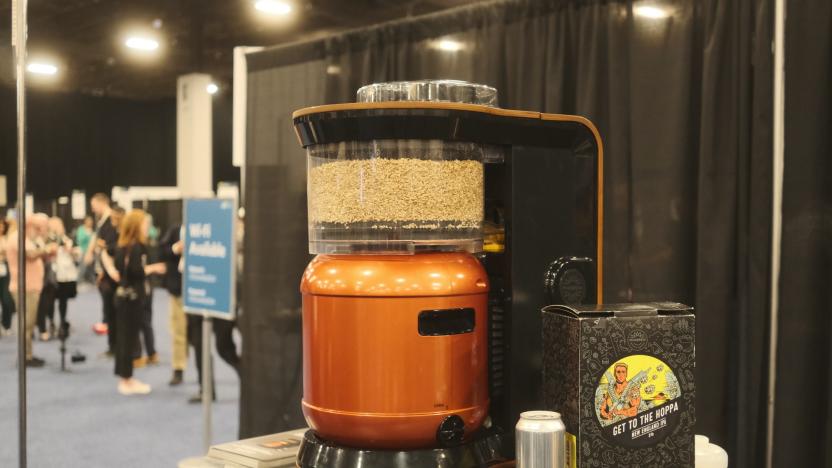
Exobrew is the latest machine trying to make homebrewing beer beginner friendly
The Exobrew's temperature controlled keg handles everything from boiling to serving. But the $879 price might put some off.

Kickstarter darling PicoBrew may soon go out of business
One of the original Kickstarter success stories, PicoBrew, is likely going out of business permanently, according to The Spoon.

Sacramento Kings guests can use 'smart' bottles to pour their own drinks
The Sacramento Kings are fond of using technology as a hook to fill seats, but their latest may be particularly alluring if you're in the position to score premium tickets. The basketball team is using connected bottle tops from NINA that let you pour your own alcohol in a suite or loft. You only have to open a tab, choose what you want to drink and pour until you get the quantity you paid for. This might let you focus more on the game than asking a bartender for more libations.

PicoBrew shifts its focus from beer to coffee with the MultiBrew
In May of 2018 PicoBrew announced the Pico U -- a universal brewing machine that was supposed to make basically any beverage you could called "brewed", from coffee, to beer to horchata. Well, the story didn't end well for the Pico U. Its Kickstarter campaign was pulled and the device never actually saw the light of day. A little over a year later and the company is ready to try it's hand at an all-in-one system again. The Pico MultiBrew takes the core concept of the U, but refocuses it. The result is a product that might have an easier time finding a home on your counter.
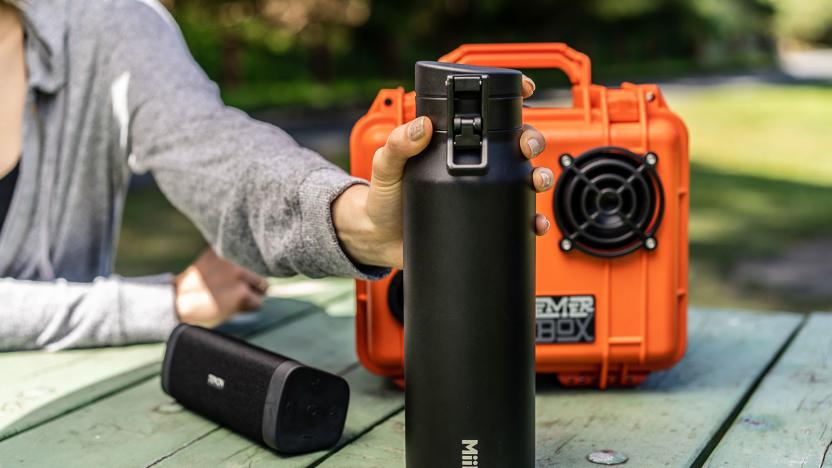
The best gear for your backyard party
Ah yes, sweet summertime. The few months of the year when your time is best spent outside, and that means time in the backyard, if you're blessed with one. Here's all the gear you need to turn your backyard into an outdoor summertime haven.
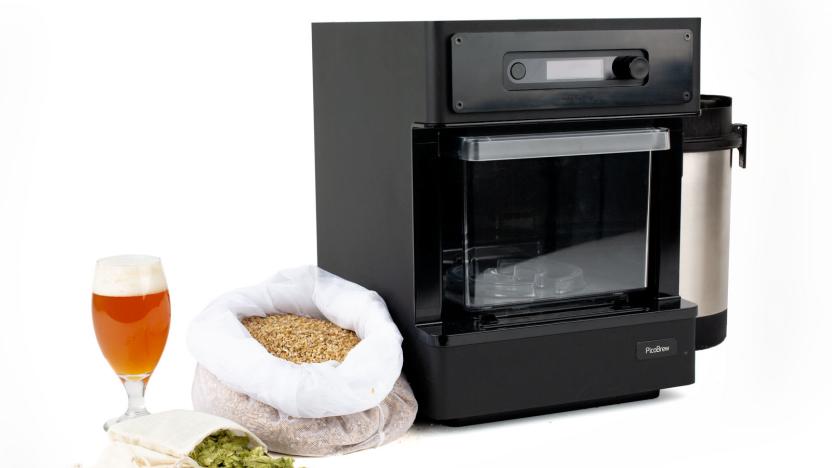
PicoBrew's new kits let you homebrew beer with your ingredients
PicoBrew's all-in-one homebrew appliances put a brewery on your countertop. They're relatively easy to use, and give novice beer makers detailed steps to make their own suds -- no previous experience required. There was one huge hindrance for the Pico C, Pico Pro and Pico S though: you couldn't buy ingredients from your local homebrew shop and pop them into these small appliances. You could do that with the $2,500 modular Pico Z, but it simply wasn't an option on the more affordable models. Well, that changes today with the so-called UnPak'd Kit.
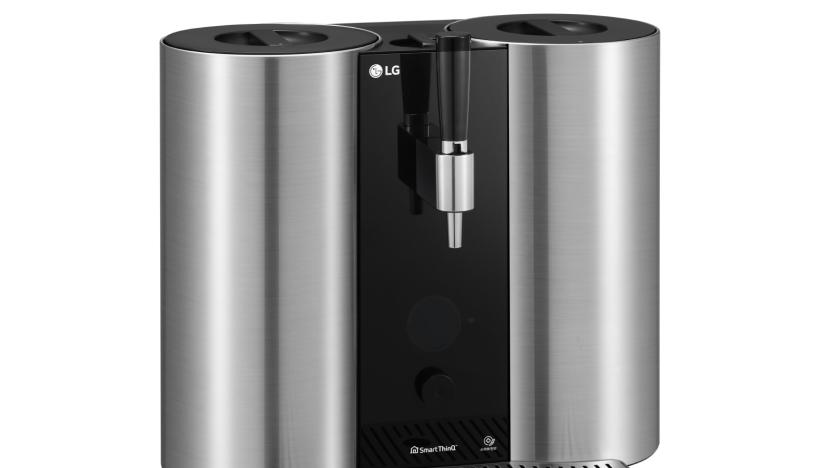
LG's automated craft beer system could make homebrewing much easier
Given the phenomenal popularity of craft beers and ales sweeping bars across the globe, it's surprising that homebrewing hasn't yet taken off to the same levels. Sure, we've seen a number of systems touting the trend -- Picobrew and Brewie are two that have done well on Kickstarter -- but it's yet to really go mainstream. But this could be set to change now that LG is getting in on things.

Cannabis infusions are the latest evolution in beer's 10,000 year history
Archaeologists suspect that humans have been brewing beer for more than 10,000 years, which would indicate that we developed fermentation technology prior to the agricultural revolution. The oldest known beer sample dates from more than 8,000 years ago, made in China using a mix of rice, grapes, hawthorn tree fruit and honey. In the millennia that have followed, brewed beverages have spread and diversified across the globe. That trend continues to this day as brewmasters in the US and Canada experiment with a new strain of 21st century beer infusions: cannabis. It's not been easy, but our good friend science has come to the rescue.
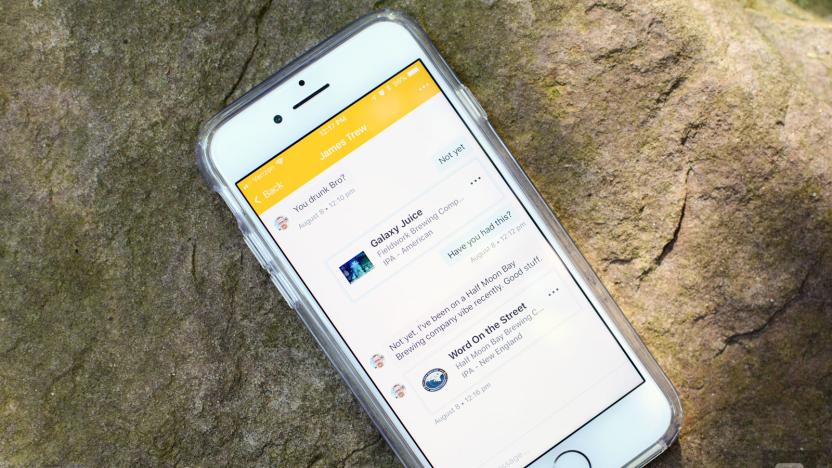
Untappd adds messaging for all your beer-related chats
Untappd has long been the app of choice for many beer drinkers looking for the best brews in town. To make it easier to find out what's worth checking out at your local bars or share that great IPA you just found with your friends, Untappd has added direct messages. You can plan an outing with your buds or simply share your knowledge of excellent beers, breweries and venues with them.

PicoBrew moves beyond beer to tackle coffee, kombucha and more
You've got to hand it to PicoBrew: The company is ambitious, if nothing else. After years of trying to perfect an automated, counter-top beer brewing machine, it's branching out to other beverages. In fact, it's basically branching out into all beverages -- at least all the ones you would call "brewed." The Pico U is what the company is calling a "universal" brewing machine, capable of making beer, coffee, tea, kombucha, horchata and a host of other drinks.
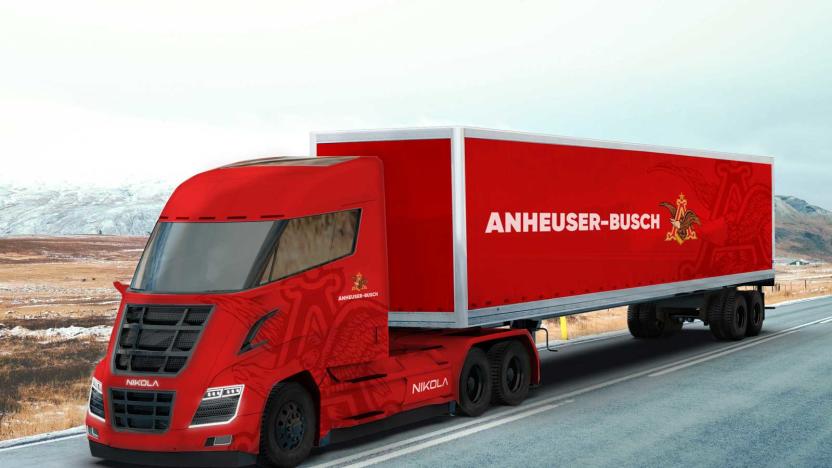
Anheuser-Busch will haul beer in Nikola hydrogen-electric trucks
The rivalry between Nikola and Tesla is only getting hotter... figuratively speaking. Mere months after ordering 40 Tesla Semis, Anheuser-Busch has ordered "up to" 800 of Nikola's hydrogen-electric semi-trucks to introduce them into its beer-carrying fleet starting in 2020. The deal should help Anheuser-Busch convert its entire long-haul roster to renewable-based trucks by 2025 and will be equivalent to taking over 13,000 cars off the road. As to why it's not just relying on Tesla? One word: range.
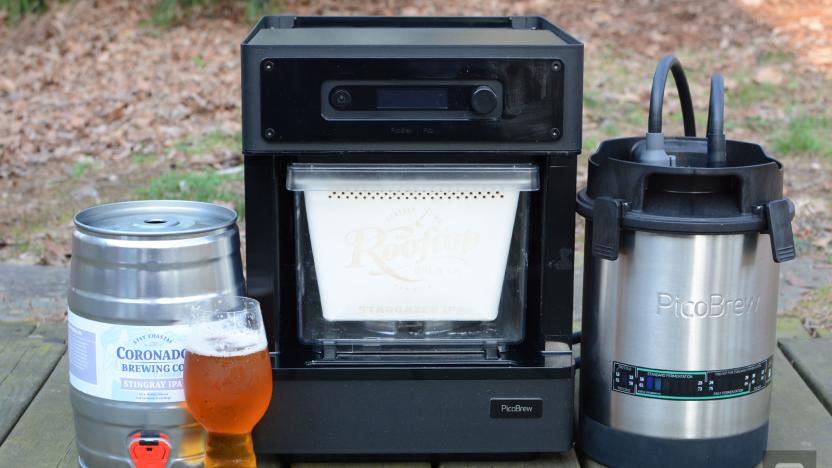
Pico C review: Making homebrew beer easy for beginners
PicoBrew has made a name for itself with a range of beer-making appliances that promise a "set it and forget it" experience. The company covers the gamut of brewing levels, from the Zymatic (now Z Series) for pros to the Pico Pro and Pico C for intermediate folks and beginners, respectively. While PicoBrew's entire product line offers WiFi connectivity for remote monitoring of the process, its PicoPaks make the whole process even easier by bundling all the ingredients into a simple, self-contained pod. However, as I found with the $499 Pico C, that simplicity has one big trade-off.
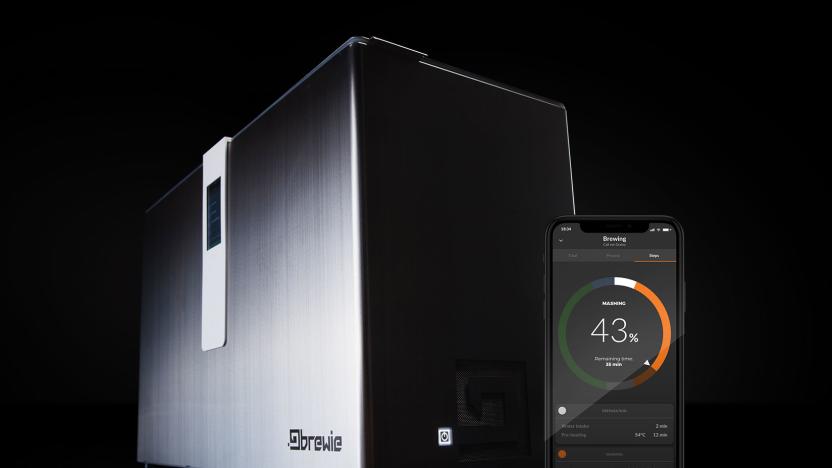
Brewie is back with version 2.0 of its automated homebrew machine
Over the last few years, we've seen a number of automated homebrew machines promise easy beer making for homebrewers of all skill levels. Some of them offer the freedom of using loose grains and hops, while others rely on pre-packaged ingredients straight from the company. Brewie falls into the former category and the company is back with a follow-up to the machine it first debuted back in 2014. The new device, dubbed the Brewie+, has been retooled to make the unit faster and the brewing process more efficient.
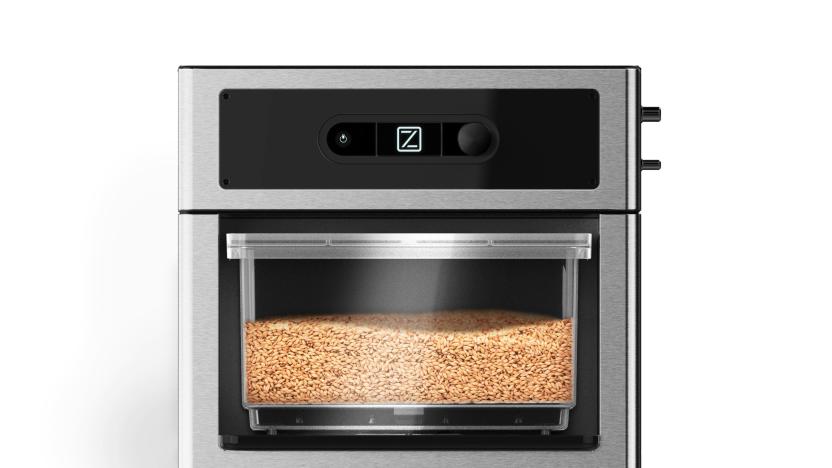
PicoBrew Z series is a modular all-in-one setup for serious homebrewers
After introducing Keurig-like pods for brewing beer at home, PicoBrew is back with a more traditional all-grain setup. The new Z Series allows brewers to use their own loose grains and hops instead of the company's own pre-packed ingredients. There are also four models, from 2.5 gallons up to 10 gallons -- each one increases brew capacity by 2.5 gallons. Like the Zymatic these units replace, PicoBrew designed these devices for pros, especially since a 5, 7.5 or 10 gallon batch would be enough to put on tap in a tasting room -- for pilot batches, at least. However, experienced homebrewers can also use their expertise for the Z Series.
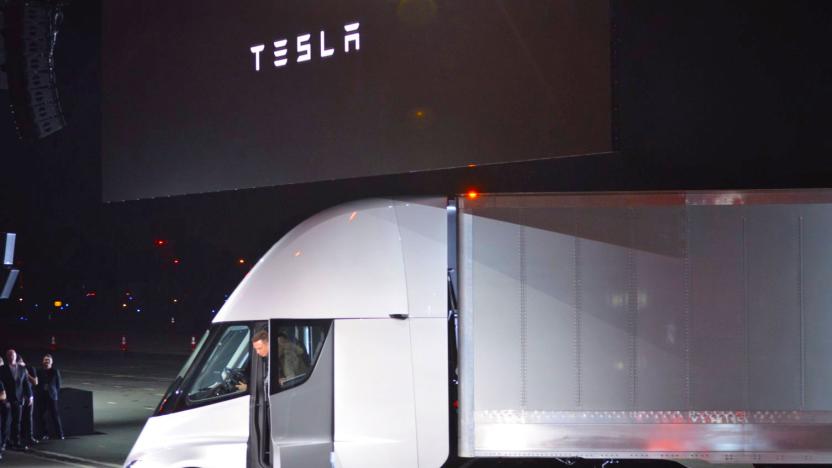
Anheuser-Busch wants to deliver beer with Tesla's electric semi-trucks
Anheuser-Busch just joined the list of companies that have placed an order for Tesla's upcoming semi-trucks. In an announcement today, the beer-maker said it has ordered 40 of the trucks that are set to go into production in 2019. "Integrating the Tesla semi-trucks into the brewer's distribution network will help Anheuser-Busch achieve its commitment to reduce its operational carbon footprint by 30 percent by 2025 – the equivalent of removing nearly 500,000 cars from the road globally each year," said the company.

Budweiser is blasting barley into space to brew Mars beer
Settlers could arrive on Mars as soon as 2024, if SpaceX gets its way. And, those newcomers to the red planet are going to need supplies, like...beer. While Elon Musk and co. are aspiring to send (useful) cargo to Mars two years ahead of the first visitors, Budweiser is planning for the inevitable celebrations. The company previously said it wanted to be the first beer on Mars, and it's moving ahead with its publicity-stunt-cum-science-experiment, with plans to send barley into space in December. Cue (disastrous) micro-gravity beer pong and drunk astronauts joyriding in Mars rovers (Engadget does not condone intergalactic drink-driving).
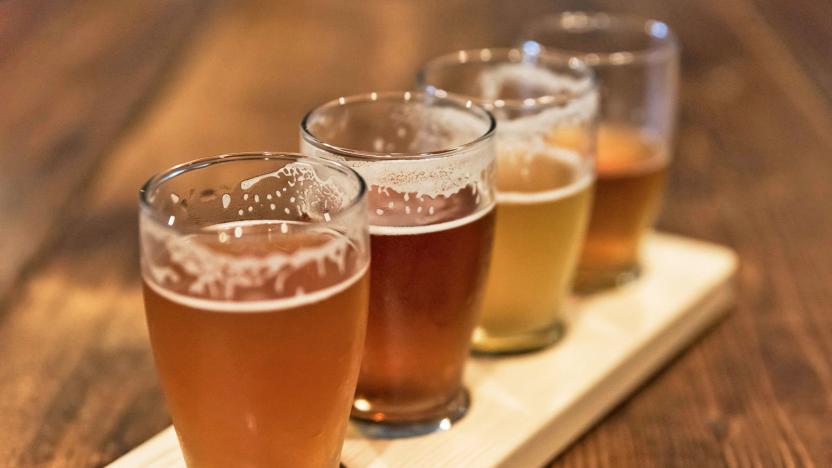
Your next craft beer might be named by a neural network
Researcher Janelle Shane has used AI to come up with names for paint colors, metal bands and guinea pigs in the past. She's even used it to generate wonderfully weird pickup lines. Now, she's turned her AI naming capabilities towards beer.

Postmates' speedy booze delivery begins drop-offs in NYC and Texas
Postmates' on-demand alcohol service is now available well beyond California's borders. On top of an expansion to Miami in May, the internet delivery mainstay is now making its Drinks feature available in New York City (in Brooklyn and Manhattan) as well as Austin, Dallas and Houston. As before, the aim is to bring neighborhood stores' booze to your door in 25 minutes or less. You'll have to be in the mood for certain drinks depending on where you live, though. The NYC service focuses on wine and spirits, while the Texas offerings revolve around beers.
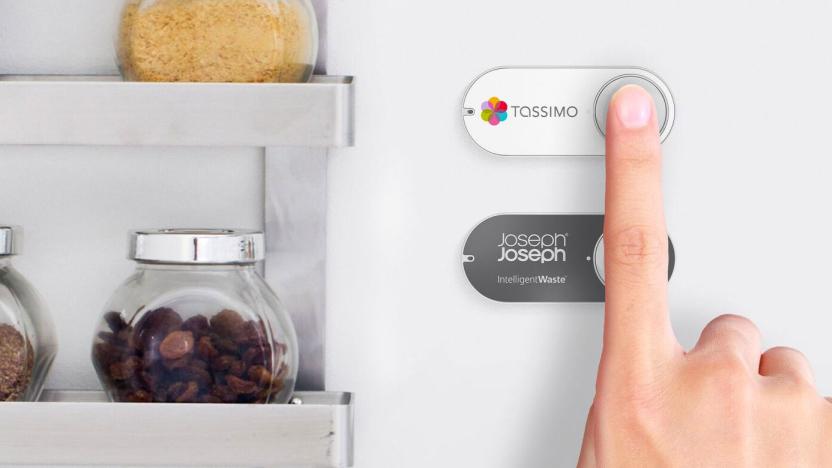
Amazon UK adds Dash buttons for beer and batteries
It's already pretty easy to find and purchase products on Amazon, thanks to a wide array of apps and additional hardware like the Echo and grocery scanner. However, Dash buttons make things even simpler. Fix one to the fridge and every time you run out of your favourite home product, hit the button and it'll instantly re-order what you're after. In the US, the program is already two years old and spans over 250 different products, but in the UK, where the program isn't yet a year old, things are a little more sparse. That changes somewhat today with the addition of 20 new products that range from batteries and beer, to coffee and vitamins.
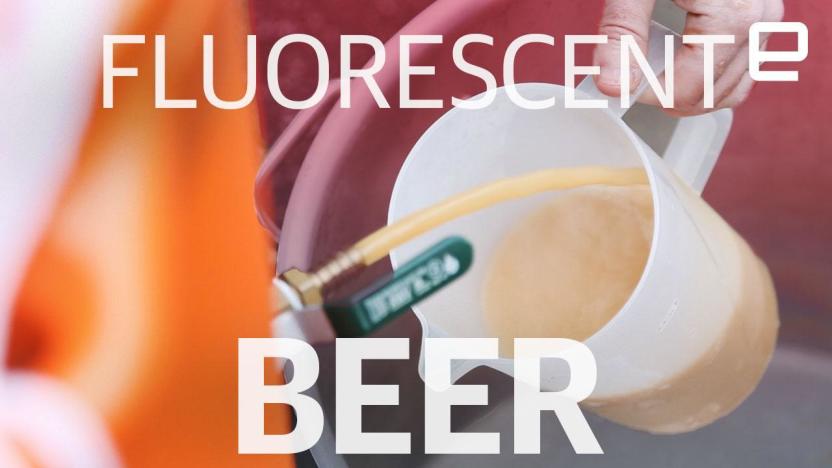
I bio-engineered glowing beer and it hasn’t killed me (yet)
I've been making beer for about 10 years and, in the name of fun and experimentation, I've done some weird stuff. Toss some sarsaparilla and birch bark in the pot? Why not? "Dry hop" with a box of Apple Jacks? Try and stop me. But I may have finally gone a bit too far, when I genetically engineered a beer to glow green. All right, so how did I do it? With a technology called CRISPR, which is pretty much the belle of the science ball right now. CRISPR stands for "clustered regularly interspaced short palindromic repeats" and it essentially lets you snip out bits of DNA and replace them with whatever you want. It actually relies on a basic feature of bacterial immune systems.


