billboard
Latest
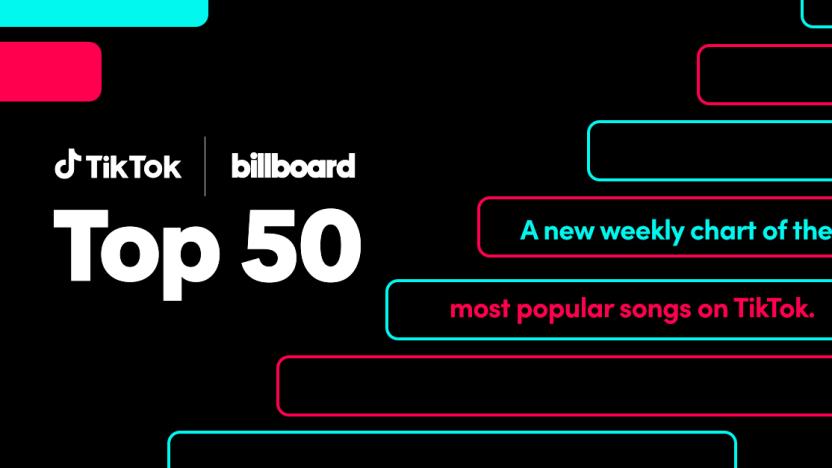
Billboard's latest top 50 chart pulls the biggest tracks from TikTok
TikTok and Billboard are collaborating on a pop music chart. TikTok Billboard Top 50 Chart is a new weekly roundup listing the most popular songs on the social platform in the US. The list debuts with the track “SkeeYee” by Sexyy Red taking the inaugural top spot.

Twitter's new Billboard chart will highlight trending songs
The Billboard Hot Trending powered by Twitter will showcase trending songs and music across the platform and will feature video and editorial content.

Billboard 200 charts will include online music videos
Billboard has included streaming music in its top 200 chart for years, but now it's ready to consider music videos as well. The industry publication has revealed that it will count official online music video plays from YouTube, Apple Music, Spotify and other services in the Billboard 200, starting with the charts for January 18th, 2020 (covering the first full week of January). The reasoning is quite straightforward -- this is meant to "accurately reflect the changing landscape" of music listening, Billboard's Deanna Brown said.

Hackers made a Detroit interstate billboard play a porn scene
Drivers in Auburn Hills, Michigan, got a heck of a surprise last Saturday night when an electronic billboard starting playing porn. The billboard, located alongside I-75 North between University Drive and highway M-59 in Auburn Hills, began playing the X-rated movie not long before midnight. It was shut down after 20 minutes, when police made contact with the sign's owner, Triple Communications.

'Baby Shark' has gone so viral it's now a Billboard Top 40 song
Unless you spent the latter half of 2018 on the moon with your hands over your ears, it's highly likely you're at least aware of Baby Shark, the infectious kids' song and scourge of parents everywhere. So popular is this viral sensation that it's now entered the Billboard Hot 100 chart, meaning it's not going away any time soon. Sorry.

Future earns highest-charting streaming-only album on Billboard 200
Future's new album, Beastmode 2, is now the highest-charting streaming-only album, Billboard reports, debuting at No. 3 on Billboard's Hot 200. With this album, Future has dethroned Chance the Rapper, whose Coloring Book became the first streaming-exclusive album to chart on the Billboard 200, peaking at No. 8. Coloring Book also went on to earn Chance the Rapper the first Grammy awarded for a streaming-only album.

Pandora and iHeartRadio paid streams now count on Billboard charts
Billboard may give more weight to paid streams than the free variety in its music charts, but it isn't playing favorites. The industry publication will count subscription streams from Pandora and iHeartRadio toward rankings in its Hot 100, Billboard 200, Streaming Songs and genre-specific charts. They'll have an effect starting with the rankings on July 14th (covering streams between June 29th and July 5th). iHeartRadio's terrestrial and programmed radio stations won't affect the data.

YouTube's revamped music charts focus on what's hot right now
YouTube hasn't been shy about wanting to be a cornerstone of the music industry, and that now includes one of the staples of the business: the charts. The video giant has launched revamped charts in 44 territories, headlined by a brand new "trending" section. The fresh area shows which music videos and songs are hot both worldwide and in given regions based on activity at multiple points in the day, with the option to play them all if you want a sense of the cultural zeitgeist.
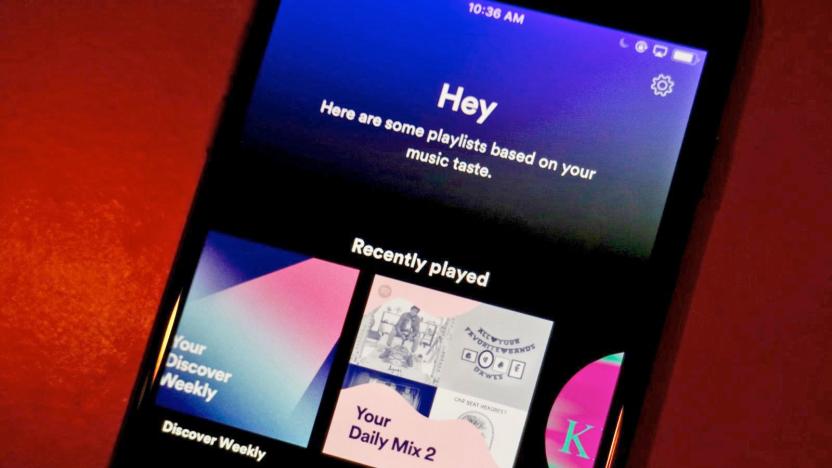
Billboard weighs paid streams more heavily on its music charts
Since Billboard started using streaming data in calculating the country's most popular songs and albums in 2013, there's been a sea change in how music's popularity is quantified. Some artists, like Chance the Rapper, have had hits with streaming-only albums, while bigger names, like Kanye West with The Life of Pablo, can reach the Hot 200 summit primarily on streams. We've known since October that subscription streams will play a bigger role in shaping the Hot 100 songs and Hot 200 albums charts than free and ad-supported streams. The new rules go into effect on June 29th, and Billboard has revealed more detail on how it will calculate its charts going forward.
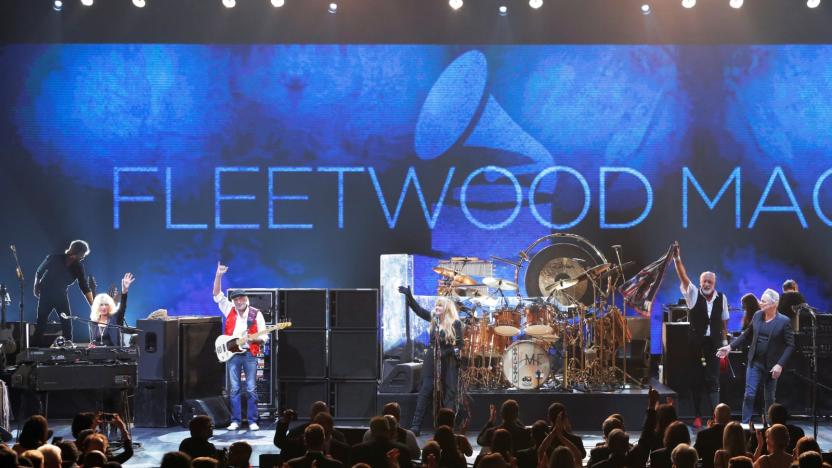
A tweet sent Fleetwood Mac back to the Billboard charts
Fleetwood Mac's songs are not boring, and it's very easy to dance to them. That's what Twitter user @bottledfleet showed us all when responding to criticism from an unnamed source that "Fleetwood Mac's music is so boring, you can't even dance to it." @bottledfleet posted a video of a dancer named Elexis Wilson, with backup from The Golden Girls from Alcorn State University, dancing to the song "Dreams" by Fleetwood Mac. The tweet and video went viral, with over 142,000 RTs and as a result, the song is back on Billboard's Hot Rock Songs.

Piccadilly Circus' billboard is alight once more, and it's watching
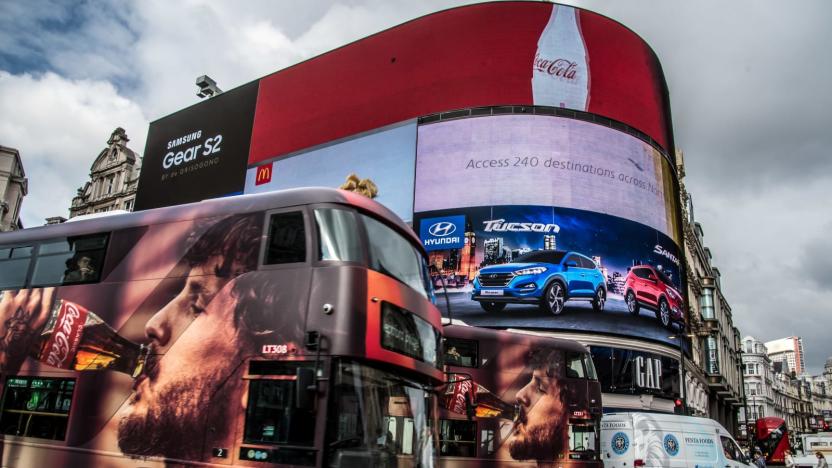
The iconic lights illuminating London's Piccadilly Circus were switched back on this morning, nine months after going dark to accommodate some serious renovations. The huge advertising space is no longer home to six distinct screens. Instead, owner Land Securities has swapped these out for one giant, curved LED display with a greater-than-4K resolution that measures around 790 square metres in total. The upgraded screen allows for more dynamic ads that can move around or take over the whole space, and incorporate mod cons like livestreams. With a bevvy of cameras and sensors, the Piccadilly Lights can also respond to the local environment and deliver targeted, responsive ads.

Billboard’s charts will give more weight to paid music streams in 2018
Starting in 2018, Billboard will change the way it counts streaming music for its charts. Right now, the way it works for the Billboard Hot 100 songs chart is that there are two tiers for streaming music: on demand (where you can select what you listen to) and programmed (think Pandora). On demand listening is given a greater weight than programmed. But next year, the company will add another tier. Paid subscription services (such as Apple Music and the paid tiers of services like Spotify) will have more weight than purely ad-supported listening and unpaid tiers of subscription streaming services.
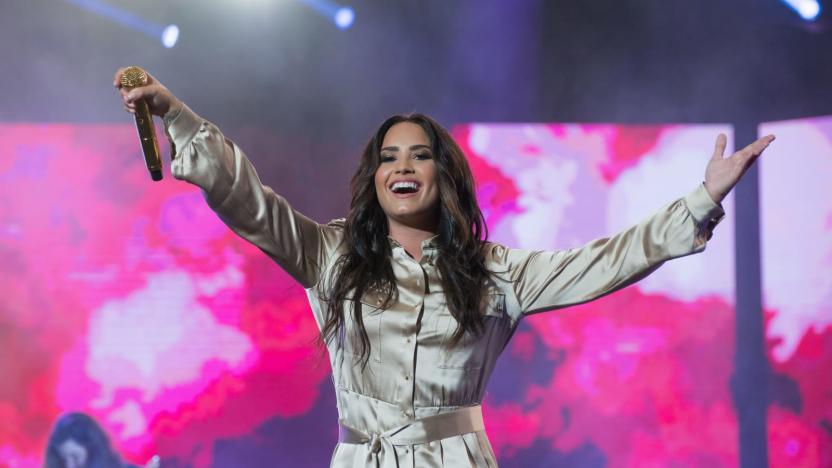
Billboard’s ‘Artist Pass’ is Snapchat’s first music-focused series
Snapchat is getting a music documentary series courtesy of Billboard. Called Artist Pass, the series' five-minute long episodes will give viewers behind-the-scenes looks at musicians as they prepare for their performances, and artists like Luke Bryan and Demi Lovato are among those that will be featured.
Apple Music's new film chronicles Bad Boy's hip hop legacy
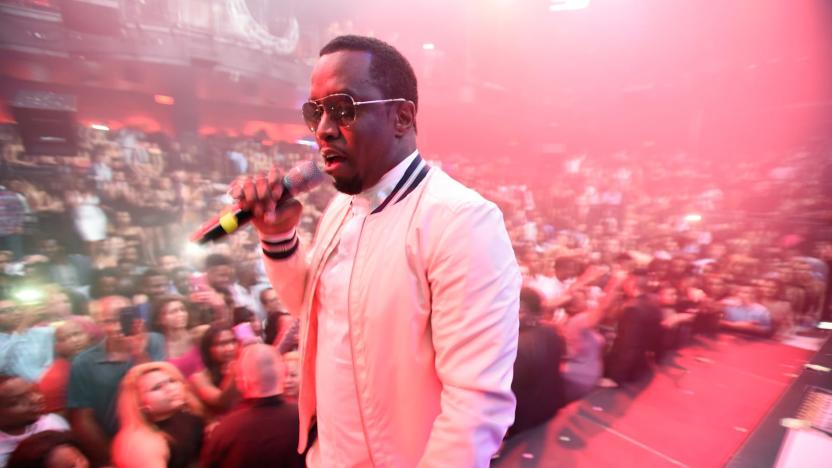
Apple Music's latest documentary is all about Sean "Diddy" Combs' Bad Boy Records. From the looks of the trailer below, it will chronicle the label's ascent and downfall -- in many ways, mirroring Combs's career -- and will of course touch on the death of Christopher "The Notorious B.I.G." Wallace. Last night at the Billboard Music Awards, Diddy debuted the trailer and spoke a bit about Biggie's legacy. Can't Stop, Won't Stop: A Bad Boy Story comes from Live Nation Productions, an offshoot of the concert-promoter/ticket-seller/venue-owner amalgam.

Pandora's radio data now included in Billboard Hot 100
Despite recent layoffs and the fact that it only launched a streaming service last month, Pandora is a giant player in the internet radio market. Billboard unveiled a partnership with the service for its Hot 100 chart, and says it immediately impacted 35 songs. It pushed nine of those up by five or more spots in the rankings, including Sex With Me from Rihanna and Rob $tone's Chill Bill, which leaped 10 places. Lady Gaga's Million Reasons, meanwhile, is now on the Hot 100 thanks to Pandora, Billboard says.
London's iconic Piccadilly Circus will go dark next month
Since 1908, London's Piccadilly Circus has been home to illuminated signs and advertising billboards. As time went by, incandescent light bulbs gave way to neon lights, eventually ending up with six massive LED displays (Piccadilly Lights) that you see today. From January 2017, however, the Lights will be switched off for the longest period since the Second World War to make way for the largest single digital screen Europe has ever seen.
Chance the Rapper's streaming-only album hits Billboard chart
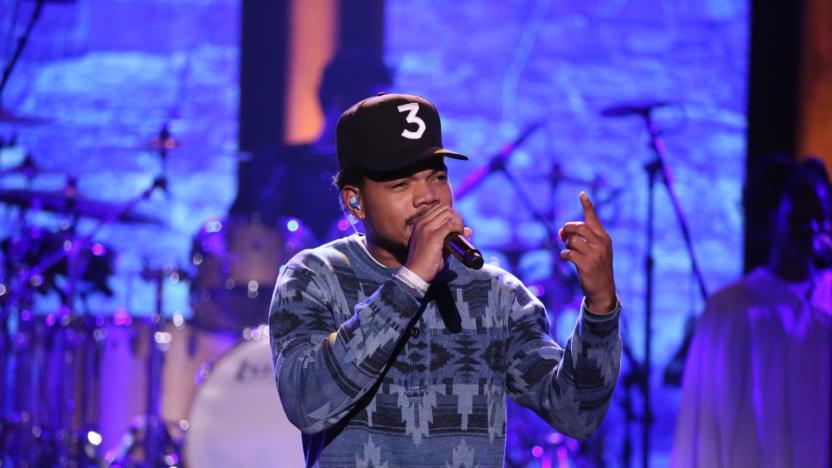
In late 2014, the Billboard 200 chart began to take into account both album sales and streaming plays for its rankings. When the list is updated this week, the first streaming-only album will be included on the chart. Chance the Rapper's Coloring Book debuted at number 8 on the list with 38,000 in equivalent sales since its debut on May 13th. The album is an Apple Music exclusive until May 27th where it has tallied 57.3 million streams so far. According to Billboard, there are no plans to make the album available for sale. When Billboard started including streams over a year ago, it announced that 1,500 streams from an album would translate to "an equivalent album unit."

Billboard's music charts now feature Spotify song clips
Billboard has long been the authority on what's popular in music. The company tallies weekly rankings across charts like the Billboard 200 and Hot 100. With a hand from Spotify, you'll now have a way to listen to clips of songs on those charts without having to hunt for them elsewhere. Billboard announced the partnership today, and the snippets of tracks are already live on the weekly lists of what's popular in terms of audio entertainment.

The Notorious B.I.G. might be going on tour in hologram form
ARHT (Augmented Reality Holographic Technology) Media announced on Monday that it has acquired the digital rights to Biggie Smalls' likeness and will resurrect the famed rapper as a hologram. He (it?) is expected to appear in a new music video before potentially going on tour. "What we're gonna start with is a video with the first single from [Faith Evan's upcoming duets compilation] The King & I then I think Faith wants to do a little tour," ARHT Media founder Rene Bharti told Billboard.

Kanye West album will top charts after Tidal exclusive ends
If you guessed that Kanye West's short-lived decision to make The Life of Pablo a Tidal exclusive would hurt the album's chances... you guessed correctly. Music industry forecasters now expect Kanye's latest to top the Billboard charts for April 23rd, which will include the first results from other streaming music services as well as purchases from both Tidal as well as the star's own website. The data suggests that Tidal just isn't big enough to support a major album at this point, even if it did lead to many people signing up (however temporarily) when they wouldn't have otherwise.


