sequencer
Latest
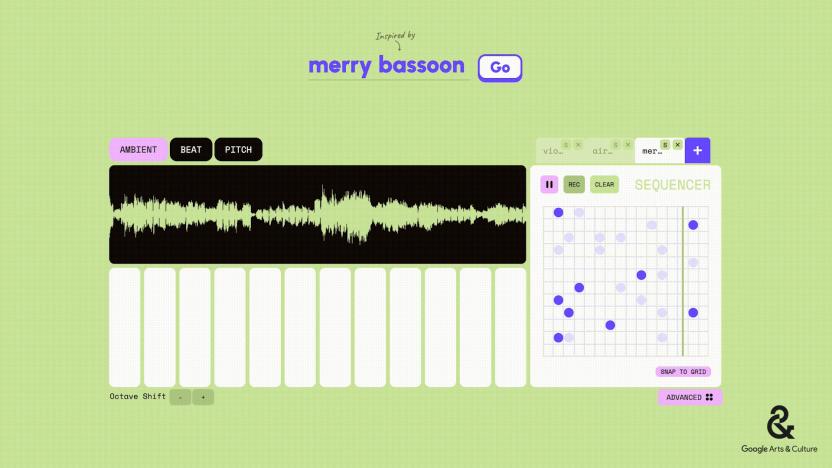
Google’s new AI experiment composes abstract musical clips inspired by instruments
Google’s new generative AI experiment lets you create music “inspired by” over 100 instruments worldwide. It will spit out a 20-second sound clip as a starting point to compose soundscapes that may or may not include the instrument you entered.

Eventide Misha review: A playful sequencer that says to hell with tradition
Eventide's first Eurorack sequencer, the Misha, ditches traditional music composition for intervals and tone rows.
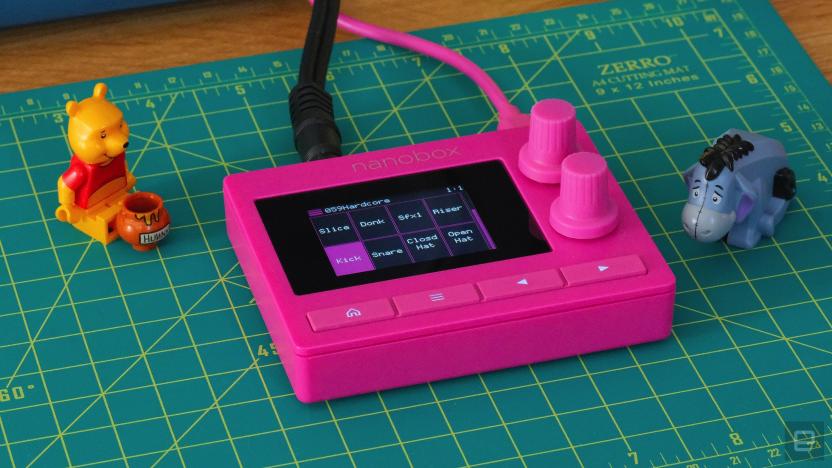
Razzmatazz review: A delightful (and delightfully pink) drum machine
1010music's Razzmatazz is a playfully pink and deceptively powerful drum machine that fits in a pocket.
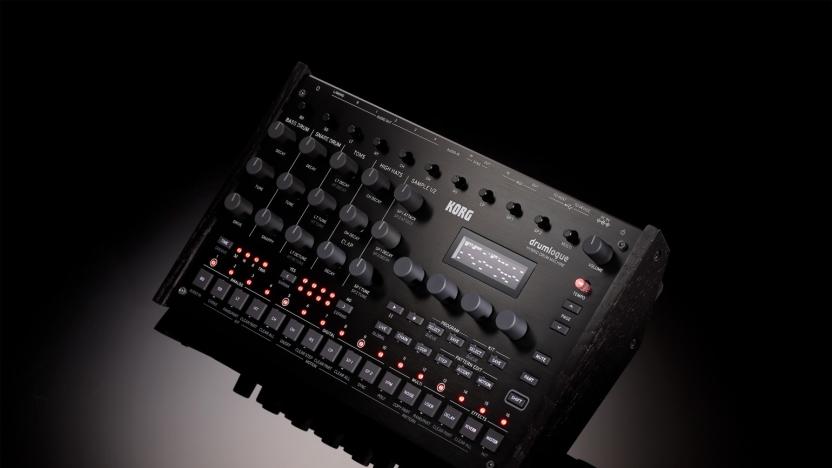
Korg's Drumlogue is an analog drum machine with a powerful digital engine
After first teasing it way back on January 2021, Korg has released the much-anticipated Drumlogue, a hybrid drum machine.

Elektron's Model:Cycles and Model:Samples grooveboxes are on sale for $249 each
You can save $50 if you pick up one of the sequencers now.
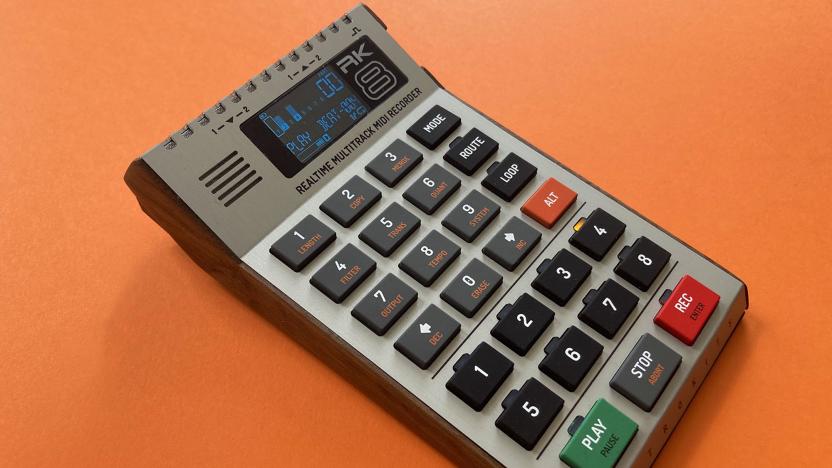
Retrokits RK-008 is a robust MIDI sequencer disguised as a pocket calculator
Retrokits RK-008 is capable of controlling an entire live music rig, but looks like a pocket calculator.
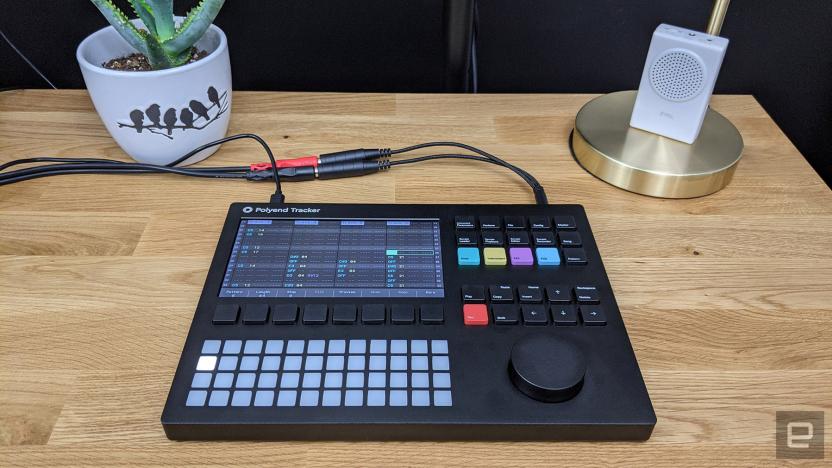
Polyend Tracker review: A powerful but confounding groovebox
The Polyend Tracker is an exceptionally built and almost intimidatingly powerful groovebox. It can record samples, edit them, turn them into playable synths, and control external gear. It will carry you all the way from germ of an idea to polished track. The workflow isn’t for everyone, but it’s impossible to deny the value packed into this $599 instrument.
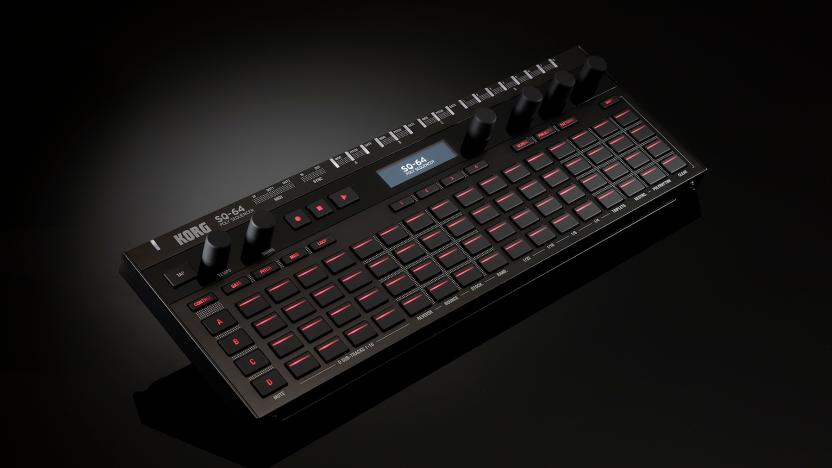
Korg goes for the sequencing crown with the modular-friendly SQ-64
Korg’s SQ-1 is a bit under appreciated. The Korg SQ-64 Poly Sequencer is basically attempting to be the king of all the CV sequencers. It has four 64-step tracks. The SQ-64 also expands on the playback variation you got the SQ-1 and injects some controlled chaos.
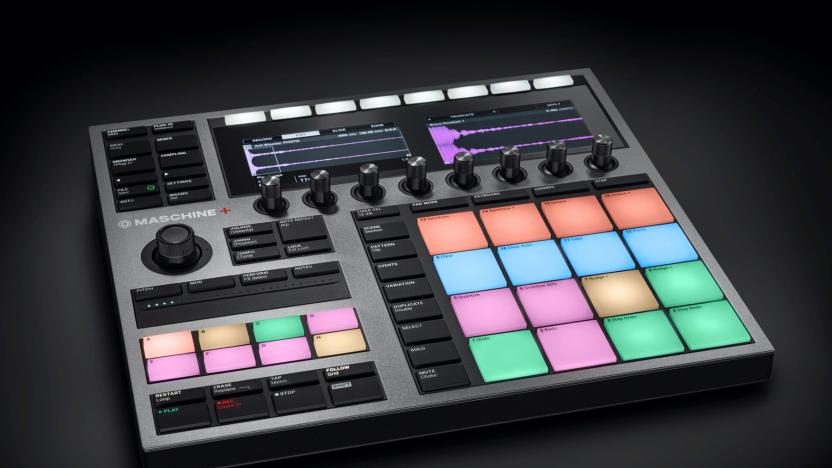
Native Instruments crams its powerful music-making software in a standalone groovebox
Maschine+ brings the Maschine workflow and Komplete instruments to a standalone groovebox.
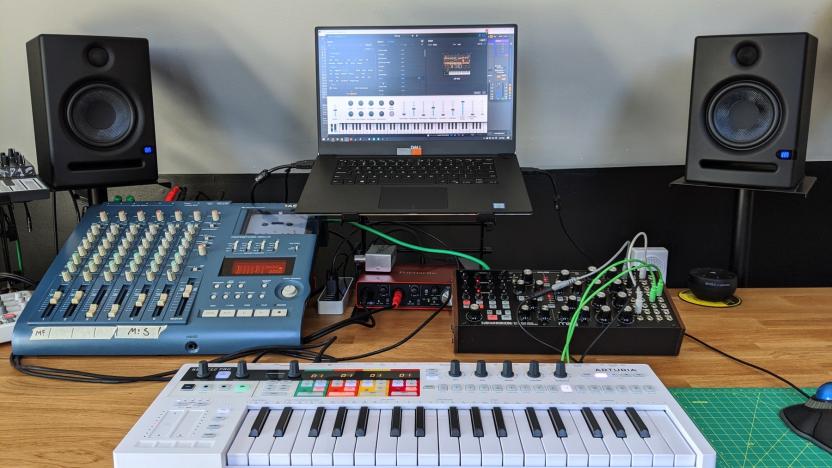
Arturia's KeyStep Pro is a near-perfect MIDI controller for hardware synths
Arturia’s KeyStep Pro successfully marries most of what makes the KeyStep so ubiquitous with the sequencing power of the BeatStep Pro. It’s not perfect, especially if you’re hoping to use it as the core of a hybrid setup that combines hardware synths with the power of a DAW. But there are few controllers out there with this breadth of connectivity options, especially at the price point.
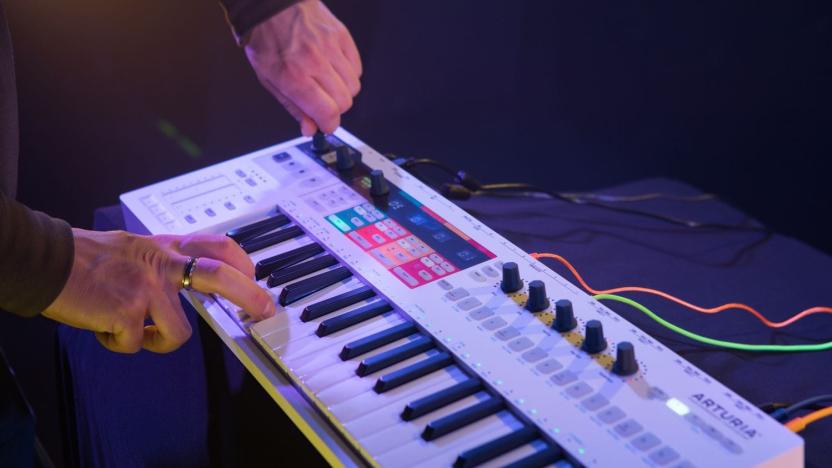
Arturia's KeyStep Pro MIDI controller is out now for $399
Arturia's KeyStep Pro, though, puts a lot of emphasis on the "Pro." The KeyStep Pro is out today, and though Arturia charges $449 plus $70 for shipping, retailers like Musician's Friend are selling it for $399 with free shipping.

Endlesss is a simple, fun music collaboration app
Thanks to social distancing measures, online collaboration is more prominent than ever. But that doesn't just go for work -- it's part of having fun, too. When it comes to remotely making music with friends, there's typically a high barrier to entry. Not everyone is familiar with the workflows of digital audio workstations like Ableton Live or Apple's Logic Pro X. That's where Endlesss comes in. Billed as a "multiplayer music" app, it's aimed at users who are familiar with the basics of music production and synthesis while remaining somewhat accessible to those who aren't. Though it probably won't become a staple of bedroom producers, it could be a fun way to pass the time while cooped up at home.

Model:Cycles review: An affordable and approachable FM groovebox
Fair or not, Elektron has a reputation for making complex and kinda pricey electronic music gear. Last year though, it made a serious play for the entry level with the Model:Samples ($299), an affordable, sample-based groovebox that simplified Elektron's unique workflow for beginners. In a lot of ways, it's a stripped-down version of the company's Digitakt sampler. If you're familiar with the Digitakt, you've no doubt often seen it paired with the Digitone, a sort of sibling groovebox that relies on FM synthesis instead of samples. So it only makes sense that Elektron would want to give the Model:Samples its own FM-based partner in crime. Physically the Model:Cycles is basically a palette-swapped version of the Model:Samples -- Subzero to the M:S' Scorpion. At its core it's the same six-track monophonic sequencer -- but with a streamlined version of the Digitone's sound engine under the hood. Obviously though sacrifices had to be made to hit that $299 price point. As a result, the Cycles isn't exactly a budget-friendly replacement for the Digitone. It's very much its own instrument.

Jamm Pro combines powerful synth and sampler tools in one iPad app
If you're an electronic music DJ and you want to produce a truly unique live performance, you might have found your tool. DJ duo Coldcut and its Ninja Tune label have released an iPad-only app, Jamm Pro, that promises both much more power than its Ninja Jamm predecessor and "extensive" modulation and patching abilities like those you'd find in a modular synth. There are four channels with nine sequencers each (modulation, slice, pitch/reverse/drill and gate) and up to 64 patches, allowing a staggering 2,304 sequencers for each sound pack (Sound Set in Ninja Tune's lingo). You can finally use your own samples as well, whether they're from Sound Sets, external sources or straight from the iPad's mic.
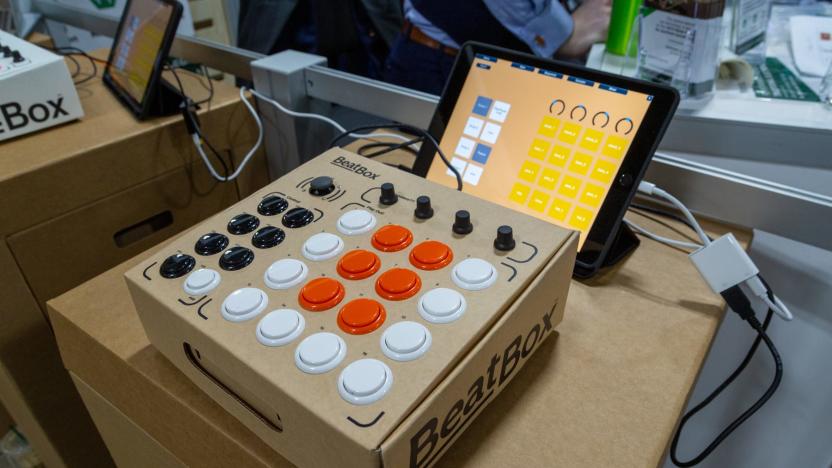
Making music with BeatBox, a Labo-like drum machine kit
When I first heard about the BeatBox, I was skeptical. A build-it-yourself drum machine made from cardboard? Wouldn't that disintegrate within half an hour? Finger-tapping isn't as violent as, say, regular drumming with wooden sticks, but when you're in the zone you still tend to hit the buttons with melodic oomph. (At least, that's what I tend to do.) After a few seconds with the crowdfunded instrument, though, those fears evaporated. I'm no musical expert, but it's clear the BeatBox has been thoughtfully designed and can take a chunk of performative punishment.

Korg Minilogue XD update adds key triggers for synth sequences
We really liked Korg's Minilogue XD synth for its blend of power with a relatively affordable price, but there were some omissions that prevented it from living up to its creative potential. Thankfully, Korg appears to have tackled many of those gripes at once. The music giant has released a 2.0 firmware update for the Minilogue XD that delivers considerably more control, most notably key triggers for the sequencer. You can create a sequence and transpose it anywhere on the keyboard with a single note -- in other words, you can dramatically alter the sound of a sequence on the fly.
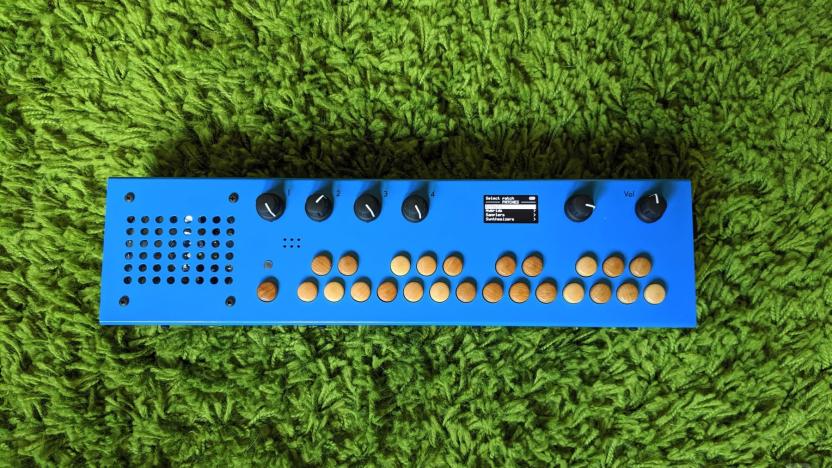
The Organelle is a music computer that can do almost anything
Not long ago, "portable" was basically a synonym for "toy" when it came to keyboards and synthesizers. Sure, a classic Casio like the VL-1 is not without its charms. But it's not exactly a serious musical instrument. That's changed a lot in recent years, partially due to miniaturization and clever engineering but mostly thanks to the relentless march forward of computing power. Perhaps no device is more emblematic of this than Critter & Guitari's Organelle. It is, at its core, a computer, and I don't mean that in the same broadly defined way that almost all electronics are computers. I mean that inside there's a Raspberry Pi running Linux. It's this fact that makes the Organelle so unique and flexible. Unlike other portable music gadgets, like the Pocket Operator, that focus on being a drum machine or a sampler, the Organelle tries to be all the things. It's a synthesizer, a sampler, a sequencer, an effects processor -- almost anything someone with the right coding skills can dream up. But there is a danger in trying to be a jack-of-all-trades: You often end up as a master of none.
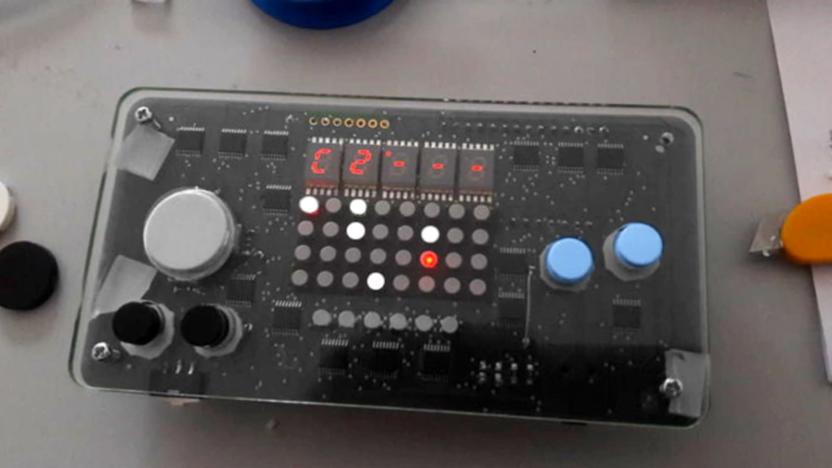
Crowdfunded Nanoloop synth doesn't need a Game Boy to make beats
Nanoloop has been a cornerstone of chiptune music for years, but using one has meant either owning a Game Boy or making do with a mobile app. You won't have to make those compromises for much longer. Developer Oliver Wittchow and crew are crowdfunding a dedicated, handheld version of the music-generating wunderkind. You'll still have a gamepad-like interface, four-channel synth and 4x4 matrix sequencer, just in a form factor that frees up your other gadgets.
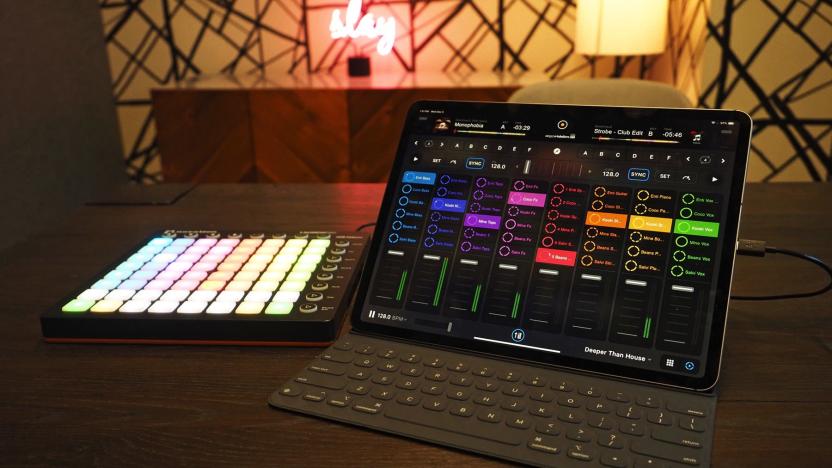
Algoriddim merges its iOS djay apps, adds new Pro-level features
Algoriddim's djay app has been an Apple favorite for some time, regularly appearing in the company's keynotes to show off incremental updates over the years. There's been djay, djay for iPhone, djay for iPad, vjay (for video), djay 2, djay Pro and djay Pro 2, but the whole thing has gotten a bit fragmented. Today, the company is simplifying its app catalog by releasing the new djay for iOS, spanning all the requisite devices and available as a free download in the App Store. On top of that, djay for iOS Pro is now the same app, but with an unlocked set of new features as part of a $5-per-month subscription model (or $40 if you pre-pay for a full year).

Roland’s TR-8S drum machine is ready to tackle the stage
If you know the history of drum machines, the first thing you want to do with the TR-8S is load up the 808 kick drum. It's a deep, satisfying boom that's been an important part of everything from hip-hop to rock. But after you get done having fun with four-on-the-floor bass hits, it's time to get to the real work -- your own rhythms. For that, it's tough to beat the latest digital percussion instrument from Roland for ease of use and features.


