

Growing up geek: From school tech support to tech journalism
My father spent most of his career in computers, logging many years as an Oracle database administrator. But he left work in the office, working in an era in which we weren't always connected to our bosses by smartphones, so we didn't have a computer or much new technology around the house for most of my childhood. When I think about the gadgets that ended up defining my childhood, it boils down to two things — the Apple computer and the original Nintendo Entertainment System, both of which were introduced to me at my lifelong friend Devin's house, just down the road from me.
Those two product categories probably represent the two sides of tech that are most important to me: creativity and entertainment (specifically gaming). We played the incredibly basic games available on his original black-and-white Macintosh, but we also goofed around with its drawing programs nearly as much. A few years later, my family got our first personal computer, an Apple IIGS, when I was probably eight years old. I was disappointed that there weren't more games available for it, but the computer ended up being a creative centerpiece for our family for years to come. I used the IIGS to draft countless school reports, made all manner of terrible computer-generated artwork, and even started composing some basic music.
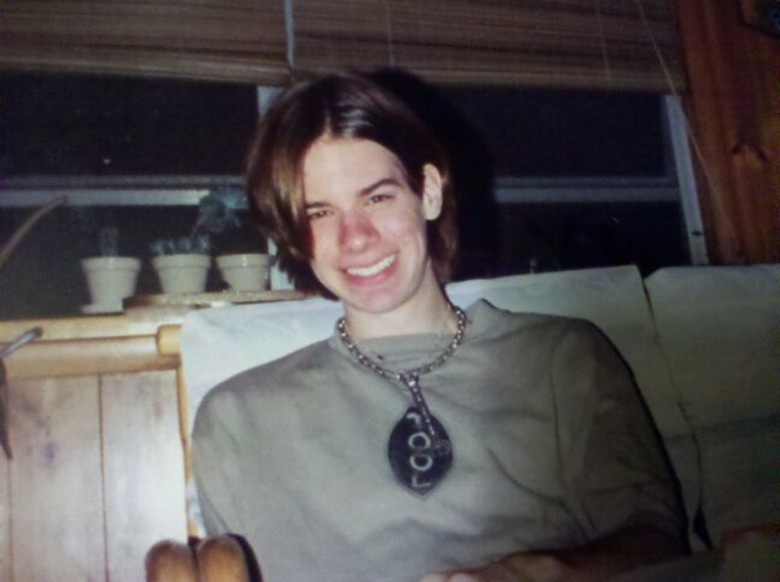
That computer also was responsible for the first time I was recognized as a "geek," used in this case to represent someone with greater-than-average technical know-how. I certainly was no computer expert, but because of my natural inclination to mess with my IIGS past the point of potential harm, I became de-facto tech support in my elementary school. The school got a bunch of IIGS's around the same time as my family (I'm guessing that's how we ended up with one, as my mom was a teacher), and any time something went wrong I was dispatched to clean up the mess. Sure, my tech support was little more than the "reboot and cross your fingers" variety, but back in the '80s that was still a well-kept secret.
As for the NES, I'm not going to pretend there was anything unique about my childhood video game obsession. If you were born in the 1980s, you almost certainly remember the first time you had the wonder of playing games in the comfort of your home — games that weren't designed to milk you for every quarter you had. What I can take away from the many sleepovers spent playing the NES long after bedtime was a tradition of games as a social activity rather than a solitary one.
Playing co-op Contra, taking turns tackling levels in the Super Mario Bros. series, eventually stepping up to the SNES and competing in games like Mortal Kombat and Super Mario Kart — whether competing, collaborating or just watching and helping, my favorite way to game was in person, with friends. That tradition continued right into adulthood with boozy post-college game nights and Wii bowling tournaments. Even now, as online multiplayer is the way most choose to game, I'm still considering a throwback local multiplayer game night as an excuse to both catch up with friends and find more time to play some games.
As the '80s made way for the '90s, Devin introduced me to one more pretty pivotal piece of technology. My first experience on the internet was at his house, the dulcet tones of America Online gently informing us that we did in fact have mail. It definitely took me a while to realize there was a whole internet beyond the cozy confines of AOL, but that didn't matter then. We jumped into chatrooms to talk music with fellow teenagers first getting their feet wet online. By then, Devin's family had stepped up to a Windows 3.1 machine, so I got a simultaneous education in the internet and DOS prompts to start up Doom and Wolfenstein.
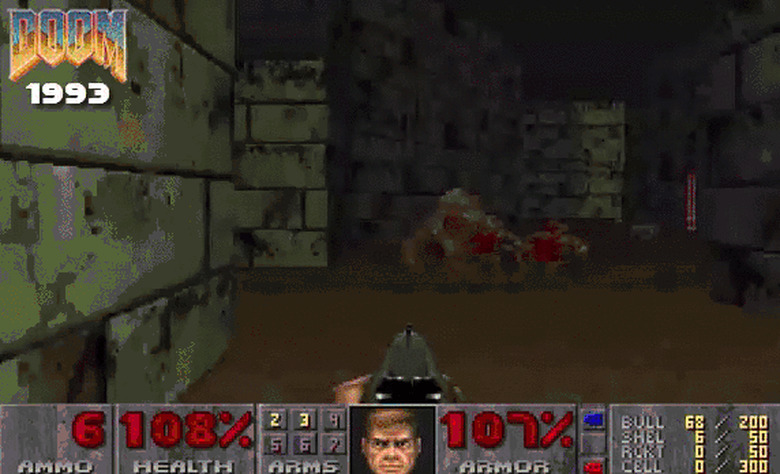
That all led me to begging my parents for our own internet-capable computer — we were still using the trusty old IIGS at that point. Before long, we had a Windows machine of our own and an AOL account to go with it. The rest of my high school career was spent doing the dial-up dance, fighting with my sisters for access to the phone line so I could get online. Music, not technology, was my true obsession at that point in my life, and getting online meant I could read countless articles about bands I loved, look up guitar music for my favorite songs, and even stream some live concerts (via terrible, terrible RealAudio). It was also a great way to stay in touch with friends who had moved away — I definitely stayed up all night long more than a few times in group chatrooms with friends near and far.
Sure, using the internet back then was a terrible headache. No one knew how to design a page, the simplest sites loaded dreadfully slowly, there were plenty of trolls to contend with, and the technology basically wasn't ready to show the internet's full potential. But it was also a captivating way out of the small town I was growing up in. While I'll always value real-life interactions over virtual ones, there's always been a comfort in knowing I could get out there and find like-minded individuals who love to making music or photos or words or video games or anything else with just a few clicks. And even though I never, ever want to go back to dial-up, I still miss the sound of a modem connecting. It's the sound of possibility.
The combo of getting my own PC and broadband internet in college sealed the deal –from then on, I've been an early tech adopter and obsessive reader of technology news. I spent years following liveblogs on Engadget for big events and quick daily news alike and always thought that being in technology journalism would be a great dream job. I got that chance by joining The Verge right before it launched in 2011 — it was a radical leap and entirely different than my previous career, but it was also hugely satisfying and rewarding. And now it's a bit surreal (not to mention awesome) to be contributing to Engadget, a site that was a daily read for so many years.