

7 Ways Augmented Reality Can Transform Business
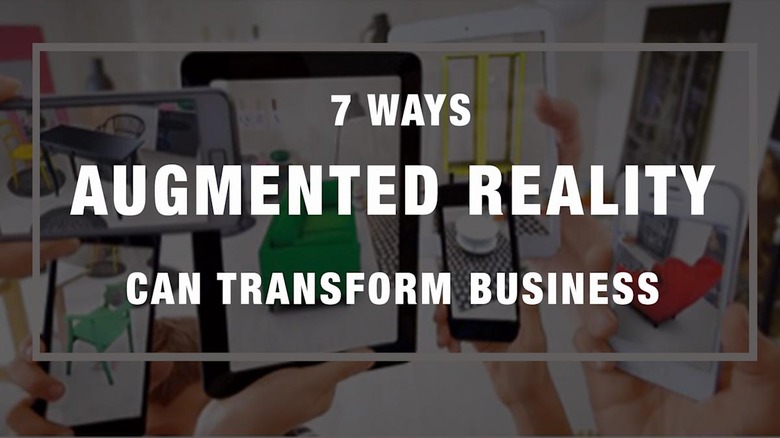
With the news that Snapchat will be building a Google-Glass style augmented reality headset, the message is clear. Augmented reality (AR) is no longer just a vision of the future or a technology only used for gaming. It is now ready for use in a variety of fields to improve user experience, create dynamic marketing platforms, and help businesses work smarter than ever.
AR has the power to merge the virtual with the real world. The technology is impressive and becoming mainstream. Google is currently selling its Glass headset to businesses, and Microsoft has released the HoloLens to developers. These devices may hold the key to making the customers more satisfied and the staff more productive.
Here are the seven ways that augmented reality can transform business:
Helping Workers out in the Field
Many employees are faced with the reality of spending much of their working lives outside of the office. When out in the field, even the most experienced professionals may need assistance. This is where AR glasses or smartphone technology can help. Workers have a hands-free means of showing their co-workers what they are seeing in real-time and receiving information and guidance back from them directly. This can even assist with emergency situations. For example, a paramedic at a medical emergency may be able to provide information directly to the hospital and receive life-saving instructions through AR.
Improved Training
AR can forever transform the way that we view training. AR technology makes training more immersive and interactive. It is far more effective than lectures or reading. Training can be more elaborate and repeated as many times as necessary until the Trainee masters the material. Training can also be self-paced. For example, mechanics can practice technical skills virtually and master the practice before they work with real equipment. The result of AR training will be a better-trained workforce.
Product Showcases
E-commerce has put pressure on businesses to showcase their products more effectively. AR allows customers to fully inspect products online as if they were viewing them in person. In fact, customers can also do more advanced things with these products like seeing how different models of furniture fit in their home before deciding to purchase them. This improves the buying experience by empowering the customer and helping them make better decisions than before.
Maps and Tours
Think about the AR implications for real estate and museums. These businesses can now offer more interactive and informative experiences. Graphic overlays can help potential home buyers see the house fully furnished while providing historical information. Museum visitors can receive relevant information about the art they are viewing in real-time.
Now also consider how AR can help professional delivery drivers – and all kinds of drivers for that matter. They can use graphic overlays of maps to help guide them quickly without needing to divert their eyes from the road. This improves both safety and efficiency.
Augmented Offices
AR can turn a plain office space into a dynamic environment. Tables and chairs are all that is really needed. Everything else can be created based on the needs at the time. For example, AR can display digital whiteboards or multi-media presentations on any wall. This will help reduce overhead and make offices more adaptable.
Improved Customer Service
AR can transform customer service, especially in the retail industry. AR glasses can help with make-up and clothing decisions, for example. Not only can AR demonstrate how customers would look like wearing these products without actually putting them on, but it can also provide style and application tips.
In fact, a similar type of service is already being offered on tablets. Major hardware retailer Lowe's lets customers explore various models of bathroom suites on iPads in what is called the Holoroom.
Improved Collaboration
The way that remote employees connect can be forever changed. Remote workers are often distracted during team meetings. With AR, it will seem like everyone is present in the room at the same time. Things like facial expression and body language, which are so important to communication, will not be missed. This improves the remote experience and helps people to feel more connected.
Conclusion
AR has the power to transform our organizations. It can provide better experiences for the customer while helping businesses run more effectively. The implementation of AR in business is really only limited by our imagination.