

Sony's A7R VI blends speed with a 67MP stacked sensor
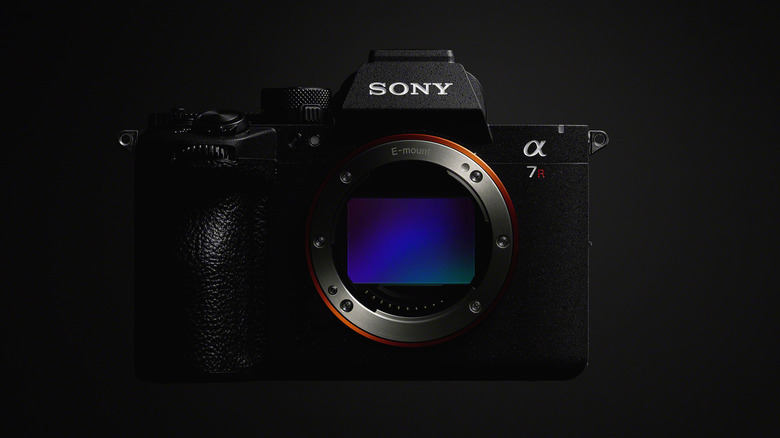
Sony A7R cameras have always been more about resolution than speed, but with its latest model, the company has flipped that equation. The 67-megapixel A7R VI is not only Sony's highest-resolution mirrorless camera ever but its first A7R model with a fully stacked sensor. That allows for incredible detail, higher speeds and reduced rolling shutter, making it one of the company's most versatile cameras yet. However, it's also quite a bit more expensive than the previous model.
The key change from before is the switch from a 61MP backside-illuminated sensor to a fully stacked 67MP sensor. That not only gives photographers more detail but also mitigates one of the biggest problems with the previous model: rolling shutter distortion. With a much faster readout speed, you'll be able to use the electronic shutter in more situations and video "jello" will be far less of a problem. However, the A7R VI still doesn't read out nearly as fast as Sony's current speed champ, the $7,000 50MP A1 II.
The faster sensor and new Bionz XR2 processor also supercharge RAW burst speeds to 30 fps (blackout-free) from 10 fps before with the electronic shutter. Speed with the new mechanical shutter remains at 10 fps, still highly respectable for such a high-resolution camera. The A7R VI is the first R camera to offer pre-capture as well, letting you capture up to 15 frames with the shutter button half-pressed before full activation.
The 759-point (94 percent coverage) phase-detect autofocus now works at up to F22 and in light as low as EV-6 and promises speeds that can keep up with the 30 fps bursts. It adds human pose estimation on top of eye, face, head and body detection for humansand now supports smaller sizes for animal, bird, vehicle and insect detection. That's important because the A7R VI's high 67MP resolution lets you crop in on subjects more than ever. Like the A1 II, the new model can also recognize individual subjects, even in a crowd, track them separately and continue to follow someone even if their face is hidden for a moment.
As for photo quality, Sony is promising up to 16 stops of dynamic range in RAW mode (projected), a jump up from 15 stops before. The new sensor and processor combo uses AI to estimate light sources for improved white balance and the DRO (dynamic range optimizer) has also been expanded to Lv8 so that even backlit subjects should be well-exposed.
One change that you may or may not like is the elimination of uncompressed RAW in favor of lossless compressed, along with compressed (HQ) and compressed. Sony says those new types reduce file size without compromising resolution. Other new modes include composite RAW shooting, which combines multiple RAW images in Sony's Imaging Edge Desktop software, along with extended noise reduction and extended hi-res features for improved clarity and higher resolution, respectively. Finally, extended RAW processing can boost detail when you need to zoom in on a subject.
 Sony
Sony
Image stabilization has been boosted from 8 to 8.5 stops with supported lenses, or an estimated 7.0 stops at the periphery. That should reduce blur, which is key on such a high-res camera.
With a stacked sensor and reduced rolling shutter, the A7R VI is finally respectable as a video camera. It can capture 8K at up to 30 fps (oversampled from 8.2K) with a 1.2 crop and 4K at 60 fps or 120 fps with 5K oversampling and no crop, which means some pixel binning is going on. When shooting with a 1.5x crop in super 35mm mode, you can capture 4K 60p with 6.3K oversampling. Sony is also offering a "4K angle of view priority" that lets you capture a wider area with no observable change in image quality. However, no RAW or ProRes video modes are available, like Panasonic and Canon's latest high-res cameras.
A key improvement for video is a new dual gain function that boosts quality by reducing noise in darker areas, at the cost of some battery life. Sony also introduced new active stabilization that promises smooth video "even while walking," the company claims. Subject recognition AF has also been improved with the same features offered for photos. Finally, the internal mic has been improved to reduce steady background noise, such as fan noise and lens zoom operation.
 Sony
Sony
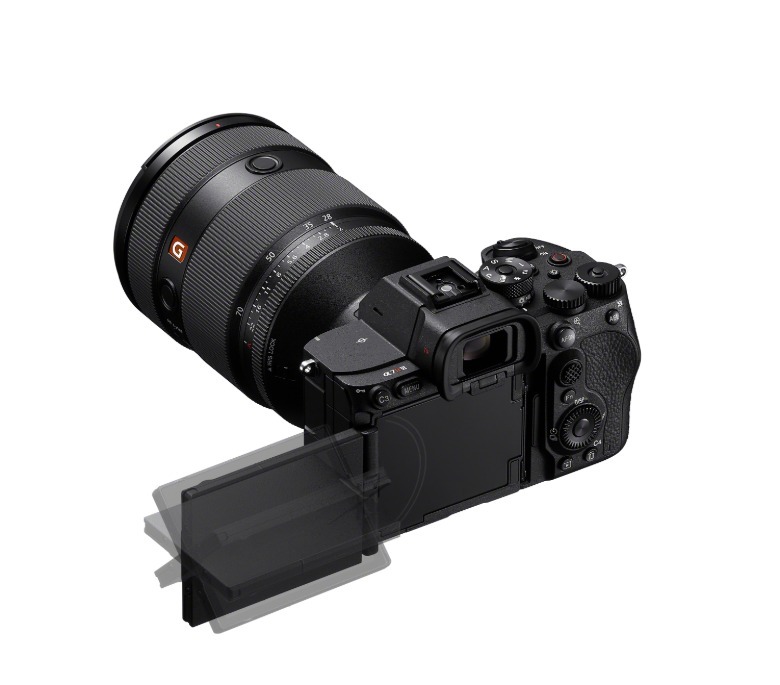
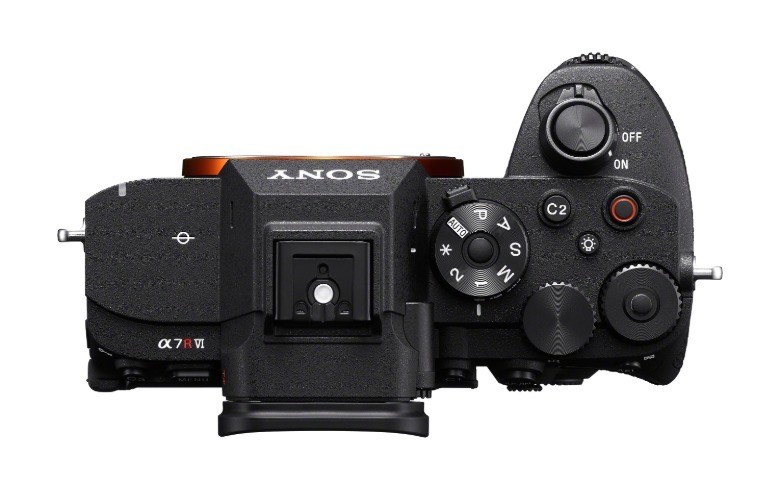
A high-res camera needs a good viewfinder and Sony has a new one for the A7R VI with the same 9.44 million dots of resolution, but with support for DCI-P3 HDR wide-gamut color and three times higher brightness. It has a 4-axis multi-angle rear LCD as before, along with a new tally lamp, improved grip shape and a rear info display that now works in vertical mode. It now comes with illuminated buttons that are easier to see in the dark (activated by a button on top) and a new "*" mode that lets you select one of 10 shooting modes from the menu.
Other key features are 802.11ax 6Hz Wi-Fi, dual USB-C ports for charging or data transfer and a new FPO battery (NP-SA100, not compatible with any other A7 models) with 17 percent more capacity. The A7R VI is now available for pre-order at $4,500 with shipping set to start in June 2026. Sony also introduced a new FE 100-400mm F4.5 GM OSS G Master lens that's significantly lighter than the previous model. It's also now on pre-order for approximately $4,300.