

Honor Magic V6 review: A mechanical marvel
It’s just a shame the software lacks polish.
- Outstanding battery life
- Durable build quality
- As slim as a regular phone
- Software needs polishing
- UI can be fussy
- AI photography tries too hard
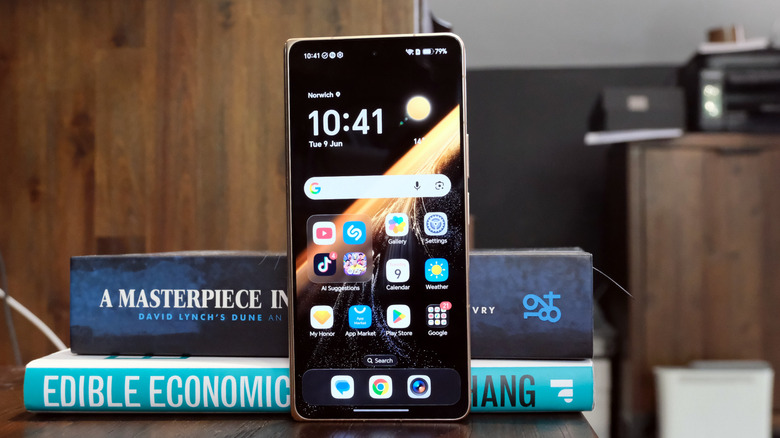
Honor launched the Magic V5 in August 2025, announcing the Magic V6 in March 2026, a mere eight months later. It's easy to understand why it rushed a successor out so quickly: to maintain its grip on the title of making the world's thinnest foldable. After all, that PR bluster could be the difference between gaining a sale, or losing one to Samsung. After spending some time with the Magic V6, I think Honor did itself a disservice focusing so much on those few millimeters. Really, it's the least interesting thing about this handset.
Hardware
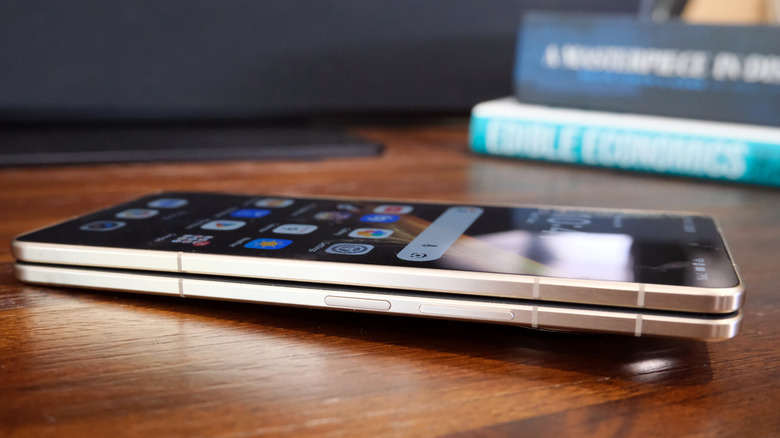
There's plenty to praise about the Magic V6, but I'm going to start with the obvious fact there's a hell of a lot of carry over. Releasing a handset so quickly after its predecessor hit the market means much of what was true about the Magic V5 remains true here. You'd be justified in calling this less of a V6 and more of a V5 Plus or Pro, whichever suffix better suits your worldview.
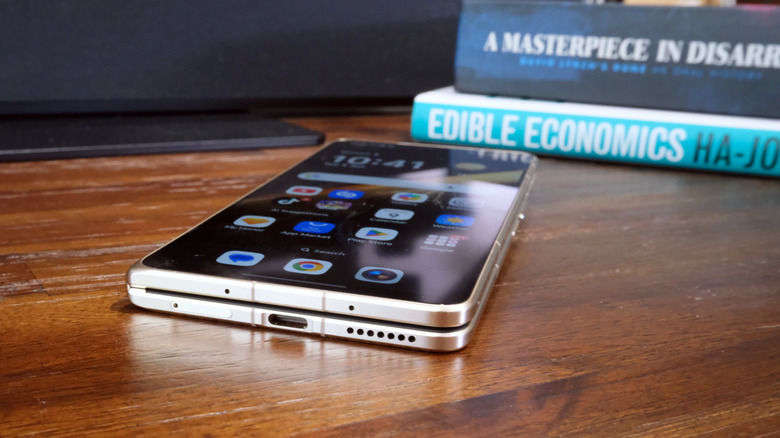
Last year, I said the Magic V5 crossed the rubicon from slender to dainty, making me feel a little nervous about how robust the hardware is. The Magic V6 is, obviously, a wee bit thinner again, even if only one of the four colorways actually is thin enough to claim the record. My memory of the older handset was that it felt much easier to flex compared to the rigidity of the V6. I'd still insist on using a case for this phone, but I'm far more at ease throwing it around than before.
Doubly so, in fact, because Honor's made the Magic V6 IP68 (immersion) and IP69 (pressure) dust and water resistant which should help reduce the dangers inherent in a foldable. The company says its cover glass is 33 percent more resistant to impact than the V5 and can be used in wet weather. I'm really looking forward to the money-is-no-object YouTubers putting one of these handsets under water and seeing if the promises match the reality.
I can never get out of my head the notion that Honor's design is a deliberate attempt to give it some distance from Samsung. Whereas the Z Fold 7 is quite austere in the hand, with harder edges, Honor emphasized the chamfering to make this phone easier to hold.
Like its predecessor, the Magic V6 has a 7.95-inch, 2,352 x 2,172 AMOLED primary display with a variable refresh rate between 1 and 120Hz. Face on, that crease is sufficiently subtle that only those with the most delicate of palates will notice it. Unlike its predecessor, the cover screen is now a 6.52-inch 2,420 x 1,080 AMOLED, thanks to the bezels shrinking slightly. My only nitpick is, as with every book foldable on the market, the cover screen is a little taller than I wish it was.
The real magic — unintentional pun noticed three hours after writing this sentence — of this phone is inside. To shave a mil from the phone's total thickness, Honor put its focus on a major redesign of many of the handset's internal components. The company redesigned the antenna, speaker chamber, vibration motor, NFC module, SIM slot and USB-C housing. The saved space also helped to accommodate the pretty beefy battery in such a relatively small package, too.
Honor's Magic V6 is the first foldable to ship with Qualcomm's Snapdragon 8 Elite Gen 5 paired with 15GB RAM and 512GB storage. To say it moves quickly would be an insult to things that move quickly, because this thing zooms, glides or sprints. I've not yet been able to make this thing stutter or slow down, and it's an absolute dream for gaming. I spent plenty of time playing FIFA EA Sports FC Mobile on Ultra, and set Sword of Convallaria and Fortnite to play at 60 fps. Yes, the phone did get warm, but not problematically so, and this would be an ideal device for a half hour playing session on your commute into work.
Those gaming sessions might not take too much out of the V6's battery, either, especially given how much juice it's packing. The international version is equipped with a 6,660mAh silicon carbon battery with 25 percent silicon content. That volume of silicon would ordinarily have a deleterious effect on the cell's overall life, but Honor claims its design work ensures "long-term battery durability."
Software
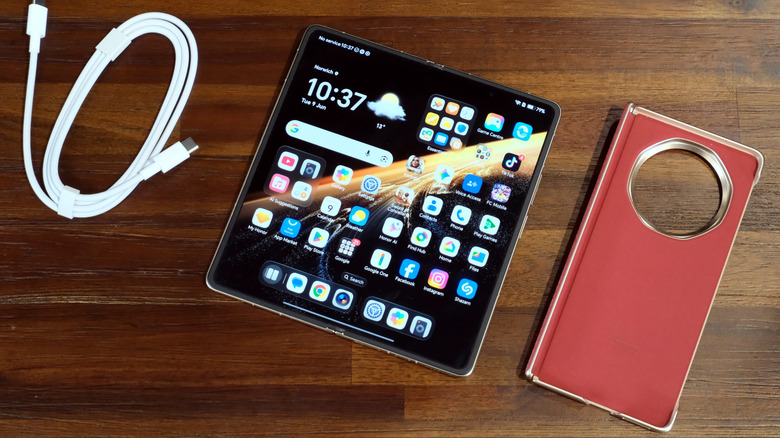
Magic V6 runs on Honor's MagicOS 10, based on Android 16, and for users in the EU, you'll get seven years of software and security updates. As usual, MagicOS is neither beautiful and easy to use enough to distract from its rough edges, nor comprehensive enough to feel powerful. It's fine when you're using the cover screen, but things get fussier when using the primary. Again, none of these are new complaints, but it's vexing when you're trying to multitask with two apps and it turns out only one of those supports the feature.
One of the more interesting elements of Honor's pitch was the focus on how "Apple-ready" the V6 is. Honor's been making this case for a while but I was surprised how much focus there was given this is the company's ultra-flagship device. Yes, we are living in what Honor calls a "multi ecosystem world," but if I'm spending this much cash on a phone, I want it to be the centerpiece of mine.
Honor talked up being able to forward your iPhone and iPad notifications to the Magic V6 while sending Apple Watch notifications the other way. One thing I thought was far more important was the ability to pair your AirPods with the V6 and get access to the native controls, or Honor's adaptation of them. Rather than them just working as any generic pair of Bluetooth earbuds, they actually operate as AirPods. I have no idea if Honor's able to do this without getting a sternly-worded letter from Apple, but the feat is impressive nevertheless.
You can also hook the V6 up to macOS, which lets you use the phone from your laptop or desktop and offers one-touch file and photo transfer. To make this work, you'll need to install Honor's Workstation app on your Mac and allow the software plenty of access to your machine. But, once done, you get file system access to the phone and pushing things back and forth is a doddle. In fact, it's actually easier to manage the files on your Magic V6 from a Mac than it is to manage the files on an iPhone from that very same Mac. It's genuinely impressive to be able to run a phone in this manner given how fussy things like AirDrop can be. (I know Apple doesn't want its users having such access, but that doesn't mean it doesn't look foolish here.)
The other thing you can do is use your Magic V6 as a secondary display for your Mac, which requires even more software to be installed. Once you've done so, you'll be able to use it as if it was a natively-connected display, with almost no visible lag despite what's going on behind the scenes. Now, it's entirely possible to do this with any foldable Android phone if you get the right combination of third-party utilities to weave it all together. Honor gets the praise here for making it all work without too much extra effort.
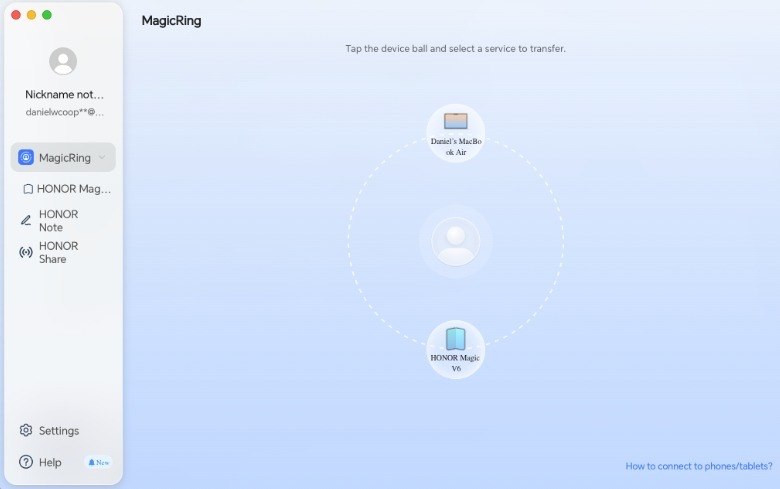 Screenshot
If I have one gripe, it's that I do wish Honor would work out why UI designers exist. Look at the mismatched fonts, wasted negative space and awkwardly wrapped text in this screenshot. This is not the companion app you offer to accompany a phone you're charging this much money for.
Cameras
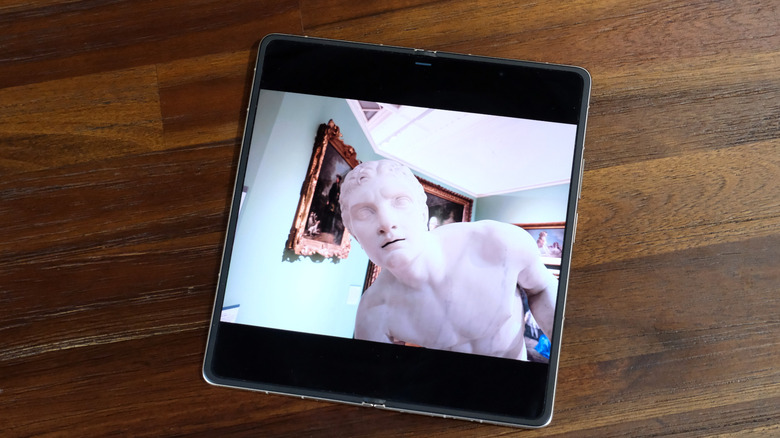
The V6's cameras are more or less the same as found in the Magic V5, so I'm not going to spend too much time on them here. There's a 50-megapixel f/1.6 primary lens, a 50-megapixel f/2.2 ultra-wide and a 64-megapixel f/2.5 with a 3x optical zoom. Given the slender space in a foldable phone, even with a prominent camera bump, the cameras here are perfectly fine. I think you'll find the usual Android phone camera experience here, with clear detail at the expense of color reproduction.
Sadly, I do think that Honor needs to spend more time working on improving its software rather than throwing more features into the package. One notable example was the harsh line which separates the subject from background in portrait mode. And then there's the digital zoom which can crop images up to 100x and fill in the rest with AI, which I'll let you judge for yourself. Take a look at these shorts, snapped from on top of Norwich Castle to the front of the railway station at a distance of roughly 2,000 feet.
 Daniel Cooper for Engadget
 Daniel Cooper for Engadget
The cameras on a foldable aren't going to surpass those on a regular candybar phone, but it's hard to laud an ultra-flagship if it can be upstaged by a Pixel 10. Again, it feels very much like I want to send Honor's software team to polish every existing feature before they try to add any new ones.
Battery life
Honor is understandably, justifiably proud of the battery technology inside the Magic V6, which is equipped with that 6,660mAh silicon carbon pack. In general use, I would often just forget to charge this thing and found the battery life rarely dipped below 50 percent. In our local video rundown test using its primary display, the Magic V6 lasted a fantastic 30 hours and 12 minutes. I can only imagine how well the Chinese version of the handset, with its 7,000mAh cell with a silicon content of 32 percent, will last on a single charge. And while there are still plenty of questions as to how long a battery like this will last over the lifetime of a smartphone, we can but hope it remains hardy enough to last the four years or so you'll own this device.
Wrap-up
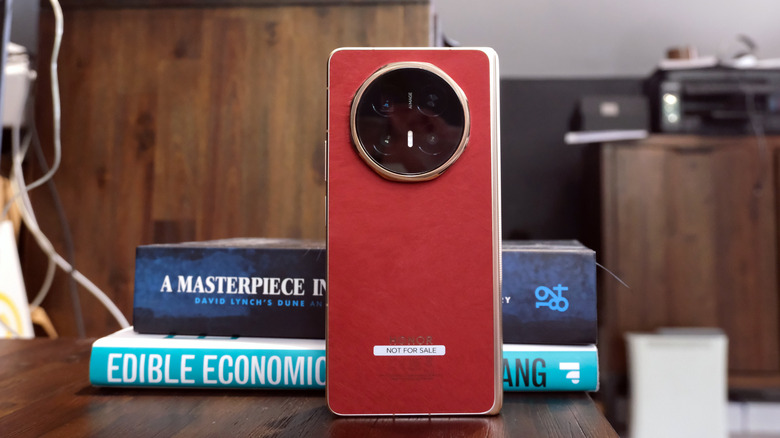
If I sound down on the Magic V6, it's because I can see how much potential this handset has. I cannot find fault with any element of the hardware, and I think Honor really has built a mechanical marvel that threads the needle on the V5. The tragedy of this device is that you can throw a rock and hit an issue with the UI design or software that you would expect to have been caught during the QA period. Some of these would be forgivable in a cheaper handset, but not in an ultra-premium flagship of this caliber.
In every other regard, I'm a fan, especially of how sturdy and strong this handset feels in daily use. As much as you can't start flinging review units out of windows and seeing what happens, I've not babied the V6 in my daily use. This included flinging it into a backpack and hoping it'll survive next to a bike helmet separated only by a millimeter-thick piece of polyester cloth. The battery life too is a thing to behold, and this handset has soothed my battery obsessiveness far more than I was expecting. Those things make a good phone, but it's one that's achingly short of greatness.