

Future Hyundai and Kia cars might never need air fresheners thanks to UV tech
The companies have unveiled a sanitization system called Plasma Care.
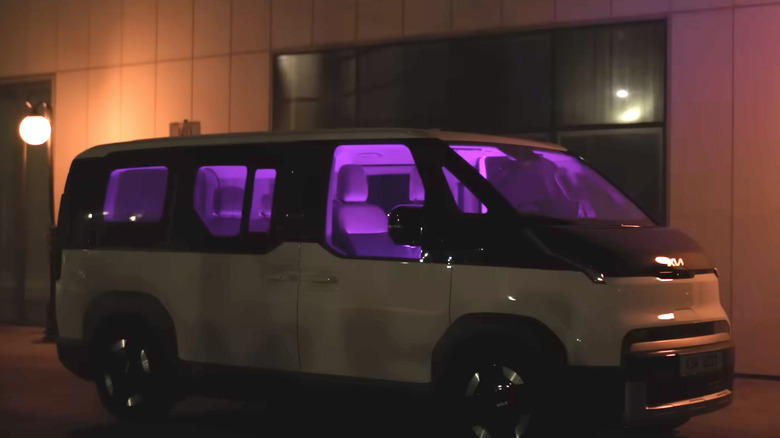
Hyundai and Kia recently introduced a new UV technology for in-vehicle sanitation called Plasma Care UVC. The system reduces bacteria in the cabin and can even operate while passengers are present.
The companies say the technology is especially useful for eliminating foul odors, as it kills the actual organisms behind the smells. In any event, it's likely better than one of those hanging air fresheners that have been making cars smell like off-brand coconut for decades.
This is all done via the use of a plasma lamp that creates far-ultraviolet C (Far-UVC) light. This light is emitted in the 200 to 230 nanometer range, which doesn't penetrate human skin but does destroy bacteria and viruses. Conventional ultraviolet sterilization can pose a risk to human skin and eyes. There's a reason why this Far-UVC tech is typically used in places like airplane bathrooms between visitors.
There were also other hurdles to putting this type of technology in vehicle cabins. Kia and Hyundai had to optimize the system by reducing its size and improving power efficiency. Far-UVC systems designed for schools and hospitals couldn't be used here, for size and power draw reasons.
Finally, the companies added a specialized optical filter for more protection. This limits the ultraviolet wavelengths to the aforementioned range. All in all, this looks like a fairly novel way to prioritize sanitization.
Hyundai and Kia conducted a battery of tests to make sure the system could actually work as advertised. There was a sanitization evaluation with a simulated vehicle cabin, which was conducted by the Korea Testing Laboratory. This confirmed a 96.8 percent reduction in airborne viruses within 30 minutes.
Another test determined that the Plasma Care UVC eliminated 99.9 percent of pneumonia-causing bacteria in just 30 seconds. The companies partnered with Seoul National University for that one.
Final tests in collaboration with the Korea Automotive Technology Institute found a 99.9 percent eradication of E. coli within 40 minutes. This was done in an actual vehicle cabin, thus potentially demonstrating real-world performance.
As this is a new technology, it's not actually in any cars just yet. Tests are ongoing to ensure "technical validation in line with international safety standards prior to implementation in production vehicles."
It is worth pointing out that UVC sanitization tech does have its limits. It only disinfects via direct illumination, as light must reach the physical surface of the contaminant. This means that germs and bacteria will still be able to hide in the shadows or under the seats. Also, certain pathogens can repair themselves after exposure to UVC light. In other words, this is best thought of as an assistive technology to be used in conjunction with regular cleaning.