

Chinese solar company says its new cell has an efficiency of 35.5 percent
Commercial solar cells only have a conversion efficiency of around 25 percent.
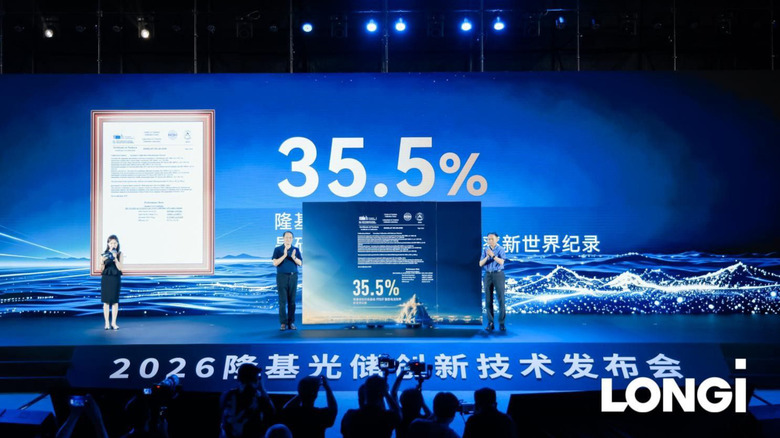
Chinese company LONGi has developed a solar cell that it claims has achieved a conversion efficiency of 35.5 percent, as verified by the European Solar Test Installation, a reference laboratory for the calibration of photovoltaic (PV) devices. That's an impressive conversion efficiency compared to what most solar cells are capable of. According to the US Energy Information Administration, the solar cells in commercially available panels are just now approaching a 25 percent efficiency. There are cells with a conversion efficiency of 50 percent, but they're for niche uses, like solar panels for satellites.
The company specifically developed crystalline silicon-perovskite tandem solar cells. They're an emergent PV technology that LONGi believes is the future of solar energy. Theoretically, these cells could achieve an efficiency of 43 percent. LONGi first achieved an efficiency of 33.9 percent in November 2023 and then 34.6 in June 2024. After several more incremental increases, the company is now claiming an efficiency of 35.5 percent.
LONGi says it holds the world record for efficiency when it comes to this particular PV technology. That said, the US Department of Energy's National Renewable Energy Laboratory developed a solar cell with an efficiency of 39.5 percent back in 2022. In the grand scheme of things, who holds the record matters very little for most people. What matters is finding a way to mass produce and commercialize cells with these efficiencies so that they can help address humanity's energy problems.