

Samsung Galaxy Z Flip 8 hands-on: Slightly thinner, but more expensive
It’s a year of minor upgrades for the Z Flip series.
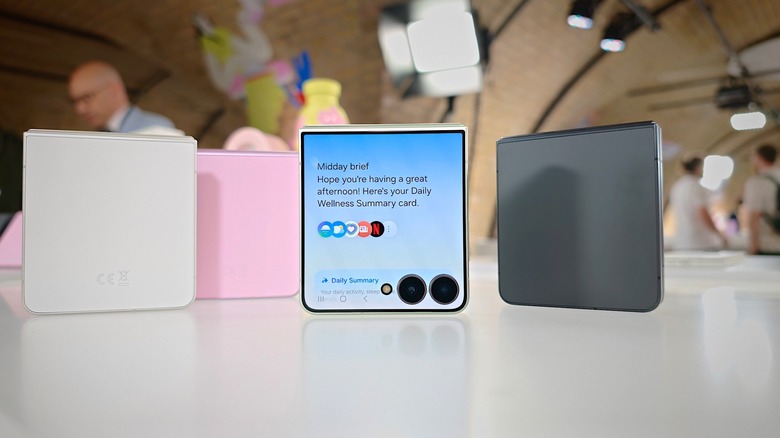
With no fewer than three new foldables, Samsung's newest pocketable Flip runs the risk of living in the shadow of the Fold 8 Ultra and the redesigned Fold 8. Once again, Samsung's gone for iterative improvements — some welcome, some less notable. It also arrives amid higher electronics prices and RAM shortages: the Z Flip 8 is $1,200, 100 bucks more than last year's Samsung flip phone.
This is the company's thinnest and lightest Flip smartphone yet. It's 6.1mm thick unfolded, 13.1mm folded and weighs 6.35 ounces (180g), although those are relatively small improvements on last year's 6.63-ounce, 6.5-mm Z Flip 7.
Samsung is leaning into pocketability for its new Flip. Alongside those size reductions, the Flip 8 now has substantially more beveled edges. Even during my limited preview time, these are particularly useful in this form factor for opening the phone single-handed, especially with its noticeably stronger hinge.
Screen-wise, Samsung's newest Flip 8 hasn't changed much. There's been no boost in screen brightness, with the Fold 8 Ultra maxing out at 3,000 nits.
The Z Flip 8's cameras match its predecessor's specs, too: a 50-megapixel primary camera and a 12MP ultrawide. Samsung has added a horizontal lock to the camera, which should help keep video footage looking more uniform, especially if you're capturing it with a camcorder-style grip.
The company has also introduced a new MyFan cam feature, an AI post-processing mode that lets you choose one person to track throughout video footage. You can choose the screen ratio the video outputs to, helping scale the person you're tracking within the footage. Since it affects existing clips, you'll be able to generate different MyFan cam videos for different people in the same video. For now, it can only track and crop human subjects.
Another software addition is mirror mode, which uses the front display. This crops into the camera sensor while it's facing the user so that they can see their face in more detail, and at a higher frame rate. Samsung says it designed the mode for Flip 8 users who might use the selfie cameras to apply makeup. You can even take a temporary shot in this mode (the image is saved on-device), pinch to zoom in, then return to the digital "mirror."
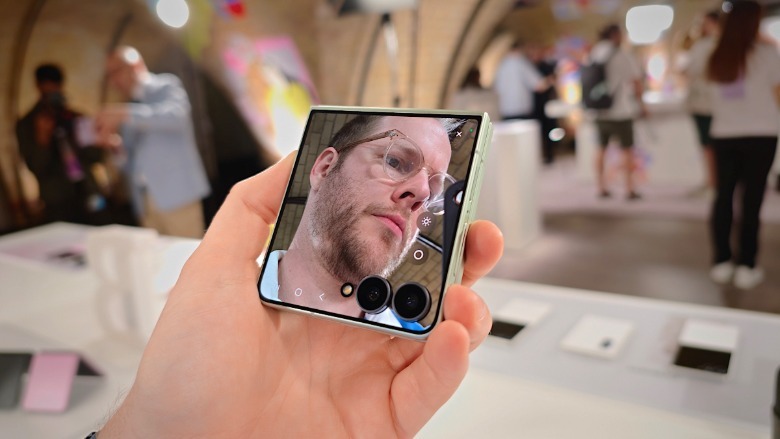 Mat Smith for Engadget
The Z Flip 8 is powered by a Qualcomm's Snapdragon 8 Elite Gen 5 for Galaxy. However, in some regions (including the UK) it will have Samsung's own chipset, the 2nm Exynos 2600, which was inside the Galaxy S26 and S26+ phones released earlier this year. While the company's homemade chips have improved in recent years, it's frustrating that it won't offer more powerful (Qualcomm-made) chips worldwide. You're also getting the same-sized battery in the Galaxy Z Flip 8 as last year's Flip 7, although it's a silicon-carbon battery this time around, which explains the reduction in thickness.
Cover screen upgrades
There are a smattering of software improvements, and Samsung is addressing what many of us want: more functionality to the Flip series' front display. This includes Now Brief improvements, its own dedicated app tray with recently used apps and entirely customizable panels. It doesn't reach the functionality of the half-sized Android experience you get on, say, Motorola's recent flip phones, but it does lean further into Gemini.
You can use more sophisticated Gemini features from the front display, assigning it agentic and automation tasks, such as booking a vacation based on a picture of a region. My demo involved a picture of the Eiffel Tower, triggering research and booking a hotel in the background. It will then notify users with a final price and details of the prospective itinerary. I'm not sure many of us are prepared to relinquish vacation decision-making to Gemini AI based on a picture and wishful thinking, but you can.
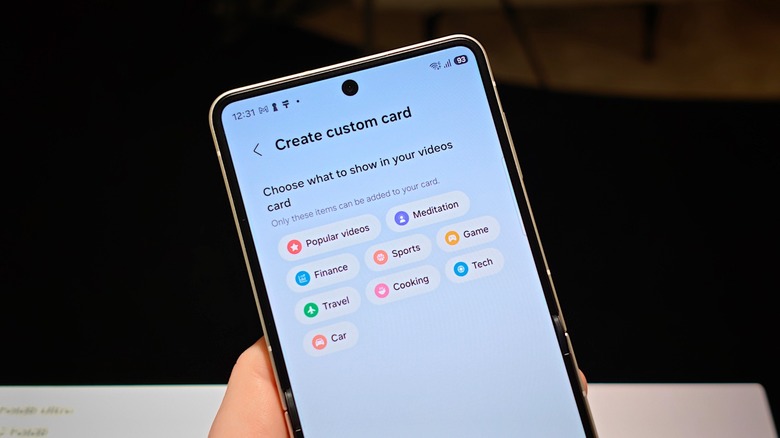
Now Brief is richer, too, with a greater ability to add customized cards to your daily (or twice daily) brief of news, notifications and more. Custom card options are separated into three categories: health, weather and videos.
While that may sound a little limiting (Why no news customization? Social media summaries?), there's some degree of flexibility; you can choose at what time to include these custom cards in your Now Brief, as well as cadence. For example, if you want YouTube highlights only on weekends, when you have time to go down that rabbit hole of the science behind the Pringles can design and learn what a hyperbolic paraboloid is, you can set it up that way too. You can also choose to include meditation videos, which sound like a smart addition to your daily summaries.
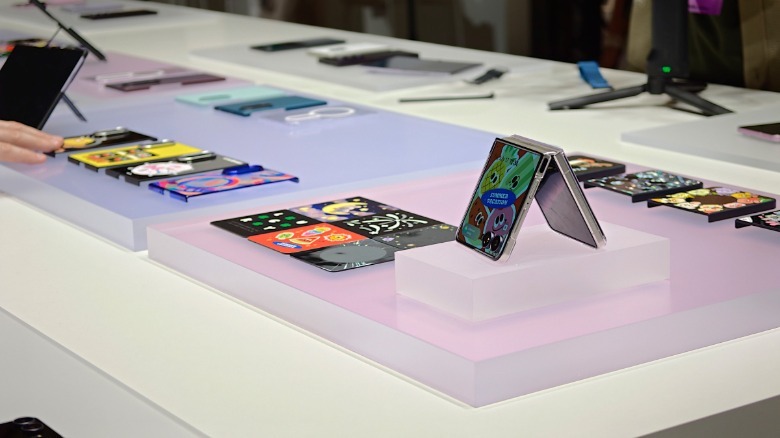 Mat Smith for Engadget
The Z Flip 8 is priced at $1,200 and will land in four different colors: pink, cream, graphite and the online-only (nicest!) mint. There will be 256GB and 512GB storage options, and buyers will also get six months of Google AI Pro to test out Google's agentic AI in practice. The phones are available for pre-order now, and go on sale August 7.
Update 7/31/2026 10:55AM ET: We've updated the information regarding the Z Flip 8's hinge, which isn't Flex Titanium like the Z Fold 8 models. Also, the Z Fold 8 Ultra maxes out at 3,000 nits of brightness, not 2,600 nits as previously reported. Apologies for the error.