

Colorado thinks it found the answer to EV battery recycling's biggest challenge
The state is shifting responsibility to someone new.

Electric vehicles (EVs) are still the future, despite the best efforts of the current US administration. Cheaper fueling, lower lifetime emissions and less routine maintenance mean adoption will keep growing, even if gradually. But there's a looming problem that doesn't always get much attention: what to do with used EV batteries, which have a heavy carbon footprint during production and can create logistical headaches at the end of their lives. Colorado's answer could serve as a blueprint for other states.
A Colorado law signed in June (SB26-003) makes automakers responsible for collecting and processing unwanted EV batteries. It also bans landfills from accepting them starting in July 2029.
The math problem
There's still no single national framework for handling end-of-life EV batteries. Colorado is one of the first states to address the problem, and it goes further than other states by setting specific targets for recovering minerals. Colorado is also a natural testbed, with over 200,000 EVs already on the state's roads.
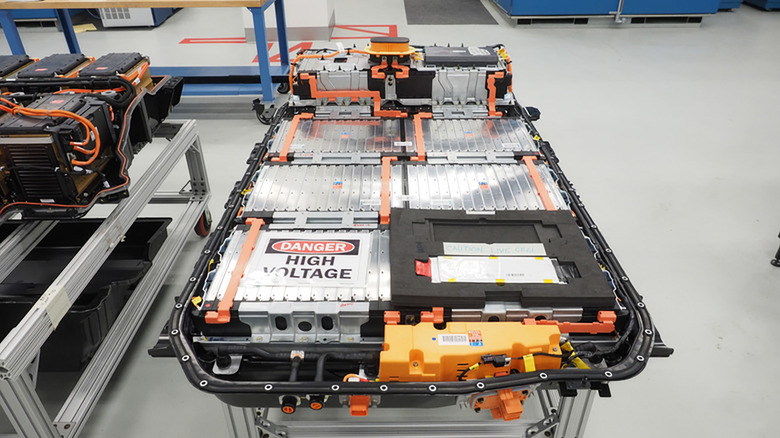
Used EV batteries contain valuable minerals like lithium, nickel and cobalt — all of which are recyclable. But the batteries are extremely bulky and heavy, with some tipping the scales at more than 1,000 pounds. If a salvage yard can't sell one, it may be left with two bad options: leave it in storage or pay thousands of dollars to ship it to a recycler.
Scale is another factor. While large automakers and battery recyclers can spread out shipping and processing costs over larger volumes of batteries, smaller scrapyards are another story.
"You have got to do something with these batteries," says Norman Wright, owner of Stadium Auto Parts in Commerce City, Colorado, according to CPR News. "If they can't be reused or remanufactured, it ends up here. And what do we do with it?"
Make
Colorado's law addresses that by going back to the source. Automakers have to create a statewide system for collecting and handling unwanted EV batteries. If one lands in a scrapyard or other business, the manufacturer has to make sure it's properly managed. That approach helped the bill win support from environmental groups, auto recyclers and even the automakers themselves (likely because it's less stringent than the EU's model).
Battery production is still the big shadow hanging over electric vehicles' carbon footprint. Plug-ins tend to come out ahead of gas cars over their lifetimes, but making their batteries requires a lot of energy, water and mining. The International Energy Agency estimates that battery recycling could provide 20 to 30 percent of the required lithium, nickel and cobalt by 2050. Keeping those materials in circulation means less new mining and cleaner supply chains.
Other states, including New Jersey, have passed laws requiring end-of-life battery management. But Colorado's is the first to set specific recycling targets for critical battery minerals. By 2031, Colorado's recyclers will have to recover at least 90 percent of the cobalt and nickel in EV batteries, along with 50 percent of the lithium. By 2035, the lithium target jumps to 80 percent. These requirements could become even more important as automakers switch to cheaper battery materials that are less profitable to recycle.
"Producer responsibility just means that the people making the trash — or whatever we're considering the trash, the thing we're disposing of — have to take responsibility for recycling it and for taking care of end-of-life," says the bill's co-sponsor, Colorado state Sen. Lisa Cutter, according to NPR. "There's not a magic trash fairy," she added. "We have to plan for these things."
Colorado's law won't make every old EV battery valuable or erase the logistical headaches involved in recycling them. But it does create a safety net: If an EV battery has nowhere else to go, the onus is on the manufacturer to deal with it.