

2026 Lexus ES 500e first drive: A classy sedan with a slow charge
The luxury sedan is priced right and drives great, but feels like it’s built around outdated EV tech.
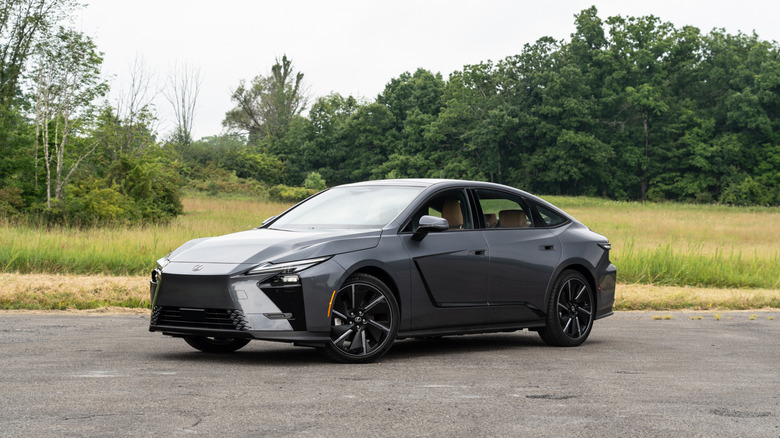
When Lexus sprang onto the American car scene in 1989, Toyota's assault on the luxury car market began with the LS sedan. Staid in design but effortlessly cool and absolutely bulletproof, it became something of an icon for the brand.
Today, with sedan sales at an all-time low, the LS is sadly dead. That means the smaller, more attainable ES needs to fill the void by doing more things for more people than before. As part of that effort, it's now available in your choice of hybrid or all-electric powertrains. We all know what happens to those Jacks that try to do everything, and while the new ES does have some unfortunate shortcomings, it's still a remarkably good EV.
Choices, choices
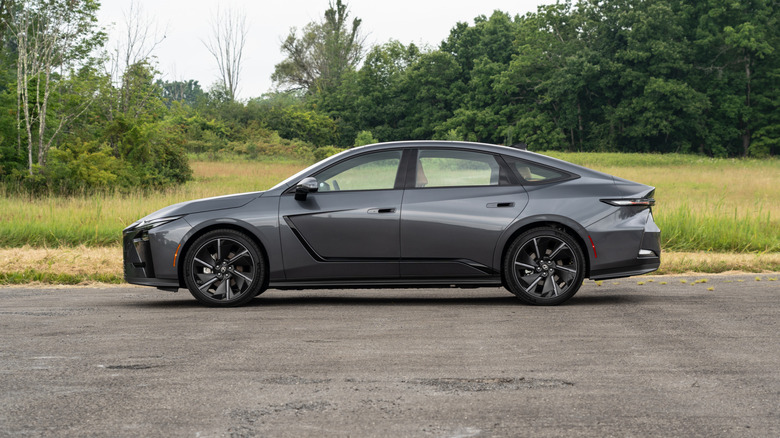
The 2026 Lexus ES is a very different proposition than those models that came before. With the bigger LS out of the picture, the ES has gained roughly 6.5 inches in length over last year's model, with much of that space going into bolstering rear-seat legroom and trunk space. It's far more roomy and commodious than before.
But the bigger story is the wealth of powertrain and configuration options newly on offer. If you prefer combustion, the entry level is the ES 350h hybrid model, with 244 horsepower and a starting price of $51,095. It comes with either front- or all-wheel drive.
We're going to mostly focus on the all-electric model, though, a new offering from Lexus and the company's most compelling EV yet by a mile. The electric ES is available in two flavors: the single-motor, 221-horsepower ES 350e, starting at $48,895, and the dual-motor, 338-horsepower ES 500e at $51,895 and up.
That's right, the electric 350e is cheaper than the hybrid, and nicer to drive.
Mid-ranger
Both the ES 350e and 500e feature the same 74.7-kilowatt-hour battery pack, which isn't particularly large for a luxury sedan of this size — more significantly, of this weight. The ES 500e in Luxury trim weighs nearly 5,000 pounds, about 1,000 more than the base hybrid.
The net result is 307 miles on the charge for the single-motor ES 350e, or up to 276 miles for the ES 500e, depending on configuration. That's hardly class-leading, a factor that's sadly exacerbated by slow charging. The ES maxes out at just 150 kilowatts, less than half the speed of Mercedes-Benz's new C-Class Electric and well behind most EVs in this class.
These were the numbers floating through my head as I prepared for my first go behind the wheel of the new ES, and while I was ready for disappointment, I walked away pleasantly surprised.
A welcoming space
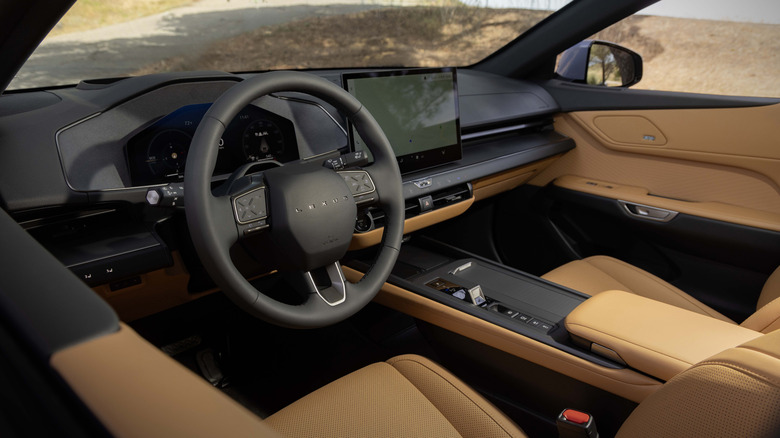
The base price for an ES 500e puts it within spinning distance of a dual-motor Tesla Model 3, a sedan with a decidedly cut-rate interior. By comparison, the inside of the Lexus offers opulent comfort and luxury. The car I drove was the entry-level Premium trim with just a few options, yet when it came to the basics of materials, colors, and overall design, its interior really impressed.
I'm not always a fan of black-and-tan upholstery schemes, but I loved the look here, especially the subtle texture added to the door cards. I also enjoyed the way some controls are subtly integrated into the dashboard, things like temperature controls and lighting, with buttons that shine through the wooden veneer. You won't find much in the way of traditional buttons here, nor an old-school volume knob, but the roller mounted centrally in the dashboard is very nearly as good.
Touch-friendly
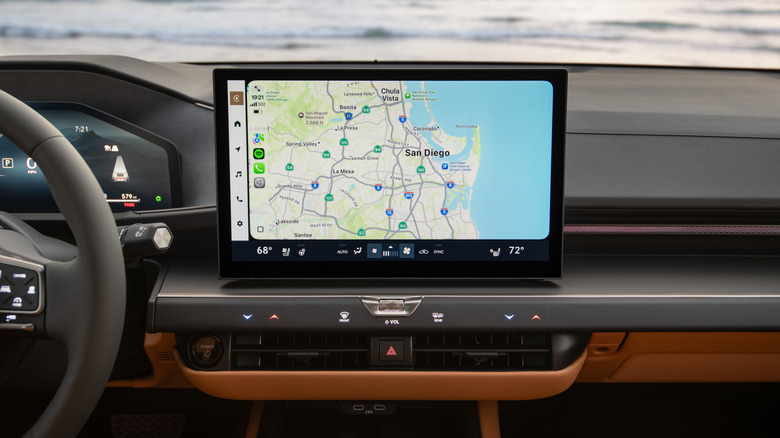
The primary interface of the ES is a 14-inch touchscreen that cleanly integrates into the dash and is easily reached. That's paired with a 12.3-inch digital gauge cluster behind the wheel, featuring several different views and levels of information. That display is nestled in a sort of recessed, microfiber-lined nook that adds another unique element to this classy interior.
Pair your phone for wireless Android Auto or Apple CarPlay, and you can pull that map view into the gauge cluster if you like, leaving the central touchscreen free for media playback or whatever else.
I was a bit unimpressed by the sound system on the Premium trim, a middling 10-speaker unit. Buyers with audiophile aspirations may want to spend the extra for the 17-speaker, 1,800-watt Mark Levinson system on the Luxury edition.
The software interface is an updated version of what we've seen on the Lexus before, similar in look and feel but still quick and responsive enough and with a reasonably competent voice assistant.
Drive time
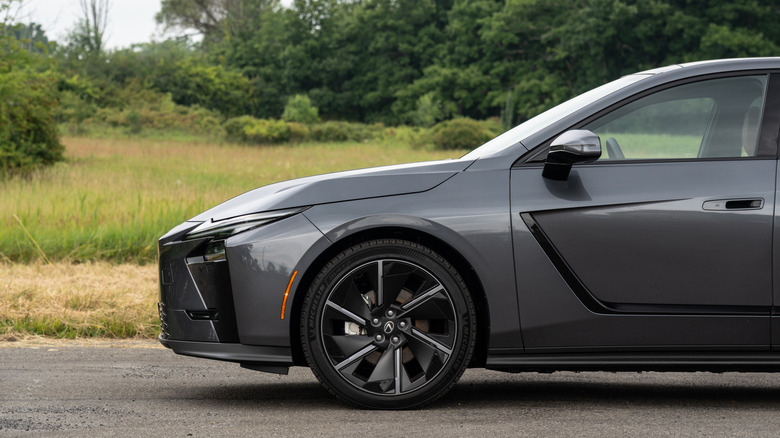
When it came to the ES's software, I only had one real complaint in my time behind the wheel: There's no way to change the car's drive mode from Normal to Sport or a custom mode without diving through two sub-menus. That feels like a serious UI misstep, but perhaps it's better seen as an indicator that the car's designers really didn't expect drivers to bother.
In Sport mode, the ES 500e is reasonably quick, officially rated for a 5.1-second 0-to-60 mph time, but it's hardly eye-opening by modern EV standards. The steering also gets unfortunately firm in that mode, and the car picks up a subtle fake engine noise. Given there's no adaptive suspension on offer, there's really not much reason to change from the car's default mode.
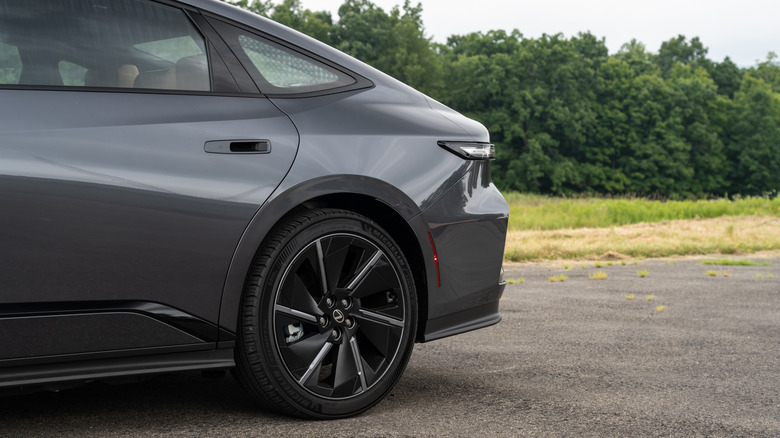
That's how I spent most of my time driving, focusing more on ride quality and comfort than cornering speed and handling. The ES really shines when driven in a relaxed way, and that's how you'll go the farthest on a charge. Despite more than a few acceleration tests and a run up the highway, I saw an efficiency rating of 3.8 miles per kilowatt-hour in my time behind the wheel. That equates to a theoretical 284 miles from the 74.7-kilowatt-hour battery pack, 12 more than this car's official 272-mile rating with the optional 21-inch wheels.
You can feel the ponderous weight of that battery pack over bigger bumps, as this lengthier sedan can sometimes take a moment or two longer than it should to stabilize. But most of the time the result is a super-smooth, calm driving experience that I really enjoyed.
It's quiet, too, even for an EV. Wind and road noise are barely perceptible. Combine that with the stylish interior trimmings and the laid-back handling, and after a few hours in the ES I stepped out feeling refreshed and stress-free.
Wrap-up
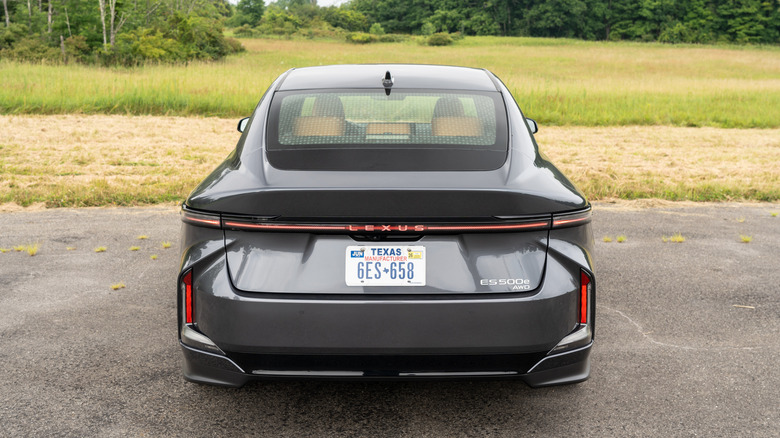
The new ES's biggest burden is Toyota's middling EV technology offerings, which mean limited range and charge speed compared to the competition. The lack of a proper one-pedal regenerative braking mode is also a disappointment. Still, Lexus has made the most of it, creating a compelling sedan that looks great both inside and out and offers a driving character to match.
I found myself liking the ES far more than I thought I would, and after a brief drive in the hybrid model, I was even more convinced that the battery-powered version is the way to go. The fact that it's available for even less money just seals the deal.