

How Samsung's Galaxy Watch 8 measures your antioxidant levels
We think it's kind of neat.
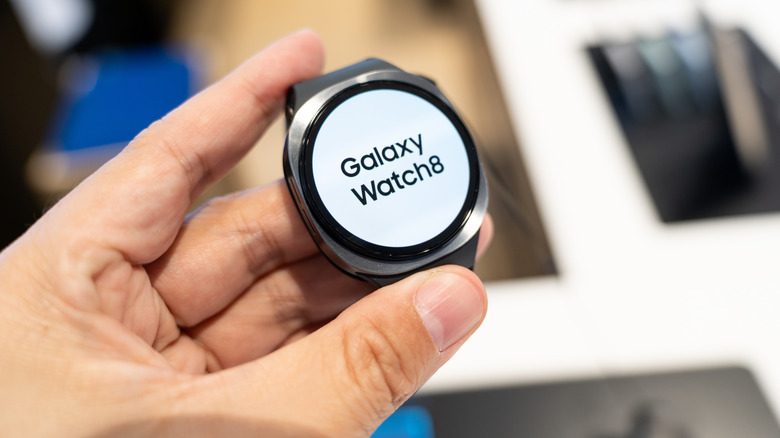
Samsung's Galaxy Watch 8 can already track your heart rate, sleep and workouts. But that's not enough information about you, apparently. Its Antioxidant Index turns a five-second thumb scan into a score from 0 to 100.
The watch isn't measuring all of the antioxidants in your body. Instead, it estimates carotenoids, pigments with antioxidant properties found in yellow, orange and green fruits and vegetables that can build up in your skin. Samsung uses that reading as an indicator of fruit and vegetable intake, though the company says UV exposure, alcohol and stress can also affect the score.
How the sensor reads your skin
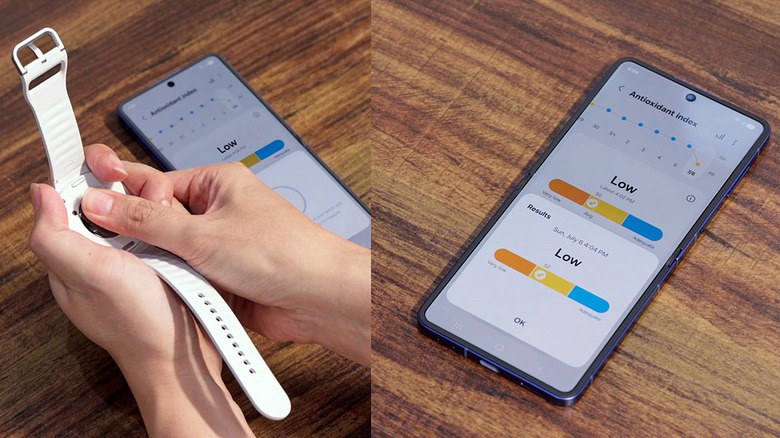
To take a measurement, remove the Galaxy Watch 8, open Samsung Health on the watch, select Antioxidant Index and tap Measure before pressing your thumb against the BioActive Sensor on the back. Samsung says the sensor uses multi-wavelength absorption spectroscopy to analyze how different wavelengths of light are absorbed and reflected by the skin.
It's a lot more dramatic than pressing your thumb to a smartwatch. In practice, the sensor uses yellow, blue, purple and green LED light to illuminate your skin; carotenoids absorb certain wavelengths more strongly (blue is the most important here) and photodiodes detect the light that reflects back, allowing Samsung to estimate the concentration of carotenoids and calculate an Antioxidant Index score.
The thumb wasn't selected just because it fits well over the sensor. Melanin and hemoglobin can interfere with optical measurements, Samsung says, so finger skin helps minimize melanin interference while pressure from your thumb temporarily restricts blood flow, reducing interference from hemoglobin.
How accurate is the Galaxy Watch 8's Antioxidant Index?
Samsung says it validated its sensor against Raman spectroscopy, a lab technique used to measure skin carotenoids, and compared readings with blood tests, food logs and clinical data from several hundred participants. Separately, a 2023 randomized controlled trial involving Samsung researchers also found a strong correlation between reflection spectroscopy and Raman spectroscopy when measuring skin carotenoids.
But there's a big caveat. Samsung has not published a simple consumer-facing accuracy percentage or margin of error for the Galaxy Watch 8 feature, and it says Antioxidant Index isn't intended to diagnose or treat medical conditions. Think of the score as another health trend to monitor, rather than a blood test wrapped up in a little computer on your wrist.
The number can be stubborn, according to Engadget's Galaxy Watch 8 review. After Amy Skorheim deliberately changed her diet for a day, her score dropped by two points. On subsequent days, her readings ranged from 56 to 60.
Samsung's current US comparison chart doesn't list Antioxidant Index for the Galaxy Watch 7. It does list the feature for the Galaxy Watch 8, Watch 8 Classic and Galaxy Watch Ultra (along with the newer Watch 9 and Ultra2), but Samsung hasn't specified why the Watch 7 misses out. The company says it usually takes two to three weeks for carotenoids from food to build up in the skin to detectable levels.