

Here's why you should think twice before storing your electronics in the garage
Moisture and extreme temperatures are the last thing electronics in storage need.
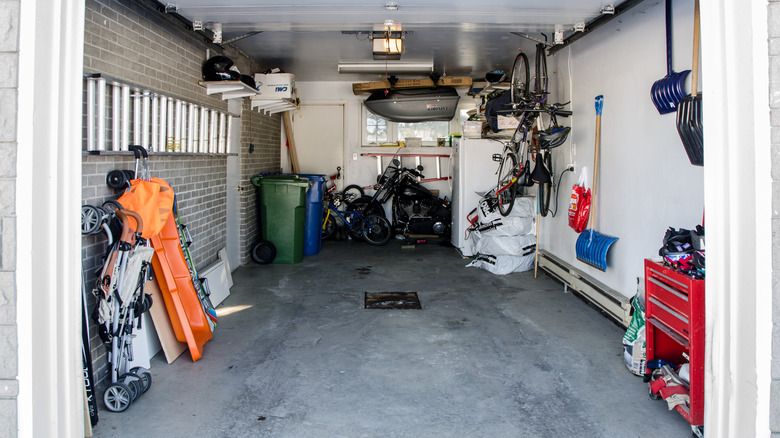
To most, the garage seems like a fairly sensible place for storing electronics. There's usually plenty of room for unused TVs, old laptops, game consoles, boxes of cables or spare monitors so they aren't taking up space in the main part of your house. However, storing your electronics in the garage may be a slow and brutal way of turning them into paperweights, depending on where you live and the state of your garage.
Most garages throughout the US lack climate control simply because it's the default safety position. Because carbon monoxide or other dangerous gases could potentially enter the home through linked ductwork, most state and local building codes treat garages like the orphan of the home. Worse, most garages aren't insulated and they tend to have a greenhouse effect, often 10 to 18 degrees hotter than the outside temperature. For example, the southwest's dry heat can accelerate battery aging, and in some areas produces rapid, large temperature swings in the evenings.
No matter where you live, humidity can corrode contacts and solder joints and create condensation inside devices. Of course, this isn't to say every garage will destroy every gadget. A tightly sealed, insulated garage in a mild climate presents a relatively low risk. Still, as a general rule, you should never store electronics in a garage unless its climate-controlled, or the environment consistently remains within the manufacturer's recommended storage conditions.
What's the best way to store electronics long-term?
The best answer is to store them in a climate-controlled environment, likely inside your home where space is available. Before putting anything away, you should always back up important data, remove any disposable batteries and charge any rechargeable devices periodically. Most devices have some form of manufacturer recommendations for long-term storage. For instance, Apple recommends storing a MacBook in a cool location with its battery at 50 percent.
If the garage is your only realistic option, there are a few things you can do to help mitigate the risk. Use rigid, sealed weatherproof bins, not a basic Tupperware container or cardboard boxes. Place silica desiccant packs inside the container and wrap any delicate hardware in anti-static bags. Don't place bins on a concrete floor either. Instead, place them on a shelf or somewhere that's elevated. Lastly, avoid sealing up the device in the presence of moisture. For example, if it's hot and muggy outside, seal the device inside, where it's cool and dry.
A set of humidity sensors is handy as well. Place one near the storage bins and monitor the temperature and relative humidity sensors throughout the hottest and coldest months of the year. If it gets really hot outside, especially for a prolonged period, move the equipment indoors or strongly consider climate-controlled storage somewhere else.
Will a TV get ruined in a cold garage?
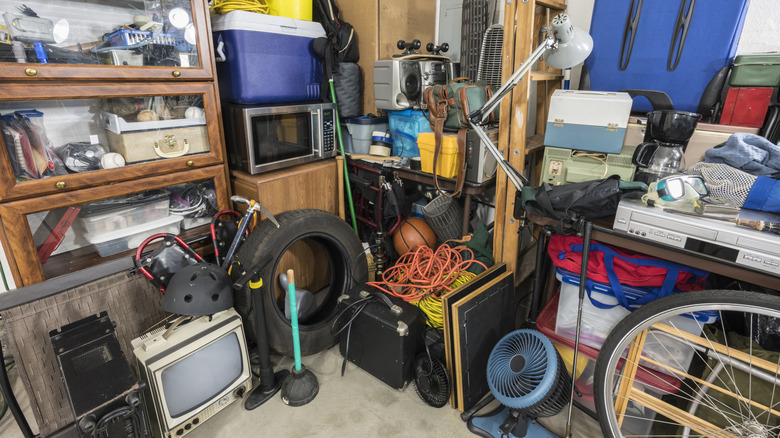
Not necessarily. But it also depends on your definition of cold: Mississippi cold or northern Minnesota cold? Most TVs can handle a cold snap so long as the temperature remains within its manufacturer-recommended storage ranges, and it stays dry. It's the freezing conditions that create issues, especially a rapid, significant temperature swing. Plus, you should never bring a chilly TV inside, plug it in and turn it on immediately.
Give it time to sit and return to room temperature so any interior moisture has time to evaporate. The same logic applies to computers, cameras, printers, routers, speakers and any game consoles, vintage or otherwise. Check the manual on each item, or pull it up online because acceptable storage conditions vary. Most manufacturer guidance permits a little more leeway with storage versus operating conditions, but nearly always calls for a moisture-free environment.
Humidity is a big issue in coastal areas and the southeast throughout the cold months. A winter in Outer Banks, North Carolina is more brutal on electronics in the garage than a winter in Las Vegas. Moisture exposure is anathema to electronics whether it's hot or cold outside, and coastal regions are perpetually humid. A sealed desiccant is helpful in either climate, but it's always a good idea to stick with a stable humidity range, if possible.