

Here's how Nintendo missed the mark with the GameCube console
A swing and a miss.
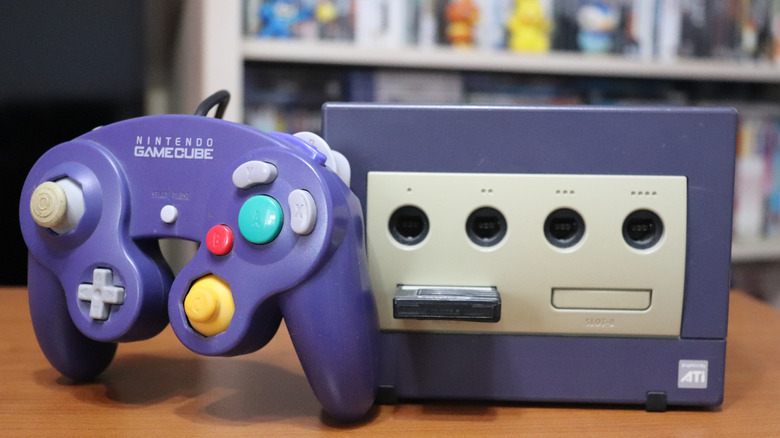
When looking back across the annals of gaming history, some consoles are beloved (Nintendo Entertainment System (NES)), panned (Google Stadia) or woefully ahead of their time (the we-almost-had-it-all Sega Dreamcast). And then there are those systems that are frankly just weird and polarizing, like the Nintendo GameCube. Laden with the dubious honor of being Nintendo's second worst-selling console with only 21.74 million units, the GameCube is only outdone by the Wii U (and the Virtual Boy, if you want to get technical).
For me, the GameCube was such a spectacular failure that it was the last Nintendo console I owned until the Switch debuted. To be fair, there were some things that I liked about the console, such as the design and one or two games. However, a fun blurpleberry color and a nifty handle weren't enough to stem the tide of descent. A dearth of games, an over-reliance on first-party titles and the lack of a DVD player were just a few of the things that doomed GameCube to commercial failure.
But let's take a walk down memory lane to examine exactly where the GameCube went wrong.
Childish design and weird button placement
This one stings a bit as I actually liked the GameCube's design. With the integrated handle, the GameCube was one of the more portable home consoles of its era. It had eye-catching colors and its compact build meant it could fit in most entertainment centers with little fuss. It was also one of the last consoles to offer local four-person multiplayer, making it perfect for games like Super Smash Bros. Melee, Mario Kart: Double Dash!! and the four Mario Party titles that appeared on the system.
Those fanciful colors weren't as popular as Nintendo had hoped. The kids who grew up with Super Mario Bros. and Legend of Zelda were now either teenagers or young adults who wanted consoles to match their maturity. As a result, the GameCube, with its diminutive dimensions, was knocked for looking more like a toy than a console.
 TheRainstep/Shutterstock
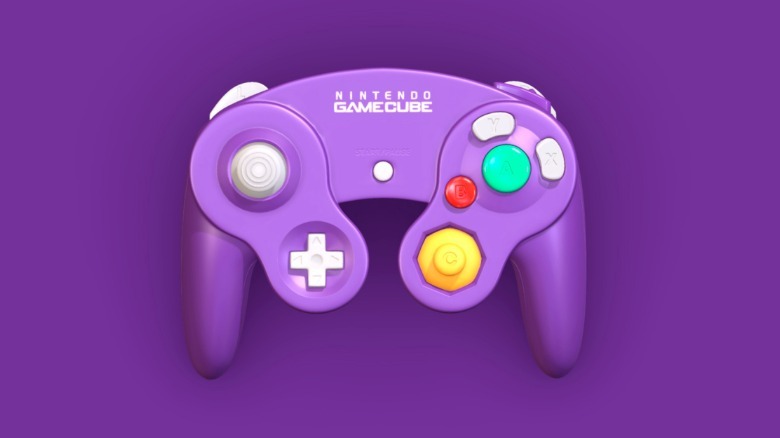
The GameCube's controllers also stoked the flames of discontent. The smallest of that era's controllers, some gamers on Reddit complained about the layout of the buttons and their unconventional shape. The A button was huge in comparison to the B, X and Y buttons that sort of orbited around it. This was fine for games like Smash, but it was awkward for other titles. The tiny d-pad, single shoulder button and missing select and second analog stick were common complaints on Reddit forums. And of course, games felt as awkward to play as the controller looked.
The wrong disc format
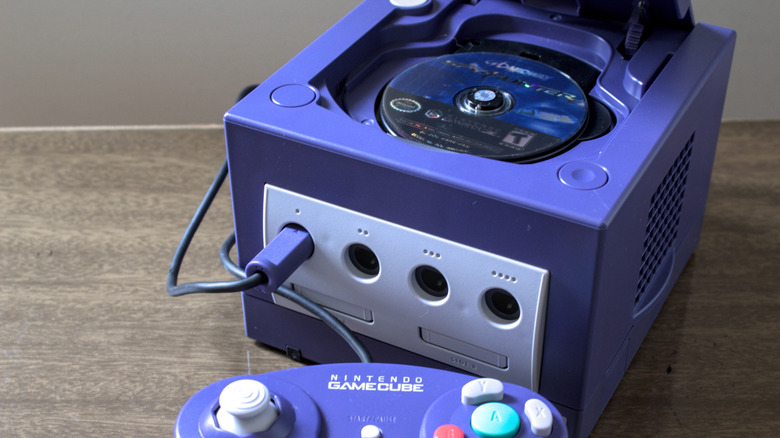
A cutesy box got a disc to match. Where the PlayStation 2 and Xbox used DVDs to store their games, GameCube and Dreamcast took a left turn at Albuquerque. Nintendo went with the GameCube Optical Disc format, while Sega chose GD-ROM. These decisions were made in large part to combat piracy while avoiding licensing fees from the DVD Forum and DVD FLLC (Format/Logo Licensing Corporation).
However, the decision proved to be one of the nails in the coffin for both Nintendo and Sega. Sony and Microsoft utilized both single-layer and dual-layer DVDs, which held 4.7 and 8.5GB of data, respectively. Compare that to the 1.47GB and 1.2GB of the GameCube and Dreamcast. This is why, outside of certain titles, you saw far fewer multi-disk games on PlayStation 2 than on the PS1. The Optical Disc's limited storage posed major problems as video and audio files take up a massive amount of space. The lack of space forced Nintendo to compress these files, which made for muddy-looking cutscenes and lower audio quality. In some cases, this content was seen on Xbox and PlayStation, such as extra missions in Tom Clancy's Splinter Cell and Resident Evil 4.
Those weird formats also shut the GameCube and Dreamcast out of a lucrative revenue stream as built-in DVD players. My DVD collection exploded once I learned I could play movies on both the PlayStation and Xbox when I wasn't gaming.
Third-party devs and publishers took their ball and went home
Whew. Even though Nintendo and Sega were known for gaming, that didn't mean they played well with others, especially when it came to third-party developers and publishers. Although the GameCube had approximately 600 third-party titles over the course of its lifespan, many major developers skipped the console due to its Optical Disc format, including Rockstar Games, EA Sports and Square Enix, initially.
And in what proved to be a devastating blow, Rare Ltd. left Nintendo in a breakup almost as shocking as the Justin Timberlake and Britney Spears split. That meant that games like Perfect Dark, Conker, Banjo-Kazooie sequels and the Killer Instinct series all jumped to Xbox. Dreamcast also got the kiss-off from Rockstar, EA and Square Enix. Eidos Interactive also said adios, taking the Tomb Raider and Deus Ex series with it.
 Jonathan Sippel/Shutterstock
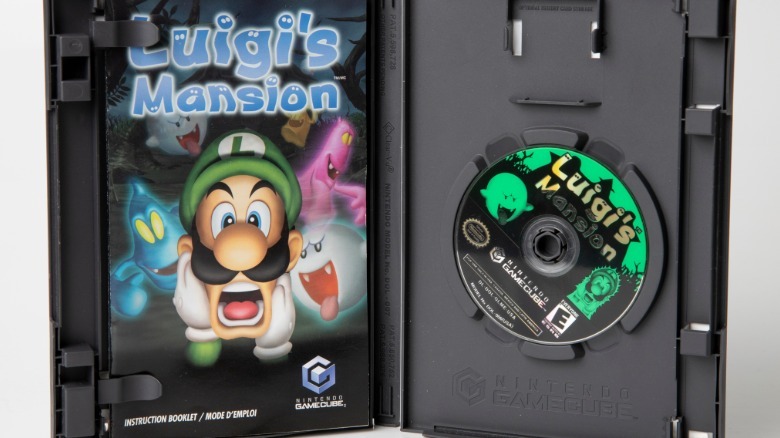
The result left both consoles leaning too heavily on their first-party titles. And while Nintendo has strong performers such as Mario, Zelda and maybe a Kirby or Metroid game thrown into the mix every now and then, those games launched too infrequently to keep a console afloat. But wait, Nintendo had none of those games ready at launch. Instead, the company offered up such titles as Super Monkey Ball, Tony Hawk's Pro Skater 3, Star Wars Rogue Squadron II: Rogue Leader and Luigi's Mansion. That last one is a cult classic now, but at the time, Luigi with no Mario was an absolute no-go. And I'm not touching the brouhaha The Legend of Zelda: The Wind Waker created.
The Dreamcast had it even worse, as Shenmue, Crazy Taxi, Jet Set Radio and Sonic Adventures do not a console make.
Nintendo was late to the online services game
The final nail in the GameCube's colorful coffin was the lack of online services. While PlayStation Online and Xbox Live were rudimentary at best, at least the companies saw which way the wind was blowing and set sail. Even Sega saw the writing on the wall as Dreamcast was the first console to dip its toes into online waters.
Not Nintendo. Sure, you could plug it into your router to play Phantasy Star Online or set up some funky LAN play for Mario Kart: Double Dash!! But you didn't get true online services until Nintendo Wi-Fi Connection in 2005. It was a mind-boggling choice at the height of the internet era. GameSpot noted that Satoru Iwata, Nintendo's president at the time, told the Japan Economic Foundation's magazine, Japan Spotlight, that consumers didn't want to pay more for online games or even the internet services required to take advantage of them. It was, after all, the early oughts, and he wasn't wrong when he went on to state that "connection procedures to the Internet are still not easy."
Nostalgia is the ultimate pair of rose-colored glasses
Alas, poor GameCube! I knew him, Horatio. In a tragic comedy of errors and miscalculations, the GameCube went gently into that good night with abysmal sales numbers that became a case study in what not to do. Which they promptly did again with the Wii U, but ah well, they can't all be winners, I guess. Today, many gamers on Reddit look back fondly on the GameCube as it's reached cult status, with the controller being regarded in some circles as one of the best ever.
The console design is considered charming, and its game design lauded as innovative and experimental. In fact, trying to find a GameCube console today is like trying to find a needle in a haystack. It's currently one of the rarest and most expensive devices on the retro market. Those unique Optical Discs can cost between $5 and $1,500. It's a nice way to end things for one of Nintendo's most misunderstood consoles.