

What is Android System Intelligence and what happens if you turn it off?
This background Android component quietly handles several features you probably use every day.
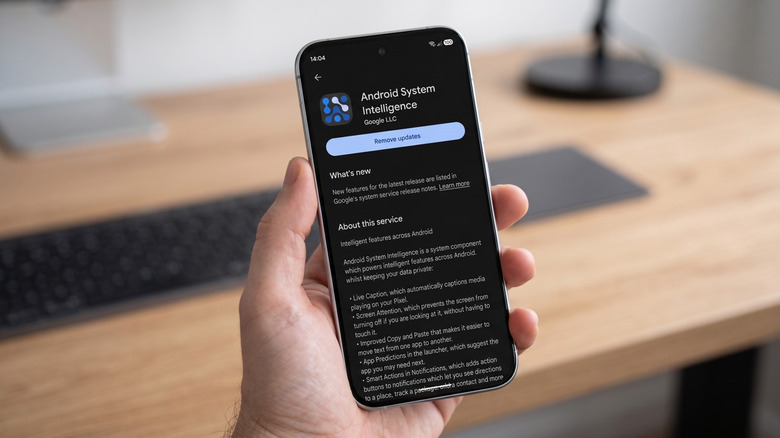
If you dig deep enough into your Android phone's app list, you might come across Android System Intelligence, which sounds both extremely important and impressively vague. Of course, there is a Disable button close by.
Android System Intelligence (ASI) is a Google system component that enables a suite of contextual features throughout Android. On Pixel phones (where it has a particularly long resume), those include Live Caption, Now Playing, Smart Autorotate, Screen Attention, app predictions, smarter copy and paste and notification actions. The lineup varies by device.
ASI runs within Android's Private Compute Core, which was introduced back in 2021 with Android 12. Its machine-learning features don't have direct network access, so Private Compute Services serves as a bridge when they need updates from the cloud. Google says ASI and Private Compute Services collect crash logs, diagnostics and device identifiers for app analytics, while usage and diagnostics collection can be switched off.
What Android System Intelligence actually does
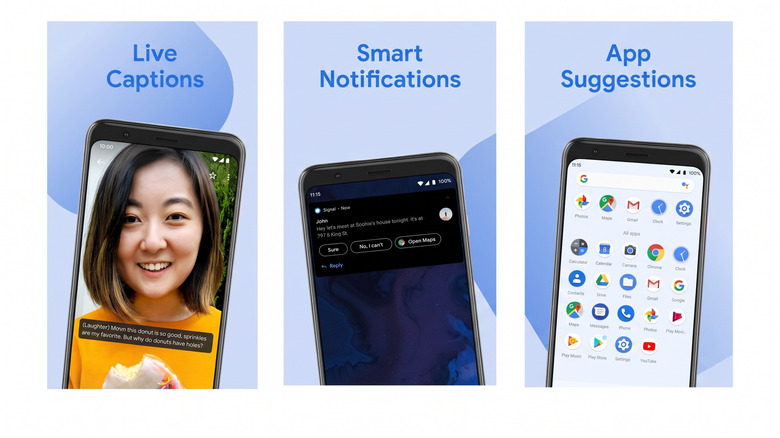
ASI is not an app you use. It's the plumbing behind the features you use. Now Playing can detect music playing around a Pixel, Screen Attention can prevent the screen from going dark when you're viewing it and smart notification actions can add useful action buttons directly to notifications. Features like Search Live, Live Translate, Assistant Voice Typing and App Search can rely on it too.
That wide scope also accounts for the seemingly intrusive permissions that ASI might ask for. According to Google, ASI uses system permissions to provide smart predictions, and contacts access can be used to suggest people you communicate with frequently. But the company doesn't explain on its current ASI support page why the component may request location access. That doesn't imply each ASI feature needs each permission, and restricting a permission or feature is a more targeted solution than disabling the entire component.
The privacy configuration is a little more interesting than the app's ominous name. Private Compute Core components cannot directly access the internet, and Private Compute Services manages network requests on their behalf. Pixel owners can even view a Network Usage Log after enabling developer mode.
There is one other thing worth separating in 2026: Android System Intelligence is not Gemini. Google's Gemini Nano models run in Android's separate AICore system service.
What happens if you turn Android System Intelligence off?
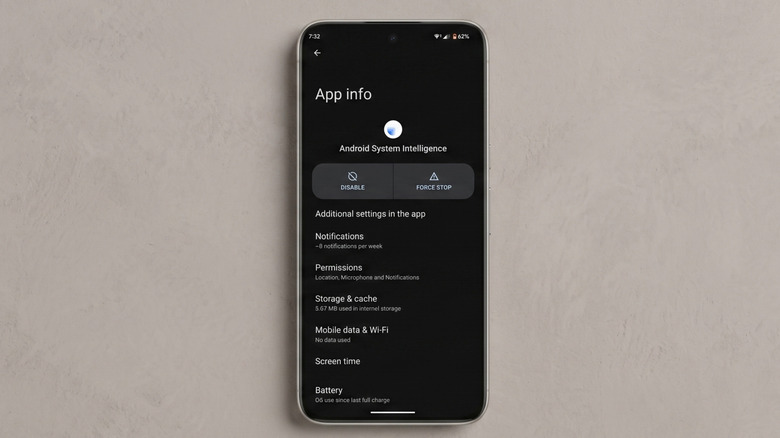
Normally, you can't uninstall ASI like an app you installed yourself because it is a system component, although Android phones may let you disable it in Settings > Apps. The route varies by manufacturer.
Turn it off and your phone shouldn't suddenly forget how to be a phone. In January 2026, Android Authority reported that critical phone functions remained operational while ASI-powered features were lost. That can include features like Now Playing, Live Caption and other contextual tools that are normally hidden away on a Pixel until you need them.
Google doesn't say disabling Android System Intelligence will make Android unstable, and it doesn't provide one universal list of everything that stops working across every Android device. That leaves some uncertainty. Switching off ASI is not like removing a vital organ. It's more like closing a utility closet without first checking the switches inside.
For most people, leaving ASI on and disabling the individual feature or permission causing concern is the cleaner option. If your objection is Google's wider presence on Android, GrapheneOS goes much further, though some apps may still have compatibility issues.
If Android System Intelligence keeps stopping, Google's own troubleshooting advice is more practical than disabling it for good: Restart the phone, install any available updates, force-stop the app and clear its cache or data if needed.
According to Google Play, Android System Intelligence has over 5 billion downloads.