

Is the Steam Deck still worth it in 2026?
The Steam Deck was the king of gaming handhelds when it arrived. But with more competition (and a higher price), is it still worth the cost?
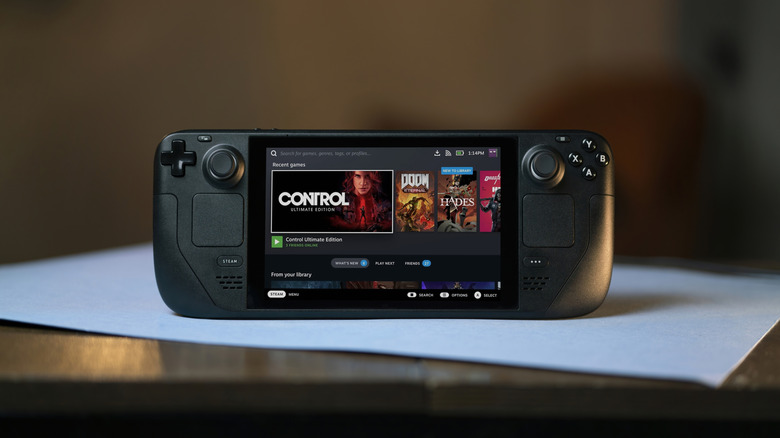
We're still deep in the trenches of RAMageddon, the memory shortage driven by AI companies utilizing massive amounts of it in data centers, and virtually no sector of the tech world has been spared. This is particularly true for the gaming industry, where console prices have risen in recent months (compared to historically, when they would fall over time). The Steam Deck has seen a $300 price increase, and with a new generation of handheld competitors on the market, it's easy to wonder if the hefty price tag is still worth it in 2026.
The gaming landscape has changed a lot since the Steam Deck was first released in February 2022. Unreal Engine 5 released just a few months after, drastically expanding the tools at developers' fingertips to make increasingly complex game graphics, and in turn how taxing they are on a machine. Even the Steam Deck OLED — now the only model available — didn't see any real performance improvements when it was released in 2023, with changes instead focusing more on the screen and battery life.
However, the Steam Deck still has features that help it stand out amongst its competitors in 2026.
The Steam Deck's main competitors
Arguably the biggest competitors for the Steam Deck in 2026 are the Asus ROG Xbox Ally (and Ally X) and the Lenovo Legion Go line of products. Both boast generally higher performance: in testing, all models in both lines tend to deliver better frame rates than the Steam Deck. All achieved a higher raw 3DMark Time Spy score — a common benchmark test for GPUs and CPUs — except for the Legion Go S and Legion Go model that features the less powerful Z2 AMD chip. However, it's worth noting that sometimes these differences with the Steam Deck can be very minimal depending on the game (even down to a few frames).
The two competitors do have some distinctions between them. The Xbox Ally or Ally X are clear picks for gamers who skew towards Xbox titles (though not every title supports Xbox Play Anywhere). However, the Xbox Ally is somewhat held back by its frequently criticized Windows OS, something the Legion Go has circumvented by introducing models that run SteamOS. The Legion Go line (sans the S models) is also set apart with its detachable, Joy-Con-esque controllers, making it an especially good option for those interested in docked gaming.
Though it may not be for everyone due to its limited title pool, the Nintendo Switch 2 is another viable alternative. "Prices are ludicrous," says Jessica Conditt, who wrote our review for the Steam Deck OLED. "I feel like Switch 2 is the only handheld that makes sense for its price at the moment, honestly."
Even with its own price increase — rising from $450 to $500 in September 2026 — it still beats the prices of the Xbox Ally and Legion Go product lineups. There are a few other standout differences: The Switch 2 is the sole handheld in this discussion that can support Nvidia's DLSS rendering technology, and the only one besides the Steam Deck to support HDR.
Is the Steam Deck still worth it?
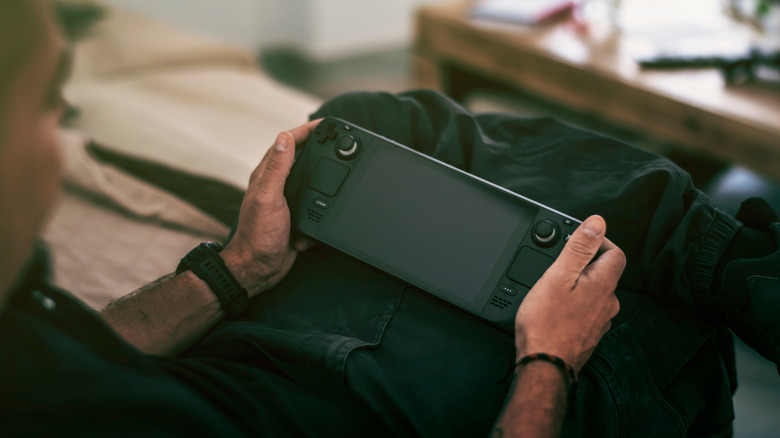
One of the biggest considerations when purchasing a Steam Deck is the sort of games you want to play. "If you only want to play Steam games and you're not too worried about bleeding-edge graphics," Conditt says, "Steam Deck is still a great little machine, even with the price increase." For those who tend to play less-intensive titles, and are content with what the library has to offer, it's a fine option. Bear in mind that SteamOS can't run games like Fortnite or CoD: Warzone that utilize certain forms of anti-cheating software, though.
Another point of deliberation is battery life. Though the Xbox Ally and Legion Go (S and 2) lines offer larger batteries than the Steam Deck OLED, in real-world applications, Valve's handheld often comes out on top. As soon as the Xbox Ally or Legion Go stop operating in low-power settings and utilize their full potential, they tend to die faster. If you're someone who wants to use their handheld for hours on end, the Steam Deck offers you the best shot at a handheld console that lasts. You may also find the Steam Deck most comfortable for long gaming sessions — besides the Switch 2, it's the lightest of the bunch.
Price-wise, the Switch 2 is by far the cheapest option. The regular Xbox Ally is the most affordable choice that has access to a PC library, but with the tradeoff of the Windows-based operating system. From there, the Steam Deck OLED is less expensive than the Xbox Ally X and every product in the Lenovo Legion Go line's current generation (at least when buying straight from the source — occasionally a Legion Go S can be found on sites like Amazon for less than MSRP). If price is your biggest deciding factor, Lenovo's line is effectively ruled out. From there, it really comes down to whether you prefer Nintendo, Windows, or Steam OS, and how much you're willing to pay for it.