AbdulGaniy Shehu

Engadget Editorial Policies

The unique content on Engadget is a result of skilled collaboration between writers and editors with broad journalistic, academic, and practical expertise.

In pursuit of our mission to provide accurate and ethical coverage, the Engadget editorial team consistently fact-checks and reviews site content to provide readers with an informative, entertaining, and engaging experience. Click here for more information on our editorial process.

Stories By AbdulGaniy Shehu

  • One Website Multiple Versions: 5 Things you should know about Mobile Responsiveness

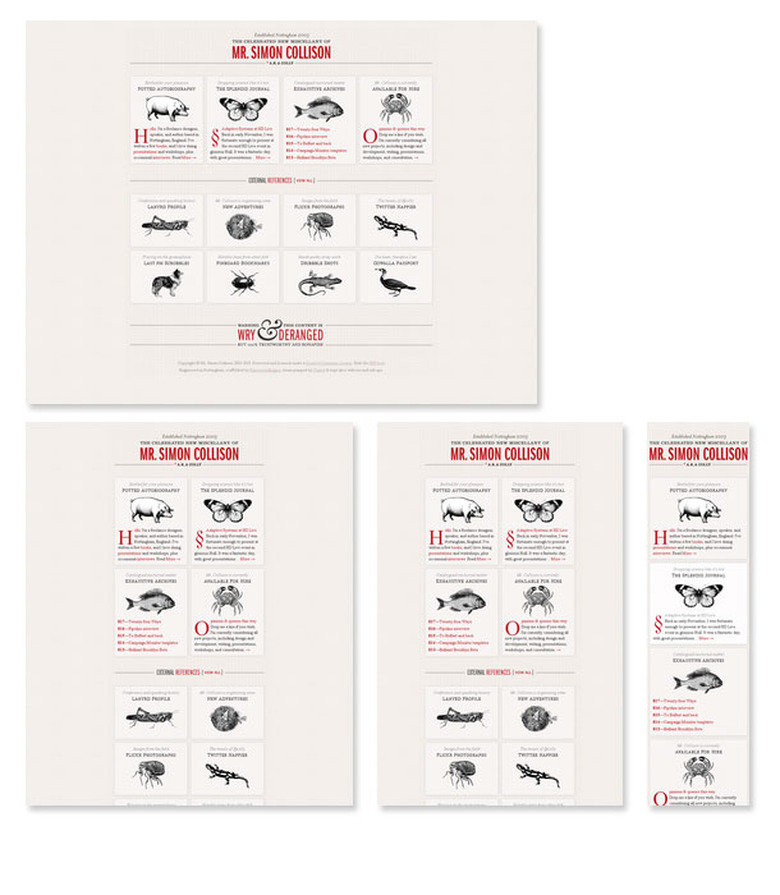
    With the increase in the use of mobile devices (Which includes Ipads, Iphones, Smartphones and android tablets). More people access the internet through these devices and don't use the PC these days. Hence, businesses/ individuals need a version of their website/ blog which is responsive and can be operated on all devices (which includes desktop, tablets, laptops and mobile phones). Since Mobile Responsiveness is essential for every website, so what's it all about, what are the things you should know about it, how do you test it (both manually and on the web). This article addresses this and many more. What is Mobile Responsiveness? According to Studio Press: "When a website is responsive, the layout, and/or content responds or adapts based on the size of screen they are presented on. A responsive website automatically changes to fit the device you are reading it on" In a nutshell, a mobile-responsive website must be; Flexible: To respond to the screen of the device with which it's viewed Automated: Changes automatically from one screen to the other. What you should know about Mobile Responsiveness Optimization: A mobile-responsive website is optimised in terms of its interactive design, and how it facilitates the ease with which it can be used. The fonts of a mobile responsive websites are easy to read and could be easily navigated. Multiple platforms interaction: With a mobile-responsive website, you are sure of a website that can interact across platforms. It does this with little change in user experience. There are four major screen sizes that responsive mobile designs are aimed at. This includes: The wide-screen monitor, the laptop, the tablet and the mobile phone. Hence, for a mobile responsive website, as the screen changes or get smaller, it adjusts to the best display for it. It aids SEO: Search Engine Optimization, otherwise known as SEO is the concept of writing for search engines to index your posts and pages and make it appear in its pages on the web. While a good SEO strategy explained by experts is perfect, a mobile responsive website will aid this a lot. In fact, it will make your website to be in the good books of search engines. This is because Google and other search engines prioritise websites with good user experience. Optimal performance: A mobile responsive website performs well and loads faster (within a second or less). Since mobile responsive websites connect a website's contents to a single URL, it makes it easier for Google to crawl and index. A mobile responsive website reduces page load speed and offers fast loading which makes the contents discoverable. It's good for all: Mobile responsiveness is good for all, irrespective of where you belong to (or what you do). It's the reality of the web today, as it offers a website multiple versions. It is also revolutionary for online publishers, as it allows them to reduce cost of app development. The user is also not left out of the experience, as they will enjoy every bit of navigating your website on various platforms. How to test Mobile Responsiveness for your Website - To test if your website is mobile responsive manually. Input your website's URL using multiple devices mentioned above, and see how they respond as shown in the images. - To test your website's mobile responsiveness on the web, you can check it through google via: https://search.google.com/search-console/mobile-friendly On a Final Note Mobile responsiveness is good for any website publisher, developer and designer. It makes your website unique and distinct from the rest. It drives more traffic to it, as it gives the users an experience they will always relish.

    By AbdulGaniy Shehu Read More
  • The Rise and Rise of Instant Messaging Apps: 5 reasons for WhatsApp's Dominance

    ​​​​ Instant Messaging: How it all began Instant messaging (IM) predates the internet, yes! You heard that right. This report, indicates that the phrase entered common usage in the early 1990s, while the concept dates back to the mid-1960s with the Compatible Time-Sharing Systems (CTSS) created at the Massachusetts Institute of Technology in 1961. Later on, it evolved to the peer-to-peer control that allowed researchers of different Universities to communicate, then came in the era of the Bulletin Board System (BBS) which allowed users to exchange direct messages among one another. In 1997, the launch of AIM by AOL which is the turning point for the IM apps market attracted a lot of tech-savvy individuals at that time. And from then on, the IM apps have been on the rise. The rise and rise of Instant Messaging Apps Instant messaging apps industry have grown over the years, while this 2013 report indicates that about 1.48 billion IM apps users are in China alone. A research by Deloitte in 2014, claimed that users in the United Kingdom send at least 46 messages daily, and that by the end of the year, the UK will witness about 300 billion instant messages sent. Instant messaging apps have become so popular. Today, we have instant Messaging Apps such as: Blackberry Messenger, iMessage, Facebook Messenger, Skype, Snapchat, Line, Telegram, Wechat, WhatsApp and the list is endless. How WhatsApp is dominating the IM market WhatsApp, is an instant messaging app founded by the duo of Brian Acton and Jan Koum in 2009. The company which was on the verge of crashing with a million users seven years ago has gone ahead to dominate the IM industry. As at February 2013, the application users have grown up to 200 million, before Facebook acquired it a year later. And earlier this year, its user base increased to 1 billion, making it the most used IM app in the world. Recently, Similar Web examined 187 countries, and found out that WhatsApp was the world leader claiming 109 countries, or 55.6% of the world, which includes Brazil, Mexico, India, Russia, and many countries in South America, Europe, Africa, Asia and Oceania. Reasons for WhatsApp Dominance of the IM market No doubt that WhatsApp dominates the IM market today. Some of the reasons for its dominance of the market are as follows: Availability on Platforms: WhatsApp is one of the few, if not the only IM app that's available on all platforms. It caters for users on different mobile platforms such as: IOS, Android, Windows Phone, Blackberry, Symbian etc. With the application, there is no question of any buddy of yours not been on your contact list. Ease of Use: Have you ever tried using some other IM apps, which requires you to fill in your username, e-mail address, ID etc. to get registered? Also, some apps require that you add your friends up manually. WhatsApp makes it easy to connect with everyone on the go with their phone numbers. It is so easy that even a Granny in remote areas can use it. Security: WhatsApp is highly secured. Recently, it rolled out the end-to-end automatic encryption for all users using the signal protocol. This gives users the freedom to exchange private information with employees, clients, co-workers, friends and family safely. WhatsApp Web for PC: Have you been in a situation where you can only access your desktop, and you need to complete that business engagement online? Other IM apps do not provide this feature. With WhatsApp users can access it on window desktops using the web based application. This feature is unique to WhatsApp only. Popularity: It's easy to get in touch with most of your friends on WhatsApp because they are already on the platform. This distinguishes it from other IM applications, where you lack access to your friends who are not using it. There's rarely any country in the world where WhatsApp isn't popular, and this gives it an edge over other applications in the IM market. On a Final Note: WhatsApp has now become a brand in the global Instant Messaging Market. Most users do not even know the existence of some other apps. Many people these days even promote the app to family and friends. As the instant messaging apps rise continues, will WhatsApp continue in its dominance or other application(s) will soon gain global recognition? Only time can tell.

    By AbdulGaniy Shehu Read More