Brian Roberts

Engadget Editorial Policies

The unique content on Engadget is a result of skilled collaboration between writers and editors with broad journalistic, academic, and practical expertise.

In pursuit of our mission to provide accurate and ethical coverage, the Engadget editorial team consistently fact-checks and reviews site content to provide readers with an informative, entertaining, and engaging experience. Click here for more information on our editorial process.

Stories By Brian Roberts

  • 3 Killer Product Launch Strategies From This Shopify Mentor

    When Shopify connected me with Debbie Sterling, founder of GoldieBlox and one of their Build A Bigger Business mentors, I wasn't sure what to expect. Although GoldieBlox started out as a toy company, turns out Debbie's startup journey was anything but child's play. From bouts of loneliness and overwhelm to initial rejection from the mainstream toy industry, she's since sold over a million toys while empowering a generation of girls to pursue science, technology, engineering and math careers in the process. Just 6 months after launch her company was averaging $300,000 per month in sales. But you don't just change gender stereotypes around women in STEM careers overnight. She had a lot of work cut out for herself. "The thought of becoming an entrepreneur was terrifying" she said. Coming from a middle class family, Debbie worked a job since she was old enough. The idea of leaving that lifestyle behind and striking it out solo paralyzed her. So, to help offset the fear, she started to do some research. How could she make her startup a success before even pressing the launch button? This was the question that set her massive launch in motion. Debbie did nine months of due diligence on everything from gender differences to children's play patterns. She even contacted leading neuroscientists at Harvard and others to learn more about the role of play in brain development. In between research, she would beg friends to babysit their kids so she could observe how they play. She tested her prototype on children all around the Bay Area. 40 homes and 3 schools in total (talk about market research!) After nine months of testing and validating her idea, she resigned from her full-time job. Armed with a proven prototype, she took it to the New York Toy Fair. Her enthusiasm was immediately met with rejection. "Construction toys for girls don't sell" she recounted buyers saying. Dismayed, a friend told her to go to a social entrepreneurship conference instead. This one called Starting Bloc. "I hated conferences and networking. I went in with my arms crossed and sat in the corner" she said. Until she saw several others take the stage to present their ideas. Debbie figured she had nothing to lose. "The moment I became an entrepreneur is the moment I got up there and spoke in front of those hundred people.. Because I put myself out there and welcomed people to join my mission instead of just doing it alone" she said. It was a good decision. She got a standing ovation and a line around the block of people looking to join her. Encouraged to go the crowd-funding route by conference attendees, she took it to Kickstarter. She raised over a quarter million dollars in just 4 days. She has replicated this launch strategy several times over, earning more per launch each time. Debbie attributes this ability to replicate 'virality' across several different mediums (toys, videos, apps and more) by making it as easy as possible for other people to share in the excitement. Here are 4 key components that you can apply to your own launch strategies. Build a catalog of sharable assets. "We write up sample Tweets, Facebook posts, content.. we give people a playbook for sharing. We recently launched a coding app with the specific design of getting girls interested in coding. Part of that strategy was figuring out what the hook or angle. How do we come up sound bites that get people interested. A lot of the design was around cupcakes. We're hiding coding in the cupcakes, like hiding broccoli in the mac and cheese." "We made it educational, but we made it so much fun that they didn't even know. For some of our VIP influencers we actually sent them cupcakes on the day of the launch. It was a cute, inexpensive thing to do that was a treat and a surprise." "We created a bunch of social media assets with cupcakes, pictures of kids with cupcakes, we invited some of our customers and fans to come in with kids and take pictures with cupcakes. We were able to provide those to the press, along with screenshots, we made a video that showed the gameplay. We created a lot of great, shareable assets." Share your message with anyone and everyone. "I built up a database of everyone I knew -and everyone I wanted to know- and tried to get myself in front of as many as possible.. to get feedback.. To ask them to share it. Over time that database kept growing and growing" Don't be afraid to personalize it either. "If I thought someone was going to put in a hundred bucks or more, it was a phone call. If I thought they would put $10 to $20 bucks, I'd send them an email. 'I created a sense of urgency. If we get close enough to our goal, we'll reach the home page. Be ambitious with your fundraising goals. "I was terrified to post the Kickstarter because our fundraising goal was $150k and that's more money than I've ever seen in my life" she laughed. "I posted the project at midnight on December 12th and I had a few phone calls with friends and mentors before.. and was saying maybe I should put the goal lower."The goal, albeit terrifying, pushed her to hustle harder. She hit it in four days. Keep innovating afterward. "The best way to keep innovating is to keep talking to your customers about what they like and what they want to improve. The more you know what they think about the more you can improve your product, the more stories you have to tell. Whether it's a new launch or a new feature. Or maybe it's even an Op-Ed that you write because you've learned so much. There's always new things to talk about if you're always listening for things to improve on."

    By Brian Roberts Read More
  • Here's Why Technology Is Destroying Your Productivity

    We need sleep. It's a fact of life. Sure, we could stay up for hours upon hours but, eventually, our bodies would force us to rest. Over the past decade there's been a surge in the development of productivity-focused technology. Yet, despite these developments, they do nothing to work with our sleep instinct. These products, albeit beautifully designed, show little regard for our need to rest. Take the iPhone for example. The first one was available in 2007 yet it took until early 2016 for Apple to roll out a night mode. This mode was designed to limit exposure to blue light, a light that can adversely affect your circadian rhythms and make it harder to fall asleep. It took Apple, a company known for fantastic UI/UE, nine years to implement. "While we intuitively know that without proper sleep and rest we simply can't function, we see little regard for protecting sleep and rest in design of consumer products" said Behrouz Hariri, co-founder of Smart Nora, an anti-snoring device, and winner of the recent Shopify Build-A-Business Competition. "I'd love to see an estimate of the number of hours of sleep and productivity lost over the last decade just because of blue light of our smartphone screens" he said. But what does sleep have to do with how productive we are? Turns out, a whole lot. Sleep affects everything, from work performance and attention span length to how safe we are. According to a poll conducted by the National Sleep Foundation, almost 50 million Americans have some sort of sleeping problem or sleep deprivation that affected their work and home lives. 29% reported feeling tired, 36% reported actually falling asleep at work or behind the wheel and 20% reported having adverse effects on their intimate lives. Sleep deprivation is also associated with impaired vision and impaired hearing. Some have even hallucinated due to lack of sleep. Mood swings have also been reported and it even affects the prefrontal cortex of the brain, which controls and regulates complex cognitive behavior. People who also don't get a lot of sleep are more at risk for high blood pressure, abnormal hormonal behavior and an increase in stress. In short: less sleep means an increased propensity for illness and other problems. Studies indicate that the light emitted from displays of smartphones, tablets and other mobile technology cause melatonin suppression, which affects our natural body clock. In fact, by using a self-luminous display for two hours before bed, you can suppress melatonin by 22%, making it harder to fall asleep sleep. As you can imagine, this over the long-term can have disastrous effects. "Recently we are seeing a shift in how everyday products are designed" said Behrouz. "As designers, we are becoming more aware that our only duty is not designing for productivity. Designing for down-time, reflection time and recharging is going to become more and more important for products that are integrated into our lives" he said. Nora is a non-invasive snoring device. You can learn more by visiting Nora's website here.

    By Brian Roberts Read More
  • Strange But True: How Physicists Win At Roulette

    Dr. Richard Muller is a professor of physics at UC Berkeley. As you can imagine the professor and author of Now, The Physics of Time is surrounded by smart people all day. In a recent Quora post, he outlined the story of how one colleague and fellow physicist -then just a graduate student at the time- managed to create a device that beat the odds. You'll learn how in a second. But first, here's some background. Roulette, like all casino games, is about odds. Most casinos allow people to bet after the wheel has spun and the ball is set in motion (although I imagine it's being phased out). This is where physicists and mathematicians cash in. If the wheel is tilted in anyway, it further increases the odds of a winning selection. In those brief seconds, using small computers, they're able to calculate enough information that can double their odds. Here is an excerpt from Dr. Muller's post on how his colleague's device worked: He built a device with a switch for his toe in which he tapped each time the ball spun around; with a separate switch he tapped each time the wheel turned. This provided enough information for his small pocket computer to signal him back (with a tap to his leg) where he should place his bet. (He had to calibrate each wheel, but he did that by watching and testing before he started betting.) But Dr. Muller's colleague wouldn't be the first intellect to perform such a feat. Albert Hibbs and Roy Walford, two Chicago University students, documented (and capitalized on) irregularities back as 1940's. Time Magazine documented the phenomenon in the 1950's. In 1969, Edward Thorp wrote about how to predict the outcome of roulette for Review of the International Statistical Institute. Thorp determined that if a roulette wheel is tilted, which according to his findings one third of Las Vegas roulette wheels were, it would increase ones odds by 15%. With the aid of the small computer like the one Dr. Muller's colleague used, it would increase ones odds by an additional 44%. In the late 1970's, using Thorp's paper as a starting point, Doyne Farmer, Norman Packard and others capitalized too. The most recent research was done in 2012 by researchers Michael Small from the University of Western Australia and Chi Kong Tse from Hong Kong Polytechnic University. Two pair were able to calculate the rate of wheel spin before the ball began to bounce and, therefore, able to skew the odds in their favor. As you can imagine, these calculations all require considerable knowledge and skill. These intellectual heavyweights surely posses the aptitude, but your average dice roller might not. A roulette strategy simulator may help, but results may vary. And if you do have the wits to outsmart the casino, it's not likely you'll last very long before being figured out. As Dr. Muller recounts: The casinos don't have the right to search you, so how can they guard against devices such as that? To do that, they have lobbied to make a law that they can exclude any person without cause. They choose to do that only when they see someone consistently beating the odds. They can't get their money back, but they can stop losing. Indeed, my friend (who was then a gradate student at Berkeley) was put on the list. His name and photo were shared by all the casinos in Nevada (and maybe world-wide), and his gambling for profit career was at an end. What's your experience been with Roulette? Have you used methods like this? Or do you do it for fun?

    By Brian Roberts Read More
  • Strange But True: How To Turn A Human Into A Diamond

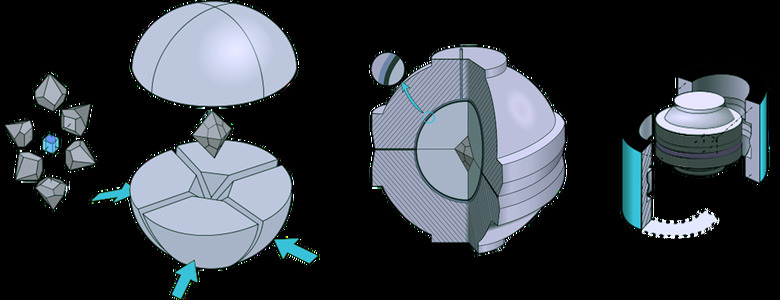
    Carbon. Its biological importance can't be overstated. The element is essential to life on land, water and everywhere in between. Without it, this spinning rock of ours called Earth would be an empty place. It'd also be a lot less shiny. That's because carbon, which accounts for 18% of the human body, is also what diamonds are made of. Insert Lonité, a Swiss memorial diamond company that turns human ashes into diamonds. Through a fascinating process that you'll learn more about shortly, they use the carbon inside of us to turn loved ones into diamonds. Natural diamonds develop deep in the earth through a combination of high pressure and high temperature. Through specialized equipment and technology, Lonité is able to recreate this natural environment, growing human carbon and hair into a genuine diamond. It all starts with purification. Upon receipt of human ashes, it undergoes an inspection. If the ashes don't contain enough carbon, the company introduces the decedent's human hair into the ashes. Once it's determined that enough carbon exists, they clean the milling equipment used to purify the mixture. Lonité starts up a water system that purifies water to 18.2 MΩ.cm (1250 times better purity than drinking water). They use this ultra-pure water to clean equipment to avoid introducing external contaminants. The ashes are introduced then introduced into their milling and purification system and cleaned of impurities over the course of 80 hours. This purified carbon taken from the human ash is then introduced into a milling chamber. According to Lonité, at this point, the carbon is so dense that air atoms, water vapor, and even oxygen are absent from the mixture. From there the diamond grows inside a crystallization chamber for over 30 days. To replicate the extremely high temperatures deep in the earth, the chamber is set at a consistent temperature somewhere around 4000°F (they won't reveal exactly what degree). At this stage the diamonds are very vulnerable, so the slightest power interruption can distort the stone so the company keeps backup generators on standby, much like a hospital. After going through the milling it's inserted into a wet chemical environment to remove heavy metals. The carbon is then tested and, if not 99.99% pure, is reintroduced into the purifiers again. Once it passes inspection the mixture is set inside a second crystallization chamber (see diagram above). Depending upon the requested size of the memorial diamond, this process can take several days to several months as the mixture transforms into a diamond. After the appropriate duration has passed, it's then polished much like a mined diamond you'd buy at a jewelry store. By this point, several weeks to months have likely passed. What's most interesting of all is that every diamond is unique to each person. Given most loved one's exchange diamonds to symbolize their commitment, this represents an interesting way to memorialize them after passing away. Would you turn your loved one into a diamond? Let me know in the comments below.

    By Brian Roberts Read More
  • KumbaCam 3rd Generation Smartphone Stabilizer Review

    Imagine running down the street while filming on your smartphone. Your phone would be bounce around like crazy and your footage would reflect that. Depending upon your running speed, your footage could vary from distractingly shaky to outright unwatchable. But strap your phone into an iPhone gimbal or smartphone stabilizer and it will counterbalance every step you take, making the footage look smooth as butter. Don't believe me? See for yourself. You just saw me running without the smartphone stabilizer. Now here I am running with the KumbaCam smartphone stabilizer: Once upon a time consumers had to spend big bucks on expensive cameras if they wanted to record high-quality video. Not anymore. With the advent of smartphones, anyone can record high-quality video right on their phone. Want a 12 megapixel sensor? Check. How about an ultra HD 4k resolution? Got it. Better glass and faster processors? Done. Thanks to the smartphone, high-quality videography has become accessible. Nowadays, anyone can shoot high-quality footage with a few swipes and clicks. It's that simple. But it doesn't make the footage watchable. It's not even about the camera anymore. It's about the camera operator. And if there's one factor that separates amateurs who shoot unwatchable footage and the pros who don't, it's stabilization. Nothing is more distracting to a viewer than shaky footage. Sure, post-production software can help (Reel Steady is a noteworthy mention) but when it comes to stabilization, prevention beats correction any day. Especially for smartphone users. A selfie-stick (i.e., monopod) can help, but not much. For smartphone users, a selfie-stick is too stationary. Yeah, it's great if you're standing still for a shot but not if you're in motion. For that you need a device that's more dynamic. Otherwise your phone will need to be adjusted every few seconds. The nice thing about a smartphone stabilizer is your device won't bounce around nor be locked in a rigged position for action shots. It's a dynamic piece of equipment that's engineered to keep your phone perfectly stable, no matter how you're moving. Whether you tilt it left, right, forward or backward, it will aim the same. KumbaCam does this with it's new KumbaCam 3rd Generation Smartphone Stabilizer. KumbaCam calls it a "selfie-stick on steroids" but I disagree with that label. It underscores just how smart and sophisticated their rig really is. Another reason why I hate the selfie-stick comparison? Because most of them are cheaply made. Insert the KumbaCam 3rd generation iPhone gimbal and smartphone stabilizer. Even the packaging is high-quality. Just look at the picture of the box above. The construction on this 12" stabilizer, from the buttons on the handle all the way up to the rotating joints, revolving metal head and phone cradle, is solid. The retractable smartphone clamp will hold any device up to 7" in length without making you nervous while you're on the move. I can't say the same about a gas station selfie-stick. Each unit also comes with a counterweight to accommodate smartphones on the heavier side or ones with cases. Inside the box is everything you need to get started: One 50g counterweight to balance out heavier devices One rechargeable 3.7V battery One micro USB cord for recharging And of course, the KumbaCam 3rd Generation Smartphone Stabilizer As for the batteries, KumbaCam says they will last anywhere from 3-7 hours before needing a recharge. The number varies depending upon the weight of your smartphone and the intensity of use. In my case, I was able to get several hours of shooting using my iPhone 6. These hours were spread over the course of several days, all right out of the box with the factory charge. Aside from the construction, I also liked the shooting modes. When you first turn the unit on it's in default mode. Default mode allows you to pan left and right. Mode 2, which you access by tapping the center button twice, allows controlled pan and tilt (left, right or up, down). My favorite mode is Mode 1. You can access that by tapping the center button once. This locks the camera position so that however you shift the device, it focuses on forward. This is especially useful for interviews or front-facing camera shots. This sophistication doesn't come cheap however. At $349 bucks, it better not be a selfie-stick. But that's exactly the point. For anyone looking to take their smartphone videos to the next level, this is an essential tool. Grab it off Amazon here.

    By Brian Roberts Read More
  • The #1 Reason Everyone Should Be An Entrepreneur

    Never in the history of our species have we been able to reach as many people as we can right this second. The internet hasn't just leveled the playing field. It's destroyed it, leaving nothing but opportunity in the rubble. While others rot their brains on cat video clips, you have a chance. A chance to work on your own terms. A chance to control your destiny. A chance to be your own boss, do what you're good at and make a handsome profit in the process. Who can argue with that? Technology -and the internet in particular- has done almost as much for entrepreneurs as the invention of money itself. Thanks to the sheer reach and magnitude of the internet, coupled with instant global finance and affordable technologies, businesses can start up in a day. You don't even need a domain name. For those of us who don't have a clue about other pertinent business topics like sales, marketing or networking, here's another benefit of technology and the internet: virtually all we know as a species is floating around on the internet somewhere. If you have a have a head full of unanswered questions, the answers out there somewhere, whether on a blog or in the mind of a freelancer available for hire. You just have to keep clicking. Thanks to affordable entrepreneurship technologies -from payment processors like PayPal, commerce platforms like Shopify and funding platforms like Kickstarter just to name a few- anyone with an internet connection can become an entrepreneur. There are hundreds of thousands of unique markets you can dive into and millions of customers within each. I did it with gold grills and it worked out pretty well. Technology hasn't just lowered the barrier to entry. It's eliminated it. The problem is this tremendous access can be paralyzing for some. You only have two options, though: leverage it to your benefit as a producer or get lost in the crowd as just another consumer. Processes that once took days or even weeks can be completed in seconds. Need a contract signed? Click. Need a payment sent? Click. From online stores to flexible work environments and global collaboration, there's no limit to what can be accomplished online. And if there is a limit, there's a good chance an entrepreneur is out there writing the code to get past it as you read this. No other generation in history has had the opportunity we have right this very second: to start and build businesses in the blink of an eye. We owe this great opportunity to technology. And we owe it to ourselves to take advantage of it while we can.

    By Brian Roberts Read More