Chandrakant Isi

Engadget Editorial Policies

The unique content on Engadget is a result of skilled collaboration between writers and editors with broad journalistic, academic, and practical expertise.

In pursuit of our mission to provide accurate and ethical coverage, the Engadget editorial team consistently fact-checks and reviews site content to provide readers with an informative, entertaining, and engaging experience. Click here for more information on our editorial process.

Stories By Chandrakant Isi

  • Japanese company unveils clip-on fan to cool your armpits

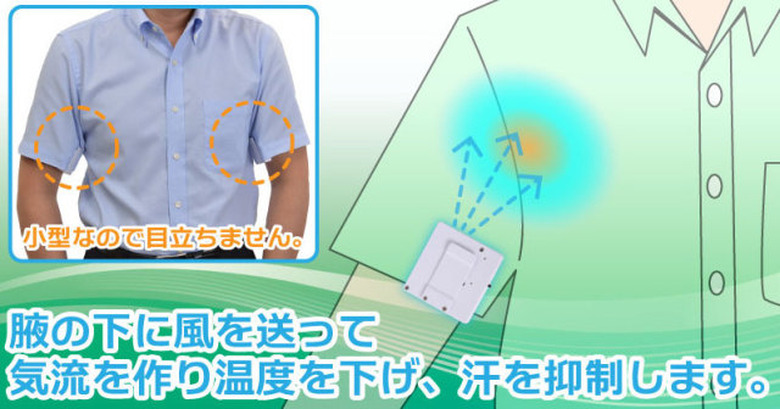
    Japan is home to some of the biggest tech companies in the world. It is the country that gave us the Walkman (portable cassette player) and more recently the PlayStation series of gaming consoles. While we love Japan for its contribution in the tech world, you can't deny the fact that these people sometimes tend to go overboard. Take for instance, the latest gadget from the land of the rising Sun. A company named Thanko has developed a tiny clip-on fan to cool your armpits during the hot and humid Japanese weather. Dubbed as Waki no Shita Kura (armpit cooling device), this small cooling device ensures the air flow under your arms. Tipping the scales at 30 grams, the device comes with three speed controls. Powered by three AAA size batteries, it can run for five to nine hours. From what I can understand from the translation, this armpit cooler costs 1980 Japanese yen, which translates to around $18. However, unless your sweating issue is one-sided, we suggest you buy a pair of Waki no Shita Kura.

    By Chandrakant Isi Read More
  • Things That Suck About The Samsung Galaxy S7 Edge

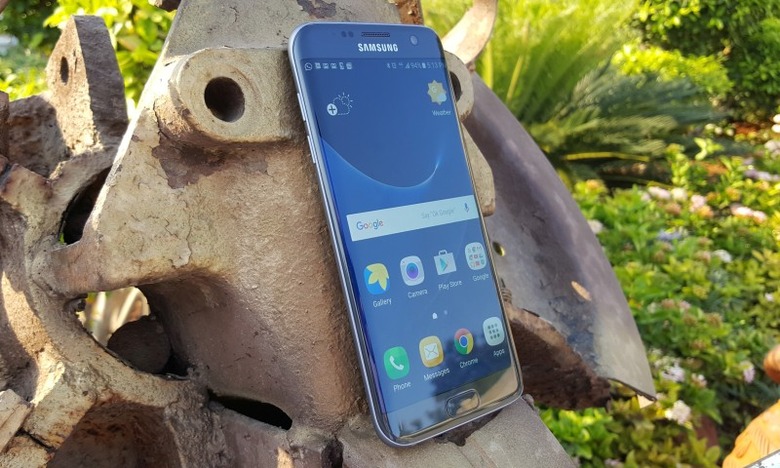
    Don't get me wrong. The Samsung Galaxy S7 Edge is brilliant smartphone. Started off as a 'me too iPhone', Samsung's Galaxy series now gives Apple's latest and greatest a run for its money. Especially, the Galaxy S7 edge is the most refined handset made by the Korean tech giant. Despite that though, the phone has some shortcomings. If you are planning to get yourself an S7 edge, here's what you need to know: TouchWiz Aesthetics (or the lack of it) Lets face it, Samsung's TouchWiz UI looks puerile. 'Garish' made love to 'gaudy' and Samsung's UI elements were born. The icons have no uniformity — they come in all size and shape. There are more colours than you would spot in a rainbow. The quick setting toggles are so crowded that it feels overwhelming. Overall, the interface looks fragmented with no sense of cohesiveness. I wonder how difficult it is to design a UI that does not make you cringe. This is definitely not what a user deserves from a high end device. Bugs Despite packing in a powerful Snapdragon 820 chipset, the Galaxy S7 edge does run into performance issues. For instance, every time you swipe to the Briefings pane, there is a noticeable stutter. Then, there are some silly restrictions such as not letting you change the position of the app drawer icon. No matter what you do, it sits there on the bottom right side of the screen. I would have preferred it somewhere in the middle. Another thing worth mentioning is the organised icons. There is an option to arrange the icons alphabetically. However, installing a new app breaks this order again. Muffled Speaker A phone's loudspeaker performance gets a mention only if it is absolutely brilliant or downright disappointing. In the Galaxy S7 edge's case, it is the latter. When listening to music, I always plug in the earphones. However, for games and web videos I prefer the on-board speaker. The downward-facing loudspeaker is under-powered and sounds muffled. This could probably be the result of an effective waterproof design. To make things worse, the speaker is badly positioned. Hold it in the landscape mode, and you end up blocking the speaker. Lacks FM Radio Before telling me how FM radio is irrelevant in 2016, think of it as a backup. No matter how modern your car is, you don't let go of a stepney right? Similarly, FM radio comes in handy when for some reasons you are unable to access the mobile network. Lets not forget that it can can be your only source of vital information in an unlikely event of calamity that may take out most of the modern means of communications. So, make fun of this point as much as you want, but the terrestrial radio receiver is going to remain the most essential feature for years to come. Fingerprint Magnet The Galaxy S7 edge's glass back panel sure looks fancy. However, it doubles up as a fingerprint sampler. No matter how careful you are, the S7 edge's back gets smudgy every time you touch the phone. What's worse is that the shiny glass highlights the smudges in all its glory. It is not really a deal-breaker, but if you have an OCD (Obsessive Compulsive Disorder) for cleanliness, better carry a microfibre cloth with your brand new S7 edge.

    By Chandrakant Isi Read More
  • Ditching the headphone jack is not really an innovation

    When it comes to technology, the evolution is quite straightforward. A more streamlined and powerful product ideally replaces the dated hardware or software. Over the years, we have seen how processors and cameras on smartphones have improved. Even in storage, floppy drives made way for optical media, which in turn caved in to flash storage. However, replacing the 3.5 mm jack with type-C USB port audio feels like an unnecessary move. What's worse is that ever since the rumour about Apple getting rid of the 3.5 mm headphone jack in the iPhone 7 surfaced, other brands too have waged a war against the standard audio jack. Now let us see how it may affect us: Manufacturers are justifying this move by dangling the carrot of "superior audio quality" in front of us consumers. According to them, the phone will output the pure digital audio, which is ideal for preserving the accuracy. This might sounds convincing. However, what they don't tell you is that human ears can listen to the audio only after it is converted from digital to analogue. In phone with 3.5 mm jack, the DAC (Digital-to-Analogue) converter sits on the mainboard. In case of handsets with USB audio out, this chip is placed inside the headphones. So while it is true that the phone passes on the lossless audio, the possible degradation during the conversion is going to happen in the headphone anyway. Considering that the smartphones last longer and are generally cost most than the earphones, phone manufacturers are likely to use better quality DACs than the headphone makers. Therefore, I don't understand why it is necessary to kill the 3.5 mm jack for better audio quality. Considering that the DAC will be placed in headphones, these accessories will cost more due to the additional components. At the same time, one less component is unlikely to bring down the smartphone prices. A new standard also means that all the existing headphones will be incompatible with phones such as the LeEco Le 2, Le Max 2, and Moto Z. The possible solution is putting up with a type-C USB to 3.5 mm jack converter. Not saying how bad it is going to look, but not classy for sure. The type-C USB port on these phones is used for audio output and charging the battery. Since there is only one port, you cannot connect the headphone and charge your phone simultaneously. Surprisingly, this is something you can easily do with phones with 3.5 mm jack. When did restricting usability become innovation? Now let us just hope that Apple retains the 3.5 mm jack in the next iPhone and sense will prevail in the industry.

    By Chandrakant Isi Read More