Chris Brantner

Engadget Editorial Policies

The unique content on Engadget is a result of skilled collaboration between writers and editors with broad journalistic, academic, and practical expertise.

In pursuit of our mission to provide accurate and ethical coverage, the Engadget editorial team consistently fact-checks and reviews site content to provide readers with an informative, entertaining, and engaging experience. Click here for more information on our editorial process.

Stories By Chris Brantner

  • Nokia says it can deliver internet 2,000 times faster than Verizon Fios

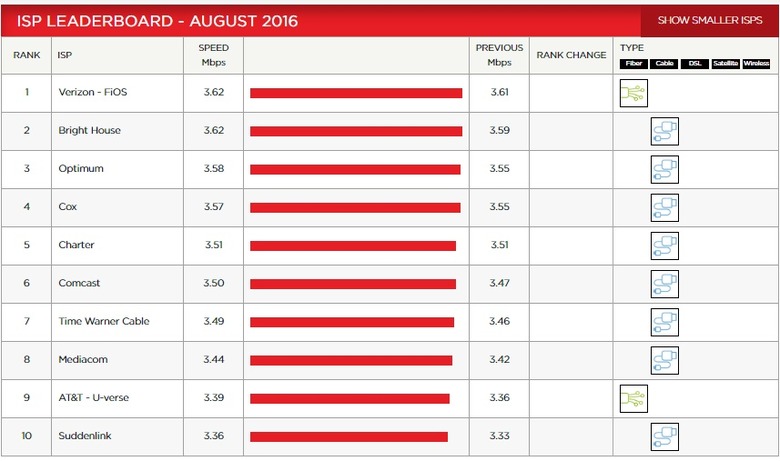
    Nearly every month, Verizon Fios defends its title as the fastest ISP in Netflix's speed index. From time to time, another ISP will unseat the champion, but the change never lasts long. Of course, some have argued that such speed index tests are inaccurate and grossly over-simplified. However, it's hard to argue against the fact that Verizon Fios is a name synonymous with internet that's fast as hell. How fast is that exactly? Well, the top plan currently offered is 500 Mbps both up and down. Just to put that into perspective, dial-up internet ran on average 56 Kbps. 500 Mbps is equivalent to 500,000 Kbps. So Fios is 1000 times faster than dial-up. Pretty fast. Of course, Google Fiber has it beat at 1 Gbps, but it's not available in enough cities at this time to make it a true contender on a nationwide scale (you can search locally available internet providers here). But imagine if you could get internet that makes Verizon Fios feel like dial-up. That's exactly what Nokia says it has achieved. According to a statement to ZDNet, Nokia is working on a technique called Probabilistic Constellation Shaping (PCS) that has allowed them to achieve speeds of 1 Tbps. 1 Tbps is equivalent to 1,000 Gbps. So Nokia is saying it's figured out how to deliver internet that is 2,000 times faster than Verizon Fios, or 1,000 times faster than Google Fiber. That basically makes both Fios and Verizon dial-up. Hard to imagine. But with nearly half of the world's population online and an insane amount of activity every second of the day, speeds need to keep up with the demand. And consider this, one day your kids will scoff at your current Fios connection in the same way you chuckle thinking about hearing the AOL dial-up sounds. Mind boggling.

    By Chris Brantner Read More
  • Netflix Subscriber Satisfaction Rises Despite Price Increase

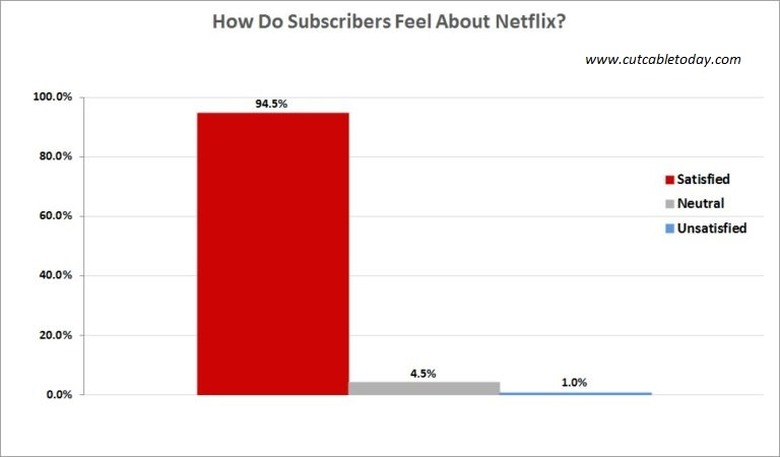
    When it comes to services that stream on-demand content, Netflix is king. Everyone knows that. However, over the last quarter, skepticism towards the service has grown. Back in July, Netflix's quarterly report revealed significantly slower subscriber growth in the US. While some speculated the service has reached it's saturation point in the US, others think there might be another issue. "The reason is obvious and has been expected in some circles: Higher monthly subscription costs for customers are causing cancellations," Jeremy C. Owens, technology editor of MarketWatch wrote. It stands to reason, as more and more people are turning to streaming services as they cut the cord and try to lower their monthly bills, Netflix's decision to raise the price of their standard plan from $7.99 per month to $9.99 per month likely rubs many the wrong way. However, according to a new survey by CutCableToday, despite a 25% price increase, Netflix subscriber satisfaction is actually up 2% from last year. "94.5% of Netflix subscribers are satisfied with the service and planning to keep it," CutCableToday reported. "Netflix customer satisfaction has increased year-over-year, despite minor price increases and changes to content library." Even more impressive, the report states that only 1% of Netflix subscribers are displeased with the service. Knowing that you can't make everyone happy, only 1% displeasure is pretty impressive, especially in the face of a price increase. Whether Netflix can continue this trend in the face of increased competition remains to be seen. But you'd think if they keep putting out quality programming like Stranger Things (which will see a second season), the future will remain bright.

    By Chris Brantner Read More