Conor MacCormack

Engadget Editorial Policies

The unique content on Engadget is a result of skilled collaboration between writers and editors with broad journalistic, academic, and practical expertise.

In pursuit of our mission to provide accurate and ethical coverage, the Engadget editorial team consistently fact-checks and reviews site content to provide readers with an informative, entertaining, and engaging experience. Click here for more information on our editorial process.

Stories By Conor MacCormack

  • Did you know that 3D printing can do all this?

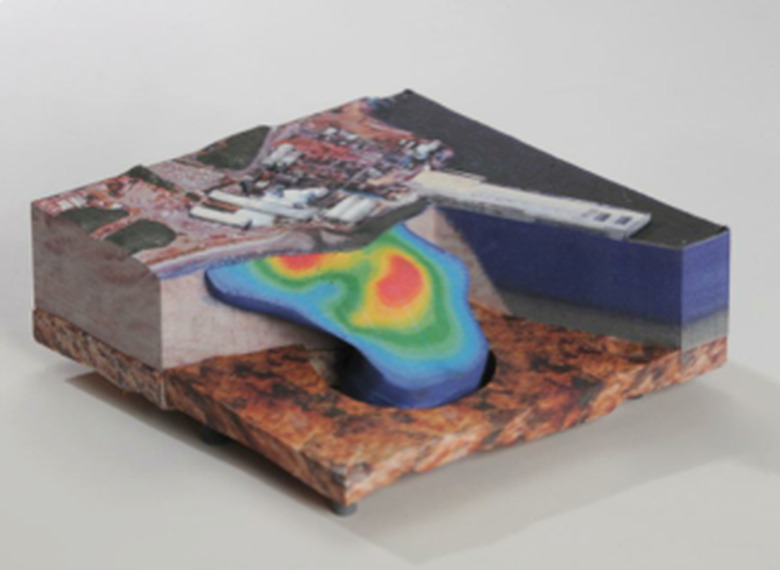
    It's Global 3D Printing Day (#3DPrintingDay), and to celebrate we wanted to share some examples of just how cool 3D printing can be. You might have heard of 3D printed cars, shoes or prosthetics, but the innovation doesn't stop there. No matter the industry, there is an application for 3D printing – from the medical field to creative arts, from education to geology – 3D printing is changing the world.Here are four of my favorite 3D printing applications to celebrate today:1. Plastic SurgeryAnyone who has undergone reconstructive or plastic surgery knows that it's not a simple ordeal. When it comes to altering the way that you look, there's an inherent risk factor beyond just going under the knife – the uncertainty of knowing what the final result will look like. With 3D printing, we are now changing the face (get it?) of reconstructive and plastic surgery, allowing doctors to be able to communicate both verbally and physically what their patients' will look like post-surgery, and giving patients the opportunity to interact with their "after" selves without even seeing a knife.The importance of color in this application is clear – it would be almost impossible for a patient to look at a monochromatic replication of their face and be able to truly understand what the final result will look like. With photorealistic 3D printing, details down to the blush in their cheeks and the arch of their eyebrows show patients the true final result that they will see in the mirror for the rest of their lives.2. JewelryThe trend towards "going green" affects everyone from large manufacturers to an individual, and every little bit counts. While corporations work to reduce their emissions, on a personal basis simple changes such as recycling cans and bottles or turning off the light when you leave a room can make an impact. If being eco-friendly is part of your or your company's core values, then paper-based 3D printing can help you achieve your goal, no matter the industry.Take jewelry, for example – from concept to design to implementation, the process often encounters hurdles including reproducing the exact design on paper to its final, wearable form. With 3D printing, that problem is obsolete, and with paper-based 3D printing any issues with toxicity or fumes are also eliminated, creating 100% recyclable products. Sounds like a win-win, especially with results like this.3. Medical StudiesWhile 3D printed prosthetics are certainly awe-inspiring and often come with heartwarming stories, the importance of how the human body (including bones, muscles and ligaments) moves on its own is just as important. For medical students, this is especially true, and 3D printing is giving them the ability to learn in the palm of their hand.With true-to-life 3D printed bones, students see the intricacies of the bone structure, including where tendons and ligaments connect. By adding these additional ways for students to learn, 3D printing is expanding lesson plans beyond the whiteboard and computer screen. They can recreate the physical movements on the bones, and can even print abnormal or diseased bones and compare them to healthy bones to help determine the best course of treatment for patients.4. Geology AnalysesHazards often exist in the land area around us, but can be difficult to discover or understand when just explained on a two-dimensional map. 3D printing gives geologists the ability to explain the "why" behind the "where" of the hazards, providing an additional level of detail that simply cannot exist on flat surfaces alone.When two-dimensional data is paired with three-dimensional digital images, hazards and dangers are brought to life and can be examined at a much higher level of detail. For example, in the case of an active volcano, 3D printing can show volcanologists all of the potential paths of lava flow, allowing them to be prepared no matter what happens. This can then be clearly relayed to the public, who might not otherwise be able to fully comprehend the danger if it was presented on a two-dimensional hazard map.There is no doubt in my mind that the applications of 3D printing will continue to grow at an exponential rate. We have only touched the tip of the iceberg as to what the future of 3D printing will bring, and I can't wait to see how far 3D printing takes us!

    By Conor MacCormack Read More
  • How to Make Math Tangible With 3D Printing

    A recent report released by the National Assessment of Educational Progress shows a decrease in mathematical skills of American students – the first since 1990. While the reasoning behind the drop is up for debate, one thing is true; the subject of math is oftentimes one of the hardest to digest by students.There is an opportunity here to bring the teaching of mathematics to the 21st century and I am not talking about going from a white board to an iPad. The NAEP report is clear – we need to do something to make math more digestible for the students of today or face a continually declining spiral in understanding. In other words, we need a tool that will help engage students and encourage deeper understanding of mathematical concepts by presenting them in a new way.Frequently relegated to just lines on a chalkboard, theories and lessons aren't always able to break through to students with disabilities – be it learning or physical – but I believe 3D printing is looking to change that.The next Industrial Revolution?The Industrial Revolution was led by the textile industry, steam power and iron production back in the 1700 to 1800s. One of the pieces that made the revolution so revolutionary was that it took a previously manual process and mechanized it. Recently, the 3D printing industry has been called the next Industrial Revolution due to its capacity to change the way we live our lives on a daily basis. As much as 3D printing will change our lives in both the near and far future, there are other factors to consider before identifying it as the next Industrial Revolution.To determine how "revolutionary" a change is, it's important to look at the output both before and after to determine if the after results are indeed better. When it comes to 3D printing compared to past methods, this isn't necessarily the case. Dimensional accuracy, throughput, material characteristics and accessibility all have worse outputs than previous technologies. Due to this, we can replace what many think of as the next "Industrial Revolution" by the 3D printing industry and instead deem it a "Quiet Revolution."There's no denying that 3D printing will have a huge impact across a variety of industries through its specific advantages, but it will never replace traditional methods.Enhancing learning with 3D printingLet's take a step back and look at education from an overall perspective. There are areas of opportunity to implement 3D printing across every topic, discipline and subject for students of all ages and backgrounds.3D printing capabilities add another level to any lesson, enriching the learning process and encouraging students to think outside of the box and discover new ways they can transform their ideas into physical models. Educators should teach children with customized learning that is adjusted for their individual needs and promote independent thinking to show them how they can solve the problems themselves and not just give them the answer. They should also aim to cultivate creativity such as breaking things and experimenting with the results and ultimately, they need to light the spark of curiosity.With the antiquated tools currently being used in lessons, it can be hard to light a spark among tech-savvy students when it comes to teaching math. However, 3D printing is doing just that in the below three ways.FractionsWhen presented on a board in the front of the class, fractions are a relatively simple concept to understand. You have a pie, for example, and when it's split it up it becomes clear that one third of the pie is much larger than one sixth.But what happens to that understanding when you take away a key sense – your sight? When learning how to count, you learn that six is greater than three. Imagine how hard it is to then be told that one sixth is less than one third, without being able to see it explained and drawn out in front of you? 3D printing allows for fractions to be taught in a physical sense, giving vision impaired students the opportunity to feel rather than see that the printed object representing one third is indeed larger than the object representing one sixth.Pythagorean TheoremThe equation itself is easy to remember and repeat: a2 + b2 = c2. And, for the most part, the explanation that the square of the hypotenuse is equal to the sum of the squares of the two other sides is enough to perform calculations and find answers.A 3D printed version of the Pythagorean Theorem allows for students to visualize how the squares of the sides exist in relation to each other. By taking the actual square of the two sides adjacent to the hypotenuse and adding the areas of the two squares, it equals the area of the square of the hypotenuse. This physical aid can help students who have trouble visualizing the concept of the theorem. GeometryCan you differentiate between a circle, ellipse, parabola or hyperbola? And do you know how each is formed? It's easy to teach the different shapes by drawing them on a board, but 3D printing allows students to see and feel how each one is created from a different slice of a cone.A circle is a horizontal slice, a slice at an angle is an ellipse, a parallel cut to the edge is a parabola and a vertical cut is a hyperbola. The differences between each of these shapes might seem negligible to the common student, but those studying bullet trajectory, for example, know that a parabola is the trajectory a projectile will follow, and the concept of a hyperbola can be used to show how it's possible to leverage only straight lines and make them look curved. Math is just one of the many ways that 3D printing will change the educational landscape. From sciences to history, 3D printing allows educators to have a greater line of communication with students and tangibly show them the concepts and ideas that they are relaying through their lessons. No longer will learning be relegated to the chalkboard – it will be available in the palm of your hand.While we are still a ways away from having 3D printing available to every student, advancements around of low-cost materials, color capabilities and eco-friendly printers are driving the idea forward. While the 3D printing industry in and of itself will not be a revolution, 3D printing in the classroom will be -- consider it the "Educational Revolution."

    By Conor MacCormack Read More
  • The Future of 3D Printing - We're Not in Kansas Anymore

    The concept of widely accessible 3D printing has, up until recently, been reserved for sci-fi movies and companies with extensive budgets. However, in the past few years there have been hundreds of thousands of dollars invested in 3D printing companies around the world, demonstrating the shift in technology from a futuristic concept to an everyday reality right at our fingertips.As with most new technologies, the earliest editions are rarely the final versions that end up in the hands of businesses or actual people. Each iteration of the technology is updated to improve the performance and output, a trend that 3D printing has also followed. Many editions of 3D printers in use today operate with single-color plastic spools to create printed objects that many associate with the term "3D printing." However, just as television sets started out in black and white before the transition to color, the demand for photorealistic-color 3D printed objects is pushing the monochrome 3D printers to the back of the closet. Not only do full-color 3D printers already exist, but they could be in your offices and schools right now, and even in homes within the next few years. Just as Dorothy noted when she and Toto arrived in Oz, we've moved beyond the black and white Kansas into a world full of color, and there is no turning back now.Why is full-color such an important feature?Think about it – we as humans have evolved seeing in color and use our color vision to discern details. We associate color with a variety of things, such as brands, memories, specific individuals and more. From a tactical standpoint, full-color 3D printed objects provide a much wider variety of use cases than objects that are just one solid color throughout or blocks of only a few solid colors.Education is a great example of the benefits of 3D printing. There are applications for 3D printing across every academic department, from fine and dramatic arts, mathematics and geography, to sociology, anthropology, medicine and engineering. When applied to art, full-color 3D printing allows students to combine their creativity with technology in a tangible way to produce amazing creations and realize their creative vision. The possibilities range from sculpture and jewelry creation to architecture projects that bring designs to life. When it comes to a medical education application, photorealistic color 3D printing can take a 2D X-ray or CT scan and give it a third dimension, allowing doctors and their attendants to practice on the realistic models of the patient's anatomy, using color to represent medical conditions before the actual operation in the operating room. This in turn reduces time in surgery and improves patient outcomes.Another example of the benefits of full-color 3D printing is in the development of a company's or product's brand identity. We all know the importance of color for brands – for example, white and green versus orange and pink most likely reminds you of Starbucks versus Dunkin' Donuts. A full-color 3D printer helps communication and advertising firms give physical 3D shape to an otherwise two-dimensional idea, creating better understanding among their clients and resulting in faster approvals.For example, clients can see proposed logo and color ideas on exact replicas of their product or packaging, providing a more effective representation of the final campaign than a 2D sketch or image can provide.But what about people who are thinking of purchasing a 3D printer?You know your typical 2D printer sitting on your desk has an extremely high level of color capability. Why then would people accept monochrome 3D printed objects when they're used to printing from the full color spectrum? The answer is simple – for 3D printers to become a common household object, one of the capabilities they'll need is to be able to 3D print in photorealistic color to satisfy demand.The reality is that pervasive day-to-day 3D printing in your home isn't as far away as many may think. When it comes time to purchase a 3D printer for your school, office or home, make sure it can achieve the results you need – including producing full, photorealistic-color objects.

    By Conor MacCormack Read More