David Kirby

Engadget Editorial Policies

The unique content on Engadget is a result of skilled collaboration between writers and editors with broad journalistic, academic, and practical expertise.

In pursuit of our mission to provide accurate and ethical coverage, the Engadget editorial team consistently fact-checks and reviews site content to provide readers with an informative, entertaining, and engaging experience. Click here for more information on our editorial process.

Stories By David Kirby

  • Digital Currency and the Future of Privacy

    Privacy on the internet is often an elaborate illusion. Government agencies, internet service providers, and software publishers all use various levels of active and passive monitoring of where we go on the internet. Netizens might feel compelled to use a combination of safe browsing habits and privacy software in an attempt to cover their online footprints. The reasons for this are many - some seek safety from prying eyes purely for the sake of privacy, while others intend to conceal more nefarious practices. Both can succeed with varying levels of effectiveness. The 'Silk Road' of the internet age was known for the high level of anonymity it granted both purveyors and purchasers of illicit goods and services. It's highly evident that the internet and technology changed the way we do business, even business on the black market. Yet beyond this it becomes a topic of internet currency. Privacy and data are as equally a type of currency as the venerable bitcoin itself. What are you willing to trade in exchange for privacy and secure data? Moreover, what are the corporations you allow access to that data willing to trade it for? When you entrust your personal information, be it search history or social security, safety isn't guaranteed. There are two primary groups in the debate of big data: the collectors and the subverters. Namely those who want to compile data from as many people as possible and use it to enhance their profitability, and those who will use any means possible to prevent this and maintain their privacy. Subverters value alternatives to centrally managed systems of currency and data storage to ensure information security. Collectors value data mining, and regularly employ the practice of selling that data. Subverters see their claims of "protecting privacy" as lip service only and prefer to protect themselves instead. Nothing represents this distrust of centralized organizations more than digital currency like bitcoin. Bitcoin is global and can be seamless traded and transferred across states and nations. Without a centralized company acting as middleman and demanding his "fair dues," transaction costs are lower. In the case of bitcoin and the Silk Road, transactions were anonymous. There's no credit-card company to monitor your purchases and send you "customized" and intrusive advertisements. Digital currency protocols are often uncontrolled by governments and organizations, adding an extra level of freedom. Digital currencies are limited by a lack of worldwide acceptance, however. Examining the valuation of the bitcoin does also demonstrate a wide variability that isn't typically evident in a traditional analog currency. This is simply the cost of dealing in an anonymous, unregulated currency. Bitcoin is anonymous but not private in the way we might traditionally think of it. When transacting using bitcoin, identities are nowhere identified. The amounts of the transactions themselves are visible via the public ledger called the blockchain. Bitcoin is less anonymous than cash, but provides a certain level of privacy if precautions are taken. When acquiring bitcoins, be aware that purchasing them using a debit or credit card in turn connects yourself with your bitcoin stash. To obtain truly anonymous bitcoins, they must be acquired independently of purchasing them outright - perhaps in exchange for services rendered. If the thought of private and public organizations monitoring where you visit, what you watch, and how you spend your money frightens you...extra privacy might be in order. David Kirby is a writer and editor that enjoys writing about tech and security.

    By David Kirby Read More
  • Social Media Isn't Optional For Businesses

    Of all the tech trends in the past ten years, few things help businesses and organizations more than the combination of mobile phones and social media. The advent of social media particularly has proven to be a boon for entrepreneurs and businesses across the globe. It's not an optional part of your outreach routine - using social media platforms like Twitter is expected and essential. The main benefit of these tools is that it allows you to build up an audience and establish your expertise. Combined the two of these let you interact directly and credibly with your audience. Five years ago, it wasn't uncommon for CEOs and senior staff to avoid social media without the help of PR experts. Now execs are embracing social media and it plays a vital role in overall business strategy. More than this, it humanizes companies and leaders alike. Social media on the go helps you put your best foot forward. When you're consistently engaging with your customers, you might begin to understand what's working and what isn't. Social media helps you get to know your audience and learn what's important to each demographic. For example, the built-in data collection tools of Twitter allows you to target your audience and understand why they're coming to you in the first place. Online platforms allow you to see what gets people excited and learn about trending ideas and products. Social media can also be used as a way to improve customer service and retention. Brand pages are highly visible on Twitter, and often customers will use it as a way to reach out. This is an opportunity to answer their questions and share timely information about your organization. Social sites like LinkedIn handle this differently, but are still a great place for interested parties to find out more about your business practices. LinkedIn also doubles as a publishing platform. Companies and individuals can post articles directly through LinkedIn Pulse. Sharing your ideas and ideals with a public audience helps expand the reach of your company. This is about brand awareness. The more you participate, the better the odds that your company will become part of the discussion. Social media is useful for entrepreneurs, and is easily accessible to professionals of all experience levels. To pull this off correctly, it's important to establish yourself and your company as an industry leader or expert. Always share relevant information and offer helpful advice based on what you already know. Helping others and reinforcing their passion is a great way to get others to connect with you. Becoming a trusted online resource allows you to increase engagement and expand the reach of your company. All of these aspects combined are great starting points to ensure that you company achieves and maintains digital relevance. Social media is the new norm and can benefit companies of any size. Many businesses rely on social media to gain new customers, build trust among existing clients, and build authority. Building social media presence is a great way to position your company to reap the benefits of a connected age. David Kirby is a writer and editor. You can find more of his work here.

    By David Kirby Read More
  • Athletics is Getting a Tech Upgrade

    Ah, yes - the age old struggle of geeks versus jocks. I can see it now: The jock rules the halls and the geeky kid watches fearfully from inside his locker. The divide between the two is ironclad, or at least it was. Technology has become pervasive in our society - and it's not limited to any one group anymore. In a stunning twist of irony, technology has become important even to athletes. The perception of gadgets as uncool is simply outdated. The technological evolution of the athlete is primarily aimed at increasing athletic performance. This occurs in two primary ways: Biometric technology and enhanced equipment. All right, all right. See, we're already delving into technobabble. Biometric tech in this case refers to devices that can monitor and measure various changes occurring in and out of the body. A pedometer could be seen as a biometric device. FitBit and various other sport wearable products often measure your steps via pedometer as well. They can do things like track your speed, record your location via GPS, and even estimate how many calories you've burned. Many new sports smart-watches contain heart-rate monitors built in. For the purpose of monitoring and improving health and performance, these are all helpful. It gets even more intensive and specialized, however. The MotusPro is a device geared specifically toward Baseball players, as opposed to the generalized fitness nature of a FitBit. It's also wearable and contains multiple sensors that measure the strength and speed of throwing as well as batting biomechanics. This information is invaluable to batting and pitching coaches because it provides measured data that can be used to create an actionable plan for improvement. Blasphemy! Who would have ever imagined athletes using gadgets to learn how to be better athletes? There's another device that was created for the opposite of what every locker-stuffed nerd wants: preventing athlete injuries. Catapult has developed a wearable analytic device that tracks not only heart rate, but determines fatigue. When combined with medical data, it can give advanced warning to prevent joint wear and tear. I know getting payback for those years of torment sounds tempting, but I promise this is good for you too. Beyond that, these systems that track biomechanics are already used to rehabilitate injured people - even non-athletes. Many of these devices are linkable to smartphones, and this allows you and your doctor to monitor your health and overall progress when recovering from an injury or illness. While your physical activity is automatically recorded, you can manually enter any symptoms as well as your emotional state. The next part is an extension of the first. Smart-watches are the combination of a simple everyday object and technology. Similarly, tech is being combined with sports equipment like tennis rackets. This is two-fold: advanced polymers and composite materials can be used to build lighter-weight and increased durability equipment. Sensors could be applied to measure swing speed and generally analyze the way the racket is used. While this focuses on the performance of an individual athlete, there's a larger picture still. Simply put, information is power. The more we all know about how our bodies are working, the better off we are. You can't fix a problem unless you know it exists. Technology gives us all - jocks and nerds alike - the ability to take charge of our fitness and health. David Kirby is a screenwriter and columnist. Follow him on Twitter @kirbywrites.

    By David Kirby Read More
  • Facts & Fiction of Automation & Robots

    Automation and robotics are frequent themes in popular science fiction media. Combined the two are often depicted as the great destroyer of jobs and freedom. Supposedly mankind will create machines and before long they will replace or exterminate us all just like Skynet of Terminator fame. Are we really just counting down the days until our robot overlords emerge, or is this whole trope perhaps a bit overblown? For the purposes of this article, I'll address two different types of robotics work - automated machines built for a singular and often repetitive purpose, and machines with an intelligent and often adaptive design. Industrial automation helps companies provide safer and more productive work environments. Implementation of significant automation also reduces the number of humans who would otherwise be doing that work. Automation accomplishes all of these and minimizes human error, reduces fatalities, and saves money in operations costs. Robotic technology is changing the way we work and manufacture. Advanced automation reduces the time it takes to manufacture - reducing the necessity of human workers. Automated assembly and production lines are representative of this type of industrial automation. The automotive industry uses robots that can produce automotive vehicles and parts with a high degree of accuracy and consistency while meeting or exceeding industry safety standards. Amazon uses a robot called Kiva to fulfill warehouse orders - roughly four times faster than the previous system. This is what gets unions hot under the collar. Films and literature sometimes feature a future where a robotic workforce have replaced human workers. The workers revolt, after taking umbrage to the collective corporate chasing of the almighty buck. It makes for great pulpy fiction, but has little basis in reality...yet. We already experience automation in various forms. Some of these include mechanical, electrical, electronic, or computer automation. Perhaps you've noticed a problem with your credit card. You call the help line and discover it's an automated line - to get to a real person you must jump through the hoops of trying to answer your questions via touch-tone telephone or speaking into the handset. While frustrating, it does solve some easy problems (balance check, etc) without involving another human. The other side of the fictional coin are dreams of a utopian future where humans are happier, healthier, and now have more free time to pursue the things dearest to them. A cursory glance at the news can confirm that this is sadly not the case. Despite that, the marriage of robotics and medicine has made great strides toward improving human health. Healthcare technology is home to some of the most exciting robotics advancements - like nanobots. Nanorobotics is an emerging field based around the creation of tiny robots that can be programmed for various applications, in this case nanomedicine. In theory, these tiny robots can be introduced to the body to detect cancer, deliver medicine to in the body, or even destroy viruses. They're frequently depicted in entertainment as capable of repairing tissue and cell damage at an astounding rate. The reality of this may not be far off when the concept is completed. What else can robotics do for the field of medicine? Robot-assisted surgery. Johns Hopkins' resource on Robotic Cardiac Surgery indicates that this technology can be used to: Repair or replace stiff or leaky heart valves to improve their function Correct atrial fibrillation, a common type of arrhythmia Remove a tumor in the heart Treat congenital heart conditions Under the supervision of trained physicians and surgeons, robots are able to operate in conditions where the risk of error is too great for human hands. The finely calibrated machinery can operate less invasively using smaller incisions, and this allows for a faster recovery period. Living healthier for longer doesn't sound so menacing, does it? If you can ignore the sensationalism surrounding the technology of automation and robotics, you'll see that a lot of good come from both. This technology will continue to be developed and provide ways for professionals of all stripes to accomplish their duties more efficiently. David Kirby is a screenwriter and columnist. You can find more of his work at McCauley's Columns.

    By David Kirby Read More
  • The Mad Genius of Elon Musk

    On June 21, Elon Musk made an offer as the CEO of Tesla Motors to purchase SolarCity, a company where he also serves as chairman. The surprise offer to purchase SolarCity is leaving some to question the inherent conflict of interest, seeing that Musk himself already owns 20% stakes in both companies. In an attempt to assuage concerns, Musk has recused himself from the board and shareholder voting process. Silicon Valley is a strange and unforgiving place. The $2.86 billion dollar plan to combine Tesla and SolarCity is forcing analysts to take a second look at their stock value. Morgan Stanley Analyst Adam Jonas reported that the acquisition of SolarCity will not "help [Tesla] make better cars." Meanwhile, UBS Ltd. Analyst Colin Langan adds, "We are cautious on the deal as synergies seem limited, it adds complexity, and most importantly it could potentially be an unneeded distraction for Tesla management." Elon Musk is no stranger to controversy. In 2015, the State of New Jersey bet against Musk and lost. New Jersey's decision to ban Tesla from selling directly to customers was quickly overturned. In my opinion, it's better to bet on Musk than to bet against him. SolarCity - a company dedicated to the creation of sustainable solar energy - fits squarely within his plans for Tesla. SolarCity has participated in development projects for electric vehicle chargers and energy storage with Tesla in the past. Do either of those sound like something Tesla Motors might be interested in long-term? Tesla pursues much more than simply automotive manufacturing, and its controversial CEO frequently works in multiple industries. Elon Musk's ambitious rise shows no signs of stopping and he has no intention of simply producing cars. A glance at the work he's done with SpaceX should decisively dismiss any notions of a lack of ambition. Elon Musk has spent significant time and money developing advanced batteries for his vehicles and the supercharger stations to power them. "The world does not lack for automotive companies - the world lacks for sustainable energy companies," Musk said on Tuesday. "The opportunity here is to have a highly innovative sustainable energy company that answers the whole energy question from power generation and storage to transport." As things stand, there are multiple hoops for Tesla customers to jump through just to use solar power. They'd need to have the solar panels installed, then purchase a proper replacement battery back. Musk's vision is simple: integration. By combining Solar City's sustainable energy business with Tesla's lineup of electric automobiles, Musk stands poised to completely cut out the oil industry middle-man. Acquiring a company that specializes in solar-powered energy collection and storage sounds like a natural fit for a company like Tesla. The deal may never come to fruition, but Elon Musk has his own way of doing things and time will tell if this gamble will pay off. Of the deal, Musk added, "We are a sustainable energy company, this is, broadly speaking, right in line with that. In order to solve the sustainable energy problem you need generation, storage, and electric cars." Meanwhile, Elon Musk is barreling full-steam ahead. Pundits may call him crazy, but his genius and vision is undeniable. No other industry leader is in a better position to make their vision for the future a reality. David Kirby is a screenwriter, editor, and columnist. You can find more of his work at the Huffington Post.

    By David Kirby Read More
  • Mobile Apps and Devices Can Maximize Workplace Productivity

    Productivity is a hot-button issue in the workplace, especially when mobile devices become involved. Mobile usage has expanded dramatically in recent years, and this allows smartphones in particular to fulfill a variety of roles. Our internet-capable devices connect us globally but also provide endless distractions at the touch of a button. While unchecked usage can be a nuisance, mobile devices still provide distinct advantages for the working professional. When combined with traditional management techniques, it's possible to incorporate mobile devices into your workflow with success. When handled correctly, mobile devices provide flexibility both in and out of the office. Mobile devices are portable, convenient, and ubiquitous. Apps are easily accessible and frequently low-priced or free. Many mobile applications are regularly released for the sole purpose of improving productivity - like Evernote Scannable, the document scanning little brother of the fully-fledged business tool Evernote. I take my smartphone with me everywhere I go. This grants me easy access to Slack team messaging, my work email accounts, notekeeping applications, and writing software. Particularly important to me is easy access to my workflow calendar. Each facet of technology has a role to play and is best combined with tried and true management techniques. Unhappy employees are often unproductive. Employee engagement and retention is a serious issue, and both are tied to workplace stress. Managers need to remember to unplug every now and then to recognize their team members for a job well done. Receiving recognition helps us all feel valued and worthwhile. This can even be done in company emails or digital newsletters. When we feel our contribution is appreciated, we are better able to focus and less likely to want to leave. A greater sense of satisfaction is tied to better productivity and commitment to the work itself. If you want an immediate boost to productivity, let your subordinates and co-workers know that you think the work they do is wonderful. Mobile-friendly tools like Slack allow for the seamless sharing of achievements to your entire team. A well-timed shout-out can help motivate employees and reinforce positive performances. Technology is a tool in the repertoire of a well-prepared manager. Remember to provide ongoing and honest feedback. Don't fall into a trap of sugar-coating everything, because that can be just as damaging as only offering negative feedback. Google Drive encompasses a variety of office tools, and each provides ways to leave feedback from within the document or spreadsheet. To cultivate well-balanced employees, remember to provide constructive feedback. We all need to understand what we do well and where to improve. Room for improvement means that there's something to strive for. If you're nailing both of these, then chances are you're setting an example and you don't even know it. Leading by example encourages others to bring their best selves to work. Habits have a tendency to rub off on others, so make sure that yours are good ones. Technology can reinforce the forming of good habits by providing a simplified approach toward project management and workloads. Using spreadsheets, apps, and documents can slow you down if it gets too convoluted, yet it also can help you keep all the information you need in a convenient and easy to find location. Documents and programs can be stored in the cloud (even via Google Drive), granting easy access to employees on the go. This added flexibility can gives employees the opportunity to work outside the office, and even allows willing employees to work from home while sick or injured. There is a time and place for everything, including tech in the workplace. Use technology as a tool to unite your teams and simplify the work. Staying connected, offering feedback, and working on the go have never been easier or more important. All of these can be combined as an effective way to boost productivity and increase workplace satisfaction. It might require trial and error, but each of these are ways that mobile devices can be embraced to improve your workplace. David Kirby is a screenwriter, editor, and columnist. You can find more of his work at the Huffington Post.

    By David Kirby Read More
  • Gaming Paved the Way for Virtual Reality

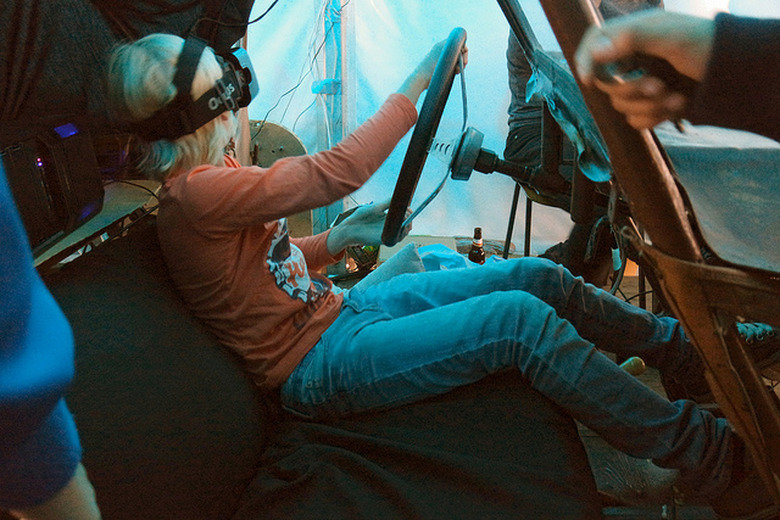
    There are few things that I enjoyed more as a kid than playing video games, the pastime that many liked to call valueless. Slowly that perception has changed. When I was home-schooled, my parents introduced nontraditional methods of teaching. Educational video games were soon implemented in my curriculum. I recall the first time that I saw the Nintendo Virtual Boy in 1995. Who knew that this early attempt at virtual reality gaming would look a lot like the future of education, interaction, and learning? Great things are coming from the beginnings of humble video games. It's clear that technology is changing the way we learn and connect. The first step was normalizing gaming in the classroom. Opening that door allowed the possibility of alternative technologies and methods. Arizona State University has implemented an innovative take on student coursework - environmental science games. The intention of these games is to force students to use their critical thinking skills in a series of real-world scenarios. There are no right or wrong answers in the game, but students and teachers receive performance summaries showing the potential consequences of their actions. The categories include environmental, economic, and social sustainability. Game-based learning is becoming largely normalized. Immersing students in games and simulations can provide engrossing and personalized learning experiences unable to be obtained in any other way. These analog video games represented the first step. Virtual reality comes next.The applications of VR expand beyond what we traditionally consider 'gaming'. Any experience you can imagine is going virtual. VR in the classroom makes a lot of sense. It provides a safe environment for students to learn and interact. No mistake is permanent and the feedback is immersive. Google is leading the initiative by providing low-cost Google Cardboard VR headsets alongside the field-trip sim software called Expeditions. Think of the technology as a planetarium in wearable form. It allows these students to be transported to a place normally inaccessible, such as the Italian city of Verona. Imagine using this tool to study architecture, archeology, or even astronomy. You're no longer limited by where you can physically travel. The software is offered free to teachers, and is included with the kit of of headsets. Teachers control the software via tablet and it allows them to control the so-called expedition. Nearly 100 VR field trips are currently available to teachers and students. The applications stretch even further. Virtual reality enables researchers to examine human behavior in a controlled environment. Researchers use virtual reality technology as well. Some marketing researchers use virtual shopping 'games', wherein the consumer can browse a virtual store and their actions are monitored. Your decisions and habits are recorded and used as a benchmark for future tests. Concepts of virtual locations are fascinating because they create the possibility of visiting locations that can't or don't exist in our lifetime. Imagine virtually visiting the Library of Alexandria. The original books are long gone, yet this virtual library could contain all of the digital books of the world and be accessible by anyone with a desire to learn. The educational and self-development possibilities are endless. Each of these pushes the boundaries of what may have traditionally been thought of as a 'game'. Game based learning, especially when featuring virtual reality, is immersive. It has the power to depict complex topics in an intuitive format. Viewing a photo of the Statue of Liberty in a book is nice, but virtually touring it is a visceral experience second only to real life. 25 years from now I imagine we will look back at these early attempts at VR as the first steps toward something much greater. David Kirby is a screenwriter, editor, and columnist. You can find more of his work at the Huffington Post.

    By David Kirby Read More
  • Women and the Boundaries of eSports

    The gender boundaries of traditional athletics are straightforward. Women compete against other women, and men against other men. Weight classes and physical characteristics further divide men and women. In some cases this prohibits physically dissimilar athletes from competing against each other. eSports are a different beast altogether. Their virtual nature allows participation to be much more inclusive. It doesn't matter what you look like, only what you can do - at least in theory. Fast twitch reflexes, vast in game knowledge, and coordinated team efforts are all prized in the eSports arena. In practice, women seem to be almost completely absent from the competitions and the organizations who host them. eSports are traditionally marketed exclusively to men between the ages of 21 and 34. Despite this, women comprise nearly 30% of eSports viewership. For team-based games like League of Legends or DOTA 2, there are several high profile tournaments each year that garner millions of unique viewers. Between 2009 and 2014, there were zero female professional League of Legends players despite the game being the most popular eSport in the world. In 2015, Maria Creveling became the first female professional League of Legends player to ever reach the League Championship Series. Examining the evolution of women's athletics highlights why so few women are playing eSports, despite viewing them in large numbers. In athletics, 40% of all sports participants are female, yet women's sports receive only 4% of all sports media coverage. If the comparison between viewership and female playerbase indicate anything, it is evident that women face systemic exclusion from integrated mainstream eSports professional play. Online verbal abuse exacerbates the situation by excluding would-be female players. Riot Games, the publisher of League of Legends, has made significant efforts to curb this online culture of toxicity. Their honor initiative and chat monitoring measures have cleaned up much of the sexist and hate-filled interactions that the game was notoriously known for. Richard Procter wrote about the subject of online female gamer harassment in his article "How Women In eSports Deal With Twitch Toxicity Every Day." In reference to a panel held at the convention, Mr. Procter writes, "The panelists also discussed the idea of having women-only eSports tournaments. The general consensus was that such tournaments might be beneficial in the short term to create a welcoming environment for ladies interested in competing in eSports events. But they expressed frustration that such reasoning was necessary and hoped it wouldn't always be the case." When women do play eSports they are often segregated. This can occur as a defense mechanism against sexism, or as an organizational method of dividing genders in the mainstream side of the sport. Female only tournaments may appear to help in the short term, but do nothing to promote long term equality. Tournaments exclusively for women do bring visibility to the sport and the women playing them. However, the long-term viability of this practice is questionable and undoubtedly the sport needs diverse participation to grow. When we strive to accomplish something, we attach ourselves to role models. It is particularly challenging to succeed in an industry where there are few people similar to yourself, as is the case for the majority of women. There are several influential women in the gaming industry, but unfortunately too few have any involvement in eSports. If the business world is any indicator, integrated female leadership in the eSports community would ultimately strengthen the sport in both participation and viewership. More than this, excluding half of the world's population inherently reduces the eSports talent pool. This division among the community is a missed opportunity to erase misogyny and increase engagement. Physical ability and gender have no bearing on the capability to play eSports. Encouraging women to participate will grow the sport and demonstrate that video games can be enjoyed by anyone regardless of gender. Women of all ages need to be shown that video games and eSports are a place that they can participate as equals without be ostracized for pursuing their interests. Mutual respect and equality of representation is an admirable goal within the larger industry. Creating an inviting environment for women in eSports and online gaming is a smart business move that will contribute toward solving the toxic harassment and 'bro culture' within these communities. It's time to tear down the boundaries and allow equality of opportunity for everyone with the skill to compete. David Kirby is a screenwriter, editor, and columnist. You can find more of his work at the Huffington Post.

    By David Kirby Read More