Ed Zitron

Engadget Editorial Policies

The unique content on Engadget is a result of skilled collaboration between writers and editors with broad journalistic, academic, and practical expertise.

In pursuit of our mission to provide accurate and ethical coverage, the Engadget editorial team consistently fact-checks and reviews site content to provide readers with an informative, entertaining, and engaging experience. Click here for more information on our editorial process.

Stories By Ed Zitron

  • IT nightmares: What Apple Did When My Macbook Caught Fire

    In 2007, I was about to graduate college. I was sitting with my darling Macbook Pro. It was one of the first intel models. It had survived most of a year's exchange education at Penn State, the trip back and the trip to Aberystwyth, Wales. It was a behemoth machine that I did everything on. It also used the wonderful first-generation MagSafe connector. If you don't know what that is, it's the magnetic power connector for portable macs that if you happen to trip over it'll unhook safely without using your computer like some sort of weird Pee-Wee's Playhouse trap. The problem with the first generation was that they had a critical design flaw. In the natural life of a laptop you tend to move your cable around - and usually when it's plugged in, especially on your lap, it'll move around a little from the pressure of you typing. The issue with the original MagSafe was that it was a tiny little magnetic connector that was relatively heavy compared to the teeny-tiny little wire that came from it. Over the years, I hadn't seen it, but the waggling of the cable in my bag had somehow caused the wires to fray. I had noticed it had lost some of the soft coating around the wires that I could now see, but it was working fine. One day, I was walking out to get something from the shops, and plugged in my laptop to charge it. I did so, turned to put my shoes on and saw a tiny little trail of smoke rising from my laptop's plug. This fast became a much larger, more scary plume with real fire and I immediately unplugged the cable from the wall and the laptop and for some reason threw it across the room onto the couch. I then realised the couch might get burned, ran over, and threw it onto the carpet. Once I realised that too may get burned, ignoring the fact that it was now not actually combusting, I put it in the fridge. I called Apple and spoke to someone. They asked for my address. They seemed quite disinterested in how distressed I was, and I asked why. I don't remember them actually answering, simply saying they'd get me a box, to send the burning one to them and then send me a new cable. "If you want we can take the laptop too." I declined. In furious, angry, British rage, I did what any normal person would do and slammed out an 8 paragraph email to sjobs@apple.com, saying how big an Apple fan was, recounting the experience I had had over the phone, suggesting the MagSafe needed review and that I was fairly upset with how I had been treated, but truthfully I'd remain a customer as the MacBook Pro was actually lovely, the PowerBook I'd had was great, the iPods I'd had were great and really, I loved Apple stuff. I did that and waited for my box to get to me. Around an hour later, I received an email from a man I will call Mike. He was someone quite high up in customer care, in Cupertino. It was around 12PM GMT - so that's 5am in Cupertino. This man was very, very insistent we jump on the phone, in the nicest way possible, as my laptop had nearly set on fire. He called me and immediately apologised. "Did Steve read my email?" "Someone read your email." "Who?" "I did." "Do you get Steve Jobs' emails?" "I can't say who read your email, but I have also read your email." Realising I was being a huge dick, I apologised. "No, it's good to get a laugh out of a guy in your situation. What happened." I, slightly emotionally, as I was a bit overdramatically scared over my apartment setting on fire, recounted the story. He apologised endlessly. "That's horrible. I also need that laptop. I need it here, in Cupertino, as soon as possible. I'm going to get you a new laptop too and a FireWire cable so you can transfer it over. Do you know how to do that? Is the old laptop still powered enough to transfer your stuff over?" "Uh...yeah." "Great, what's your address?" I provided it. "Cool. Okay. I'm ordering you a new laptop now. Just gonna hit all the highest options and give you a new AppleCare. Should be with you tomorrow. Also, a guy will arrive to help transfer your data and seal the laptop and charger away to take it to me." Now it's important at this point to pause and give some Geographical education. Aberystwyth, Wales is a town 236 miles from London (by Google Maps' estimate, nearly 5 hours away thanks to a lot of hills.) The closest airport is around 3 hours away in Birmingham. It is NOT a pleasant drive. It was now, after much discussion, 1PM GMT. "Sure, mate," I said, in my head thinking "I'll see this in a week." Royal Mail and the various delivery services are as reliable as giving a dog your mail and saying "go get it boy! Go to the nice man!" Sometime the next morning, the door rings. A man walks in, casual yet well-dressed, with two boxes. "Hello Ed, I'm <name>, here's your new Macbook Pro." He hands it over. "I've got a cable here." He walks me through the full transfer between devices, using the old power adapter ("that's a good sign - the machine still works and isn't overheating anything") to keep it alive. It finishes. He places the old one in a foam-lined box, perfectly cut for the machine, along with one for the charger. He takes out a huge seal and slams it onto the connectors of the box as it's closed. "I'll be on my way. Thanks again and have a lovely day." "Cup of tea?" "No, I've quite the drive ahead." I decided not to ask any further questions.

    By Ed Zitron Read More
  • For your app-roval: My horrifying digital dependencies

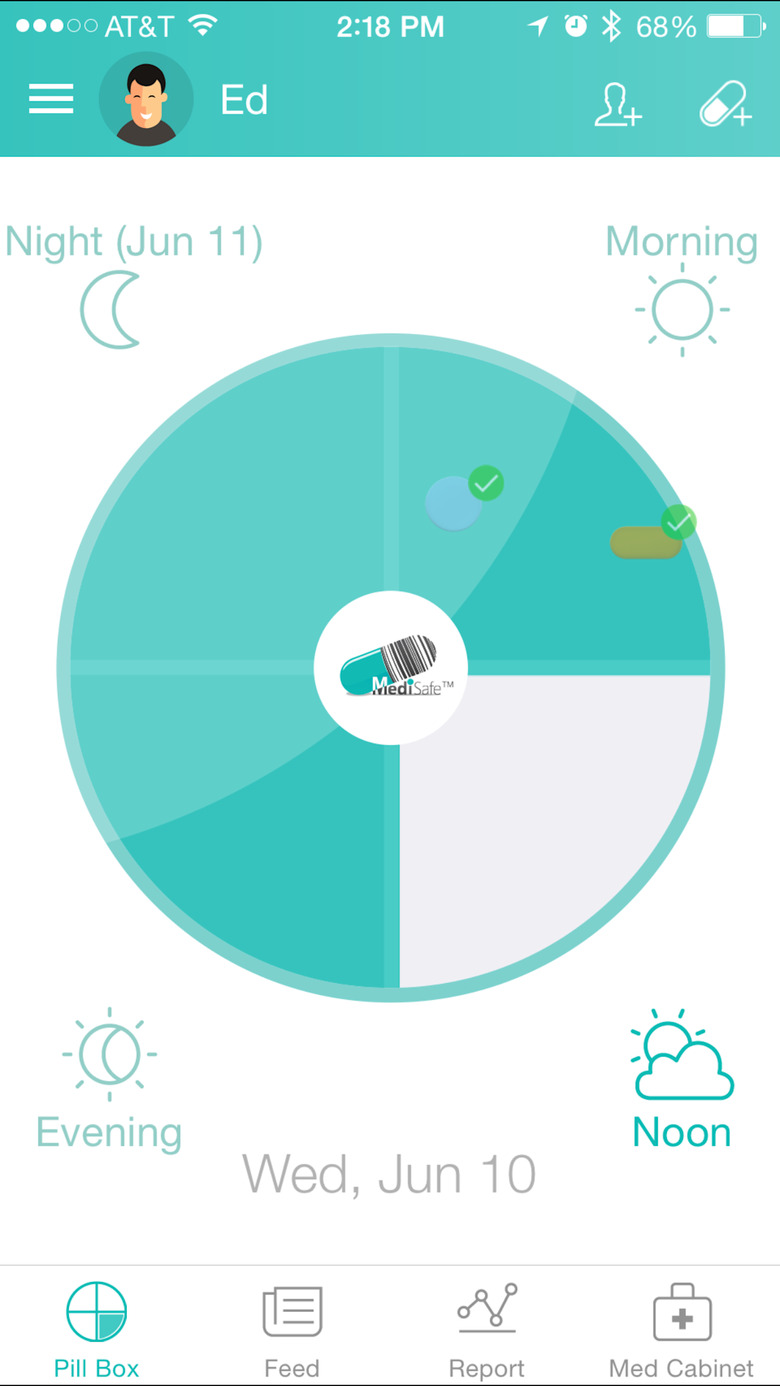
    My phone now has earned the twitch status of my wallet, my hand reflexively tapping whatever pocket it should be in, creating a giant flux of anxiety if it's not there. Worse still, inside sits tiny voids of dependency that exist to control the tire fire that is my brain. My iPhone 6 plus is at times (along with my Chief of Staff) all that stands between me and catastrophic failure. Here are the little buttons I press to stop my world ending. Medisafe I require medicine to exist, as many people in the world do. In my case it's for anxiety and ADHD, which are conditions that you'll find compounded if you miss even one dose. Most pill trackers on most devices suck like working in a vacuum factory. Medisafe, which I found by accident, is the only one that's got the simple things you need from these apps: You can easily enter in your medicines. It has a database of medications so that it doesn't say "BUHHH?" when you enter something obvious, and put in the number of pills you have. It's really easy to tell it when you took it, and it reminds you to do so. You can handle both as-needed and time-specific medications. You'd think that making a medication-tracking app would be easy, but it turns out most companies making these apps are bad at it. Medisafe's great. It even pings my Chief of Staff if I don't take them, so that if I forget and also ignore my reminders (which I would never do, except all of the times I do it). I found the app by accident, and it's become the one I use all the time. Doorman Full disclosure: At one point, Doorman was my client. I didn't do a very good job for them. Partly because I didn't live in San Francisco (I was in North Carolina), we all day and I also didn't trust people to not steal packages from my doorstep. Thus I went back to the service that I'd not truly understood I needed. It's simple: Doorman gives you an address that you can have packages sent to. Doorman has people at that address and they accept your packages. You pay a fee (either per-package or monthly) and on the app tell them to deliver it at a certain time window, after 6pm (through midnight), which you can choose depending on your plan. I use them at least 4 times a week, and if I didn't I'd probably lose the 49 different things I order daily from Amazon. Thank you, people who deliver to me, and I'm so sorry about the very large objects I order. Workflow I remember seeing the launch of Workflow and thinking "man, what kind of lazy idiot would use this!" only to adopt it the moment I got my new Apple Watch. The commands you can enter into Workflow use the combinations of different app access to save me a bunch of time but also do things faster (and more accurately) than I can often do with my huge, horrifying fingertips. For example, connected to my watch, I can poke at Workflow in two taps to say "from my location, get an Uber to take me home." This hails an Uber, tells the Uber where I am, then tells the Uber where I'm going. Alternatively, I can when I take a bunch of photos, I can get them uploaded to Dropbox (away from my easily-breakable phone) in one tap. That's magic. That is what magic is. Workflow makes me feel like a Steampunk Prince From The 23rd Dimension. Microsoft Bloody Outlook It's very cool to dislike Microsoft, especially if you're using an Apple machine to type on and an Apple phone and an Apple Watch and everything technological you use regularly is Apple. I am fortune's fool - I use Outlook, as it's the best email client and life-organizer I have. It's the best email client on the iPhone, with the ability to search your actual emails (unlike the Apple mail client, which rarely works properly for me), and lets you connect all of your various cloud storage services and attach things from them. It's also remarkably intelligent, noticing the attachments you've been sent and allowing you to send them elsewhere, either via email or the cloud. It's also - and I'm surprised how few people know this - a great calendar app that syncs with Google's very neatly. Finally, it's got support for the 4 different email aliases I have. These are all important things to me in my professional and personal life, and I'm utterly surprised that Microsoft is the only company to competently handle them. In Conclusion: I'm a terrible human being that is reliant on technology and technology-related accessories.

    By Ed Zitron Read More
  • Logging in ... My first screen name

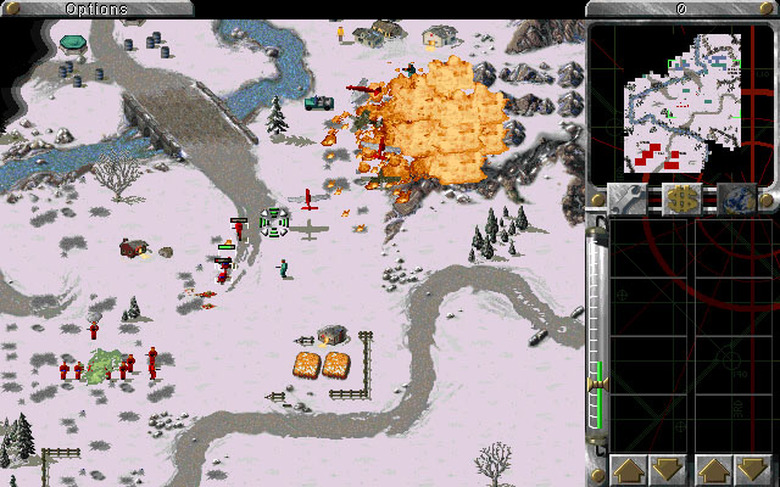
    We all embarrass ourselves as children. At the tender age of 10, I was for some reason allowed to use a computer and also play Command And Conquer: Red Alert. This was before I had AOL, before I had any need for a username that wasn't my dad's on Compuserve, before I knew about the idea of a username. Suddenly I was told to give some sort of online handle that would declare who I was to the world of people I'd be playing a strategy game against. This is in fact the point at which I made my first internet-based mistake, shortly thereafter making my second in agreeing to play a strategy game on a 56k connection. I wanted to be cool as hell, striking fear into the heart of my enemies, so I naturally turned to a subject I knew nothing about - drugs. Not so much as having smoked a cigarette, I chose opium, which seemed to be the drug of a badass, even though it was really not that badass of a drug. Nope. Either Westwood Studios was smart enough to block drug-based names, or I'd been scooped by some other opium-haver. That accursed man or woman had taken my handle. I didn't fear though, because clearly I could be just as badass and a rebel, choosing the name opiun. I played a few games. I got pasted. About 6 months later, somewhere on the internet (mIRC chat, possibly), I mentioned the username. "Lol, that's a perfume." They were right. This led me to simply stick to edzitron. Most people think it's made up anyway.

    By Ed Zitron Read More
  • Growing Up Geek: Ed Zitron

    When I grew up in England, I legitimately wanted to be a games journalist. This sounds strange, but the moment I started using tech, I started playing games. I'd play The Humans on my dad's computer for as long as he'd let me. I'd even play an aged version of Duck Tales on a monochrome laptop. Well, calling it a laptop was generous, as this thing had handles like a suitcase and if you dropped it on your foot you're going to get a broken bone before you get a broken computer. My first piece of technology that was "mine" was the Game Gear, a monstrously large SEGA handheld (I have small hands, and this was a challenge) that I used to love so much that I'd hide from my parents before bed to play it more. Then something interesting happened; that weird internet thing came to be, and I'd start playing Ultima Online using my dad's PCMCIA sub-56kbps dial-up connection on Compuserve. I'd learn from other people in chatrooms, which all seemed far more innocent than they are today, about how to build computers, what the different specs mean, and eventually we'd purchase our own family computer that my dad would let me help pick (because I somehow knew more). I was elated to start playing games with real 3D in them, and even learned how to install new RAM and 3D cards (such as the Voodoo FX5500 - which added in things like bump mapping and anti-aliasing) that my dad didn't know why he was buying but knew it made me happy. I loved it. I'd learn about the internal parts of the computer through whatever pre-Wikipedia means I had, usually those I knew through the vestigial world of online gaming and internet forums. It was fascinating and I felt like a wizard being able to stick things together and then the electricity would go through them and magic would happen. Depressingly, things at secondary school would not go so well, as I'd find my new-found geek knowledge didn't play so well with a private school of sporty bullies. I'd dive further into Everquest than any child (or human) should, one of the early adopters, importing the game from America and somehow convincing it to accept my (dad's) credit card. I'd get eat, I'd get sad, I'd play Everquest. Rinse and repeat for a few years. It was sad, but I sat there - without realizing it - that I was actually seeing the rise of one of the most lucrative parts of the games industry, something that would go on to influence huge parts of technology. Everquest, by proxy of its (relative) popularization of the experience system (though it was far from the first to do so) would lead to everything from World of Warcraft to the % of "done-ness" you'd find on your LinkedIn profile. By 17 I'd learned to loathe my geeky side but couldn't escape it. I'd started to reject the comics my brothers Matt and Will had given me, I'd somehow gone through the entire anime timeline of "Hey this is cool!" "huh that's alright!" and "oh my god, tentacles, no," and thus was back to simply playing Everquest out of addiction. On the side I'd still play my console games, which are really easy to put time into when you don't have friends (I was an RPG man, sticking to the Final Fantasy titles). Then something curious happened. Through some family connections I got an internship at the now-dead Computer & Video Games magazine (which I'd read since the age of 8). My dad sat me down after my first weeks went well and I was offered a chance to take part in the "readers' issue," telling me that perhaps all of the gaming stuff was good for me, and that despite being in a school where it was generally looked down upon to have this kind of knowledge, I could make a career out of it. A day or two later, I had a guide to how I was going to lose weight from him, and I dropped 100 pounds in about a year. My father is a marvelous man of mathematics and spreadsheets and management consultancy. One might call him a geek, but that's for him to say, not me. One day, after graduating high school and feeling quite svelte and fancy-free. I still played games and felt fairly proud of turning it into a career. I emailed my old friend Will Porter (who at the time was a lower-level person at CVG) - he was now Deputy Editor at PC Zone, the other games magazine I read that has also been shut down. I asked him if he had work. "You know anything about MMORPGs?" I laughed, emailed him I'd played Everquest for 5 years and remained quite into WoW. "Well, how about a review of a Final Fantasy XI expansion?" I ground away at FFXI for hours, then stepped up to review the expansion. A hundred reviews and way more random features, previews and think-pieces (within games and technology) later, I'd end up deciding to leave England. Getting a visa to write about games was not happening, so I thought I'd try Public Relations. People were quite sad when I left. They even make a fake-Ed to commemorate my passing. When I moved, I joined a firm that was quite confused by my technical knowledge. I'd meet "tech PR" people who didn't know what RAM was, or what haptic feedback was, or how to put together a PC, or how even the most basic HTML worked. Many would even boast that this gave them an "objective perspective" on the industry. I said it gave them "bugger all." Many reporters would agree with me. I'd continue to use this new-found "money" that one makes in PR to buy random gadgets, tablets, phones and other doo-dads, simply because I wanted to know. I'd sort of married myself to the idea of picking apart technology endlessly, and it helped talking to reporters, who usually were quite surprised that a PR person would be able to sit there and talk anywhere near their level. It was strange. I felt out of place at events. One time I was in trouble at my first PR job for "being too geeky" on a call with a client. I'd eventually stifle my geekness into the back of my head through a series of bad dating experiences and worse work experiences. Out of spite, and immense luck, I'd write my first book and somehow convince Warren Ellis, author of many fantastic comics including Transmetropolitan, RED and the even more excellent book Gun Machine, to write the foreword. I receive hate mail at a consistent clip thanks to it because apparently "this guy doesn't know anything about PR" and "just writes comics." Some years later, I'd end up starting my own PR firm and felt my geekiness snap into place. I couldn't hide who I was anymore. I couldn't be a facsimile person and I simply gave in. I'd have every game release I wanted, I'd buy geeky things and accept who I was as long as I didn't turn into a social hermit again or bankrupt myself in the process. Eventually this won me huge clients, some that I can't even talk about publicly (yet), because I actually knew up all about the things they were talking about and could do my job. I'd been slowly getting back into comics for years, and my brother (through a few excellent recommendations and the film Guardians of the Galaxy) recommended I consider purchasing some comic artwork, as after all Arthur Adams had just drawn the cover (and was drawing the entire issue) of one called Guardians Team-up. A few months and a few lovely lunches later and I handed Arthur a check and bought the entire original interiors and the cover of the issue, always wanting some artwork on my walls. Or one entire wall. This led to a huge collection of interiors, including one of the largest of Warren Ellis and Stuart Immonen's Nextwave. With 12 issues of the comic and a huge cult following it's become my geek crusade. Now I've both grown up and grown into being a geek. I hope I never grow out of it.

    By Ed Zitron Read More