Ekim Saribardak

Engadget Editorial Policies

The unique content on Engadget is a result of skilled collaboration between writers and editors with broad journalistic, academic, and practical expertise.

In pursuit of our mission to provide accurate and ethical coverage, the Engadget editorial team consistently fact-checks and reviews site content to provide readers with an informative, entertaining, and engaging experience. Click here for more information on our editorial process.

Stories By Ekim Saribardak

  • 6 of the Best Uses of Drones

    Drones – also known as unmanned air vehicles (UAVs) – are fun and they shoot amazing aerial videos, but that's not all drone technology can offer to humanity. Drones come in many sizes and shapes and they are perfectly suited for carrying packages or conducting aerial inspections. All around the world organisations, companies and governments have started using drones for various purposes. Amazon, DHL, UPS and NASA have invested in their own drone fleets for delivery, security surveillance and other purposes. In light of the latest developments in the industry, drones have proven that they are more than flying cameras. You have probably seen aerial photographs taken by drones and heard about drone racing, but from transporting people to beaming down Internet access, these flying robots have become a multi-purpose tool that offers the possibility of reimagining the fundamental ways humanity works. While most people are still freaking out about Amazon's plan to use drones for shipping and delivery, UAVs can do much more than just move packages. Real Estate Aerial drone photography is easier to implement in terms of price and planning when compared to the next alternative – helicopters. That's why the first commercial use of drones was to shoot videos of real estate. Using flying cameras, real estate photographers are producing stunning shots of landscapes and recording videos of residences in ways never imagined before. The laws in the USA and UK currently allow commercial, for-profit use of drones in real estate under registration and limited access. Fishing Drone fishing may sound ridiculous, but a few months ago a video captured anglers catching a giant tuna after using a drone to place their bait 100 meters off a beach. Drone enthusiasts are creative and resourceful people, to say the least. Since the release of that drone fishing video, many people have followed this trend and there's now a drone manufactured just for fishing called the AeroKontiki. Internet Access Facebook's CEO Mark Zuckerberg has plans to bring wireless Internet to undeveloped countries around the world using the Aquila drone. WiFi drone Aquila uses solar charging panels and laser systems to beam down Internet access from 90,000 feet, covering a radius of 50 miles on the ground. The Aquila drone will be able to stay up in the air for three months and is able to deliver data at speeds of 10 Gbps. On June 28, 2016, Facebook completed its first test flight of the Aquila with success and Zuckerberg said, "Eventually, our goal is to have a fleet of Aquilas flying together at 60,000 feet, communicating with each other with lasers and staying aloft for months at a time." Aerial Inspections Drones can be equipped with all kinds of cameras and sensors. Using heat sensors, farmers use drones to monitor crops and animals. Using various cameras, drones have been used for inspecting offshore oil rigs, commercial jets, wind turbines and power lines. Human investigations are only able to go so far as people are often limited when it comes to heights, and drones can see much farther than the human eye. Companies and organisations are increasingly using drones for inspections as they face the challenges of having humans conduct inspections. Surfing This has to be one of the coolest ways a drone has ever been used. Freefly produces large drones that are waterproof and can carry 20 pounds. These drones are manufactured for the media but instead of carrying a camera, their latest drone, ALTA 8, was outfitted with a rope to pull a surfer. The drone costs $18,000 but definitely introduces a new way for surfers that doesn't depend on good waves. Fire Fighting Fighting a raging fire is one of the toughest jobs in the public service world. Firefighters are often forced to rush into a blaze, having no idea of the scope of it. Lately, the use of drones by fire departments and police agencies has grown across the globe. An aerial view from a drone help firefighters figure out the size of the fire and develop tactical methods accordingly. The idea of a New York skyscrapers swarming with tiny drones might seem like sci-fi right now, but with the latest innovations in precision and accuracy of GPS technology, it could happen in the near future. We have yet to see the changes these little flying machines will bring as the tool of the 21st century.

    By Ekim Saribardak Read More
  • DJI's Latest Drones Compared in Detail

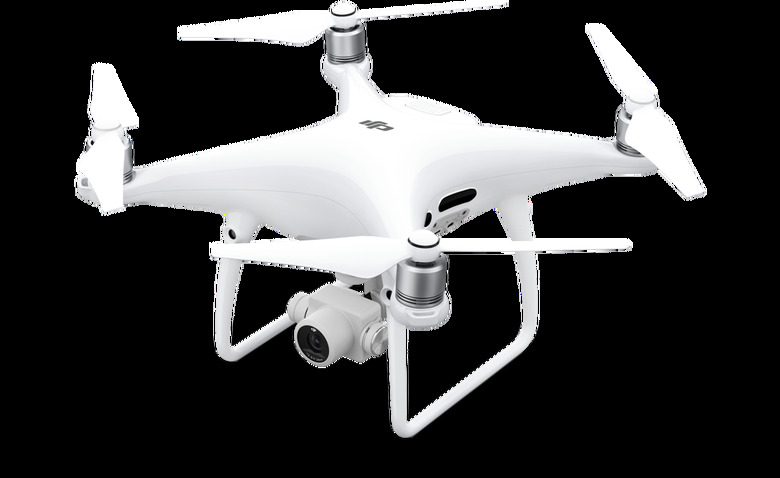
    DJI has released their latest drone the Phantom 4 Professional a few weeks ago. The Phantom 4 Pro stands out as the twin brother of the Phantom 4. It's a modern, white-colored drone for video recording, with aerodynamic outlines, a magnesium core, along with a durable plastic exterior. It measures about 7.0 by 11.5 by 11. 5 inches (HWD) and weighs about 3 pounds, so you will need to sign-up before taking it out and start flying. The camera is stabilised with a 3-axis gimbal. In a massive change from previous Phantom models that leveraged the 1 Or 2. 3- inch sensing unit dimensions found in most long zoom cameras and smartphones. It's roughly four times the size in regards to surface area comparison, so both images and video clips have the potential to demonstrate significantly more detail and quality. The field of view is a little bit narrower than the Phantom 4, the Phantom 4 Professional's lens captures the equivalent of a 24mm versus the P4's 20mm scope, which makes it a much better lens. DJI's introduction video for the Phantom 4 Pro demonstrates the camera changes. Stills are recorded at 20MP resolution in Jpeg or Raw DNG file format, with video clip recording available at up to 4K high quality at an ultra- smooth 60fps. Classical 30 and 24fps capturing rates are available as well. The camera also provides aperture control (f/2.8 through f/11), which means you do not need to depend on neutral density filter systems to manipulate your shutter perspectives anymore. And it supports a mechanical shutter, which removes the rolling shutter effect that may scar video recorded by CMOS image sensors. The video bit rate has been enhanced as well. Video Footage is compressed at 100Mbps using H.265 data compression, up from the H.264 60Mbps format provided by the Phantom 4. A high-quality SD Card is required to achieve these recording speeds. Body comparison: Despite looking very similar, just the top covering is identical. The bottom half including the camera, gimbal, and sensors are of different design and style. But the P4Pro will fit in all cases designed for the P4. You will be able to use your old bag that you bought for your Phantom 4, with your Phantom 4 Pro. Camera Comparison: The P4P camera is larger than the P4. ND filters from the P4 will not fit the P4P. Battery weight comparison: 458gr vs 462gr. Despite having more power along with a larger cooling system the P4P battery is only 4gr heavier than the P4. Given the power it produces is 10% greater, this is an acceptable weight. LED and vent out comparison: Identical in all dimensions. More exposed air vents on the P4P make it possible for much better air conditioning and air flow into the airframe. Clear and non-diffused LED cover provide better visualisation of P4P during daylight flight. Motor comparison: Identical motors on both P4 and P4P. Even though P4 and P4P have identical motors, the Phantom 4 Pro exceeds it's younger brother in speed by %10. The Phantom 4 Pro flys at speeds up to 55 mph. RTF weight comparison: 1342gm vs 1339gm. Despite having a heavier battery, more sensors, and a larger camera, the P4P is 3gr lighter on take off weight. Both drones weight almost equal, but the new P4 Pro's flight time is increased by 5 minutes. Battery comparison: 5350mAh vs 5870mAh. Both are fully compatible with either P4 or P4P. The new P4Pro electric batteries will work with the P4 and the P4Pro, new batteries give the P4 a longer flight time. Phantom 4's announced flight time is 28 minutes, while P4 Pro has 32+ minutes flight time. Rear comparison: The rear sensors on the P4P are the same as the front ones on the P4. The Bottom half of the P4P frame is totally different to the P4 to accommodate the extra sensors. Despite having the same height and footprint, the sensors are different too. Bottom comparison: Identical in all dimensions but slightly different design in the downward sensors. An additional foam piece is now supplied with the P4P to provide added support and protection of the gimbal during transport. RC comparison: Despite looking Identical, the remote controller on the P4Pro is NOT compatible with the P4 and vice versa as the P4P has a new transmission protocol using both 2. 4GHz and 5. 8Ghz. The previous P4 uses 2.4 GHz band for transmission. Full control of camera Aperture and Shutter: Unlike the P4, the P4P gives you full control of Aperture and Shutter. Propeller attachment comparison: The spring retainer plate on the P4 is replaced with a central spring on the P4Pro. This provides a better even distribution of propeller locking force on the propeller during flights. Propellers are identical on both P4 and P4P and are compatible with each other. In conclusion, the Phantom 4 Pro features a much better camera, more advanced obstacle avoidance, higher battery life, and extra intelligent flight modes. It puts some room between the top of the Phantom line and the new Mavic Pro — a less expensive, more compact drone DJI launched in October which, at least on paper, was just as powerful as its bigger uncle. Phantom 4 Pro may be considered as the leading consumer drone when it's compared to GoPro's Karma and Mavic Pro. Another big change with the Phantom 4 Pro is that you may purchase a remote with a built-in display. The new remote is significantly brighter than your average smartphone and offers the benefit of allowing you to fly without burning the battery on your main communications device. The new Phantom 4 Pro takes droning to a whole new level, safe flights!

    By Ekim Saribardak Read More