Emily Chi

Engadget Editorial Policies

The unique content on Engadget is a result of skilled collaboration between writers and editors with broad journalistic, academic, and practical expertise.

In pursuit of our mission to provide accurate and ethical coverage, the Engadget editorial team consistently fact-checks and reviews site content to provide readers with an informative, entertaining, and engaging experience. Click here for more information on our editorial process.

Stories By Emily Chi

  • Tech Arsenal for Activists

    There's a groundswell of new activists organizing in the current political landscape and technology is a powerful tool to aid in social activism. It can, however, be complicated to know where to begin or what to do beyond retweeting yet another plea to "contact your senator!" Here is an arsenal of apps, podcasts, and websites to help concerned individuals pave a path towards activism by staying informed, learning how to get involved while also keeping you entertained and sane. Countable Recognizing the inherent difficulty of tracking the frequently complex machinations of the Legislative Branch, Countable is an application through which voters can remain informed and updated regarding congressional lawmaking. Users of the Countable app are not only provided with brief, non-partisan summaries of pending or active legislation, but they are also able to quickly communicate their opinion directly to their congressional representative by voting "Yay," or "Nay," through the app. Countable aims to further connect members of Congress with their respective constituents, thereby ensuring elected officials are held accountable to the voters they represent. Pod Save America With the goal of providing access to thoughtful, informed, and, perhaps above all, sane political discourse, Pod Save America is a self-declared no-bullshit conversation about politics. Founded by experienced politicos that include Jon Favreau, Jon Lovett, Dan Pfeiffer and Tommy Vietor, Pod Save America dissects American politics in the most direct manner possible while acknowledging the need to engage, entertain, and inform listeners. Vietor also recently launched a sister podcast, Pod Save the World, leveraging his experience as President Obama's National Security Spokesman into a thoughtful podcast about foreign policy issues. 5 Calls A growing chorus of voters has expressed increasing concern and dismay that the voice of the people is not being heard by lawmakers or worse, ignored. 5 Calls addresses this critical issue by providing voters with information and guidance intended to ensure each voter's voice is not only heard but is also amplified in the most substantial way possible. 5 Calls understands that lawmakers are most likely to be swayed by a deluge of constituent phone calls, which is why it researches the issues most important to voters and provides contact information for the most appropriate representative. 5 Calls also provides an outline or script so callers can clearly and succinctly express an opinion to the appropriate representative. Also, check out democracy.io to easily send messages to representatives and Faxzero to fax a senator when you can't get through via phone. Togetherlist Togetherlist is designed to create a united front for social justice advocates, groups, and organizations representing different causes yet sharing a common goal. Volunteers, organizers, and supporters can quickly and easily access a comprehensive database of advocacy groups and organizations working in support of a wide range of causes. Togetherlist uses technology to connect with organizations and people who can make an actual difference and allows one to get off the Internet to join the efforts. Track Trump Track Trump eliminates all the sound and fury emanating from the White House and instead provides substantive coverage of the actual policy changes being proposed or introduced by the new administration. Through the use of a straightforward and easy-to-use digital dashboard, Track Trump users can compare the campaign promises made by the current president with the actions taken since entering the White House. Progress can, therefore, be seen in real-time, providing users the opportunity to hold the president accountable to the people he represents as President of the United States of America. Signal Signal provides end-to-end encryption designed to ensure all communication between Signal users is secure and protected. Using Signal's end-to-end encryption, it is possible to engage in one-on-one as well as group voice or text conversations. Users are also able to use the Signal app to send images and videos to other Signal users. Recently, some activists concerned about the new administration's potential willingness to engage in abuses of power, or perhaps even fearful of retribution -- have taken to using Signal as a way to ensure their communications remain secured against any unwanted intrusions. CSPAN Radio Available through iTunes, Stitcher, TuneIn, SiriusXM, AudioNow as well as through the C-SPAN Radio app, C-SPAN Radio provides a live stream through which listeners can listen in on congressional hearings as well as speeches given by political leaders. Their gavel to gavel coverage of House and Senate sessions familiarizes listeners with the inner workings of the legislative branch without any partisan analysis. An arsenal should also be rounded out with a news app from a source with minimal partisan bias. Check out the apps from Reuters, BBC News or NPR News, for excellent sources of analytical news.

    By Emily Chi Read More
  • Exclusivity in Modern Consoles: Who's Reigns Supreme?

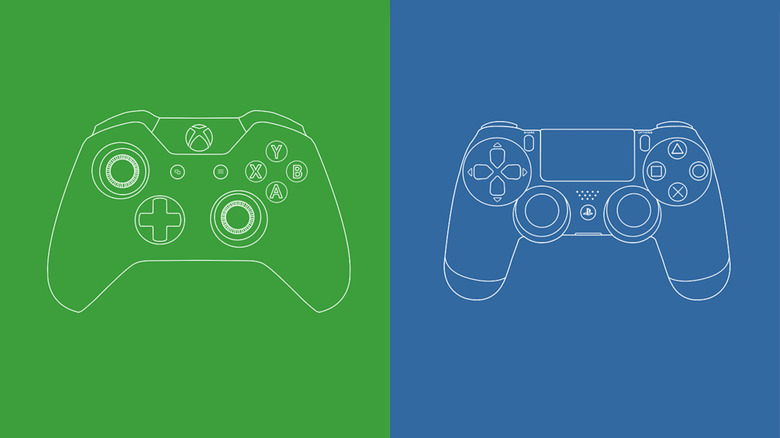
    Console gaming is a modern battlefield for corporate titans. Microsoft's Xbox One and Sony's PlayStation 4 represent the newest generation of advancements in console warfare. The question now is, who's winning? If we look at each console's list of exclusive titles for indication, the answer is pretty clear. Sony takes it by miles. Of the approximately 1,200 retail games available on the PS4, over 100 are platform exclusive. Meanwhile, the Xbox One, whose list of retail titles is something closer to 900, has only 30 exclusive games to date. A primary reason for such a huge disparity may be the Xbox One's unsuccessful launch compared to that of its competition. By January 2016, less than two months after its launch date, the estimated number of units sold for the Xbox was 18-19 Million. That's roughly half of the 36 Million reported by Sony around the same time. In turn, this might have caused Microsoft's console to appear less attractive to developers, who then flocked to Sony as the obvious alternative. Speculation aside, it's clear that Sony has gained control of the larger developer market, with such AAA exclusives as Bloodborne, Until Dawn, The Last of Us 2, and the recently released Horizon Zero Dawn, among several others. Compare that list to Microsoft's relatively meager offering of Halo 5: Guardians and Gears of War 4, neither of which are new intellectual properties, and the difference in scale becomes unmistakable. A string of high-profile exclusive cancellations from Microsoft has only made the case for PS4's dominance stronger. That said, the Xbox One is by no means a weak console. Interest in developing for the system has been rekindled somewhat by the impending release of Xbox Scorpio, and with exclusives aside, the system supports an admirable library of AAA and independently developed titles. As a company, Microsoft's gaming arm is exploring exciting avenues for the future, not the least of these being their Play Anywhere initiative, which strives to combine the best of PC and console gaming through shared games and profiles across connected Windows devices. At the time of writing, Microsoft has also just unveiled a new Xbox Game Pass initiative that will give subscribers unlimited access to over 100 Xbox One and backwards compatible Xbox 360 titles for $9.99 per month. The "Console Wars" have seen momentum swing back and forth many times over the years, and it's important to remember that this oscillation is typical of a market whose strategies and technologies are constantly evolving. Going into the future may yet see the tide of battle swing again into Microsoft's favor, for it is in times of strife where we see the most critical leaps of growth. This is the result of competition. Better products reaching wider audiences, more games and technologies being developed for the end users to enjoy. Whoever wins the battles of today, it is we, and the gamers of tomorrow, who will claim the real victories.

    By Emily Chi Read More
  • AR vs VR: Fight!

    From the outset, 2016 was heralded as "the Year of Virtual Reality" with regards to the development of the Oculus Rift, HTC Vive, and several other PC/console VR platforms. The internet buzzed with excitement, and a wave of VR titles seemed set to dominate the market. In reality, VR platforms have largely been ignored post-launch despite the interest they initially generated. A relatively high price point (with the Vive topping the charts at $799) and a shortage of playable titles at launch could attribute to the lackluster reception, or, an over-hyped audience disappointed with the product they received. Whatever the reason, the VR industry hasn't seen anything close to the numbers projected early in 2016. SuperData, the research firm that often provides insight into the world of game and hardware sales, closed the year by revising its expectations. The firm downgraded 2016 expectations for PlayStation VR in particular, from 2.6 million to under 750,000 while Google Daydream saw a reduction from 450,000 to 260,000. A quick look at the online industry discourse and it seems that VR has all but disappeared from the conversation. In full disclosure, this comes as a personal surprise as our house still runs like a Best Buy showroom with friends eagerly coming over to try the PSVR and leaving to contemplate purchasing a system of their own. The first significant PSVR release of this year, Resident Evil, is less than a week away. It could very well be the breakout title for PSVR and the one to shock some excitement back into consumer VR. Meanwhile, Augmented Reality began an unexpected comeback after the lukewarm launch of Google Glass. With Google itself investing heavily in the startup Magic Leap, and Microsoft launching their own Kinect-inspired HoloLens, the tech giants seem to be in a race for supremacy in AR's emerging market. But new hardware doesn't come quickly, or cheap. Despite nearly $1 billion in funding, Magic Leap doesn't have a retail product available, while Microsoft's is currently sitting at $4,500. On the software end, we're all familiar with how Pokémon Go took over the mobile gaming scene in mid-summer of last year. Pokémon Go itself saw 50 million active users and over $600 million in revenue in its first three months, as reported by SensorTower. It was a mobile gaming juggernaut. The amount of active Pokémon Go players has dropped significantly since the game's early days, with unsatisfied users citing a lack of available content as the driving reason for their departure. Even after heavy losses to its player-base, Pokémon Go sits near the top of both the Android and iOS marketplaces. More importantly, it introduced a broad audience to the concept of AR and more deeply, demonstrated that the success of AR is in its mobility. The future of the AR/VR landscape remains exciting but uncertain. The demand for user-integrated gameplay is still very real, and the technology to deliver it is developing fast, but as 2016 demonstrated, we're not quite there yet. With the lackluster launch of multiple VR platforms and AR being still in its infancy, a clear winner has yet to emerge.

    By Emily Chi Read More