Imran Uddin

Engadget Editorial Policies

The unique content on Engadget is a result of skilled collaboration between writers and editors with broad journalistic, academic, and practical expertise.

In pursuit of our mission to provide accurate and ethical coverage, the Engadget editorial team consistently fact-checks and reviews site content to provide readers with an informative, entertaining, and engaging experience. Click here for more information on our editorial process.

Stories By Imran Uddin

  • Cryogenic Hardening: A High-Tech Treatment for the Increased Performance of Metals

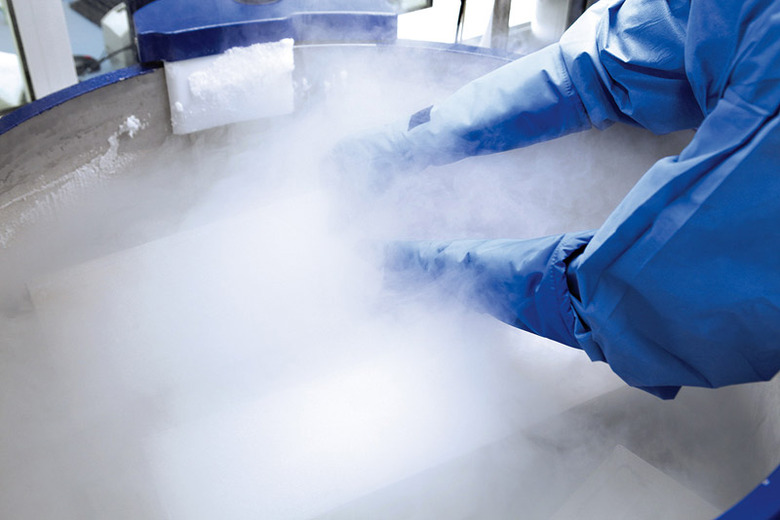
    When people think of cryogenics, their minds go toward the various medical procedures that use extreme cold, such as those used for cancer treatments or wart removals. However, these aren't the only situations where the extreme cold can produce amazing results. One of the lesser known uses of cryogenic treatments relates to metal hardening. It can improve the strength of certain metals while enhancing the overall grain structure. But why would someone want to use such a complex process on metal parts? The simple answer is for increased performance. Increased Durability While most people are generally aware of different kinds of steel, they don't always know the benefits of each and how more favorable results can be obtained. Cryogenic hardening can help transform the austenite found in traditional heat-treated steel into martensite, a more hardened variant. That means you will have a metal with fewer imperfections and with a greater overall strength. Improved Resistance to Wear Cryogenically hardened steel is also more resistant to the damage caused by traditional wear and tear. The process increases the creation of eta-carbides which help bind the martensite matrix more effectively. Since the matrix is better formed, it resists traditional wear as well as corrosion. Less Residual Stress When metals go from a liquid state to a solid state, weak areas often develop within the structure. These weak points increase the likelihood of failure due to the imperfect structure. Cryogenic treatments help create a more uniform grain structure, lowering the number of weak points in the structure and decreasing the chance of failure when the metal is put under physical stress. Uses for Cryogenically Hardened Parts Metals that are cryogenically hardened can be used for more strenuous tasks with less associated risk than their untreated counterparts. This makes them ideal for systems under a significant amount of strain as well as notable heat variations. One example is the use of cryogenically treated metals in performance engines. Treated metals often have increased efficiency while in use, and generally experience less friction than parts that were created more traditionally. Stress points are corrected, limiting the risk of cracking and failure, and allowing the entire system to work more reliably even under extreme circumstances. How the Process is Done Cryogenic treatments involve repeatedly cooling and heating the metals to specific points. Businesses that offer the service often set their own temperature range, so you can see a variance in the standards from one company to the next. The temperature shifts are extreme regardless of the service chosen. For example, one company may slowly cool the metal to -350 degrees F before raising it back up to over 300 degrees F. The cycle is repeated multiple times, and each part of the cycle can around 12 hours depending on the target temperatures. When engine components are treated, each piece must be managed separately. Then, after all of the cryogenic treatments have been completed, the engine is assembled. That means an ideal business offering the service will be able to complete the treatments effectively while also disassembling and reassembling the parts are needed. The process changes the structure of all of the metal in the parts, and not just those areas closer to the surface. That means you get to experience the benefits of increased durability and improved wear throughout the whole of the piece. If grinding is required to achieve an ideal fit, you do not run the risk of grinding away the treated area, as all of the metal is in the same state. Treatable Metals Various forms of steel can be cryogenically treated. This includes high carbon, high chromium, and tool steels. The process can also be used on aluminum, copper alloys, cast iron, and magnesium.

    By Imran Uddin Read More
  • Has Online Technology Made Us Lazy and Less Knowledgable?

    For those who are in their late twenties and above, you know what it's like to live a life without the Internet and other technological devices that seem to make our lives somewhat easier. Attaining information pre-Internet days was all about visiting a local library, walking about aimlessly until you found the book that was congruent to the topic you had to research or were interested in, and then writing it down with a pen and paper. Believe it or not... the world existed before photocopy machines, computers, printers, and Google. Pre and Post Internet It's safe to say that writing a paper for college or working in an office that required researching specialized information, gathering data, or creating a product was a lot harder than it is today. With social media and search engines, people are able to gain copious amounts of useful facts to aid their business and school papers, all in the comfort of their own home. Heck, you could even find a date on Tinder while relaxing on the sofa. It seems as though people today do not have to work half as hard to gain information, to form friendships and relationships, or to simply thrive in business as what was previously required pre-Internet. Negative Effects of Online Technology What does this mean for millennials and the youth of today? Is today's world becoming lazier and perhaps dumber, because of the Internet and technology? With products that essentially do everything for you – from finding your keys using a Chipolo Bluetooth key finder to ordering food at a restaurant less than a mile away via an iPhone app for delivery, we've essentially cut out a considerable amount of natural, face-to-face interaction – something that is pivotal in forming meaningful and mature relationships. Additionally, with the Internet being so readily available to people – including young children, the chance of being exposed to unsavoury or inappropriate information or images has increased ten fold. Even apps such as Instagram occasionally expose people to sexual content that is not suitable for viewers. This has lead to younger children being curious and experimental way before their years. Web content aside, children and adults are now prone to being cyber bullied – a type of bullying that is far easier for bullies, as they can "hide" behind their computer screen. This has lead to a number of suicides and social issues. This issue is so big, in fact, that it is advisable for parents to screen their children's Internet searches. Positives of Advancing Technology Alternatively, one could argue that the invention of the Internet is a positive thing. Social media has proven to be the fastest and most efficient form of communication yet, which is good news for those living abroad. Programs such as Skype have also helped businesses to interact and share ideas with companies around the world, creating globalisation. It has also increased the number of entrepreneurs, who can now create and sell their products using websites such as Etsy and eBay. The Internet can and should be a good thing... if used responsibly. Of course, many enjoy the perks of how easy living is with the Internet readily available but at what level does this invention become detrimental to one's health and social wellbeing? Teenagers and some adults find it hard to leave the house without their smartphones. They use their device more than they engage in human interaction. What does the future look like? What technology will be invented next? And will it have the same monumental effects as the invention of the Internet and the smart phone? Only time will only tell.

    By Imran Uddin Read More