James Gerber

Engadget Editorial Policies

The unique content on Engadget is a result of skilled collaboration between writers and editors with broad journalistic, academic, and practical expertise.

In pursuit of our mission to provide accurate and ethical coverage, the Engadget editorial team consistently fact-checks and reviews site content to provide readers with an informative, entertaining, and engaging experience. Click here for more information on our editorial process.

Stories By James Gerber

  • The 4 Top Trends of CES 2017

    With New Year's festivities now firmly in the rear-view mirror, this week the consumer electronics industry will collectively showcase all of its innovations for the year to come – and beyond. CES 2017 will be a fleeting glimpse into the future of technology. While the show officially begins tomorrow morning, the past couple of media days have been full of intriguing announcements and gadgets unveiled at media events. Smartphone growth may have plateaued as mobile is now ubiquitous, but the IoT is continuing to emerge and there are a number of promising other technologies that will be on display. Here are the top 4 trends I've been seeing before it kicks off: 1. Artificial Intelligence is Becoming Ambient What struck me in the sessions that I've attended and the discussions I've had is the degree to which the consumer electronics industry is trying to embed artificial intelligence within everything. Almost every announcement I've seen this year has some element of AI involved, whether it involves the connected car, IoT, smart home, robotics, etc. For example, the FT's Tim Bradshaw showcased some interesting AI-powered innovations in a video from CES Unveiled. And that's just the tip of the iceberg. Expect it to be a layer that sits on top of everything else. 2. Everything in the Home is Getting Smart There are now toothbrushes with "embedded AI". Let that sink in. Wiithings also created a connected hair brush for L'Oreal that can detect your brushing patterns to fix hair issues. Just what the world needs. But there are also going to be a number of connected devices that improve everyday life. Alarm.com, for instance, introduced the concept of a security drone to help consumers better monitor their homes by investigating anything that triggers its system. GE announced C, its elegantly-designed Alexa-enabled smart lamp, showing that smarts can go in more types of devices than speakers. Catspad will keep your cats fed. Sleep Number's 360 auto-adjusting bed that promises to give you a comfy nights' sleep no matter how much you toss and turn. There will be myriad iterations on these concepts and each one will add a new piece of intelligence to the home. Soon, everything in the home will have connectivity potential - for good and bad. 3. Connected Cars are Roaring Onto the Scene The connected car is well on its way to entering garages everywhere in the near future, and the self-driving innovations that have been shown highlight that the auto industry is innovating rapidly, embedding both intelligence and connectivity to meaningfully improve the driving experience. For example, Faraday Future generated a lot of mostly positive buzz with the unveiling of its FF 91 self-driving car. Although there were hiccups on stage, what they showed was a potential Tesla competitor with a sleek design, advanced connectivity capabilities and an intriguing autonomous mode. Honda's NeuV concept car will have emotional recognition to built in and Toyota had a similar idea with the concept car it showcased that has AI built in (there's that concept again). Hyundai's Mobility Vision concept links the car with the smart home to share AC or heating duties, act as extra space for sitting or provide emergency power. While the auto industry is heading in a number of different directions, it's clear that the car of the future will look very different and be a lot smarter than the ones we drive today. 4. VR and AR are Now a Reality The first VR headsets are already available for consumers. Sony's Playstation VR has been available for several weeks now, joining the ranks of Oculus, HTC Vive, Galaxy Gear VR, Google Daydream and more, and may very well help to make VR more widespread. For VR now, it's all about creating engaging content and killer apps for consumers, and we'll see those on full display at the show, as Intel showed during its keynote. Lots of cameras and accessories that improve the VR experience will also be displayed, such as the Vuze VR camera and Holo Cube. For AR, a number of devices will be shown that will help to change the way consumers see the world. While the space is filled with a lot of hype at the moment (consider the case of ODG's R-8 and R-9 VR glasses), true innovations will surface themselves. Vuzix's cloud-enabled Blade 3000 will help consumers take entertainment wherever they go, Occipital Bridge links the VR and AR worlds together and Lenovo's New Glass C200 shows promise for the enterprise, for example. Robots are Getting More Personal Than Ever While the robotics space was also very hot at CES last year, the sheer breadth of personal robotics innovation on display will show that capable, intelligent and emotional robots are coming ever closer to entering homes everywhere. Kuri from Mayfield Robotics is a cool $700 robot that has emotive eyes, takes pictures and photos and has AI built in to foster friendly interactions with its family members. Olly takes a very different approach and reminds me of a blend of Amazon Echo's intelligence and Jibo's movement, with advanced AI and cognitive capabilities to learn from interactions. LG is even getting in on the robotics action with its Hub Robot that uses Alexa to communicate with other smart devices. Robots and the AI within them are getting smarter, costs are coming down and the variety of form factors that are tailored to individual needs will encourage consumer and business adoption. Expect every flavor of robotics to be showcased, including some unexpected ones. Combined, all of these trends show that the world is rapidly becoming more connected, and each of them ties into the others. A sci-fi dream world isn't far off, and CES will help to take us there.

    By James Gerber Read More
  • Flexible Smart Sensors and the Future of Health

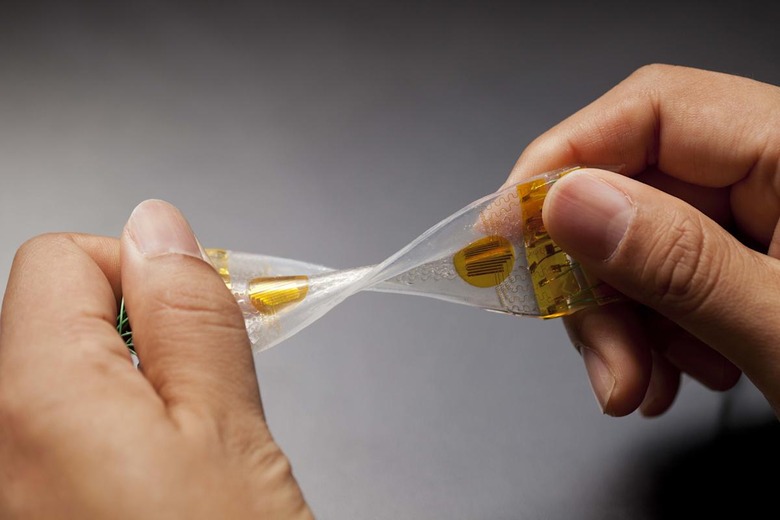
    Have you heard of flexible bioelectronics? While it's doubtful the phrase will ever become a sexy buzzword, these next-gen wearable sensors just might save your life one day.Researchers from some of the top educational institutions and the private sector have been developing lightweight, bendable sensors that take advantage of the latest biomaterials and microelectronics to create smart bandages, stamps and stickers that will give us new insights to improve our health and wellness.Although the technology is still emerging, recent developments are promising.Smart BandagesSupported by the National Science Foundation (NSF), researchers from Harvard, Purdue, Tufts and Brigham and Women's Hospital have created smart bandages to monitor and treat wounds that require ongoing care, such as diabetic ulcers, bed sores and burns.Reza Abdi, associate professor in medicine at Harvard, explained to LiveScience that, "We first create microparticles containing drug molecules and then incorporate these into a hydrogel patch that holds them. Next, we place a stimulation mechanism on top of the hydrogel patch. We monitor the wound area, such as its temperature and pH levels using flexible sensors. If the wound environment is outside normal conditions, then we send a pulse to the electrical stimulator which induces drug release from the microparticles."Another team from UC Berkeley is creating a similar technology to detect tissue damage associated with bed sores before it progresses. It works by using a printed array of tiny electrodes on a thin flexible film to monitor for the electrical changes caused by cell death. Dr. Michael Harrison, professor of surgery at USCF said, "By the time you see signs of a bedsore on the surface of the skin, it's usually too late... If you can detect bedsores early on, the solution is easy. Just take the pressure off." Smart bandages and similar sensors may still be five to ten years away from being used on patients, but they will eventually enable doctors and caregivers to monitor wounds in real-time by collecting valuable data, and to automatically remedy a condition, such as an infection, a drop in insulin, etc.Mind and BodyBeyond the skin, flexible bioelectronics can be used to monitor brain activity and internal organs.John Rogers, a materials scientist from the University of Illinois at Urbana Champaign, said, "Our prototypes can provide a variety of monitoring and stimulation functions. We can pick up coordinated firing of neurons, and run that activity through a computer spelling interface, so that brainwaves pick letters out of a virtual keyboard display and type messages."The Biostamp patch developed by Rogers is as light as a feather, which lets wearers use it for long periods of time without annoyance. It aims to replace a helmet of electrodes (which isn't exactly portable and requires the wearer's head to be scrubbed), and offers better accuracy by collecting more information over longer periods of time. The patch further increases accuracy by eliminating background noise and using high-density electrodes that generate thousands of times more brain activity information.By using the data generated by the wearable device, it can measure the brain waves associated with epileptic seizures and alert its wearer before a crisis occurs. It also aims to provide more insight into sleep patterns and disorders, which had previously been impossible.Wearable patches have numerous additional use cases. For example, the team led by Rogers previously created electronic devices that were inserted into the pelvic nerve to reduce bladder dysfunction, and on the heart as an advanced pacemaker. Stamps can even dissolve safely inside the body after a period of time, reducing the risk of long-term complications. It's tantalizing to imagine a future where every organ can be monitored, to ensure any ailment is under control.A Flexible ApproachAs Moore's law has continued to hold true, more computing power is available on ever smaller, cheaper circuits. Flexible electronics, created through the most recent innovations in materials, have taken advantage of this fact. The Internet of Things (IoT) has completed the puzzle, by interconnecting devices and sensors in new ways to make data more accessible.According to Rogers, "The history of electronics is about getting closer to the individual. At first it was a computer down the hall, followed by a desktop, then a laptop, a phone in your pocket and a watch on your wrist. Now it could be electronics integrated the skin, bioelectronics, and fully implantable devices."Fitbit and the like are fun tools to monitor health and fitness, but these new devices have the potential to save and improve lives. When flexible bioelectronics are available to all, healthcare will take a giant step forward.

    By James Gerber Read More
  • Self-Driving Cars Get Realer: Google Ramps Up Production

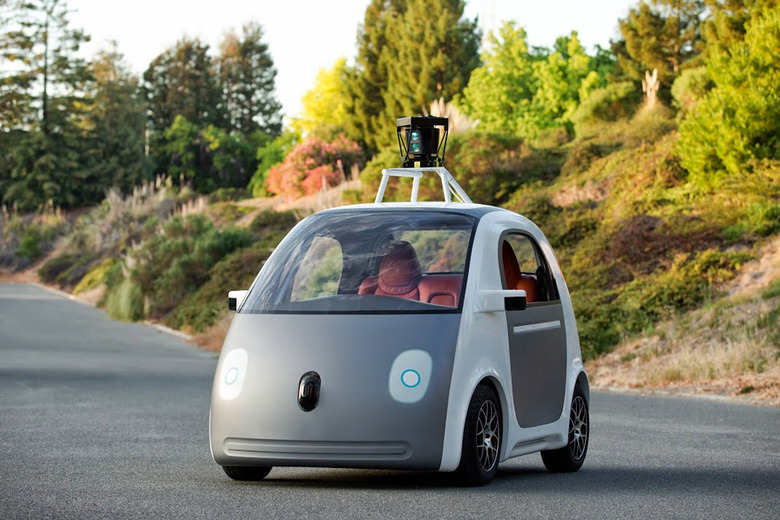
    Drivers, rev your engines (and then do nothing else). This week, Google indicated its self-driving car initiative is ramping up production faster than anticipated. Sarah Hunter, Google X's Head of Policy, revealed that the company plans to create several hundred units this year, up from Google's previous estimate of 100 units in 2015."This is not a car we're planning to sell," Hunter told the California Public Utilities Commission. "We're only making a few hundred of them. We're making them to enable our team to learn how to build a self-driving vehicle from the ground up. It's the first vehicle that's designed just for self-driving. It has no steering wheel, no brake pedals, no manual controls at all. All it has is a 'go' button, a 'please slow down and stop' button, and 'stop really quickly' button. The intention is for the passenger to get into the vehicle, say into a microphone take me to [a location], and the car does the entire journey for you."This is undoubtedly a sign that the company is more optimistic about how the cutting-edge vehicles are progressing. However, there are still technological and business challenges that must be overcome before autonomous vehicles truly become viable."We haven't decided yet how we're going to bring this to market," said Hunter. "Right now, our engineers are trying to figure out ... how to make a car genuinely drive itself. Once we figure that out, we'll figure out how to bring it to market and in which way. Is it something that we manufacture at scale for sale to individuals? Or is it something that we own and operate as a service?"It seems that Google feels it may go head-to-head with Uber in the near future, which certainly puts Uber's increased hiring of roboticists in perspective. Regardless, the market is still in its infancy, and companies like Google and Uber will need to create desirable cars that go over 25 mph before any real competition between them takes place.Although the company's current prototypes are electric, Hunter hinted that when the cars hit the market, there may be hybrid models. And, even though the cars currently move at a gingerly pace, it's easy to imagine Google licensing the technology to major automotive brands who will create high-speed, high-performance self-driving models, if it doesn't decide to go it alone. However, to do that will require federal and local governments to revise current regulations. Google will face an uphill battle to change legislative minds, but proving the safety of its prototypes as it tests more will be a major step in the right direction, if it hopes to achieve its previously stated goal of reaching mass production by 2020.Along with the expanded number of prototypes hitting the roads, Google is also venturing for the first time beyond California to Austin, to further refine its technology. The self-driving car may have a long road ahead of it, but it's clear that Google is well on its way to making it a reality.

    By James Gerber Read More