Jess James

Engadget Editorial Policies

The unique content on Engadget is a result of skilled collaboration between writers and editors with broad journalistic, academic, and practical expertise.

In pursuit of our mission to provide accurate and ethical coverage, the Engadget editorial team consistently fact-checks and reviews site content to provide readers with an informative, entertaining, and engaging experience. Click here for more information on our editorial process.

Stories By Jess James

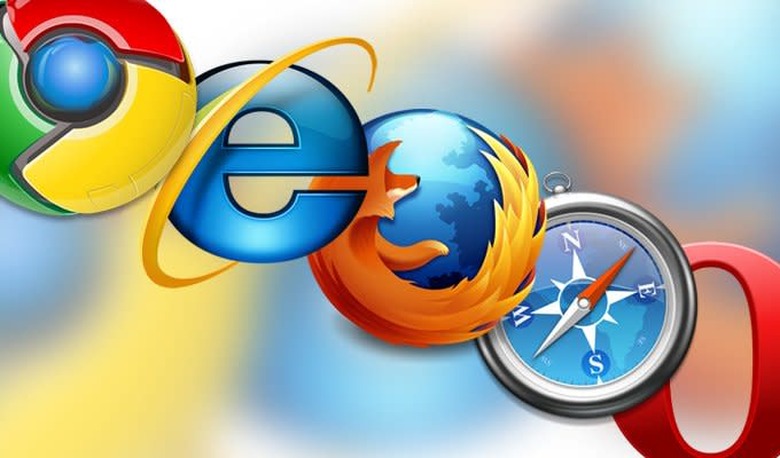
  • Chrome annoys me, or: "I'm in an abusive relationship with Google".

    When I first starting using the Internet it was barely an Internet at all. It was more of an internet.We used Netscape Navigator to browse in monochrome, and suddenly we had pictures and text on pages instead of bulletin boards and clunky communication. Like all revolutionary steps, especially in technology, it was awesome, and then became commonplace, and then became annoying as we started to feel the limitations and desperately want upgrades and new features.And now we have maturity and iterative changes, and 3 or 4 browser vendors controlling, quite literally, everything.I'd like to say, publicly and for all to hear, that I love Mozilla and Firefox, but it wasn't always the case. By the time Chrome came along Firefox was competing with Internet Explorer by way of it's features list. As a result it was bloated, heavy, sluggish and complex. It also had kind of a techie feel to it, and leaked memory like nobody's business.And here comes Google. Their browser is fast, simple, fast, pretty, easy to use and fast. I loved it. Everyone loved it. It changed everything.And now the inevitable switch has happened. Firefox, in an attempt to keep up and not lose relevance, has completely re-invented itself. While Chrome has become slow, sluggish and stagnant, Firefox is good looking, fast, easy to use and is still a pillar in the world of open source software.I would absolutely, completely and utterly love to use Firefox as my main driver every day, but I can't.I just can't leave Chrome. I want to leave. It doesn't treat me well, doesn't respect me and always makes me feel a little dirty and used. But I can't leave. I feel trapped, and sometimes a little weak; giving in to my love of convenience and reliance on a couple of key features, rather than standing strong and saying "NO! Chrome. You're not good for me. I'm leaving you for this open source browser over here that cares about ME, not just my browsing habits and personal data".But I don't do that. Occasionally I try. I update Firefox to the latest version, use it to surf for a couple of hours, import my bookmarks and go to some of my favourite websites.But then, inevitably and predictably, I return to Chrome's warm and familiar embrace... and each time I hate myself a little more.Look, I know that depending on which direction you're facing when you look at them Google are either completely awesome or despicably evil. I have an Android phone which I pick up and say to it "navigate to work" and it gives me the best route based on real time traffic data. I take photos with it and Google keeps them safe for me in my unlimited storage, and it tells me where my car is when I lose it in a car park. To top it all off it doesn't cost me a penny. I love them for that. Their services consistently rock my world. On the other hand, I know that the reason they give me all these things for free is because they are constantly exploiting every aspect of my life to increase their bank balance, and I let them do it. I bend over and let them use me every day so that they'll keep giving me free stuff.I use Google products with my eyes open. I know what they want from me, and I give it to them willingly, and in return they give me access to revolutionary technology for free, and keep making it better without me even asking.Chrome is slightly different, however. As a web browser I think Firefox is better. There is a superior alternative out there, and even taking into account my willing dependance on Google's ecosystem in many ways it's still a better option. So why, I hear you cry, do I keep coming back to Chrome?The answer is there are one or two things which I use every day that only Chrome does, or that Chrome does best. It's really that simple. If Firefox would simply implement or improve one or two small things I would switch in an instant. I really would. But they don't. So here I sit writing this in a Chrome browser window. Damn you Google.The Chrome features I can't live without are not really obscure techie features either. Things like Netflix and WhatsApp in Linux (OK maybe that's a BIT techie - bit it's changing), extensions as desktop apps (the Mac REALLY needs this feature) and their simply flawless browser login and data synchronization feature are not things that only I use. Surely Firefox can make these things better? Please?Yes, I know that Firefox can do the whole log-in-to-the-browser-and-sync-your-stuff thing, but despite them completely rebuilding the whole thing it still pales in comparison to Google's effort in terms of usability, visibility of what it's doing and quite frankly the the fact that it just does what I want it to do when I want it to do it. And this is representative of the whole problem... Firefox is just slightly behind on design, usability and features all the time, and it makes it very difficult to leave Chrome behind.Despite being astonishingly memory hungry, a lot slower than it was, and kinda stale in it's design and core functionality Chrome just works, and I don't have to think about it.I really hope this changes in the near future. I hope that Mozilla sit down with Chrome for a few days and say "let's make Firefox do everything that this does, but better and prettier".Until then I'm just going to go and install Firefox on my office iMac and use it to browse the net for a couple of hours. It helps me to feel a little bit better about myself.

    By Jess James Read More
  • Growing Up Geek - Jess James

    Ya know what's funny? I'm 41 years old and one of the things I'm most proud of in all my life is that I have been tinkering with technology almost as long as there has been technology to tinker with. Perhaps even more importantly is that I've been playing video games for as long as video games have existed. These are things which I feel have defined me in every significant way. I can't work out if that's something that should trouble me. Ya know what else? I offer thanks to anyone in a position to receive them for my parents in this regard. When I was about 5 years old they bought me an Atari 2600 games console (still the best version of Space Invaders ever made). A few years later, bless their generous hearts, they bought me a ZX Spectrum 128k. A few years after that an Atari ST. By the time PC's were a thing I could buy it for myself with my paper round money, and I had myself a 386 SX PC with Windows 3.1 and DOS. All I knew about these things when they miraculously turned up under the Christmas tree was that they were new, they were cool and that I wanted them. What I didn't realise was that I was navigating a journey through technology and video games which would consume my adult life, with a 20+ year career (so far) as an Linux Systems Engineer running right through the middle. Most of the defining events of my life seem to center around this very subject matter. Some of my earliest memories involve being huddled around Night Driver, Combat or Missile Command on the Atari console. I can't remember the very important thing my wife said to me last night, but I can vividly recall playing Manic Miner and Magnetic Scrolls adventure games on my Spectrum (seriously the guy who designed Fish! was a sadist). I can remember getting my first ever mouse with my Atari ST and being completely confused as to what "double-click" meant. I remember recording music of my own for the first time ever by plugging a MIDI keyboard into my Atari ST. I remember booting up Dungeon Master and Doom for the first time, and just how exciting they were. Want to know about some of the strongest early memories I have of my oldest friend and I? Playing Monkey Island, Sam n Max and Day of the Tentacle together, and going to a computer wholesaler to pick up my first ever Pentium chip for my new PC I was building. I currently live in America and my family in England, and technology has been the solution to that problem as well. At school I liked to work in the computer clubs, went to University to learn to be a programmer, spent literally countless hours of my free time building PC's, tinkering with scripts, installing Linux and plugging cables into stuff. It's everywhere and it's in everything. It's burned into every part of me. At both ends of my life and every step of the way in between there is one of constant. Hell, I met my wife online about 15 years ago. I am a musician, I like to draw and take photographs, I ride motorcycles, I have friends and family and I'm English, which means I like a beer now and again. Despite all these utterly fascinating and impressive things you can say about me, if someone were to ask me to tell them something about myself I would most likely say I was a dedicated video gamer and a passionate technologist. Today? Let me describe some of my day today. I browse the net on my Acer C720 Chromebook, which is running Ubuntu 14.04. For reasons which will not be interesting to anyone but me I've been without a smartphone for around a year now, so I spent some of my browsing time investigating my options to finally right this terrible wrong. I spent a couple of hours playing Witcher 3 and then when my wife came home from visiting with a friend we played Elder Scrolls Online together for a bit. Oh, and I spent a little time reorganising the media inside my Plex Media Server. These days my hair is grey and I'm a little wider around the mid-section but when I think about it I'm doing the same things I've been doing my whole entire life. This was intended to be about growing up geek, but to be honest I'm not sure my geek has grown up at all.

    By Jess James Read More
  • Evolution or revolution?

    Simplicity over complexity. Usability over increased functionality. Form over function. As improved devices are released year after year in a seemingly endless litany of new, shiny and ever more impressive numbers we all scramble like obedient consumers to have the latest and greatest CPU (is it a 805, 810 or 815? I forget. Which one overheats again?) in our pocket. With each iteration of what is essentially the same solution to problems we didn't even know we had, the major phone and tablet companies are locked in a battle to outdo each other and the result is new features, new buttons to push and new, more efficient ways of doing things. The problem is this: With great functionality comes greatly reduced user experience. In other words as we increase complexity we also increase complexity. They know this. Apple, Google, Samsung, HTC and their brethren are well aware that they are in danger of breaking the immediately accessible nature of their devices as they work hard to have more cool things to talk about, but what option do they have? Some companies, Motorola comes to mind, have attempted to break the cycle. The original Moto X was designed to do just this: reduce the specs, reduce the price but increase usability for the average phone user. It worked too. The device was a critical victory, people bought it and loved it, and it's about a spawn it's 3rd revision (although its interesting that since the first version the Moto X has become the same sprint to the highest specs as all the others). A few notable exceptions notwithstanding though most cell phone and tablet designs seem less concerned with whether I'll enjoy using them than they are with the PPI of the screen and the benchmark scores of the CPU. The solution, as with most things technical, lies in software. Motorola's headline stealing efforts were almost all software changes, as is HTC's Blinkfeed and Google's Now app. Make the hardware as Skynet-like as you see fit, but it is in the software design where you are defining the kind of experience I will have with my device. This one fact is why the release of iOS9 is as big a deal, if not bigger, as the release of the iPhone 6. The trouble is that in software we are still iterating. Yes Apple, Siri now tries to predict what you want instead of reacting to you (like Google Now kinda does), and Apple Maps now tells me which bus to catch (which Google Maps has done for ages). Yes you have an app which can summarise all my news, social media and messages in a pretty interface so I don't have to spend all those precious minutes reading individual apps (like HTC's Blinkfeed has done for two phone generations). We're really excited about these awesome changes, honest. All of these things are improvements but they're also iterations. Refinements. Some of them catch you up with your competitors and some put you a little ahead, but they are refinements still. Evolution and not revolution. Now, don't get me wrong. Every phone or OS release cannot and should not be a revolution. Ideas need refinement and improvement. As people use your awesome new feature they will tell you what it does well and what it does badly, and then you can change it a bit and send it back out. This is the essence of all good software design and there's nothing wrong with it. Eventually it's not going to be enough though. We are starting to get phone fatigue. We are beginning to tire of the same device released year after year with minor refinements and a shiny new advertising campaign, like this years version of Fifa on the Playstation, and I think we're beginning, somewhere in the back of our minds, to want that revolution. If you asked most smartphone users what change they'd like to see most in their device I'm willing to bet that the majority of them will scream "make the battery last longer". The time is ripe for someone to come along with a simple easy to use phone that has 3 day battery life and blow all their competitors away. It's coming. I can feel it. If there's one thing that Apple always did well it's design. Their devices were easy to use, pretty to look at and (to use a tired phrase) they just worked. As Apple continues to chase Google's open, configurable and frankly intimidating Android market share they are in danger of losing this, and the constant noise of refinement and iteration seems to me to be a road with no turns heading straight to complexity town. I have an Acer C720 Chromebook. It's been a trooper for me. I've had to change the screen a couple of times, but other than that it's put up with whatever abuse I've thrown at it with quiet resignation and just kept truckin'. I'm typing this on it right now in fact. Me though? I'm a Linux guy. After 20 years as a Linux engineer and as an obsessive tinkerer I'm pretty sure if you cut me open you'd find penguin all through my middle. Because of this I keep replacing Chrome OS with Ubuntu on my trusty C720 (that's right I said replacing... I commit... no dual boot nonsense for this kid). I do it all the time depending on what version of Linux I feel like trying. I did it 2 days ago. Here's an odd thing though; no matter how often I install Linux on this thing I keep putting Chrome OS back on it. It has Chrome OS on it right now. It goes against every fibre in my being to replace Linux with Chrome OS, but I keep on doing it time and time again. Why is this? Well, because it just works. In the middle of all the chaos and noise of the consumer technology industry it is Google, and not Apple who to my mind have the best "it just works" platform. I lift the lid, it does what I want it to do simply and quickly and then I get on with my life. There is literally nothing I would change about Chrome OS (apart from the ability to connect to my Windows shares from the Files app. Oh hurry up Google... we've been literally asking for years). I like it just the way it is and it just works. As Apple work hard to improve iOS and chase the Android feature set they are in danger of losing the one thing that they traditionally did better than anyone else: simple, beautiful easy to use products. Whether this was as a result of Steve Jobs' leadership, or just an inevitable symptom of the industry as a whole, I certainly see no indication that this is changing in this years WWDC.

    By Jess James Read More