Juned Ghanchi

Engadget Editorial Policies

The unique content on Engadget is a result of skilled collaboration between writers and editors with broad journalistic, academic, and practical expertise.

In pursuit of our mission to provide accurate and ethical coverage, the Engadget editorial team consistently fact-checks and reviews site content to provide readers with an informative, entertaining, and engaging experience. Click here for more information on our editorial process.

Stories By Juned Ghanchi

  • Buying Behavior of Shoppers during Black Friday 2016: A Quick Glimpse

    It is a widely known fact that Thanksgiving and Black Friday are the top shopping days in any given year. The figures to back up the same. But what is more striking and different this year is that a sizeable chunk of the sales has been accomplished through mobile phones...a good one-third of the online spending comes in from there. PayPal, the most reliable online payment gateway has put forth its numbers and they too reiterate the same that has been put forth by Adobe. The online spending on Black Friday hit a new record high and broke the $3 billion mark this year out of which over $1 comes through mobile devices. Yet another interesting observation PayPal made was that Black Friday sales topped Thanksgiving sales on a few metrics that were considered crucial. $15,507.00 was the overall payment volume done just per second on Black Friday. $10,781.00 is the overall payment volume per second on Thanksgiving. In short, shoppers spent more on Black Friday in comparison to the amount they spent on Thanksgiving Day. Latest information from M-Connect Media desk confirms that the sales accomplished through mobiles have occupied a significant 33% in the overall sales recorded for Thanksgiving as well as Black Friday. We can say very clearly that it is the mobile devices that have been widely used by the shoppers to buy their respective products. This time of the year is definitely a feast to the market researchers and analysts as they confirm the trends and declare the results as to what has been the most sought after trend by people during the festive season of 2016. How much buying did people engage in? Where did they go to for getting the best deals? Very important, what has been the most sought after product during this 2016 holidays? As we cannot get our hands directly on the figures, we can rely on those reliable companies that get delve deep into such matters. Here are the major findings of Black Friday in terms of statistics: When we consider the graph from 2008 through 2016, we can notice that the spending through desktops for retail eCommerce has witnessed a steady growth. The growth is observed in the sales accomplished during Thanksgiving, Black Friday, and Cyber Monday. This proves that people moving towards online shopping are on a constant rise. Whether it is Thanksgiving or Black Friday, the revenues saw a steady increase year on year making the future look extremely prospective in terms of online sales revenue for businesses. Mobile online sales became significant in the year 2013 but doubled up almost by 2016. During this festive season, a good 48% of the sales happened through mobile devices clearly depicting the changing behavior of the shoppers. The transition is smooth yet swift from what it was in the year 2013 to what it is now in 2016. When we consider the segments that would enjoy the most number of impulse buys from their respective shoppers, it would be topped by clothing, followed by consumer electronics and then closely followed by games and toys. When we consider the traffic from mobile devices for online retail sales during Black Friday 2016, it stands tall at a whopping 65.1% through smartphones and a meager 11.2% through tablets. This is yet another reiteration of the fact of the changing buying patterns of shoppers' year on year. Thanksgiving, Black Friday and Cyber Monday, definitely a time every year that the entire nation looks forward to, to pamper themselves with the most choices of products at the best of prices. With the advent of the internet, the buying behavior of people had changed. True that we have been witnessing a gradual increase in the number of online shoppers' year on year. But, now, we have reached a stage where people have started to shop from their smartphones for a product that is worth thousands of dollars too!! This has become the power of technology, the many benefits it bestows the users with! Virtual Reality and its Future: The year 2016 is considered as the big year for Virtual Reality and sadly we are in the waiting mode still for it to make a thumping breakthrough. There are quite a number of major players who have released these virtual reality headsets during the recent few months that went by. However, the shoppers did not realize that it would become a major hit in the near future. This lack of excitement around Virtual Reality during Thanksgiving, Black Friday and Cyber Monday made experts revise their forecast for these headsets shipment in a downward direction. For some products, this festive season could turn out to be a bitter truth but for many others, it definitely is the best season perhaps as a majority of the buying is accomplished through mobile phones, where people just do not have to think twice while they are shopping. The retailers have indeed left no stone unturned to make the entire festive season irresistible for their shoppers by way of great deals online and offline. The surge in sales could also be probably attributed to the promotions too that helped people engage in more buying behavior during the holiday weekend. Who emerged the winners during this holiday season? It is those stores that have a proper representation of their business in every format possible for the specific devices. Whether it is a responsive website design that would remain uncompromising on the resolution wherever it is accessed or it is an application of the business, business owners are ensuring that they make themselves more accessible to their customers. After all, Customer is God, though it may sound extremely cliched. As more and more sales are being accomplished through mobile and smartphone devices it has become imperative for businesses to either make their presence available for this platform or get a website that would suit any platform. Providing responsive designs is what the experts excel at. However, people still shop from their desktops, laptops, and tablets. One-third of the shopper's segment shop through their mobile phones, which definitely would be a growing trend in the forthcoming years. Find out from this article from M-Connect Media, which channel, the desktop, laptop, tablet or smartphone tops the list in terms of drawing more number of sales. No doubt, the desktop would top the list, but there is an extremely significant chunk of the population that has switched to their mobile phones for shopping. So, retailers, beware! Make yourself more accessible to your customers!

    By Juned Ghanchi Read More
  • The Promise of Apple Watch 2 in Leveraging the Power of IOT

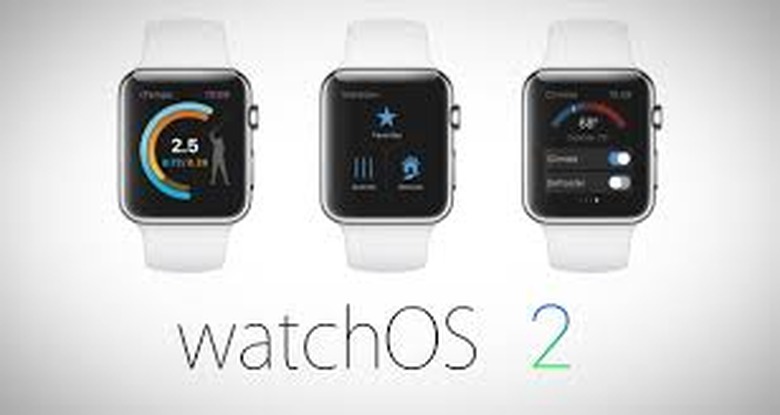
    Apple Watch is continuing to be the most sold and sought after smartwatch to this date. In spite of a sharp decline in the shipment figure in recent times, still, it is continuing to outnumber all other smartwatch brands. Well, the promise of Apple Watch as a connected wearable device playing a crucial role as an IoT device has not been big initially. But with the unveiling of new Watch OS by Apple in this year, it has been clear that the device is going to be a crucial piece in the connected IoT environment. Now, in just a few months from now, Apple is going to unveil its much awaited Apple Watch 2, which is going to have stronger sensors and location tracking capabilities. IoT experts in IndianAppDevelopers, Zabir sounded emphatic about the possibility, "if wearable devices are to play a role in the evolution of IoT, the upcoming Apple Watch 2 can play a crucial role in that". What makes Apple Watch such a cool customer of IoT environment? To be precise, in the connected reality of IoT devices and gadgets, handheld and wearable devices can really play a valuable role. If you can control the volume of your home theatre or can just turn your TV on or off right from your watch interface at the wrist, it is certainly adding more ease and comfort to the user's life. Well, better connectivity, a host of third-party apps and powerful sensors in these devices are increasingly allowing such interactions. With invigorated GPS capability and much-enhanced location sensing after the release of Apple Watch OS 2, the promise has only increased. Apple Watch 2, the new game changer Apple Watch 2 scheduled to be unveiled later this year is reportedly packed with a bevy of device level upgrades that would enhance the connectivity among the watch and other gadgets. Well, other enhancements and value additions apart, the new Apple Watch has much more improved location tracking with both GPS and a barometer. Better location tracking capability will add to the ease of connecting iBeacons, payment terminals and other reciprocating sensors in retail outlets, shopping zones, and other public areas. Industry experts are exuberant about the new capabilities of the upcoming watch in responding sensors and other devices. As CEO of Key Ideas Infotech, Jeff Butt has put it "for developers Apple Watch 2 will broaden the possibilities of creating more IoT apps". The reality of connected devices and Apple Watch Apple Watch has continued to remain popular over smartwatches largely because of the sophisticated interface and robust promise in connecting surrounding gadgets. With 1.6 million of the devices having been shipped only in the second quarter of 2016, it is still in the top of the charts ahead of all other smart wearable devices. Well, if Apple Watch is donning the wearable scene presently, it is because of the smart design, interface and capabilities to connect. For its smartwatch, Apple has a new focus concerning personalization. It is nothing but the individual context of time, place, and preferences that the device sensor will gather. Actually, to gain contextual insights and data about the user Apple Watch is more equipped since it constantly remains attached to the skin and delivers location information authenticates the user and user activities at that moment. While the skin contact provides user authentication information, GPS allows delivering location data and sensor-enabled features like gyroscope, accelerometer, etc. allows knowing your activities and body monitoring allows knowing your state of health. All these are possible because unlike any other device this one constantly keep in touch with the skin. These powerful sensors and capabilities make Apple Watch thoroughly equipped for the connected reality of the "Internet of Things". As the watch is increasingly getting smarter and intelligent by knowing the user context and preferences in depth, they now will allow connecting other gadgets and devices as and when the user needs to do so. The upcoming Apple Watch 2 is said to have powerful LTE connectivity. In that case, it would no longer depend on Wi-Fi or mobile connection but can rather perform certain tasks on its own. The promise ahead In the one hand, personalization of the device and understanding of all user contexts through close-at-wrist sensors will create more ways of contextual interaction and at the same time, this would allow the watch understanding your needs. With Apple Watch in the center, the world of gadgets around you can be more programmable and interactive through connected apps. Such a reality no longer looks far-fetched but an obvious probability in the near future. The unveiling of HomeKit and HealthKit for Apple Watch is only a step towards that direction. As for use cases of this connected reality with the Apple Watch in the middle, we can provide an array of examples. Well, what happens if your coffee machine starts brewing coffee as soon as you get up from bed? Looks too futuristic and weird? No, it is not, because an app in your Apple Watch can easily sense your waking up and in a connected home environment it can further direct the coffee machine to prepare coffee. Knowing user preferences habits and user actions became so common a reality and automatically connecting other gadgets became such a commonplace thing that no longer such things look distant and improbable at all.

    By Juned Ghanchi Read More
  • Advantages of Mobile Audit and How to Conduct Audit for Competitor's Apps

    The mobile audit is already in practice among the vast majority of developers and we all know its tremendous effectiveness in elevating the app design and performance. There are various bad and good practices of mobile audits that we used to know but with the help of some robust mobile auditing apps for Enterprises, the varying philosophies and practices have been standardized now. Actually, these apps helped to make apps more efficient and effective by changing the so-called paper based audits to mobile audits. Today mobile app audits are extremely crucial to stay competitive with your business app. The advantages of mobile app audits are many. Whether a business needs to check compliance standard in the workplace or a retail store need to track performance or an app of a construction business deals with an on-site safety standard or need to conduct your competitor app's audit, the mobile audit would help to evaluate the business process in every possible way. What a good mobile audit app should ensure To be precise, all mobile audit tools do not deliver the same efficiency and effectiveness for all businesses in the same manner. But, knowing the key attributes of such audit is crucial to select the right tool or app. First of all, the audit should be designed with user-centric attributes. Like any other mobile apps, auditing apps also require minimum user actions to get to the option and the respective result they are looking for. As ease of use is a crucial determinant for great UX, for a mobile auditing app it is extremely important to eliminate the need for typing input as much as possible. The audit tool should make the job easier for the user with limited input and ease of access. To ensure ease of use in an auditing app look for the following attributes. Well, organized audit questions and formats. Capable of capturing structured data consistently. An audit infrastructure with consisted focus on audit outcome, audit reports, evaluation and actionable areas. Capability to drive binary replies (in Yes or No value) by rephrasing questions. Capability in rephrasing questions o drives a choice among the provided options. Secondly, a great mobile audit tool should be equipped to approach the insiders and key personnel with conditional questions. There would always be certain questions that are only required conditionally. The auditing app should be able to ask conditioned questions as and where it needs to go deeper into user reactions. Often the follow-up questions are conditional that users only come across when answering positively. In no way, there should be a lot of follow-up questions as this can actually de-value the overall experience. Paper-based audits versus mobile audit apps To be precise, paper-based audits are about to become obsolete and a thing of the past. It happened simply because paper based audits are not only time consuming, cumbersome and imprecise. In a company with employees distributed over several locations, such audit can lose track of the process because of shuffle in human resource. In complete contrast to the traditional paper-based auditing tools mobile audits provide instantaneous results and deliver really actionable output. The survey reports can be uploaded in no time and it can be accessed and put to use in the decision-making process almost instantly. Moreover, mobile audit results can be evaluated by people located across several locations. Most important of all, thanks to cloud integration in most mobile audit tools, the reports can be accessed anytime and at anywhere. Auditing competitor app For any business analyzing and surveying the market before launching a new product is a standard competitive practice. Naturally, the app business cannot be any different. Especially with increasing crisis for most apps to stay competitive and profitable, it has become extremely important to make a survey of the existing competitive apps. It is more like doing a little ground work before actually taking part in a competition. It is also important to get an idea of the opportunities and competitive obstacles ahead. While going through the initial research on competitor apps, you need to be more diligent and focused than ever, because this is where you can have a detailed understanding of the typical app receptivity and opportunities that your app is going to experience. By comparing the similar apps, you not only know the lacking aspects you have but can grab the idea of how you can market your app well. Actually, without auditing competitor apps you can overlook various aspects concerning the performance of an app. A competitor app will clearly show what remains to be the standard attributes of that niche and how you can make the experience better. Here are some areas that you should focus on while auditing competitor apps. App audience Branding Marketing and promotional campaign App performance User experience How to conduct an audit of your competitor's app? Auditing competitor apps should be taken as a step by step approach. Let us offer below certain things that you should begin with. It should begin with the determining of the main competitor apps in your niche. Then you should focus on the key selling point of each of the apps and their respective target audience. Thereafter, you should focus on how your app performs against the competition. Even a highly feature-rich app has a key feature or a feature set that makes the USP of that particular app. Secondly, the target audience will give an idea of the apps branding. Obviously, your target audience will have a huge impact on the app design, user acquisition, and monetization. Choosing a wider selection of mobile apps comprising nearest competitors and related apps can actually open up the broader scope of understanding. Moreover, app audit conducted over leading apps in your niche will also enrich you with design ideas, marketing campaign, acquisition channels and monetization models. An app audit will allow learning about the best practices from most successful apps.

    By Juned Ghanchi Read More
  • The Effectiveness of Xamarin for Cross Platform Development: 7 Reasons Explained

    Xamarin is a framework that is capable of bringing the power of .NET and C# on mobile platforms of Android and iOS. The striking aspect of Xamarin is that it is being completely a .NET based framework it allows building robust apps for both Android and iOS platforms simultaneously. The Xamarin-developed apps hardly fall short of the compliance requirements in both of these app marketplaces. The recent partnership of Microsoft and Xamarin further gave the person more power and solid base to enhance its reputation as a cross-platform environment. While there are too many reasons to explain the widespread popularity of Xamarin Mobile App Development platform for Android and IOS, we would like to introduce here a few of them. 1. Low learning curve As far as the learning curve is concerned Xamarin is one of the least challenging languages of all. When learning a framework one has to learn several things including process lifecycle, UI norms, the platform SDK, etc. With Xamarin you can be from this long list of things to learn if you have prior experience as a developer with .NET and C#. Xamarin offers a thorough C# implementation along with deployment of the .NET class libraries. A whopping 80% of world's computers and servers are too familiar with these two Microsoft languages. This compatibility of NET/C# code with Xamarin is the biggest advantage helping you to manage the learning curve. In case you are not a .NET/C# developer, still Xamarin will be the easiest framework to learn for a cross platform developer. Actually for developers on Android and iOS need to master either of the two different programming environments, respectively as Java and Objective-C. Only a handful of developers is skilled enough with both the environments. With Xamarin you can learn one framework that is equipped with iOS, Android, and Windows platform. With Xamarin, the developer needs to learn only C# and just the core set of classes to build apps on both platforms. 2. Addressing distinct aspects of each platform Xamarin is cool for cross-platform developers because it does not impose any common elements that originally do not exist between two platforms. For example, iOS and Android as mobile platforms are complete with distinct UI and SDK elements that are intrinsic to their look, feel, and functionalities. These elements make what iOS and Android as what we experience and know by their typical features. So, when there are no common elements originally between these two platforms, the commonality is not imposed by the Xamarin framework. Actually, while many such cross-platform tools try to hide the distinct elements of the platform, the app in most cases looks foreign to the platform in look and feel. With Xamarin you address the distinctive qualities of each platform with more depth. 3. Equipped for rapid development The best thing about Xamarin is that it allows coding the core application logic once and then sharing it on different mobile platforms for distinct platform specific apps. This capacity implementing the core logic across platforms saves enough development time in comparison to the native development for each platform. To address the native development environment for each different platform one requires writing code for each platform. On the other hand, Xamarin allows you focusing on developing the core app features just once and then deploying it across the platforms with native look and feel. This helps rapid development of cross-platform apps. 4. No to fewer bugs Actually, the rapid development ensures also fewer glitches and almost no to fewer bugs. The basic reason for both rapid development and the bug-free app is the same. It is nothing but your need to write less code. When you write less code your chances of committing mistakes and erroneous codes are less as well. There is another aspect of Xamarin apps that contributes to the bugs-free performance. As a cross development platform, it also minimizes the errors by offering optimum test coverage. With Xamarin you can deploy a single test covering a large set of tests allowing validation of the written code across all the platforms. Lastly, just because the development team can concentrate on the core app logic together without needing o split the focus or the manpower, there are fewer chances of erroneous coding which often happened due to splitting concentration among two native environments. With Xamarin, the total focus of the development team rests basically on .NET/C#. 5. Native performance Xamarin is the perfect framework to ensure optimum native performance for each platform. The development team can beneficially leverage Xamarin libraries with Visual Studio or the code of your existing mobile app also. With Xamarin the app codes written in Java or Objective-C can smoothly be transitioned to C# for the ideal native feel and market traction. Xamarin as a cross-platform framework allows comprehensive exposure to native functionalities and platform-specific capabilities like iBeacons in iOS and Android Fragments in Android platform. 6. Xamarin component store Xamarin comes with a developer friendly component store offering a whole range of high-quality components for your app. The components include controls, web service APIs, and other backend components. Hordes of most popular backend apps and platforms can also be integrated easily including Microsoft Azure, SAP, Parse, Salesforce, etc. From the component store, you can pick your security features like authentication and encryption. 7. Xamarin is future ready It is already clear from the experience of past several years that cross platform development will continue to be the mainstream of app development in the time to come. With more demands for enterprise apps and business apps across the niches, rapid development is increasingly being preferred to gain a cost advantage and minimized time to market. Naturally, for quicker and glitch free, device optimized cross-platform development, there are not too many commendable frameworks that equally looks promising for the developers with a low learning curve. Xamarin ideally sets the stage for rapid cross-platform development with device ready features for each platform and with C#/.Net at the core offers quite a manageable learning curve. With so much versatility, Xamarin looks truly future ready.

    By Juned Ghanchi Read More
  • The Importance of iBeacons Explained in the Present Context

    We spend a good portion of our time glued to the smartphone screen, whether indoor or outdoor. But when we spend time indoor marketers often cannot keep in touch because of poor signal strength over GPS network. On the other hand, iBeacons with a limited circumference of signal works great across premises. Beacons are basically an inexpensive location technology that quickly rose to prominence because of the limitation of GPS in connecting people in inside area. A Beacon tiny enough to get inside a clench of fist literally offers endless possibilities to the marketers to connect business audience. With the emergence of Beacon, businesses started to utilize location-based technologies more contextually. It is no longer one-size-fits-all type of marketing since Beacons allow communicating more precisely to your audience in a particular time, place, and context. iBeacon, the source of delight for app development company still have some performance issues. But in all regards, it quickly became the most sought after tool to incorporate localization and context in any marketing. iBeacons in less than two years went on to transform the way retailers connect their prospects and target audience, event organizers create buzz around an event and organize events, enterprises address their audience based on location and educational institutions stay connected with learners within the premise. Apart from the institutions and businesses individuals also found beacons effective for allowing automation in a connected ecosystem of gadgets. iBeacons in diverse industry-specific usage Thanks to the new scope of localization offered by iBeacons, industries, and respective businesses leaped to their feet to utilize this technology to grab the audience and drive sales. The retail sector became hugely benefited through a notification sent to in-store customers based on their product browsing and through the contactless payment system. Beacons allow retailers to know the in-store location and accordingly flash deals can be sent to push them for a purchase from that part of the store. Beacons allow customers making the contactless payment through the signal sent and received via a connected mobile app and the nearby Beacon. From the customer's perspective, it helped to improve the shopping experience. As the vast majority of buyers are smartphone users, Beacons will continue to be an appealing solution for enhancing user experience. Beacons ad the challenges ahead Well, Beacons as of now offered immense possibilities to transform our retail, consumer, learning and digital experience at home. But in spite of the huge promise and robust potential of the technology Beacons proved to have several barriers to its widespread adoption in business, public premises, and individual homes. A series of permissions required by the connected apps for allowing access to the Beacons is a major obstacle to the smooth adoption of the technology. Typically, Bluetooth needs to be turned on followed by acceptance of location service by the connected app and the user needs to choose the option of receiving notification from the respective store or business. While Beacons have brought transformation to the retail sector and offering huge scopes for retailers to adopt to this new scope of connecting customers, other industries and services like the aviation, transport systems, educational institutions, and workplaces still remained largely untouched by this new technology except for vague planning and long-drawn propositions. Concern over signal strength and obstruction If the multiple layers of permission prove to be a challenge iBeacon deployment, the constraint of signals between the receiver Beacons and the external radios can be regarded as another major obstacle. Basically, iBeacon apps remain in communication with external radios to send signals and this often make the communication suffer from poor signal strength. The handheld device in customers hand needs to guess the location of the Beacon and send signals. The radio waves in a particular place fluctuate because of the physical obstruction caused by people. Moreover, Beacon uses Bluetooth LE wavelength which utilizes the same spectrum used by Wi-Fi. As a result, both signals sharing the same spectrum can easily collide and interfere. Lastly, we must remember that the Beacons are still made by several third-party manufacturers with the qualitative difference in the power and signal potential of their beacon devices. While poor signal strength is a big constraint for Beacons being used in many premises, absence of a uniform manufacturing standard remains to be a big concern. Further to add to the volatility of the signal strength, temperature also plays a crucial role in affecting signal strength. The varying degree of precision and accuracy in signal is the biggest challenge for the adoption of Beacons in general.

    By Juned Ghanchi Read More
  • Facebook Embraces Open Source Approach for Redex App Development

    ReDex, a tool for reducing Android app size and improve performance was launched by Facebook. There was work on optimizations to make the bytecode smaller, but it was not tested in production. With the first ReDex-optimized version of Facebook specifically for Android, the speed of loading is 30 percent faster. Also, the social media giant is open-sourcing ReDex, so that developers can leverage tools to make all types of Android apps better. ReDex is actually an Android bytecode optimizing tool which is also a framework for reading, writing and analyzing all types of .dex files that enhance the bytecode. In a recent conference, Re-dex was announced to be open-sourced which is surely benefiting all developers. With less bytes, one can expect faster installation time, faster runtimes and performance, along with faster download times and reduced data usage. Here are the changes that enhance Redex from its previous version: Feedback-directed class layout The speedup was achieved by optimizing the app's bytecode layout on disk. When the app starts, the disk has to seek out random class data which is scattered in a very large file, thus leading to some delays within the internal flash storage. Optimizing class locality has helped in enhancing bytecode-loading performance. Feedback-directed optimization (FDO) was performed after runtime data was gathered in the lab. All the classes are traced for a cold start on a set of test devices. The class trace is then fed into ReDex, which minimizes the number of fetches required for loading bytecode. Removal of interfaces Coding against interfaces is meant to be a good software engineering practice. However, sometimes an app release includes interfaces with a single implementation which takes up additional space in the memory space forcing for an additional dex. Calling interface might prove to be less efficient at runtime that resorting to calling of virtual methods. ReDex removes unnecessary interfaces wherein one can see analysis pass that scours the class hierarchy and searches for interfaces with single implementor. Then one can traverse the code and rewrite method calls so that the implementation method is invoked and then eliminate the interface. Removal of metadata Dex files include metadata which is not required at runtime. A simple pass was made to strip outsource file references to be replaced with other strings. This optimization saved a huge amount of storage. Additionally, some annotations are required at runtime, while some are used in analysis tools or during the build process. A whitelist-based pass was used to eliminate unnecessary annotations. Re-Dex optimizes before the assembly of .dex files into APK ReDex focuses on getting the Android bytecode optimised and quick. With this aspect, one can have the maximum ability to perform global interclass optimizations across the binary level, rather than on the local class level.

    By Juned Ghanchi Read More