Kat Bailey

Engadget Editorial Policies

The unique content on Engadget is a result of skilled collaboration between writers and editors with broad journalistic, academic, and practical expertise.

In pursuit of our mission to provide accurate and ethical coverage, the Engadget editorial team consistently fact-checks and reviews site content to provide readers with an informative, entertaining, and engaging experience. Click here for more information on our editorial process.

Stories By Kat Bailey

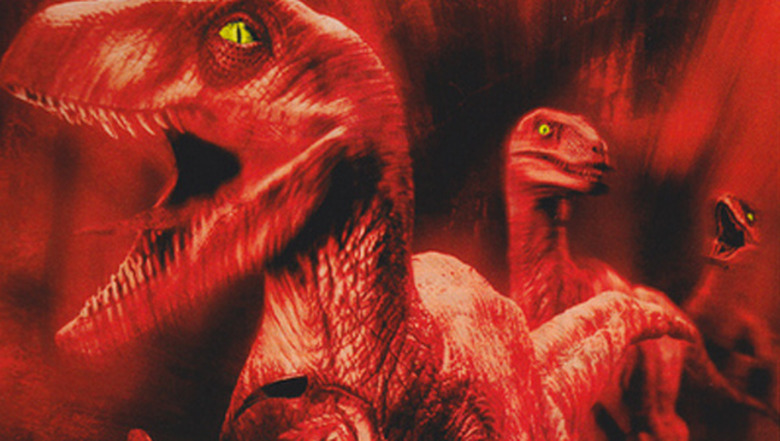
  • Jurassic Park: Trespasser remake aims to make good on long-lost promises

    Fifteen years later, Jurassic Park: Trespasser still seems to bring out the dreamer in game developers. It's largely forgotten today, but there was a time when the 1998 first-person shooter published by Electronic Arts aspired to be the ultimate technical achievement. Developer Seamus Blackley dreamt of a perfectly seamless, immersive world with intelligent dinosaurs – an idea that still has the power to spark the imagination with its insane technical ambition. Despite assurances prior to release that the game would revolutionize PC gaming, Trespasser was critically panned and commercially ignored. Today, the dream of that revolutionary title lives on through a group of dedicated fans unwilling to let to die. The architect of that effort is Larry Ellis – an Australian working part time at a local distribution company, with the rest of his hours devoted to the long forgotten licensed game. Utilizing Crytek's powerful CryEngine, he recently captivated the internet with a series of gorgeous updates to the original Trespasser jungle environments. Ellis' ambitions, however, are far greater than a simple remake. The part-time designer has grand ambitions with plans to recreate the game's entire world – Isla Sorna – and within it, inject new missions, objectives and more. Utilizing technology that lies at the bleeding edge, Ellis aims to make use of both Oculus Rift and the Razer Hydra to live up to the game's original vision for a unique control scheme. Ellis' project seems almost crazy in scope - a one-man attempt to make good on assurances made by a company he has no affiliation with nearly two decades ago. Perhaps it's an impossible dream, but it's hard not to cheer for an underdog with so much passion.

    By Kat Bailey Read More
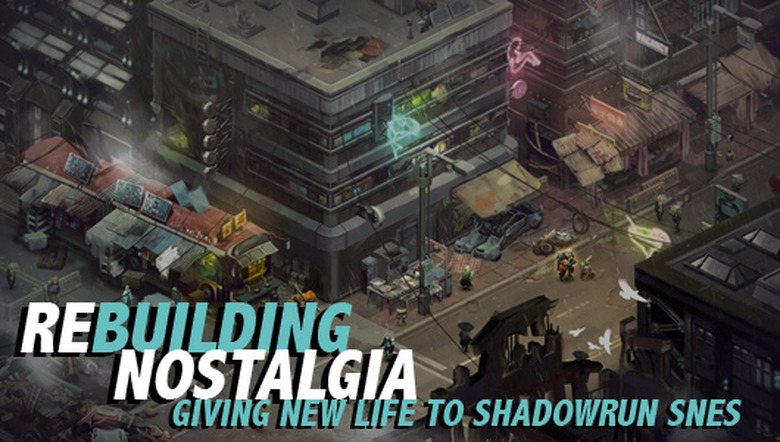
  • Rebuilding Nostalgia: Giving new life to Shadowrun SNES

    When Shadowrun Returns went live on Kickstarter in April 2012, most people didn't know they were, by extension, funding more than one project. In a sense, they were funding dozens of them, all extensions of the much-loved RPG brand. J.R Riedel is behind one such project - an enhanced remake of the cult favorite SNES Shadowrun. A much-loved artifact of the 16-bit era is on its way to an unexpected rebirth.

    By Kat Bailey Read More
  • Finding solace in anger with the 8-bit inspired Shovel Knight

    Shovel Knight may have a relatively quaint exterior, but don't let its apparent simplicity fool you. At first it appears Shovel Knight is something of a Ducktales clone, with the eponymous knight bouncing about on his shovel like Scrooge with his cane. The knight can only bounce when hitting an enemy or specific in-game objects, however, and most of his attacks are reserved to lashing out and striking enemies with his scooper. Every inch inspired by the traditional 8-bit platformer, Shovel Knight does fall back on established design tropes. Disappearing blocks and bottomless pits abound, for example. But the game is pleasantly distinct.

    By Kat Bailey Read More
  • Finding Mario's co-op sweet spot with Super Mario 3D World

    While I'm a Mario fan, I was utterly baffled by the appeal of the four-player co-op play introduced in New Super Mario Bros. Wii. People tell me: "It's chaotic and fun!" But all I ever experienced was that little jerk Luigi distracting me while I try to make a precision jump. In Super Mario 3D World, however, four player multiplayer manages to avoid the chaos found in New Super Mario Bros. and it's actually preferable to playing alone. In Super Mario 3D World, momentum is much less important. Momentum counts for a lot in New Super Mario Bros., whether it be jumping over a chasm or dodging an enemy. Having three other players around can affect that momentum, which could lead to a lot of funny but unnecessary deaths. In general, the action is slower and more measured in Super Mario 3D World than the typical 2D Mario game. There's more on-screen real estate to work with, too, lessening the chance of running into some errant enemy or falling off the screen by mistake. Super Mario 3D Land gives the modern Mario series a much-needed jolt with its tweaks to the game's precision of movement.

    By Kat Bailey Read More
  • Remembering my favorite RPG: Valkyrie Profile

    This is a column by Kat Bailey dedicated to the analysis of the once beloved Japanese RPG sub-genre. Tune in every Wednesday for thoughts on white-haired villains, giant robots, Infinity+1 swords, and everything else the wonderful world of JRPGs has to offer. Around here, we have a bit of a tradition: If the resident JRPG columnist opts to move on, they finish their tenure by writing about their favorite role-playing game. Since this will be my last column with Joystiq, it's time to discuss how much I love Valkyrie Profile. Valkyrie Profile has pretty much everything I'm looking for in an RPG. It has solid customization; visual flair; a strong story; great music; and a large cast. But what really takes it above and beyond for me is that little added twist; that certain je ne sais quoi that really makes it something special.

    By Kat Bailey Read More
  • Etrian Odyssey 4: Legends of the Titan review: The warm embrace of exploration

    This year is starting to feel like an embarrassment of riches for RPG fans who own the Nintendo 3DS. Fire Emblem is out, Pokemon X/Y and Shin Megami Tensei: Soul Hackers are on the way, and now we've got Etrian Odyssey 4: Legends of the Titan. Admittedly, Etrian Odyssey is not a series that I would necessarily recommend to everyone. It has a history of being very tough, and its story (such as it is) is on the sparse side. But despite looking much the same as the original Nintendo DS games, changes are afoot with Etrian Odyssey 4, many of them for the better. The most important change, arguably, is that it's easier. A lot easier. Not that it's overly simple or anything; but compared to the first three games, the opening areas are a breeze. This is good, because Etrian Odyssey long delighted in simply tossing players into its trademark labyrinths, then watching them die. This way, at least, newcomers have a chance to see what really makes Etrian Odyssey great.%Gallery-181354%

    By Kat Bailey Read More
  • At long last, Fire Emblem and Etrian Odyssey can be recommended to the mainstream

    This is a column by Kat Bailey dedicated to the analysis of the once beloved Japanese RPG sub-genre. Tune in every Wednesday for thoughts on white-haired villains, giant robots, Infinity+1 swords, and everything else the wonderful world of JRPGs has to offer. The average first-time experience with an Etrian Odyssey game goes something like this: You spend some time constructing a team; you venture into the forest for the first time, and you die. Then, unless you're a particular breed of RPG fan, you probably quit forever. Until now, anyway.After three games worth of trial and error, Etrian Odyssey IV seems to have hit the 'Goldilocks Zone' of RPG difficulty. In other words, it's still pretty tough, but it's not impossible. And for that reason, it's finally reached the point where I can reasonably recommend it to someone other than a hardcore dungeon crawler fanatic.The crux of EOIV's new accessibility is its casual mode, which makes it to the second high-profile 3DS RPG this year to feature such an option (Fire Emblem: Awakening was the first). The effects are relatively simple: when you die, you'll be whisked back to town, rather than having to start over. In addition, you will be blessed with an item that lets you leave a dungeon at any time.This would seem to have the effect of making EOIV a tad too easy; but in reality, it makes it compulsive. Rather than getting frustrated by every cheap death and accidental counter with an F.O.E. – minibosses that roam the labyrinth – I've found myself simply rolling up my sleeves and trying again. The result has been much more rapid progress than I've ever experienced before, and a whole lot less in the way of cursing and throwing my 3DS.

    By Kat Bailey Read More
  • Why the PlayStation 4 reveal doesn't mean much for JRPG fans yet

    This is a column by Kat Bailey dedicated to the analysis of the once beloved Japanese RPG sub-genre. Tune in every Wednesday for thoughts on white-haired villains, giant robots, Infinity+1 swords, and everything else the wonderful world of JRPGs has to offer. As we look ahead to the next generation of games, a lot of Japanese role-playing game fans figure to be looking somewhere other than the new PlayStation for whatever the future holds for the genre.Seven years ago, that would have been inconceivable, but times have obviously changed. It's fair to assume that Japanese developers will stick with the PlayStation 3 and Nintendo 3DS for the time being, only occasionally venturing over to the next generation.A lot of it has to do with the fact that Japan simply doesn't digest their games in the same way they did back in 2006. Mobile platforms have come to dominate what is a centralized culture that spends a lot of its time on trains, with home consoles increasingly relegated to a nerdy niche. The Nintendo 3DS, for instance, has reached 8 million units sold in Japan, and has already surpassed the lifetime sales of the PS3 on that side of the ocean. It's only natural that developers go where the customers are going, and that isn't likely to be the new PlayStation – at least in Japan.

    By Kat Bailey Read More
  • Dear Import Gamer: You can do better than Super Robot Wars UX

    This is a column by Kat Bailey dedicated to the analysis of the once beloved Japanese RPG sub-genre. Tune in every Wednesday for thoughts on white-haired villains, giant robots, Infinity+1 swords, and everything else the wonderful world of JRPGs has to offer. Twitter followers have recently asked me: "Is Super Robot Wars UX worth importing?" The short answer is no, but the reason I won't be importing Super Robot Wars UX pretty much cuts to the heart of what irritates me about both the Super Robot Taisen franchise and Namco Bandai in general. Super Robot Wars UX is filler. It's the game that's meant to bridge the gap while we wait for more entries in the main story arc. I know this because Namco Bandai has been releasing games just like it for roughly 15 years now. When I think of Super Robot Wars UX, the first thing that comes to mind is Treyarch's early work in the Call of Duty franchise. Games released to plug the gaps between major entries. And being a strategy RPG series that is mostly known for having a lot of licensed mecha anime shows, such filler entries aren't that hard to make. There is a lot of love for the Super Robot Wars series, especially in Japan. It's one of Namco Bandai's flagship franchises. It's as if instead of going into a precipitous decline around the time of Star Wars Episode 1, LucasArts turned around and started putting out one to two Star Wars games per year. And not only that, they had found a way to cross it with Babylon 5, Star Trek, and Dr. Who in a way that inspired not rage but glee among the hardcore fans. That's Super Robot Wars in a nutshell – a strategy series that seamlessly mixes a lot of Japan's most beloved mecha franchises.

    By Kat Bailey Read More
  • In search of a more eloquent solution to a second playthrough

    This is a column by Kat Bailey dedicated to the analysis of the once beloved Japanese RPG sub-genre. Tune in every Wednesday for thoughts on white-haired villains, giant robots, Infinity+1 swords, and everything else the wonderful world of JRPGs has to offer. As soon as I finished Persona 4 Golden I thought hard about starting a new game. Saying goodbye to Persona 4's delightful cast after 60 hours was bittersweet to be sure, but I was also thinking about the social links I hadn't been able to complete. I felt like I could make a serious go at getting 100 percent, maybe even fuse a Persona like Thanatos. Of course, that would have required another 70 to 80 hours of my life; and sadly, I just didn't have that kind of time to spare.So I'm packing away Persona 4 Golden for a while, even though there's plenty more to see and do. It makes me wonder: Is it a good idea to load up an RPG with a lot of content that can't easily be accessed in one playthrough? Especially when that RPG is more than 50 hours long?My gut reaction is to say, "No, it's not necessarily a good idea." Not that I don't like extra content, or even replaying a really good RPG. It's the time commitment involved. And there are better alternatives than, say, forcing someone to keep multiple save files just so they can see every possible branching point without starting over.

    By Kat Bailey Read More
  • GBA's Fire Emblem is a great strategy RPG for beginners

    This is a column by Kat Bailey dedicated to the analysis of the once beloved Japanese RPG sub-genre. Tune in every Wednesday for thoughts on white-haired villains, giant robots, Infinity+1 swords, and everything else the wonderful world of JRPGs has to offer. In 2001, Nintendo of America had a decision to make that would have a huge impact on what at the time was one of its least known properties in the U.S.: Fire Emblem.Super Smash Bros. Melee was set for release that fall, and among its cast were Marth and Roy, whom most westerners had never heard of before. Nintendo of America weighed cutting them for a time, but eventually relented and decided to leave them in. In the early going, I had no clue who they were; soon enough, I grew to like them, just like everyone else. The stage was set for Fire Emblem to make a surprise leap to the U.S.

    By Kat Bailey Read More
  • Project X Zone and a new beginning at Namco Bandai

    This is a column by Kat Bailey dedicated to the analysis of the once beloved Japanese RPG sub-genre. Tune in every Wednesday for thoughts on white-haired villains, giant robots, Infinity+1 swords, and everything else the wonderful world of JRPGs has to offer. Out of all Namco Bandai's crossover strategy games (and there are even more than you think), I can honestly say that I wasn't expecting to see Project X Zone announced for a North American release.I knew that it was anticipated in some quarters, mainly for its solid sprite art and crossover with Sega and Capcom. I knew that it would enjoy solid word of mouth with hardcore RPG fans. But Namco Bandai has always been coy with the crossover strategy games, no matter how much buzz they would generate. Seeing one actually get announced kind of makes my head spin.Now, before I get into why Project X Zone has a chance to be pretty good, I think it's fair to temper expectations a little bit. Namco Bandai has been down this road before, most notably with Namco X Capcom on the PlayStation 2. That game, which is basically the predecessor to Project X Zone, wasn't very good. It had a nice cast, but it took too long to clear individual maps, and it was really repetitive. It had plenty of flash, but no substance to speak of.Project X Zone borrows a lot from Namco X Capcom, so it's fair to wonder if it will have the same failings. Frankly, the jury is still out on that front. I did, however, get a chance to play it a little bit last week, and I enjoyed what I saw. It may even be a signal of good things to come for Namco Bandai.

    By Kat Bailey Read More
  • Comfort and stability: Unraveling the appeal of Tales of Xillia

    It was around fifteen years ago now that a good friend of mine urged me to try out Tales of Destiny, which had recently come out on the PlayStation."I really like the characters, and it's funny," he told me. Pretty soon, he was finding ways to incorporate the characters in his fan-fiction, his favorite being the 16-year-old master swordsman Leon Magnus. He wasn't alone.The Tales franchise has grown by leaps and bounds over the years, going from bona fide cult favorite to one of the most successful JRPG franchises this side of Final Fantasy. Unlike its competitors, the Tales series has been mostly content to stay the course over the past ten years or so. That remains the case for Tales of Xillia, which will please its now very vocal fanbase, even if it won't make many waves outside of the RPG community.%Gallery-176879%

    By Kat Bailey Read More
  • Lightning Returns: Carrying the adventure solo as Final Fantasy's 'first female protagonist'

    Lightning is Final Fantasy's first female lead, at least according to Square Enix.This may come as a surprise to fans of Final Fantasy VI, which ostensibly starred Terra, the amnesiac magic user who gradually discovers her roots as an esper. But Lightning Returns: Final Fantasy XIII director and series veteran Motomu Toriyama (who came in on Final Fantasy VII, it should be mentioned) has an explanation."We feel that every person within the party [in Final Fantasy VI] is a main character, but we feel Lightning is very impactful as the main female protagonist in the Final Fantasy series." Toriyama says. "Not only is she the first female protagonist, she is very powerful, cool, calm, and collected. So we believe that is another attractive feature of hers."Toriyama says the goal is to flesh Lightning out and make her more than a high-flying Cloud expy: "Upon considering the development of Lightning Returns, throughout this Lightning Saga she has been depicted as this cool and powerful woman, but by the same measure she's been so cool that she's also come off as aloof. We want to expand on her character some so we can have everyone fall in love with her even more.""Love" might be a bit strong in this instance. She was certainly one of Final Fantasy XIII's more successful elements, but her overall lack of depth made it too difficult to really become attached to her as a character. Still, when Final Fantasy XIII-2 arrived last year, Toriyama says that Square Enix heard from fans who wondered when Lightning would be back in a starring role. Hence, Lightning Returns.%Gallery-176713%

    By Kat Bailey Read More
  • Empowering your Fire Emblem: Awakening army with StreetPass

    Despite the unique and interesting qualities of the 3DS' StreetPass and SpotPass functionality, I've rarely had reason to use it. So far, my favorite example of StreetPass functionality has been found in Theatrhythm: Final Fantasy, where it's possible to swap Dark Notes and custom character cards. When Fire Emblem: Awakening launches next month, however, I expect the mileage I get from those features will increase.At a preview event on Wednesday, Nintendo demonstrated its upcoming 3DS strategy game, giving the media a glimpse at its secondary features. My time with it left me intrigued. It's rare to see StreetPass bonuses and DLC embedded so deeply in the single-player experience.Fire Emblem: Awakening's DLC plan, for the most part, has already been revealed. We've been aware that characters such as Marth, Roy, Ike, and other franchise luminaries will be available via an in-game variant of the eShop. What I hadn't realized until now, however, is that there are actual rewards for completing a map in the game.%Gallery-175932%

    By Kat Bailey Read More
  • Why Shin Megami Tensei 4 is my most anticipated JRPG of 2013

    This is a column by Kat Bailey dedicated to the analysis of the once beloved Japanese RPG sub-genre. Tune in every Wednesday for thoughts on white-haired villains, giant robots, Infinity+1 swords, and everything else the wonderful world of JRPGs has to offer. Like many people, my introduction to JRPGs came via the likes of Final Fantasy VI and Final Fantasy VII. Heavily story-based, limited dungeon crawling, turn-based battle systems with an emphasis on flashy animations. I loved them.Now it's 2013 (wow, I live in the future), and things have changed. I find that the RPG I'm looking forward to most isn't Tales of Xillia or Lightning Returns: Final Fantasy XIII. Neither is it Ni no Kuni, which is as pretty an RPG as you will ever find. It's Shin Megami Tensei 4.

    By Kat Bailey Read More
  • Three interesting trends found in 2012's JRPGs

    This is a column by Kat Bailey dedicated to the analysis of the once beloved Japanese RPG sub-genre. Tune in every Wednesday for thoughts on white-haired villains, giant robots, Infinity+1 swords, and everything else the wonderful world of JRPGs has to offer. As both a columnist and a fan, I've felt relatively lucky this a year with plenty of JRPGs to play and enjoy in 2012, including Persona 4 Golden, Xenoblade Chronicles, and The Last Story.I'm not exactly drowning in RPGs or anything, but this is probably the happiest I've been since 2008 or so, which was the year I discovered Valkyria Chronicles. I don't want to say that there was something for everyone, because it's a lousy cliché, and not really true either. But for those who were willing to look, it was a good year.Is this the beginning of a return to form for Japanese developers? Well, maybe not. The accelerated growth of mobile gaming, an aging population back home, and outsized budgets are all substantial obstacles for Japanese studios. But a few interesting trends are taking hold that could have a substantial impact on the industry in the near future:

    By Kat Bailey Read More
  • Crimson Shroud review: A successful roll

    You may not see them, but dice rolls are pretty much everywhere in RPGs. Even role-playing shooters like Alpha Protocol feature dice rolls to an extent. But Crimson Shroud is one of the few I can think of to literally feature dice. It's one of its most endearing features.In essence, Crimson Shroud is a one-shot tabletop adventure for the Nintendo 3DS. As with the classic Dungeons & Dragons games, multiple dice are used in everything from rolling for initiative to determining whether the party can launch a surprise attack. Characters are represented by the tiny figurines used to map distance, and the story is told across long tracts of text, as if the Dungeon Master were actually narrating. For longtime tabletop gamers, it's a treat.%Gallery-173328%

    By Kat Bailey Read More
  • The real danger in Dark Souls 2 is not 'accessibility'

    This is a column by Kat Bailey dedicated to the analysis of the once beloved Japanese RPG sub-genre. Tune in every Wednesday for thoughts on white-haired villains, giant robots, Infinity+1 swords, and everything else the wonderful world of JRPGs has to offer. It was only four years ago that From Software's "Souls" series couldn't even find a publisher in the US. It was roundly dismissed by Sony Computer Entertainment America for being too difficult, seemingly dooming it to the status of import gem and not much more. Then Atlus got it at a pittance, saw it sell dozens of times more units than they could have ever expected, and the hounds descended upon what was suddenly a profitable property.It was a cult hit. It had currency among the so-called hardcore gamer. Other publishers simply had to have it. In the end, it was Namco Bandai that came away with the right to publish more From Software titles in the series across multiple platforms, thanks to the minor name change from Demon's Souls to Dark Souls.Fast-forward to 2012, and Dark Souls 2 has enough cachet to warrant a debut trailer at the Spike Video Game Awards. Namco Bandai is cashing in on the success of Dark Souls and fans have a bona fide franchise on their hands.%Gallery-172917%

    By Kat Bailey Read More
  • Still finding love in turn-based Japanese role-playing games

    This is a column by Kat Bailey dedicated to the analysis of the once beloved Japanese RPG sub-genre. Tune in every Wednesday for thoughts on white-haired villains, giant robots, Infinity+1 swords, and everything else the wonderful world of JRPGs has to offer. When Japanese role-playing games come up in casual conversation, one word that I hear a lot is "nostalgic." As in, it's a genre that brings people back to a childhood spent playing old SNES RPGs, or maybe PlayStation classics like Final Fantasy VII. Traditional JRPG storytelling and gameplay tropes are seen as outdated, none more than the turn-based battle systems that drove all those 8 and 16 and 32-bit RPGs.It's a sentiment shared by many in the industry itself. Responding to the repeated drumbeat for change, for example, Square Enix has broadly hinted that the next numbered Final Fantasy will be an action RPG. In Japan, the action-based co-op RPG Monster Hunter has become something of a holy grail for the industry – the series that everyone aspires to emulate.This is where I take a stand though. Much as I like Ys and a handful of other action RPGs, I like good old-fasionhed turn-based RPGs that much better. Not every RPG has to be as frenetic as a Call of Duty. In fact, I rather prefer it when they're not. Case in point? The turn-based Persona 4 Golden, which remains as relevant now as it was when it first arrived on the PlayStation 2 in 2008.%Gallery-165800%

    By Kat Bailey Read More
  • Recommendation shortlist for rookie JRPG players

    This is a column by Kat Bailey dedicated to the analysis of the once beloved Japanese RPG sub-genre. Tune in every Wednesday for thoughts on white-haired villains, giant robots, Infinity+1 swords, and everything else the wonderful world of JRPGs has to offer. It used to be so easy to get people to try Japanese role-playing games. If they asked where they should start, all I had to say was, "Let me tell you about this little game called Final Fantasy VII." In the end, I would almost always have a convert.But times have changed. Many of the old PlayStation standbys have aged rather poorly, and modern RPGs are more complicated and time-consuming than ever. There are more high-quality JRPGs out there than the average person might think, but many of them are tough to recommend to newcomers.But from time to time, I'm approached by a gamer who has barely even played Pokemon, let alone Xenoblade Chronicles, and they ask me to recommend a good JRPG. It's a moment that can be every bit as delicate as recommending a good entry point into something like Star Trek. The goal is to recommend something that starts fast and makes sense, but also highlights the genre's relative strengths.

    By Kat Bailey Read More
  • Nintendo's Wii U may be an attractive device for Japanese RPG fans

    This is a column by Kat Bailey dedicated to the analysis of the once beloved Japanese RPG sub-genre. Tune in every Wednesday for thoughts on white-haired villains, giant robots, Infinity+1 swords, and everything else the wonderful world of JRPGs has to offer. I didn't manage to get a Wii U over the weekend. By the time I got around to ordering one, pre-orders were closed, and I wasn't willing to camp outside in the rain or add my name to the wait list. I'm still getting a Wii U though, and not because of Nintendo Land, New Super Mario Bros. U, or even The Legend of Zelda. I'm getting a Wii U because I'm intrigued by the potential of its RPG library.[Ed. Note: For more on the Wii U, check out Joystiq's comprehensive coverage.]As I've discussed before, this is not a new development for Nintendo. Toward the tail end of the Wii years, it made a concerted effort to woo RPG developers. The result was the "Operation Rainfall" games – Xenoblade Chronicles, The Last Story, and Pandora's Tower. Last week, I listed the Wii's Top 10 RPGs for 1UP, and I didn't even have to include Shiren the Wanderer or Tales of Symphonia 2. That platform's RPG selection is deeper than many people know.

    By Kat Bailey Read More
  • Deja Review: Persona 4 Golden

    This is a Deja Review, a quick look at the new features and relative agelessness of remade, revived and re-released games. Try explaining Persona 4 to a friend sometime – it's not easy. Any explanation inevitably begins with: "Well, it's about Japanese high schoolers who fight demons in an alternative dimension that can be accessed through a TV." And it only gets crazier from there.Back in 2008 though, it was Persona 4's slightly insane premise and its unique format – the story follows a high schooler from April to December as he tries to keep up with his studies, make friends, and solve supernatural murders – that helped it stand out against the drab backdrop of the declining Japanese game industry. It's no less charming on the PlayStation Vita, where it benefits from redrawn high-definition art and some very interesting online functionality. Then, as now, it stands among the best Japanese-developed RPGs of the past decade.%Gallery-165800%

    By Kat Bailey Read More
  • How RPGs can avoid descending into early game hell

    This is a column by Kat Bailey dedicated to the analysis of the once beloved Japanese RPG sub-genre. Tune in every Wednesday for thoughts on white-haired villains, giant robots, Infinity+1 swords, and everything else the wonderful world of JRPGs has to offer. Whenever I want to get in some quality procrastination, I turn to one of two sources. Either I while away the hours messing around with my team on Pokemon Online, or I start hitting "random" on Television Tropes & Idioms. The other day, I went in for the latter, and I came across an article titled "Early Game Hell."Early Game Hell, as you might imagine, refers to games that are really difficult at the outset, but eventually get easier. Fire Emblem, for example, is even tougher than usual in the early going due to the main characters' lack of hit points and skills. In fact, almost every entry in the Early Game Hell page is an RPG. That's not exactly a surprise – every fan has struggled through the early game of an RPG at least once. But I also wonder if an RPG can't be entertaining and deep without being excruciatingly difficult to get into.To wit, as you may recall from my previous entry, I'm currently playing Persona 4 Golden – an RPG that is well-known for being a slow starter. It's a good 90 minutes before anything of note occurs; and when the action finally arrives, it doesn't pull any punches. For the unprepared, the Avenger Knight mini-boss is quite capable of knocking out the main character in one or two hits. And without the Fox to offer any meaningful healing, it's not easy to grind.%Gallery-165800%

    By Kat Bailey Read More
  • Capturing the grandeur of the hunt in Monster Hunter 3 Ultimate

    The sheer scale of Monster Hunter can be overwhelming at times, full of moments spent looking off into what seems like a never-ending horizon while chasing monsters three or four times your size. It's meant to make you feel like one tiny participant in a massive ecosystem – which you are also trying to destroy.The only window to this massive world over the past few years has been the PSP. In North America, the lone exception has been the Wii's Monster Hunter Tri, while the PlayStation 3 port of Monster Hunter Portable 3rd has remained exclusive to Japan.But North America will finally be able to explore Monster Hunter's creature-filled worlds in high-definition in Monster Hunter 3 Ultimate for Nintendo's Wii U. Ultimate is an HD update of the aforementioned Monster Hunter Tri that includes a large amount of new content. Playing the upgraded version after spending time with the game on 3DS felt right; it was like suddenly being able to see after being locked in a dark room.%Gallery-171028%

    By Kat Bailey Read More
  • Persona 4 Golden takes an interesting page from Dark Souls

    This is a column by Kat Bailey dedicated to the analysis of the once beloved Japanese RPG sub-genre. Tune in every Wednesday for thoughts on white-haired villains, giant robots, Infinity+1 swords, and everything else the wonderful world of JRPGs has to offer. It's always around the month of May that I take a look at the lengthy list of daily decisions in Persona 4 and start to sweat a bit."Should I be going to the sports club so much? Shouldn't I be building my relationship with Yukiko?""Crap, I forgot to buy a book to read.""Exams are coming up and I still haven't hit the first Knowledge threshold. I'm screwed."More than most RPGs, Persona 4 is about the long game. It's set over the course of a full Japanese school year – from April to December – and there are important decisions to be made almost every day. Most of the time, you end up hanging out with various non-player characters, some of whom won't become friendly until you get to know a specific character. It's big, complicated, and stressful.%Gallery-167418%

    By Kat Bailey Read More
  • Which RPGs are a good fit for mobile devices?

    This is a column by Kat Bailey dedicated to the analysis of the once beloved Japanese RPG sub-genre. Tune in every Wednesday for thoughts on white-haired villains, giant robots, Infinity+1 swords, and everything else the wonderful world of JRPGs has to offer. Between Final Fantasy XIII-2, Xenoblade Chronicles, and The Last Story, it's been a surprisingly good year for RPG enthusiasts who prefer the home console experience. It's been nice to sit on the couch and really dive into a console RPG outside of the Mass Effect and Elder Scrolls franchises.But it's November now, and things are getting back to normal. I've put more than a hundred hours into Pokemon Black 2/White 2 and I've just downloaded Persona 4 Golden. As usual, I will be playing a lot of handheld RPGs through the holidays.And yet, not all handheld RPGs are created equal. Depending on the sub-genre, it can be a great fit for your mobile device of choice, a better fit for home consoles, or both. I got to thinking about the differences while downloading Persona 4 Golden, itself an odd fit for handhelds, and decided to break them down a bit.

    By Kat Bailey Read More