Kyle Turner

Engadget Editorial Policies

The unique content on Engadget is a result of skilled collaboration between writers and editors with broad journalistic, academic, and practical expertise.

In pursuit of our mission to provide accurate and ethical coverage, the Engadget editorial team consistently fact-checks and reviews site content to provide readers with an informative, entertaining, and engaging experience. Click here for more information on our editorial process.

Stories By Kyle Turner

  • Can Creativity Thrive in a Data-Centric World?

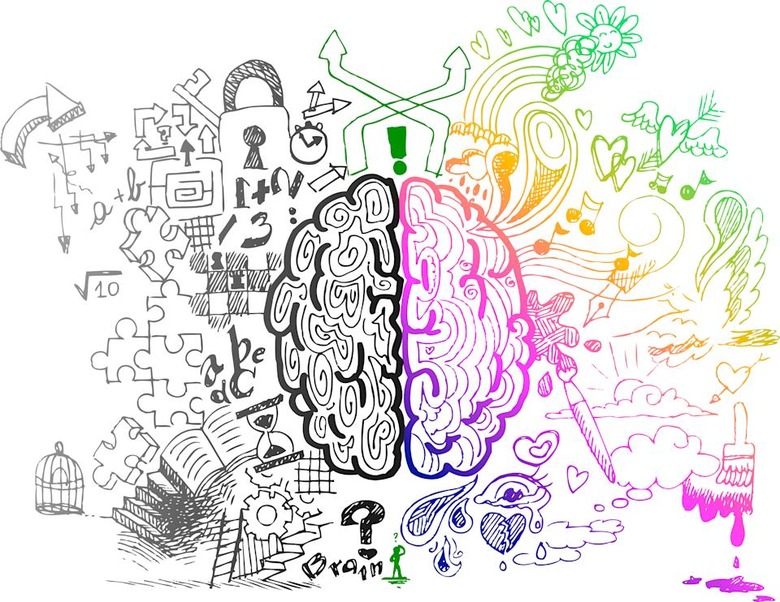
    Every day, every single day, we are inundated with statistics, numbers, and data. Our phones are tiny computers, sharing information with us even as we sleep. People are gradually embracing wearable technology as Apple Watches and FitBits codify even the most mundane of day-to-day activities. Many, myself included, readily accept this massive amount information as mostly useful. However, it's fair to ask whether or not all of this data is fundamentally changing the way humans interact with the world and endangering the creative spark from all of our collective lives. This is an especially relevant question in the digital marketing space. Data analysts, digital strategists, and creatives work with data in different capacities to very different results and with various degrees of comfort. I sought to know whether or not data could be the gateway a to creative efficiency or if people feel stifled by it instead. What is Creativity? What is creativity in the first place? Undoubtedly, people will have different definitions of it based on their daily actions and their professional roles. I wanted to start here for that reason. Of course, the answers were diverse and insightful. Linda Johnson, President @ SOCIALDEVIANT, Chicago, IL: "good creativity is elegant problem solving...all great creativity solves a problem-- a functional issue, an emotional void, etc. But it must also be simple, true, easy to understand and use." Jim Jacoby, Co-Founder @ Bienville Legacy Motorcycles/Partner @ ADCMi: "Creativity is the ability to get super instinctive at one moment and super factual at the next. The faster you are able to move back and forth, the more creative you'll be...In rare instances, you can hold both factual understanding and instinctual urges at the same time. That's when the magic happens." Maikel O'Hanlon, VP, Social Media Strategy @ Horizon Media: "Unlocking non-obvious insight that results in an idea that becomes an activation that can prove the theory that the insight was valid or right." Elisha Rio-Apilado, Senior Art Director @ PACO Collective: "Creativity is the most climatic point in a thought-process. It allows the imagination to run around freely and becomes a new way of seeing the world. It's a form of magic that keeps us open-minded, present and empowered. Intuition, "magic," instinct, and elegance are common themes when the subject of creativity comes up. All of these are intangible concepts, but seemingly instrumental to the creative process. It, at least on the surface, assumes a level of improvisation and invention, but with that in mind... ...Can Data Seamlessly Fit Into The Creative Process? This is the heart of this debate. I've worked at a variety of agencies in the nearly 10 years I've been working in digital advertising and I've seen how data can both help and hinder the creative process. I've seen art directors roll their eyes at having to incorporate data-based insights into their design methodologies. It's frustrating for them and why not? It feels restrictive. Let's also not forget the amount of testing many agencies are employing on a constant basis. Ms. Apilado: "Data to me on a personal/philosophically level are just facts." Data provides the tools to further understand the world around us. Its purpose is ultimately to shed light on problems and present opportunities to conceive an intelligent solution. Mr. O'Hanlon: "Data builds a foundation for strategy that allows for much more connected creative ideation. The day of creative mystics who simply are attuned to creative rhythms is over and that all creativity needs to be proven by insight and data." Mr O'Hanlon describes the fundamental role for all information and the point is to use that information effectively. Still, there are consequences to this amount of data consumption. We can easily get to a point where our desire for information leads to a retardation of inventive thought. Ms. Johnson: "The truth is that so much data is available to us today that two potentially bad things can happen: you get so consumed by the numbers, you can't make a decision and don't move forward [or] you get so focused on frivolous numbers that don't relate back to your intended impact that it limits your creative potential and your ability to hit your goals." Jennifer Lynn Berman, Senior Account Planner/Brand Strategist: "Data helps me visualize growth and progress and any story I can tell that's supported by actual behavior is infinitely more compelling. I try to use it in a positive manner, but at some point, I have to cut myself off and say ' enough' because it can backfire if I get too caught up in the weeds." Data clearly has a role in the creative process. The challenge will always be to apply the same creative thought to the data that's used as there is to the problems that need to be solved using that data. Part of that means not blindly trusting facts and figures and instead understanding the goals of a project, determining the what information will help achieve that goal, and what creative -- copy, color palette, imagery -- will help get closest to that goal. We're not talking about rocket science; this boils down to common sense thinking. How Can Data Be Used to Improve Creativity? The fact is that, as Mr. O'Hanlon mentioned above, we are no longer in a world where it's enough to have a cool idea. It'll get attention, but more and more the question of what it does for business goals is getting louder and more difficult to ignore. And we shouldn't be ignoring those questions. We now have the ability to measure things previously out of our reach. This information can't be treated like an annoyance; it has to be embraced in order to be effective. Elisha: "I use it every time I start a new project. Using target audience insight helps me understand their behaviors better, what they like/don't like and it slowly molds the focus of my creative thought. It's really helpful with the process of elimination on how to illustrate/letter. Jim: "We'll use data to cross-check our creative instincts OR to inspire an entirely new idea. Neither is first or second, better or worse. Either end of the spectrum feeds the other." Put bluntly, restrictions often inspire the strongest creative thought. Data, if appreciated as simply facts and information, is a restriction that helps more than it hinders. Data allows a look into why things happen. Why a group of people gravitates towards one image or another. Why a brand's resonance with people shifts from month to month. Creatives and strategists can then work together to act on this information towards creative solutions. Linda: "[The data] helped us as we declared that Keystone Resort's goal should to become the most referred ski resort in North America and that all creative executions should drive referral. We could look at the data and see that satisfaction scores were high from those who came and who love the mountain experience. We could also see that referrals would drive the revenue goals we were looking to achieve. Data helped us build this case and open up the creative potential for us." This particular example is where data's role in the creative process is most evident. You can see how Ms. Johnson's thought process is shaped by the information gathered. In turn, the creative they decided to focus on building was geared to generating referrals. Ignoring that data could have led to both a creative brief and creative output that was off-target and unsuccessful. So? Can Data and Creativity Co-Exist or Not? Data informs creativity. Data enhances the creative process. Data can validate creativity. In fact, data and creativity must co-exist for now and in the future. Agencies of all kinds are under increased scrutiny from their clients and partners. The success of creative ideas can no longer be defined in "cool points" and awards. Creatives must work with strategists to understand what resonates most with people. Their motivations and interests can mean the difference between good creative and effective creative. Working in tandem like this only improves the overall quality of everyone's work. Otherwise, everyone will end up simply stifling each other.

    By Kyle Turner Read More
  • The Case for Wearable Tech

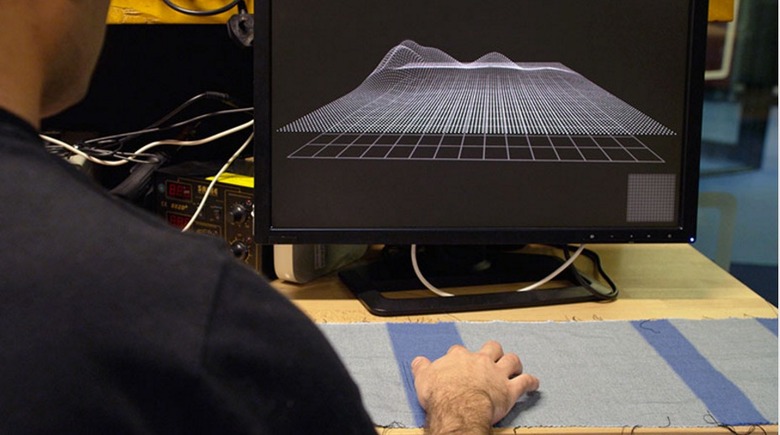
    Image courtesy Project Jacquard Google and Levi's are in development for a smart fashion collaboration they are calling "Project Jacquard." According to Levi's blog: "The goal of Google's Project Jacquard is to confront the historical limitations of wearable technologies by decoupling the touch interface from the digital device. Jacquard makes garments interactive — simple gestures like tapping or swiping send a wireless signal to the wearer's mobile device and activate functionality, such as silencing phone calls or sending a text message." This is now what reality looks like. The advancement of "smart fashion" -- apparel that is imbued with technology, ostensibly to make your life much, much easier – brings new implications to the way that we interact with not only with the world, but with ourselves. But, as wearable tech becomes the standard, is it actually making our lives easier or will this smart fashion revolution lead to even more information paralysis? Early examples of wearable tech are mostly confined to the gaudy, ostentatious outfits found on red carpets in the early 2010's. Famously, Katy Perry wore an LED-infused gown to the Met Ball back in 2010. The gown, created by London-based firm CuteCircuit, could change color from blue to pink to yellow to green. At the time, the dress garnered plenty of press, but the implications ran far deeper. A new frontier of technology and fashion had been broken into and now the world could see what was possible when the two formed a bond. CuteCircuit's foray into wearable tech pre-dated this event; Founder Francesca Rosella created the KineticDress in 2004. Depending on the amount and speed of the wearer's movement the electroluminescent embroidery in the dress changes patterns, displaying the wearer's mood to the audience and creating a magic halo around her. This dress, quite literally, allows the wearer to showcase their heart on their sleeve. As time passed, the Internet allowed us ever-increasing access to information and news about the world that was either inaccessible or difficult to find. Once mobile devices became smart, this information was now with you at all times. This coupled with advances in social media made stats about your social circles a form of emotional currency. 10 years from CuteCircuit's first kinetic dress, the very first Fitbit and Nike Fuelband were released. Our culture was already transitioning into a data-driven one and it seemed that the next logical step from codifying our social lives was to parse and consume data about our wellness habits. It's 2016, now and the Fuelband has fallen by the wayside as the Fitbit continues an upward charge. I'm actually wearing one right now and I'm becoming more addicted to the information I have available to me: heart rate, steps, flights of stairs, calories burned, I have it all. Humans are not wont to be satisfied with simply scratching the surface of what's possible. Now, people like Pauline van Dongen are teaming with scientists to design clothes with solar panels integrated into them, so that you can charge your phone on the go without searching for a charger. Our sex lives are not off limits, either. Fashion-tech designer Anouk Wipprecht created a line of dresses called "intimacy," made of opaque, smart e-foils that become transparent when the wearer gets close to another person. Having this much technology woven into our lives can seem scary, but the positives outweigh the negatives. How far are we from being able to predict things like heart attacks, strokes, even cancer, just by wearing a wristband or the right belt? Sure, we might be on the precipice of a tech overload, but this doesn't have to be a negative thing. In fact, it isn't. Minutiae like this can seem overwhelming, but it's advancements like these that have allowed us, as a culture, to appreciate the fragility of our bodies and take the steps necessary to live our healthiest and most productive lives. Statistics and data are more accessible than ever. The more information we have, the more we want. In the case of wearable tech, we are given the ability to adapt more readily to our surroundings or change our own habits for maximum benefit. This micro-data offers a level of security for us. We feel like we have more control over our lives if we can whittle our day-to-day down to a few key numbers. Not getting enough steps in? Maybe you take the long way from work. A little too cold in your office? No worries. Your shirt can adjust so that you feel more comfortable. The sense of knowing oneself better just by wearing a shirt is an exciting feeling and since flying cars haven't shown up quite yet (though we might not be too far off from that), I'm happy to take a jacket that charges my phone as a consolation.

    By Kyle Turner Read More
  • Microsoft Acquires its Missing Link

    Several news outlets have reported that Microsoft is finalizing an all cash deal for the purchase of professional networking site LinkedIn. This deal, reportedly worth $26.2 bIllion, is a huge move for the tech giant. Consider that only a few weeks ago, Microsoft almost completely gutted its smartphone unit signaling a shift in the company's direction and it's clear with this move that Microsoft has something else up its sleeve to help it reach out to the public at large. You can read up on the deal here. The advantages of purchasing LinkedIn for Microsoft are myriad. The most obvious one is the wealth of enterprise data Microsoft will now have at its disposal. The world at large is fueled by how much brands and marketers know about you. This particular stream of data, which Microsoft will now own, is a resource that not even Facebook can boast. LinkedIn doesn't come without its baggage, however. Microsoft will need to invest in curtailing a growing tide of criticism that LinkedIn is becoming another version of Facebook, where the content that people share is lacking the professional relevancy that people have come to expect there. Increased resources from Microsoft, both technological and economical in nature, could help here. New algorithms and targeting tactics would do a great deal to make sure the content on LinkedIn fits the platform more seamlessly. Microsoft's technical expertise coupled with LinkedIn's already robust digital chops make this a potentially powerful matchup. LinkedIn's acquisition of professional digital training site Lynda.com last year presents an added bonus for Microsoft. It allows them the potential for another income stream from subscriptions to the service coupled with the potential to serve, through Lynda.com, Microsoft-specific training programs. This would result in increasing Microsoft's clout in an already crowded digital space. The difficult decision Microsoft made to lay off many people from its smartphone unit now may look prophetic; professional services, training and networking is something of which Microsoft can take a strong level of ownership. There's interest brewing for digital remote training and schooling. People are using the Internet to not only bolster their own skills, but connect with prospective employers and former co-workers around the world. Full Sail University and the University of Phoenix, while still fighting some skepticism, allows people flexibility in enhancing their own marketability and skill set. Concurrently, places like Oakland University and Syracuse's Newhouse School of Marketing have begun to embrace a fully digital syllabus, allowing students to take classes from anywhere in the world. Microsoft is betting that this is less a trend and more a new standard, and I agree. LinkedIn provides a unique look into how people are looking at themselves professionally and where they want their careers to go. It's not a stretch to consider a future where Microsoft and LinkedIn create standalone, sponsored courses through the LinkedIn or Lynda platforms that directly address some of these desires. Seeing people clamoring for coding training? Develop a "Microsoft Coding University" with introductory courses available for sign up only through LinkedIn and more in-depth training available via Lynda. For advertisers, Microsoft's acquisition likely changes little about the view of LinkedIn, at least in the short term. LinkedIn has had trouble in the past making their benefit for brands apparent. During my time at Horizon Media, I worked with LinkedIn to develop a sponsored content hub for Capital One's Venture Card unit. Its stated benefit was to provide travel tips and editorial for the business traveler. The potential was high, but the resulting execution of it proved to be challenging. At the time -- this was about 4 years ago – the standard bearer for this type of tactic was American Express' OPEN Group and the Capital One sponsored group couldn't quite live up to that. LinkedIn would go on to shutter this particular segment of their advertising business. Still, Microsoft's scale and power could allow LinkedIn to re-launch a version of this that's a little more useful for brands looking to advertise their company and its culture, and not necessarily their products, to business professionals and recent graduates. The most interesting thing that could come out of this is whether or not some of the other tech giants like Google and Facebook will now look at sites like Glassdoor, which provides Yelp-like employee reviews of companies, individual jobs, and executives, to counter Microsoft's acquisition. There are no shortages of professional services resources on the Internet and the race to tap into the data that some of these companies have may just be starting with Microsoft getting ahead of the gun with this move. KT

    By Kyle Turner Read More
  • Facebook's on the Money in Asia

    What if "like" becomes the new "buy?" This is a future that Facebook has every intention of making a reality. The Next Web and TechCrunch just broke the news that Facebook is testing social purchasing on their Pages platform in Asia. This could, and likely will, have some pretty interesting implications on the future of Facebook and e-commerce here in the U.S. If you're not someone who's constantly immersed in the goings-on of the greater social media ecosystem, you might not know that in 2015, Facebook made some key changes to their platform. That July saw the advent of a money sending capability within Messenger, with some help from the founder of PayPal. Think Venmo, but on Facebook (you know what Venmo is, right?). Then, they added a buy button for businesses using ads on Facebook. Long story short, Facebook wants to give you fewer reasons to leave their platform and more reasons to conduct transactions there. As of now, we're (in the U.S.) collectively spending almost an hour everyday on the social network. Zuck clearly wants to raise that figure. That Facebook is testing this function in Southeast Asia is telling, if only because the region has skipped some of the technological milestones in the growth of their infrastructure that America has gone through. Lack of terrestrial phone lines means dial-up internet did not have the foothold it had in the West. Therefore, they were ready to jump right into DSL, broadband and, now, Wi-Fi. One result of this rapid preponderance of their Internet capability: P2P micro transactions started earlier there. Though the current system of social purchasing is clunky, often involving several third-parties like Line and Shopee, there is and was already a precedent for this kind of behavior, one that doesn't quite exist here in the States yet. But that doesn't mean that Facebook isn't preparing for a future in which it does. If you're paying attention, which isn't a given, then you can see what this could mean here. Venmo and Chirpify are perfectly viable social-media based transaction companies. Both want to make the process of sending money and purchasing via social, respectively, a seamless process. So, the prospect of social purchasing taking hold here isn't a far off notion. A Facebook that has purchasing capabilities built into it just removes another barrier between you and your money. The platform has already perfected the ability for content by publishers like the New York Times and TechCrunch to be served to you within Facebook, eliminating the need for you to have to leave and they did it so seamlessly, I would wager many don't even notice it. A successful trial run in Southeast Asia means this technology can be applied to products served to you within your NewsFeed, integrating a storefront-like interface for Facebook users. All of this seems pretty far off, but the way that we purchase things and conduct transactions of all kinds has changed drastically in the past five years. Imagine what e-commerce would look like in the next 10? We are fast approaching the confluence of technology, user behavior, and social media ubiquity to form a new consumer habit that looks poised to be a standard before long. KT

    By Kyle Turner Read More