Richard Heby

Engadget Editorial Policies

The unique content on Engadget is a result of skilled collaboration between writers and editors with broad journalistic, academic, and practical expertise.

In pursuit of our mission to provide accurate and ethical coverage, the Engadget editorial team consistently fact-checks and reviews site content to provide readers with an informative, entertaining, and engaging experience. Click here for more information on our editorial process.

Stories By Richard Heby

  • Why I Won't Purchase the New Galaxy S7 (or Edge)

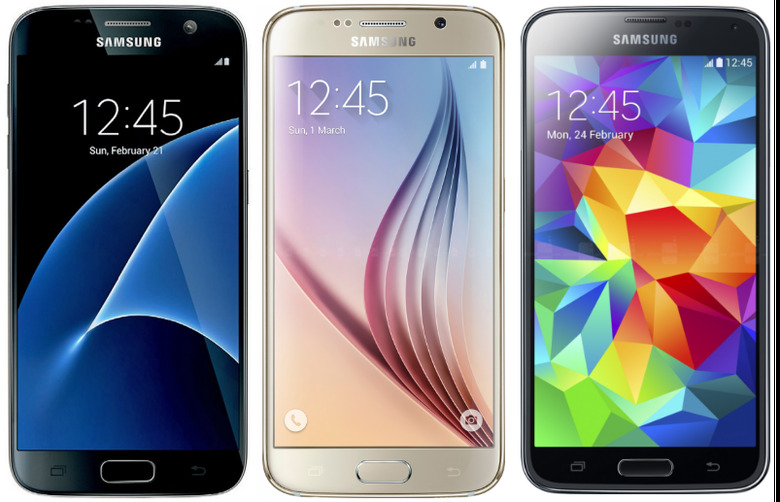
    **PLEASE NOTE: This post was created by a member of the Engadget Public Access community, where users, readers and commenters alike can contribute their thoughts, stories and opinions about technology and how it effects their lives. If you would like to read more Public Access stories, please see our Public Access section. If you would like to sign up for Public Access, you can do so here.** Samsung officially announced the Galaxy S7 and S7 Edge at Mobile World Congress 2016 for release on March 11, 2016. Along with some other Android devices, namely the LG G5, these new models came with a lot of hype. A deeper investigation into Samsung's new flagships shows that hype is basically all there is. Yes, the S7 and Edge are sleek, top of the line devices running on Android's latest Marshmallow operating system—but as Engadget's own Chris Velazco stated so simply, the Galaxy S7 and S7 Edge are beautiful, if unsurprising sequels. So these are great phones, but I'm a little let down. To be honest I have been a bit surprised, not by the awesomeness of the S7, but by all it's lacking. I have been using Samsung phones for about four years, since the release of the Galaxy S3. I'm currently equipped with a Galaxy S5 that I love. Heck if I could have Marshmallow on my phone, I probably wouldn't even consider an upgrade. But I do see a bit of lag on my version of Lollipop, I know the phone could be faster and sleeker, and I'm a sucker for redesigned, new tech. So why won't I be purchasing the new S7 or Edge, even though the offer of a free Gear VR is compelling? I haven't tested the phone, though test drives of the S7 and Edge are ongoing at Best Buy, but I'm underwhelmed by the specs and I don't imagine the new Galaxy could be much better than my S5. Battery So the S7 and Edge both have a larger battery than my current S5, but a jump from the S5's 2800 mAh to the S7's 3000 mAh is pretty insignificant. Even the S7 Edge with a 3600 mAh battery is not compelling considering that the battery is not removable, so there's no option for swapping. Wireless charging is one of the cool "new" features of the S7 Edge, but I don't really see a draw. Until charging becomes truly wireless, to the point where my phone doesn't have to sit unused on something that looks like a coaster, I probably won't use it. I'm perfectly happy having a plug sticking out of the bottom of my phone, because at least I can still use the device. Features Scouring the news about the S7 Edge, one of the most common gripes users have with the S7 line is a lack of an IR blaster. An infrared blaster makes it possible to use your phone as a remote control, and guess what? My Galaxy S5 has one. It's 2016, we shouldn't have a need for remote controls anymore. Tech companies should be consolidating devices, not leaving out features that do just that. I use my phone as a remote all the time. When one of the most prominent first world problems is that remotes get stuck in the couch, having a phone that can act as a remote is amazing. Then there's the issue of memory. The S7 Edge and S7 come with one option for storage, 32GB of storage, and that's it. Knowing how much Samsung (and my carrier Verizon) love bloatware, I'm betting I'll get less than the 25GB of usable storage that PhoneScoop says I'll get. The real problem is that even though there's a micro SD slot and support for huge memory cards, that memory is not adoptable. That means that you'll only be able to transfer certain things to external memory. In my own experience, I run out of internal memory even when I have a huge amount of external space. Durability One of the most lauded features of the S7 line is that it's once again waterproof. With an IP68 rating, these phones are protected well enough for scuba diving, supposedly. The Galaxy S5, with an IP 67 rating is only good enough for snorkeling. So in that regard, I guess the S7 wins, but who really needs to go scuba diving with their phone? Realistically, a waterproof phone should be waterproof enough to survive a drop in the toilet and my phone has done that many a time, including once today. Also, the sleek new designs of the GS7 make it look fragile. The GS5 is anything but fragile. If we take a look at a drop test comparing Samsung's Galaxy line, we notice that the S5 fares just as well as any of the other devices. It's truly a more durable device than any other I've had. I have even dropped my phone off my apartment balcony (4 floors) and it survived (well... it still worked though it was severely cracked). If you want real scientific proof that the S5 is durable, peak the top YouTube comment on the linked video: I don't know how durable the new S7 line is, but with the Edge's edge, I imagine that it's prone to breaking. And breaking my high expectations is all the new S7 line has done so far. Prove me wrong, Samsung.

    By Richard Heby Read More
  • The Future of Mobile Advertising Isn't What You Think

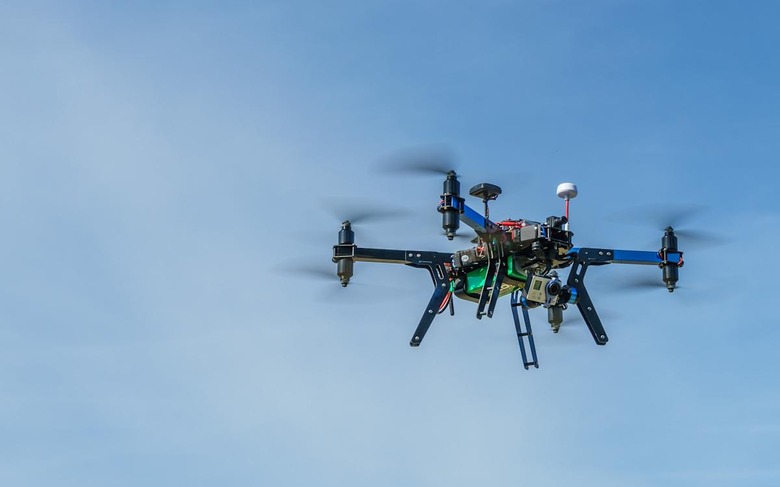
    Today, mobile advertising refers to advertising on mobile devices like smartphones, tablets, and smartwatches. But more and more our advertising is on the move. The "mobile" advertising of the future will be will actually be mobile—it will move! Drones and self-driving cars are two of the most prominent emerging technologies today, and each presents an exciting opportunity for advertising. The Potential for Drone Advertising Aerial advertising by way of airplane banners been around for years. With drones, this method gains a new and more versatile avenue. Companies like Dronecast and Hoovy are already beginning to make some noise in the drone advertising market, but the future holds a lot more exciting prospects than what is currently available. For drone advertising to be truly successful, it must be targeted and it must incorporate data. For example, if you wanted to use a drone to advertise a real estate property, you would send your drone to the places where potential homebuyers spend their time. The best way to figure out the placement of your drone, the timing of the advertisement, the volume of advertisements, and the frequency of the advertisement would be to use data. Social media can already give you a lot of the information you need to target these ads, and its usefulness will likely grow. Also, if drone advertising were to become more popular method, then pricing for banner rentals would likely fluctuate based on data. For example, advertising in front of the Javitz Center for New York Comic Con in October would cost more than advertising in the same place on a different, less popular day. Distributors should automate their pricing models according to this data in order to gain the most benefit out of their resources. Finally, if drone advertising is to distinguish itself from every other form of brand awareness banner advertising, it has to be engaging. How could a drone be engaging? Well for one, it's simple to involve social media in drone advertising. Brands can create campaigns around drones and offer coupons to whomever broadcasts a photo of the drone. But, if we scrap the idea that drone advertising exclusively must involve banners, then we can imagine drones that engage with consumers beyond a simple impression. For example, a drone with an on board A/V system could offer consumers directions to a venue, suggestions, or even take branded selfies with whomever interacts with the flying robot. In Car Advertising Advertisers have already begun exploring ways to reach consumers while they're in their cars. One of the most successful examples involves Waze advertisements. As you travel with Waze, ads pop up on your route for gas stations, restaurants, rest stops, and whatever else you might need. One lesser known example of in-car advertising is piggy backing on the success of on-demand ride-sharing services like Uber and Lyft. Vugo claims to create ride-sharing ads for everyone, and highlights the fact that their ads are relevant. The wave of self-driving cars that is coming towards us is exciting for advertisers for a few reasons. Because of self driving cars, we won't have to pay as much attention to the road and can therefore focus more attention on in-car systems. We can imagine an in car system that talks to you and makes suggestions on your route. And we can also imagine the system being responsive and interactive. For example the car might say, "you're running low on fuel, why don't you stop at this upcoming gas station?" And the driver might respond, "is there also a pizza restaurant nearby? I'm hungry too." This back and forth also shows how the system might incorporate data like fuel levels, but with AI and machine learning, the aspect of personalization via data is even more exciting. Imagine a car that knows where you want to go before you set a route, just by your past actions. Or one that can anticipate a trip to the hardware store to pick up a lawnmower because it's been communicating with your IoT lawnmower, which is now broken. Imagine, too, that your car has been involved in a secret romance with this lawnmower and now that the mower is broken, the car's "heart" is broken. Ok, maybe don't imagine that last one. The future will be an exciting time for advertising on the move. But the more important question is this: will advertisers finally learn how not to be annoying?

    By Richard Heby Read More
  • 3 Reasons Robots Should Replace Airport Staff

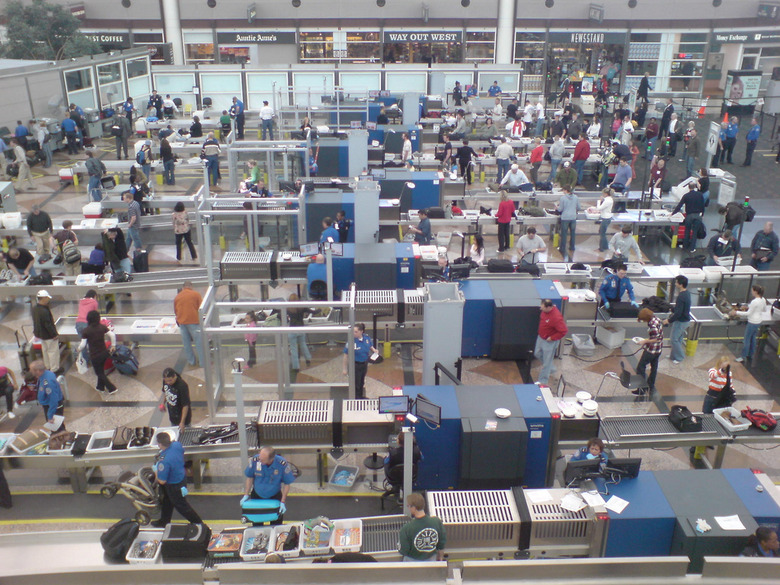
    Every time I fly I feel frustrated by the lack of order, the stupidity, and the overall inefficiency of the process. And it's not just the fact that everyone hates the TSA, and the security screening process that seems to fulfill a hunger for power rather than a sense of logic. No, the entire process of air travel is dumb. Let's start with the most obvious. Our security processes are slow, and could be safer. Going through security checkpoints during travel we soon come to realize that there are lots of holes and unnecessary steps in the process. You have to take off your shoes, unless you're part of the special pre-check group (then you can leave on your shoes). You're not allowed to bring one large container of liquid, but you can bring many small containers equaling that amount or greater of liquid. And then beyond that, people get held up for some real stupid stuff, like a mom trying to carry on breast milk for their infant or a kid bringing a Buzz Lightyear toy on the plane. Yet, it's clearly possible to smuggle at least the components of a weapon past security, if for example you use a plastic 3D printed gun. If we had robots that used the power of search and image recognition software to log images of every known item in existence, we could easily expedite this process. Couple that with a common sense machine (hopefully someone is working on that) and voila, airport security is better than ever. People don't know how to board and off-board planes. I always try to be the last person to board a plane because I hate waiting behind slow people trying to figure out how to fit their oversized bags into tiny overhead compartments. Even so, I always end up waiting. Sometimes people just chat, or ask to change seats, or get confused or try to order drinks or other inefficient things that prevent me and everyone else from getting in their seats. It's really not that hard to sit down. When the time comes that all tickets become digital, I think simple tracking should speed up this process. Every time you travel, your device (think of it like a fitbit for travel efficiency) will track the time it takes you to do simple tasks, like sitting in your seat and standing up from your seat. The slowest people will be banished to the back of the plane and the fastest will get front row seats to speed town. And then we'll use robots to mobilize and expedite people to their seats. The system for luggage retrieval is likely arbitrary. I have always wondered how the luggage carriers figure out which luggages to put through onto the conveyor belt and which not to put through. I've also wondered why, no matter what, there is always a lag between the time it takes to get to the baggage collection, and the time to pick up the baggage. Can we get some slides and self driving robot cars to bring the luggage to the right place, immediately as the planes land? And while we're at it, can we have these robot luggage handlers prioritize some luggage over others. If for example, you're on of those speedy travelers with a high efficiency rating. So there's my tirade on air travel. Humans are bad at logistics. Humans are power hungry. I accept our robot overlords.

    By Richard Heby Read More