Sahash Khanal

Engadget Editorial Policies

The unique content on Engadget is a result of skilled collaboration between writers and editors with broad journalistic, academic, and practical expertise.

In pursuit of our mission to provide accurate and ethical coverage, the Engadget editorial team consistently fact-checks and reviews site content to provide readers with an informative, entertaining, and engaging experience. Click here for more information on our editorial process.

Stories By Sahash Khanal

  • The Future of Ecommerce

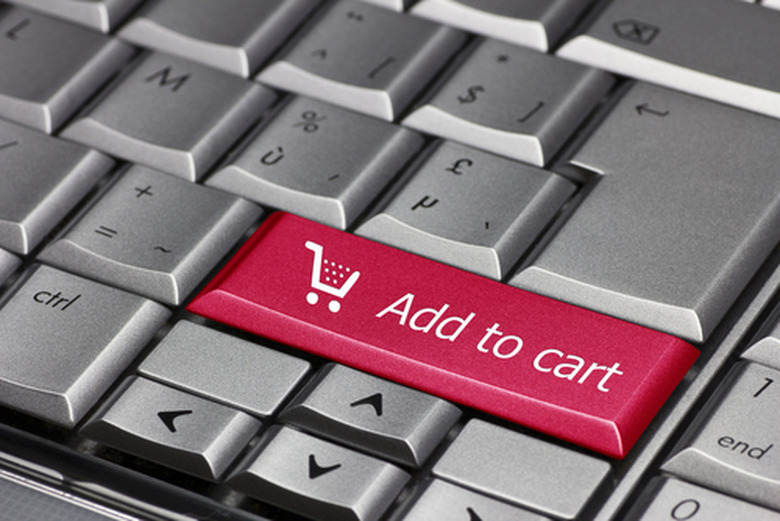
    What will the future be like? When we think about the future, we almost always think of the advancement in technology that will come with it. And there have been several aspects of our day to day lives that have completely changed with the emergence of new technology. One of these aspects is how we do our shopping. Ecommerse has been around for almost as long as the world wide web itself. As of 2016, there are hundreds of thousands of websites, some big and some small, dedicated to online retailing. But with the continuing evolution of the web, online retailing has changed a lot through the years. In this article we analyze the future of this sector, based on current trends. 1) Developing Countries will become the largest markets for ecommerse: Asia-Pacific overtook North America as the biggest ecommerce market in the world back in 2014, when the former's $525.2 billion in total sales overtook the latter's $482.6 billion. Flash forward two years. The sales for Asia-Pacific exceeded $1 trillion in 2016 compared to a little more than $600 billion for North America. Most of this hike can be attributed to the developing countries in the Asia-Pacific region, primarily China and India, two giants with almost a third of the world's population. So as the ecomony of the world continues to imporve, so will the living standards of the people in these and other developing countries around the world. The fact is that most of the developed countries are already fully emmerged in ecommerse so they don't really have any more market to offer. As the developing countries become more and more developed, the purchasing power of its people will improve with it, hence creating new and bigger market opportunities for online retailers. 2) New product categories will emerge in ecommerce: Consumer electronics and computers currently have the most online sales of all products, followed by Toys & Hobby and Books/Music/Video, according to a report by eMarketer. But like with the developing countries, this is bound to change and soon. As ecommerce continues to be more and more omnipresent, the sales for newer product categories will increase. And the reason for this is quite simple. Like in the real world, with more market opportunity, more retailors will be attracted. These may include things as esoteric as apparels and accessories retailers targeting alternative lifestyle inspired women to food and beverages retailers targeting vegans allergic to nuts. While earlier, with not enough people online, there would be little incentive for either of these businesses to set shop online. But with more and more people coming online everyday (almost 40% of the world's population as of 2016) and easier medium to connect with them (social media technologies), there is a good chance these businesses to actually profit by setting up an online retail. 3) Marketplaces, as we currently know them, will decline: Marketplaces are big websites like ebay, which currently account for almost 27% of all online retail sales in the world. These big websites emmerged in the early 2000s, before the advent of social networking. And they build on a hungry market soon emerging as market leaders. Currently retailers have more incentive in setting up their businesses in these big marketplaces rather than setting up their own websites, mostly because the former offers more traffic than the latter. But that trend seems to be on the decline. Small business owners now have the option to setup their online presence on social networking websites like facebook, where they have the opportunity to target just as much audience as the big marketplaces. They could either self promote of advertise to a specifically targeted audience. So in the future we can expect to see most ecommerce businesses dealing via a combination of a social network presence and a direct website. 4) There will be more purchases made from mobile devices than from computers: This is a no brainer. People want their shopping experience to be plesant, simple and convinient. Just look at how far we have come in the past 10 years in terms of mobile devices. We have smartphones and tablets that are more powerful than the personal computers from 10 years ago. And will the internet access almost omnipresent thanks to mobile data services and wifi, people are now almost as well off making a decision for an online purchase on their mobile phones as they are in a laptop. Almost 30% of all ecommerce purchases came from smartphones in 2014. The 2018 it is estimated that there will be more purchases made from mobile phones tha from laptop or desktop computers. Figures, given how smartphones and tablets are getting better and more convinient every year. 5) Product visualization will become more important than ever: Product visualization are always a key factor when we make purchases. Even before days of online retails, consumers were found to be more attracted towards an item than is beautifully demonstrated. Will emergence of technologies such as virtual reality and augmented reality, it is very much likely that these technologies will be incorporated into the core of the ecommerce philosophy. Wouldn't you like to see how it feels like to drive around in that new car from the comfort of your living room? Wouldn't you want to try out that new dress, see how it looks on you, before you order it. With more online retailers dealing in the same products, businesses will try harder to lure its customers, and product visualization will be key in them making their decisions on a purchase.

    By Sahash Khanal Read More
  • How Brexit Will Affect Online Retailers In The UK

    Throughout history, Europe has always been the primary trading partner of the UK. And in this age of online retailing, this is more true than ever. But the country recently voted to leave the EU, a move that has aptly been named "Brexit." And it might come at a great cost to the online retailers in UK, who like the rest of the country, have a future of uncertainty, with currency fluctuations and the possible introduction of new tariffs, taxes and rules, to deal with. Online retailers in the UK, like the rest of the country, have been wondering what Brexit will mean to their business. WTO figures from 2014 show that before the referendum the UK enjoyed an import tariff of 0% on goods from other EU countries, in contrast to a 5.3% tariff had they been imported from the rest of the world. Will a new tariff be issued to goods being imported from the EU? The bloc's vast single market of 500 million consumers is definitely not something British leaders are willing to give up on. And some are looking towards Norway, which broke away from the EU in 1994, as a possible model. Now the UK is yet to invoke Article 50 of the Treaty on European Union, which would actuate Brexit. But Repercussions are already visible in the UK, in the form of currency fluctuation. As the strength of the pound continues to fluctuate, some online retailers like fashion brand Tom Cridlan, which attributes 30% of its sales to Europe, have already seen an increase in the cost of production. Lesley Batchelor, director general of the Institute of Export, says that should Brexit go ahead, there would most likely be a change in the regulations for online retailers. The UK leaders that chose to support Brexit have many years of hard negotiations ahead of them. Millions of European customers flock UK based online retail sites everyday, some with meticulously collected coupon codes, others with their hard earned Euros. Volo, a community of multichannel sellers, estimates that western European markets account for more than 50% of all exports by online retailers in the UK. Even a small tariff could have a devastating effect on most of these businesses, both big & small. However some pro-Brexit analysts have suggested that Brexit could actually be beneficial to online retailers. Professor Joshua Bamfield of the Center for Retail Research has predicted that online retailers could see a boost in their overseas sales, thanks to a weakening pound. And believe it or not, there are actual data to back this up. Popular online wine retailer Baacco has reported an improvement in sales following the Brexit referendum. Co-founder Tai Alegbe says that due to the weakness of the sterling, some of Baacco's most expensive and sought-after wines have become more attractive to international buyers! And while most online retailers are hoping that their government can negotiate to maintain the status quo in regards to having no trade barriers or surplus taxes, and preserving free movement of goods and labour with the EU, Professor Bamfield yet again argues that Brexit could actually offers online retailers in the country a new degree of freedom, especially in regards to the supply chains. He says that in theory, leaving the EU would mean that retailers can buy from the cheapest market in the world. The UK could lower international tariffs, perhaps even more so than the EU tariffs. This could in effect actually see an improvement in the average online retailer's business. Brexit is still a long way being actuated, and in the mean time, other than having to deal with (or in some cases, make the most out of) a fluctuating pound, things will carry on as usual for online retailers across the UK.

    By Sahash Khanal Read More
  • 5 Essential Technologies For The Modern Traveler

    As a species, we humans are an inquisitive bunch. Our desire to discover and experience new things has been the propellant of our civilization. And one particular activity has been fueling this desire for hundreds, or even thousands of years. Well, of course I'm talking about travel! Travelling is fun. No wonder more than a billion people partake in it every year. And even when the primary goals of these travels are not recreational, there's still something about the idea of being in a new place that gets us pumped. To get away from the mundane routine of our daily lives, that's something all of us enjoy. But recreational travelers take it a step further. They travel to a whole new place with the only goal being to discover some new experience. If that's not living, I don't know what is. Now there are some who claim that traveling with technology can diminish the whole experience of the travel. And if you're in the habit carrying too much technology with you, this is something of a good advice. But that doesn't mean you should join the likes of these pretentious wannabe-travelers-of-yesteryear, and travel with ten kilos of hardcover books, and not even a point-and-shoot camera in your backpack. I believe that technology is something that, if used in the right way and amount, can actually elevate the experience of travel. Do it right and you might actually attain a whole new level of awe that would have otherwise been unattainable. So without further ado, here is a list of 5 essential technologies for the modern traveler. 1) Travel Apps : Let's face it, web and mobile apps have become a huge part of our lives. We already use them for almost everything from keeping in touch with our family and friends, and managing our daily routine and tasks. So why should travel be an exception? There are all sorts of travel apps available that can make travel less expensive, more convenient, and pleasurable in general.There are virtually thousands of apps you can choose from, each catered to your specific needs. Think of all the things that could run through your mind when you're planning a vacation. Want to find your next travel destination? Want to find cheap flights? Want to find cheap hotels? Want to travel with your pets? Anything you could possibly want, they've got you covered. Most of these apps are available in multiple platforms, meaning you could either use them from the browser in your computer or you could install them on your smartphones. So what I want to ask you is, wouldn't you rather enjoy the actual experience of the travel than get caught in making all of these sub-travel arrangements? I mean you could actually save money while saving time. Sound like a bargain yet? 2) Mobile Phones : By mobile phones, of course I mean smartphones. (It's 2016!). The modern mobile phone is more than just a phone. It's a flash light, a camera, a music player, an a lot more. And they support most of the travel apps I mentioned above. So yes, of course it is one of the most essential piece of technology to carry with you in any trip. It is human nature to want to keep in touch while we're away and that's one the primary usage of a mobile phone. Most places in the world, including many remote places, are now connected to mobile networks. So god forbid, some catastrophe strikes you, or maybe you get home sick, you would want to be able to call home. Another major purpose of mobile phones, for me personally, is for music. Music is a big part of our life. We spend countless hours listening to music of our liking throughout our lives. And if you've got the right playlist packed into your mobile phone, the music could truly elevate your experience. And later in your life you will be able to relate that music to the experience. Pure Magic! Other than this, mobile phones today pack a pretty solid camera that can take some pretty decent photos. Also you could choose from millions of different applications that you can then carry with you during your trip. A true technological marvel. 3) Camera : This one is pretty obvious. You would want to capture the moments from your travel so you can relive them later. And there's no excuse for not doing so, because chances are you won't be coming back there soon, or most likely ever again. Today's smartphone cameras are pretty great, and shouldn't be as frowned upon as people tend to do. They are capable of taking care of pretty much all of your photography needs. And if you're a bit too enthusiastic about photography, I recommend carrying a mirror-less camera. Mirror-less cameras are the future of photography. Of course, currently DSLRs are the de facto kings of professional photography but the last few years has seen the emergence of these whole new breed of cameras that are capable of taking photos that are just as good, but are only a fraction of the size of DSLRs. The reason for their smaller size is due to the lack of the mirror-prism setup that DSLRs use to take light from the sensor to the viewfinder. Mirror-less cameras use electronic viewfinders, meaning the light does not need to pass through a mirror-prism combination to get to the viewfinder, making them smaller. 4) E-Book Reader : For many people, travelers particularly, reading is a huge part of life. Like music they can help elevate the experience of the travel. I've personally noticed that reading some piece of literature while travelling can have a more profound impact on me than reading it at home. Which is why I always travel with a healthy quantity of books. And hurrah for modern technology, we can actually travel around with a whole library of books to choose from. Now of course, like music, we could use our mobile phones as e-book readers. There are many apps that make this possible. But having the keep display on for reading will consume a lot of battery, not a convenient option while traveling, specially since you'll be using your phone for so much more. E-book readers can be a great alternative. An e-book readers like the Amazon Kindle, can be a great travel companion. Not only do they provide a great reading experience, but they have great battery life compared to that of cell-phones. And you could carry thousands of books, probably enough to last you your entire life, around with you. These readers are light-weight and relatively inexpensive. So carry one with you the next time you're travelling! 5) Power Banks and Solar Chargers: Okay. So you've got the right combination of technology to carry with you in your back pack, just sufficient to make your travel experience amazing. But alas, the curse of all technology -- the power runs out. Even your Kindle with its long battery life, eventually pops up that message that it's battery is running low. And if there are no outlets nearby, you're going right back to the dark ages. Thank goodness for Power Banks and Solar Charger! If you're traveling to some place where you expect to have electricity, a tiny Power Bank will probably be enough to charge you mobile phone, your camera and your e-book reader, on the go. But if you're going to a place that has no electricity, a portable solar charger, will be your best friend. You could strap the panel to your backpack during the day, and as long as the sun doesn't burn out, you're settled for power. And w​​ith these last items, the list of essential technologies for travel is complete. These items will barely take up a fraction of the space in your backpack, but they will make your travel experience a whole lot better.

    By Sahash Khanal Read More