How Investments in The Drone Industry Fail
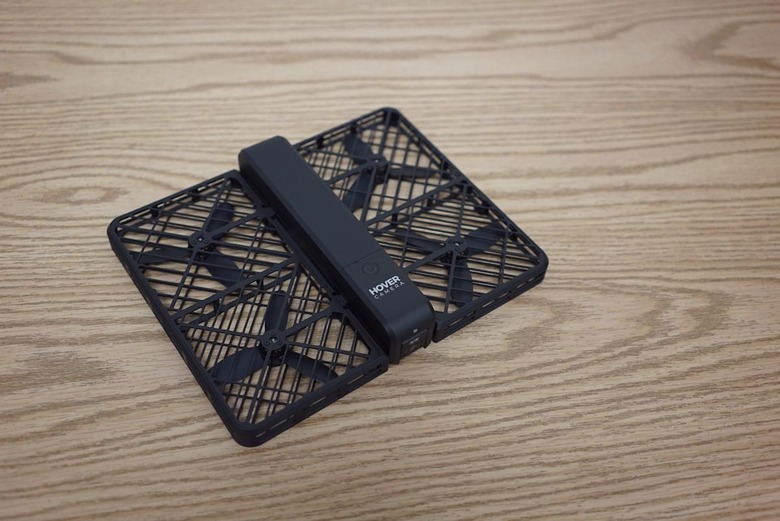
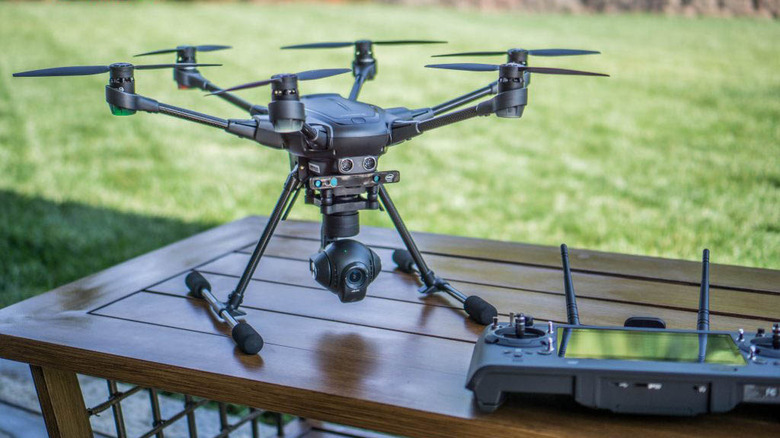
The drone industry is one of the hottest tech fields for the last couple of years. And while it's booming, some of the giant companies trying to carve out their own niche in the drone market often fail while other companies conquer and excel in this the huge industry of flying robots. Of course, the financial part is important as billions of dollars are getting thrown in for what seems to be a sure fire bet. How successful are the investments in this field? According to what I have seen, not very. Now let's walk though it on a case by case basis and see where all the invested money has gone to. Yuneec Typhoon H/Photo by Derrick Threatt Yuneec and Intel Yuneec has been in the RC business since 1999. They haven't been innovating and mostly was leaning towards OEM business. Back in September 2015, Intel invested $60M in Yuneec and after a few months they announced a hexacopter called Typhoon H. What was making this drone special is the Real Sense Infrared Obstacle Avoidance system. Unfortunately, consumers waited several long months after the announcement before they finally started shipping the Typhoon H with RealSense. Unfortunately, the product appeared not quite as competitive because of the persistence of DJI's Phantom 4 drone on the market. Yuneec was bigger, slower and cost more money than the Phantom 4. Multiple reports circulated about quality flaws in both hardware and software on Facebook and other social media and forums. Intel, seeing that the investments were not quite successful released their own drone and this time without Yuneec. Entitled Aero was a drone for developers. It was obvious that Intel wanted to stay in the drone market but was trying to avoid Yuneec, less they follow DJI's lead and include their version of SDK in the Typhoon H. Last told, it's been a half year since Yuneec started shipping but one doesn't see many Typhoons or Breezes flying around. One could not imagine that this was the experience that Intel expected when they invested $60M. 3D Robotics In the beginning of 2015, another circuit maker Qualcomm invested under $50 M USD into the 3DR. From the beginning, 3DR was primarily making open source drones and flight controllers. They were, however, driven not to miss the boom of the Ready to fly drones. 3D robotics used the investments of Qualcomm and built a Solo- ready to fly drone with the GoPro camera on board. From many points of view, it was a good, quality product and provided a great flight performance. But 3DR placed too much supply over demand and manufactured too many drones. Add the Phantom 3 price damping and 3DR could not compete. Just after 1 week of the drone on the market, 3DR announced that they are not making RTH drones anymore and will only focus only on industrial application aircrafts. Not the news any investor would want to hear. 3DR Solo/Photo by The Verge ZANO This company raised an impressive £2.3M on a Kickstarter in November 2015. It was a super small, form factor drone made for taking selfies with flash. They have raised more money than they initially targeted. The problem was that they had not enough design and manufacturing skills, so they couldn't deliver the final product. Only 600 out of 15000 pre ordered drones were shipped. Where the money all went is still a question. However, its just another example of how the drone investments are getting burned. Zano/ Photo by Kickstarter Hover Camera The new company named Zero Zero Robotics has raised $23 million USD in Series A for the companies like GSR Ventures, Zhen Fund and ZUIG. Hover created a lot of buzz in the tech and drone media, but the real product that I purchased for $550 was quite far from my expectations for the price Zero Zero Robotics set. Raising that much money and backing it up with a product like this would mean that it won't stay on the market for too long. To get more clear picture, you can refer to this review made by Tested. DJI There are more stories about failed investments in the drone industry but we took three more recent examples. Of course, not everything is that bad. Accel Partners invested $75 M in the beginning of the 2015 and since that time up until now released more than 10 products none of which failed. DJI is a rare example of the successful investments. Much like other companies mentioned above DJI received investments in amount of $30M USD in May 2014 getting major returns on the Inspire and Phantom lines of personalized drones. One year later, another company called Accel Partners invested $75M USD in DJI. Currently DJI holds 70% of the world's consumer drone market. Phantom 4 Pro RC/ Photo by Alex Assenmacher It's not about money There are plenty of companies raising tens of millions of dollars but still fail. There are a couple of main factors that the success of a new drone will depend on. R&D Capabilities Research and development is crucial in any tech product, not only drones. Without technologically advanced products, there is no way to be taken seriously by the consumer. Consider the most recent examples of GoPro Karma, Hover Camera and Yuneec Breeze. Simple drones perhaps but not nearly as advanced as other drones on the market today. If research and development capabilities are weak then it doesn't matter how great your marketing strategy. Ultimately the consumer decides and they won't give it a second chance. Understanding the Customer's Needs Consider the Selfie drone and you may understand many consumer's needs. First, the selfie is a big trend that started from the time mobile phones got the front cameras. And the selfie is probably the most casual type of photography ever. Now, the question is: "Who is taking this so seriously that they would buy a drone for $500 dollars whose only function is just taking selfies?" Yuneec Breeze/ Photo by David Tolsky Better places to invest The industry is growing so big and fast with the chances to fail also high. So how will people invest in the drone business? There are few things that tend to be pretty successful: Software: The software for drone applications seems to be a great investment. In fact, there are many examples of successful software for drones like Healthy Drones, Autopilot, Litchi, Pix4D etc. Some manufacturers like DJI have an SDK program for the developers to create a great software. Accessories: Original accessories from the manufacturers are pretty pricey so 3rd party parts are very popular throughout the drone community. There are bunch of opportunities in making drone cases, backpacks. filters, antenna boosters, gimbal protectors and more. Insurance: With the increase demands of the consumer drone users, the need for insurance is raised as well. As the number of flyers increase, insurance companies can see how this is a decent market to conquer too, especially considering that you don't need a super powerful R&D team for it. Conclusion There are more failed investments than successful ones which is normal for the hot industry like this. What's happened with Intel's $60M in Yuneec's pocket? Where are the $50 millions that was invested in 3DR? The founders of Zano still can't answer where are the investment funds of £2.3M that they raised on Kickstarter. There are more sad examples like that. Investing in the drones is the huge risk, while investing in the drone related business like software for drones or drone insurance might give you more chances to succeed. Thanks for reading!
Read More