Utkarsh Sahu

Engadget Editorial Policies

The unique content on Engadget is a result of skilled collaboration between writers and editors with broad journalistic, academic, and practical expertise.

In pursuit of our mission to provide accurate and ethical coverage, the Engadget editorial team consistently fact-checks and reviews site content to provide readers with an informative, entertaining, and engaging experience. Click here for more information on our editorial process.

Stories By Utkarsh Sahu

  • Cyber Surveillance - Friend or Foe?

    Following the revelation of the NSA's massive data collection efforts by Edward Snowden in 2013, the nation – and in fact, the world at large – engaged in discussions about the efficacy and morality behind warrantless government surveillance. While the NSA contends that it is not actively spying on American citizens, investigative reporting revealed that the threshold for differentiating Americans from foreign actors was incredibly low; and that with only 51 percent certainty, the NSA would collect massive amounts of metadata about what you search, who you call, the websites you visit and much, much more. But it should not surprise you to learn that the NSA is hardly unique in their efforts to collect data on individuals. In fact, the corporate world has been eavesdropping on you for years and selling your information to advertisers for a pretty penny. Even more revealing is that nine major U.S. internet companies (including Microsoft, Yahoo, Google, Facebook, PalTalk, AOL, Skype, YouTube and Apple) were in cahoots with the NSA to turn over live and stored information about their users to the intelligence agency. Is this a breach of trust or just good business? Is this a healthy marriage between corporate America and the agencies who protect us, or some Orwellian nightmare with a private-sector twist? One of the most common clichés defending cyber surveillance is to say 'if you have nothing to hide, you have nothing to fear.' But it isn't that simple. Obviously, no one is defending the right to privacy for known or suspected terrorists and criminals. But there is something rather disconcerting about using sites and services which actively track your movements, analyze your behavior and turns over their findings to third-party advertisers or government agencies without a warrant. The burgeoning Internet of Things market is stoking these fears as more than 30 million web-connected devices are expected to influence our lives by 2020. Can you imagine having an argument with your spouse about money, only to turn on your smart TV to advertisements about debt consolidation? Do you realize that children's toys are recording conversations in your home to a remote database? What if your innocuous search terms are flagged by a U.S. intelligence agency and you get a knock on your door by a special taskforce? This is not the plot of dystopian Phillip K. Dick novel; this is the world we live in. And we need to at least entertain the costs and benefits of corporate/governmental surveillance programs. Pros & Cons To be blatantly honest, there are no easy answers on this subject. In the case of state surveillance, amassing data points on American citizens takes an extraordinary amount of time and resources; and, to date, domestic surveillance has "had no discernible impact" on preventing terrorist attacks. That being said, it is extremely doubtful that we will see an end to NSA surveillance anytime soon. When it comes to businesses, however, there are really two ways of viewing cyber surveillance: consumer-based and internal. Facebook, Google and other services make a business of tracking users' locations, interests and habits. They have been accused of regularly obscuring their privacy and security features and, with each update, expanding their reach to encroach on our privacy – something Al Gore calls the "stalker economy." As Bruce Schneier, from Schneier on Security, says, "If these features don't sound particularly beneficial to you, it's because you're not the customer of any of these companies. You're the product, and you're being improved for their actual customers: their advertisers." In the 2015 science-fiction thriller Ex Machina, the CEO of a Google-esque internet company develops a robotic AI. To make his invention more compelling, he bases the AI's physical allure to match the protagonist's idea of beauty based on his search history. While technology has not yet advanced to this level, it is hardly a stretch of the imagination by today's standards. Companies often implement internal surveillance and security measures to reduce the risk of data leak, low productivity and insulate themselves against lawsuits. For example, an employee might be terminated for spending an inordinate amount of time shopping online or visiting adult sites, and the surveilling company could prove this. But Big Brother for business takes things a little further. Did you know the majority of data breaches (52 percent) are due to employee negligence? Similarly, internal sabotage by low-level employees is a more worrisome threat to cybersecurity than sophisticated hackers. If an employee knows they are being watched, they may be less likely to scroll through their Facebook feeds or do a little job hunting, yes; but the bigger goal should be preventing incognizant behavior from endangering corporate and customer information. Of course, implementing surveillance policies might prove deleterious to company culture; especially among Millennial workers who do not see clear lines between personal and work activities online. In fact, certain industries rely heavily on a user's ability to freely peruse the internet and keep up to date with culture, trends, social media and more. Still, there is another group watching you as well – cybercriminals. By opening a spam email, downloading a fraudulent application or simply visiting a site with drive-by malware hidden in its pages, you could fall victim to one of the many hacking scams out there, including spyware, keystroke loggers and compromised webcams. Even legitimate desktop and mobile applications can be used to spy on users' contacts, location and messaging services. Which is why it might be more beneficial for companies to work with cybersecurity agencies like Shape Security to protect their most valuable assets from internal and external threats rather than to engage in cyber surveillance. Still, some cybersecurity agencies are taking advantage of behavioral analytics to greatly reduce the threats posed by hackers and cybercriminals. According to experts at Shape Security, if an AI program can understand how to differentiate between malicious activity and a normal user, cybersecurity agencies can automatically block bad behavior before it causes damage to your business. And so we are left with a conundrum. Is cyber surveillance effective or preferential? Like any tool, it can be used to help or harm depending on the hands that hold it. If you are considering using cyber surveillance to improve your internal security, at the very least disclose it to your employees. Be sure to explain the goals of the program, the extent of its reach and how it can mutually benefit the company and its employee; the same can be said for customers. In the end, communication is key. If you hate the idea of being tracked by advertisers, hackers, the government or your employer, consider downloading a Tor browser to protect your anonymity. Similarly, encrypted messaging services like Signal, WhatsApp and Wickr work to protect your communications from prying eyes. And alternative search engines, like DuckDuckGo, allow you to peruse the web without sharing your personal profile with anyone else.

    By Utkarsh Sahu Read More
  • Exploring IoT prospects with ERP Systems

    The development of the Internet of Things (IoT) promises to be one of the biggest advancements ever to impact business IT. Now that it's possible to connect devices—ranging from watches and phones to heavy equipment and even whole buildings—to information networks, it's possible to monitor data from a much larger number of forces that affect the health of your business. That creates a wealth of exciting opportunities to maximize efficiency and productivity. But the data generated from IoT devices also places a new stress on legacy ERP systems. And if those ERPs are not equipped to keep up, they will significantly inhibit the success of your IoT initiatives. Here is what you will need for IoT and ERP to work together the way you intend. Expand the Power of Your ERP Many providers of both IoT and ERP solutions will tell you that they are automatically interoperable. But unless you have investigated this claim in depth, there could be big problems looming on the horizon. The reason that IoT is so valuable is that it is able to generate scores of new data. But as someone who already relies on ERP, you understand that effective data management is extremely complicated. Despite the provider's claims, many older ERP systems are ill equipped to handle the avalanche of data that appears because of IoT. If the ERP you rely on does not have the bandwidth, storage, or processing power to keep pace with multiples of new data, it will need to be updated. Some providers can boost your capabilities. But in other cases, it will be necessary to seek out a new ERP provider entirely if you're going to embrace IoT. Be Willing to Make Seismic Shifts The potential of IoT has been breathlessly speculated about for years now. And while some enterprises have been able to use connected devices on a large scale to do exciting things, many more are struggling to turn the potential of IoT into real value on the balance sheet. That is because the deep view afforded by IoT catches a lot of companies off guard. It's like pulling back a curtain and having all your assumptions about your company replaced by surprising realities, some positive, others negative. Making the most of IoT requires companies to fundamentally rethink who they are, what they do, and why they operate in a specific way. Those discoveries will impact things like ERP systems for manufacturing just as significantly as any other part of the company. In the wake of IoT, it may be necessary to make sweeping changes to the ERP as well. Get Flexible Fast IoT is such a transformative technology that, despite its ubiquity, has yet to reach maturity. Up to 6.4 billion "things" are expected to be connected by the end of 2016, even though this technology is still very much in its infancy. The basic concepts of IoT will not change, but the details are already undergoing a transformation. The way that devices capture and transmit data, work together within networks, and operate cooperatively with other solutions will all be radically different soon. That means whatever current approach you use to integrate IoT with ERP must be able to change and evolve. And ERP that has already shown itself to be cumbersome and inflexible will only create bigger setbacks moving forward. It's better to switch to a more adaptable solution now when it's important rather than later when it's imperative. IoT and ERP may overlap in a lot of ways, but they are not natural partners. If one will work with the other instantly and seamlessly is a big mistake. To avoid the biggest pitfalls, think about them as a pair rather than thinking about them in isolation.

    By Utkarsh Sahu Read More
  • Psychology of Virtual Communications & 5 Ways It Fosters Creativity

    Many industries and sectors have benefitted from recent advancements in video conferencing technology, including the creative industry. It has provided new ways for artists to express themselves, find an audience, and build a creative business. All industries require creativity in some form or other, so using the same techniques can help them to improve their own businesses too. These are just a few of the ways that communicating virtually improves creativity, and how it can work for your company too: Return to Visual Communication Penn State University says that the development of written communication introduced new ways for people to express themselves and convey messages. The downside is that it is much easier for text communication to be misinterpreted without to back it up, since most communication takes place subconsciously through natural body language and facial expressions. The rise of video conferencing has prompted a return of visual communication, meaning that even individuals who cannot meet in-person can still keep in touch this way. Flexible options mean that people can decide whether they prefer to communicate through text chat or video chat depending on which is better for the situation. Finding the Right Creative Team Harvard Business Review's guide to running a virtual team says that employees with strong communication skills are an essential part of a successful remote team, whether it is for business purposes or a creative project. Video meeting services such as BlueJeans make it easy to not only hire the right team for the job through online interviews but for the team to collaborate and function together no matter their geographical distance. Every company needs the best employees it can find to function properly and be successful, but remote working options mean that hiring is no longer restricted only to the immediate area. Many creative people find that their compositions improve if they gain insight and feedback from people of different cultural backgrounds, so that their work can reflect these cultures rather than coming only from their own cultural perspective. The ability to collaborate with people from all over the world with ease has gone a long way to making this happen and preventing cultural clashes. Working From Home There is a reason that such an increasing number of people are choosing to manage their jobs from home rather than in an office; it is cheaper, less time consuming, and allows for a greater work/life balance. People who do this are proven to have improved mental health, be more trustworthy, and turn in higher quality work in a shortened space of time. They don't need to spend hours of every day commuting, are less anxious about transport costs, feel less pressured without a boss constantly breathing down their necks, and their time isn't bogged down with numerous unnecessary tasks. The modern home office is flexible enough that team members can communicate together when they need to and be free to work alone and undisturbed at other times when it better suits them. Personal Interactivity Creative professions have a reputation for being a lonely and isolating pursuit, and this stereotype is true in some ways. Socializing during work breaks is an important part of nurturing relationships and maintaining a positive mood, but it is more difficult to achieve when people don't have the opportunity to meet up and chat every day. This creates trouble when it comes time for a collaborative project. And yet other people, creative or non-creative, prefer to be left to their own devices most of the time to get on with their work. There is no single ideal method as it all comes down to personal preference and circumstance. However, even the largest introvert requires some social interaction and collaboration at times to help solve their problems, keep up with colleagues, and remain sane. The ability to perform a task from one's own home while still keeping open links to outside colleagues goes a long way to preventing these feelings of isolation and improving the creative's mood and quality of work. Instant Feedback Feedback is an essential part of the creative process, and it should be for businesses and other professions as well. By finding out what works and what doesn't work about their creations, they can make steps to improve it the next time around. Video conferencing yet again helps with this as it allows for instantaneous and live feedback that feels more personal, rather than waiting for someone to respond via e-mail with a long string of notes. The flexibility, increased social options, and access to a global team which video conferencing allows for has helped many creative projects to get off the ground, and can aid in creativity in any office environment. If you haven't already, try it for yourself and see how it improves creativity in your work or department.

    By Utkarsh Sahu Read More
  • Toughpads Will Make You Forget Pen & Paper in the Field

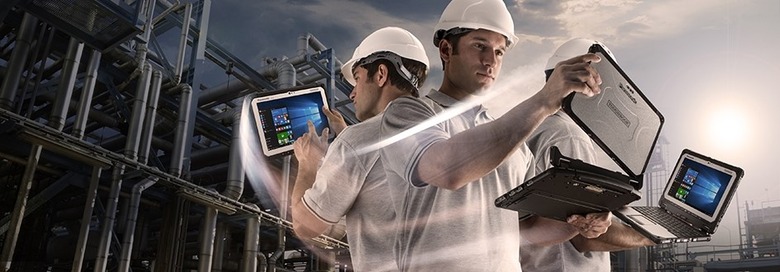
    Owing to advancements in minimalism and technology, businesses are replacing desktops and laptops with tablets very rapidly. These "loaded with heavy graphics and high configurations" are no more fragile. In fact, these rugged tablets are hardcore pieces of hardware that can withstand the roughest of situations and work environments. I did a feasibility study on rugged devices for personal, business and industrial usage - the sample data set included a lot of people who had or wanted to use rugged devices. The results included some useful insights into ergonomic aesthetics and usefulness of such technology. Professionals, especially from the oil and automobile industries, demand a tablet that offers the desired mix of durability and advanced features. 'On the move' staff like Police force are no different either. They also need a reliable handheld device that can input relevant data effortlessly even under hard hitting conditions and can survive sudden drops, unexpected kicks, and unpleasant bumps. Personnel working outdoors often resort to manual techniques of recording information and data as the laptops or tablets aren't efficient enough to meet the requirements. But Toughpads break from the norm and are especially designed for the people working in challenging conditions. No wonder they make one forget pen and paper and come handy in turbulent terrains. Power Packed, yet Pocket Sized Tough pads are created considering the harsh working conditions of niche workplaces like oil fields, mines, forests, warehouses, deserts and so on. They are fully rugged, ergonomic and lightweight. Manufacturers like Panasonic are well known to offer products in this segment. The rugged tablet Panasonic Toughpads are particularly designed for field applications where exposure to extreme environments is a constant challenge, and the consequences of failure are significant. Balancing great functionality and durability, Toughpad FZ-X1 and Toughpad FZ-G1 from Panasonic are among 'most talked about' models from the series. Since these models are rugged, they can be taken to any location without worrying about tough grease, mud, and manure. Today's field staff works in the most demanding environments and demands computing technology, which can fit in a pocket. Thanks to secure Android OS in some of the rugged tablets like the ones offered by Panasonic (FZ-X1 and FZ-G1 models), businesses can leverage their existing investments in a handheld tablet without compromising on the performance. 'On the Go' Data Management The Toughpad is mightier than the pen - and even the Oil, the Automobile, and Police professionals have admitted to this. With the launch of Panasonic Toughpad FZ-X1 and Toughpad FZ-G1, the data collection exercise will substitute pen and paper with mobile technology. And, this is the first step towards quick digitization of the physical recording system. Today's fast-paced business world relies on strong data management that can be accessed from all geographical areas. Especially the two models from Panasonic; FZ-X1 and FZ-G1, meet your data collection needs, be it regarding work order management, distributed asset management or fleet logistic. Your Data is Physically Protected Too With 'chemically hardened display glass' to withstand heavy vibrations, Toughpads offer enterprise-class security and advanced data management. These power packed devices can now do everything a mainframe computer can do, be it running heavy data, search software or controlling your data entry. With sunlight readable displays, data entry and tracking technology it is even easier and effortless to work in the field. With the multi-touch capacity touch screens, users can type with fingers, stylus or even gloves and can control the size of the screens for easy access. This controlled zoom optimizes the user experience while inputting detailed information. The display can be used horizontally or vertically and is configurable for best computing experience. Network Users Can Relax Too Wi-Fi, Bluetooth® and cellular data connectivity enable flexible and efficient workflow. These rugged tablets include USB host ports, HDMI output and a matched set of batteries that can be hot-swapped in the field. User-programmable function buttons, the encryption module to allow security programming for Wi-Fi, direct connect authentication and security ports provide workers with the ability to physically secure their devices on the network. Panasonic Toughpad® FZ-G1 Setting the new benchmarks for daylight-viewable business tablets, the Toughpad FZ-G1 is field worker's true companion. IP65-certified and MIL-STD-810G certified, these tablets not only can input data quickly but can also view high definition images or documentation in the field without any hassle. Captivating users with a multi-touch display, Toughpad FZ-G1 also offers an excellent battery, which means one can spend hours outdoors without worrying about losing power. Resistant to dust and water, these devices are sturdy to fit rocky workplaces. Panasonic Toughpad® FZ-X1 Empowered with voice and data technology, Panasonic Toughpad® FZ-X1 is the world's most rugged handheld tablet with 5'' captivating display and Qualcomm® Quad-core Processor. With optional data, voice and push-to-talk technology, this groundbreaking device boasts of the 'world's longest battery life for a handheld tablet', giving field workers 14 hours of continuous data access without any interruption. The hot swappable battery charges very quickly to 50% (in just one hour). Customized options include integrated magstripe reader and barcode reader for hazardous locations.

    By Utkarsh Sahu Read More