Winston Nguyen

Engadget Editorial Policies

The unique content on Engadget is a result of skilled collaboration between writers and editors with broad journalistic, academic, and practical expertise.

In pursuit of our mission to provide accurate and ethical coverage, the Engadget editorial team consistently fact-checks and reviews site content to provide readers with an informative, entertaining, and engaging experience. Click here for more information on our editorial process.

Stories By Winston Nguyen

  • Do Not Misunderstand THIS Message

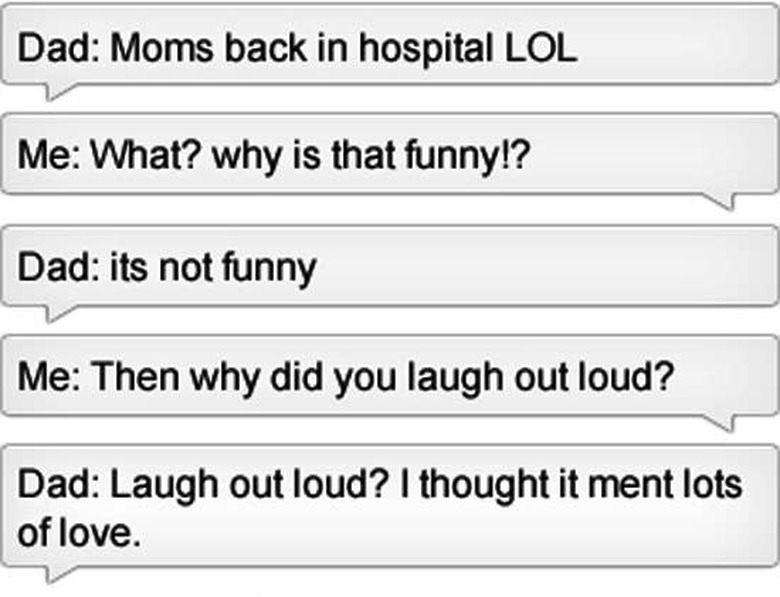
    How are people interpreting your messages/emails? Are you being too formal or informal? Perhaps you're sounding harsher in some emails than what you intended? In everyday life, we heavily rely on tone of voice and body language in order to understand another's point of view. However, when it comes to emails, the lack of these cues makes it easy to misinterpret the sender's message. Compare the following sentences: Do NOT misunderstand this message. Do not misunderstand THIS message. DO NOT MISUNDERSTAND THIS MESSAGE. Do not misunderstand this message ^^ All these sentences have different meanings, despite the words being the same. This is why email communication can be a challenge: so many details can affect the tone of a message. Unlike in real life where body language and tone of voice come so naturally to most of us, online communication is much more difficult to grasp, even for tech savvy individuals. Intricacies such as formatting (bullet points, sub-headers, line breaks), punctuations!!!, CAPITALIZATIONS, letter emphasisssssss, emoticons xD, text size, font, and color all can greatly affect the tone of a message which people remember more vividly than the content itself. Along with all this, it's crucial to consider word choice, sentence length, sentence structure and inclusion of images. Do people perceive your emails the way you intend them to perceive it? This is a tricky question, since the way you interpret your messages might be different to how another person interprets it. A neutral tone can be perceived as a lack of interest, a sarcastic remark can be misinterpreted as offensive behaviour, and spelling/grammar mistakes can be misinterpreted for lack of care or laziness. Misunderstandings often results in hurt feelings, people forming false perceptions of you, passive aggressive responses, poor decision making and even loss of a relationship if the situation escalates. This is why it's important to recognize how other people are interpreting your messages. Solutions to Email Miscommunication Just a general awareness of the email's tone rather than contents can go a long way. Reading the email to yourself helps you to recognize it's tone along with minimizing grammatical/spelling errors. With that said, there are plenty of tools such as Grammarly which can help make you sound professional, but there aren't any tools to check the tone of your email due to it's subjectivity. The best way to find out how other people are perceiving your emails is to simply ask them directly. There's a tool called 'Rate My Mail' which allows you to do just this. The tool allows other people to rate your emails anonymously, so they'll be able to provide negative feedback without sounding rude. Rate My Mail was a tool developed by Hiri, a startup based in Dublin, Ireland. The tool is built into their email client called Hiri, but now, it is accessible to everyone, regardless of the email client that you use. In order to use the tool, you must firstly sign up to their website (which is free), where they will provide you with a customizable signature. Paste the link into your email signature and your friends/colleagues will be able to rate your emails. The tool is very handy for improving your: Job applications Impression on colleagues or friends General online communication (SMS, Facebook, Skype etc.) Since this tool actually provides feedback on your messages, you can experiment on what gives the best impression. Personally here's what I find works best: Meaningful subject lines ("I found the answer" as opposed to "question 6" or worst "hey") Short, punchy paragraphs Varied sentence length as opposed to having each sentence the same length Avoiding ultra long sentences Treating the other person as human (after the first email exchange, using emoticons or saying stuff like "haha" generally makes them feel more comfortable). Being polite, even if the email is negative Their current scale is nice, as it allows you to know about ratings from the tone to subject line, but in the future, I hope they add customizable rating scales into the tool. Regardless, I think it's a great development and online communication would be better if everyone was getting feedback on their emails.

    By Winston Nguyen Read More
  • Razor EcoSmart Metro E-Scooter Review

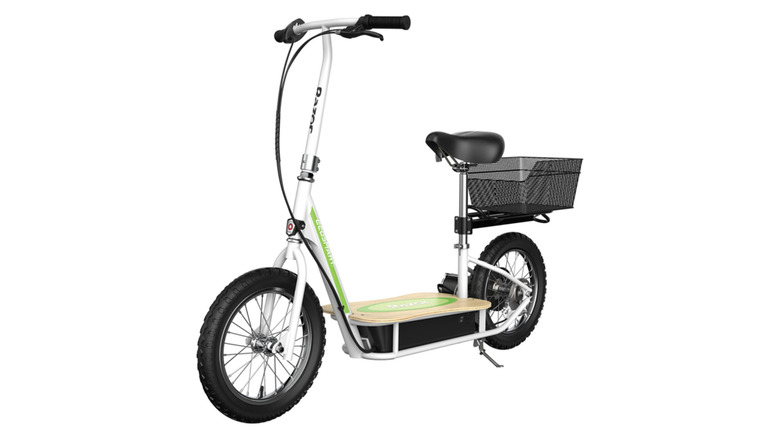
    The main appeals of getting an electric scooter (also called 'electric moped' or just 'moped') are for it's cheap, eco-friendly travelling around a small area. In a world where electric transport are seeing a rise in popularity, expensive toys like Segways and electric unicycles are becoming trendy. It's refreshing to see something as simple and fun as an electric scooter, which is one of the reasons why people tend to use a charged moped. Travellers also tend to rent a charged moped for sightseeing purposes, which can be great fun too, though be sure to double check the law if you're planning on doing this, since some states require a license. Below is a review of one of my favorite electric scooters: the Razor EcoSmart Metro. Razor Scooters have been around since 2000, and have received numerous awards and praise for their innovation and cutting edge technology. Speed: The Razor EcoSmart is powered by a 500W motor with a 36 volt electric system which can be recharged with any source of electricity. As advertised, the EcoSmart can reach ranges of 18-20 mph on flat surfaces and even faster on downward slopes. Battery: The battery is a 7.5 AH one which could be replaced to improve the travelling distance. Furthermore, these batteries are stored in a nylon zipper case which is in the bin, under my feet, allowing me to ride this in the rain without fear of ruining it. The manual suggests charging the batteries for 12 hours, however, I'm able to get this thing running for 7-8 miles by just charging for a few hours. Occasionally, I would charge it overnight for 12 hours though, as it's good for the batteries. Max travel distance of the scooter: This is one of the most important questions to ask when considering buying or renting an electric scooter. Unfortunately, it's extremely difficult to answer, since it varies from scenario to scenario. Things such as rider's weight, travel surface and slopes/hills can alter this value greatly. Hills are the biggest factor and even a slight slope can cause a change as drastic as 60% reduction, especially if the rider weighs a lot, since it takes a tonne more energy to move upwards than horizontally. Here's a rough estimation on the travel distance: If the driver is light weight and travelling on a completely horizontal surface, the scooter should reach 10-14 miles. On the other hand, if they're heavy and constantly travelling uphill, expect the max range to be reduced to 1-3 miles (no kidding). Comfort: The seat is heavily padded and contains 2 shock absorbing springs, making it a comfortable ride even during long distances. The seat and handlebar rake is also adjustable unlike some other mopeds, allowing both short and tall people to ride comfortably. The rear luggage space is also nice, as sometimes I'll be carrying up to 12 lbs of items with me. Design: I'll let the picture speak for itself. This isn't a motorbike, so don't expect to look cool riding one of these things, but it sure is fun as hell. Riding this thing will bring out the inner child in most of us. The design is also as minimalistic as it gets, nothing flashy. Pricing and Conclusion: The scooter only costs around $400 on Amazon, but it's certainly not a low end product, and it's certainly worth more than it's price. This is a great purchase for those who are on a budget, and need some means of transportation other than public transport (especially for those in rural areas). Or it's for those who just want to have some fun!

    By Winston Nguyen Read More
  • 5 Technological Differences Between Australia and the US

    1. Electrical Outlets Have Switches If you're Australian, this should look completely normal. If you're from the US or most other parts of the world, then it might seem weird that electrical outlets have these switches. Outside Australia and the UK, outlets have no switches and are always on. The main reason for this is cost: it could cost hundreds or thousands more to get switches in power outlets. Are they safer with switches? That is debatable, especially since most devices have on/off switches already. The funny thing with switches is that it can take a few days to get used to them. I've been told by friends who visited Australia that when they had their phones/laptops plugged in and it wouldn't charge, it took some time to figure out why. 2. Public Toilet Urinals Photo Credit: urinal.net The above images show 2 different urinals in Australia. They both contain no separation between each urinal. Most other places have a board to separate urinals like this: For some, it might be bothersome to urinate in the open where other people can see them, but this doesn't seem to bother most Aussies though. Luckily, cubicles exist for those who feel uncomfortable. 3. Electric Kettles Okay, this difference is not just between Australia and the US, but the whole world vs. the US. In the US, they don't have electric kettles. Even if they wanted one, they'd have to do more than just go to their local shops, because most places won't sell them either. I don't know how people survive over there in the US when they don't have kettles. I've been told that tea just isn't as popular there compared to Australia and other parts of the world. When they do intend to drink tea, they use their stove or microwave to heat water. 4. A Lack of Free WIFI Thanks to being so isolated from the rest of the world, in Australia, we have more bandwidth quotas than most (if not all) places, so you won't see nearly as much free WiFi when you're out in public. It's quite common for someone to wander around the city for half an hour before they run into free WiFi. It just costs a lot of money to install underwater fibre links and we don't have the population density to support the costs. 5. Australians Air Dry Their Clothes Photo Credit: Evil Monkey Most people in the US use a dryer, whilst most in Australia just air-dry their clothes. It saves money (using the dryer can cost $3) and most importantly, it saves electricity by a lot. Though the one downside of this is life can become a nuisance if it starts to rain.

    By Winston Nguyen Read More