

AMD at CES 2026: Live updates from CEO Lisa Su's keynote presentation
Expect announcements heavy on AI, and maybe an update on new Ryzen chips.
NVIDIA and Intel had their moment in the spotlight, and now it's AMD's turn. The chipmaker is kicking off CES 2026 on Monday night, where it'll cover its latest AI developments and perhaps show off its newest Ryzen chips. It's the kickoff keynote of CES 2026, and CEO Dr. Lisa Su is expected to outline how AMD's hardware will power the AI revolution — and what the company can offer partners and consumers that those aforementioned rivals can't.
We'll tell you how to tune in to the livestream and what else you can expect to see.
How to watch AMD's keynote live
Dr. Su will deliver a keynote speech from the Palazzo Ballroom at the Venetian on Monday, January 5 at 9:30PM ET (6:30PM PT). You can watch the event live on the CES YouTube channel (we've embedded the livestream below).
Engadget will also be liveblogging the AMD keynote in real-time.
132 Updates
-
In case you missed the tangible chip news hidden amongst all that AI chat, Devindra has writeups on AMD's new laptop chip range, as well as its new desktop chips, which you can find at the links below:
-
And we're out folks! Thanks for joining us during this... two hour long keynote.
-
Su is wrapping things up now. "This moment in tech not only feels different. AI is different. AI is the most powerful technology that has ever been created. And it can be everywhere for everyone."
-
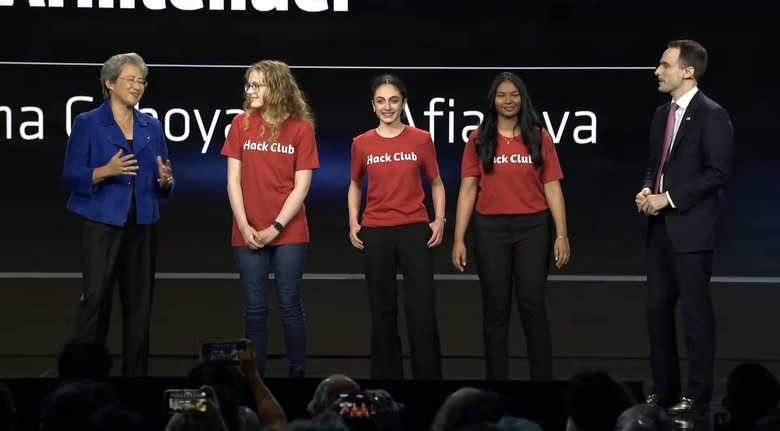
Dr. Su invited Armtender, a three-person team that won the AMD x Hack Club 2025 competition onto the stage.
-
We're watching the members of "Armtender" winning team from AMD's partnership with Hack Club, discuss their project. The team includes Emme McDonald, Ruzanna Gaboyan and Afia Ava. AMD is awarding each of them with a $20,000 education prize.
-
Let's all thank the First Lady for her AI leadership.
-
This entire discussion around the Genesis Mission has been a whole lot of nothing.
-
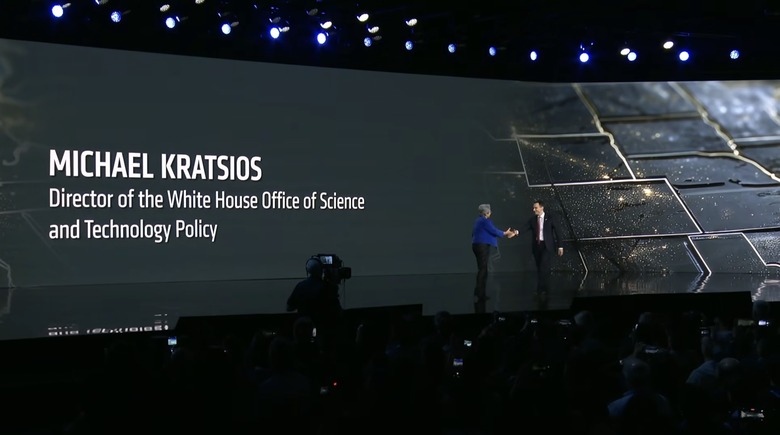
AMD CEO Dr. Lisa Su is joined by Michael Kratsios, director of the White House Office of Science and Technology Policy.
-
AMD is also involved with the Genesis Mission, a public-private initiative to use AI for scientific discoveries.
-
Su is discussing AMD's role in HPC (high performance computing) in the science world.
-
AMD's new Ryzen AI Max+ chips and Ryzen 7 9850X3D court desktop enthusiasts
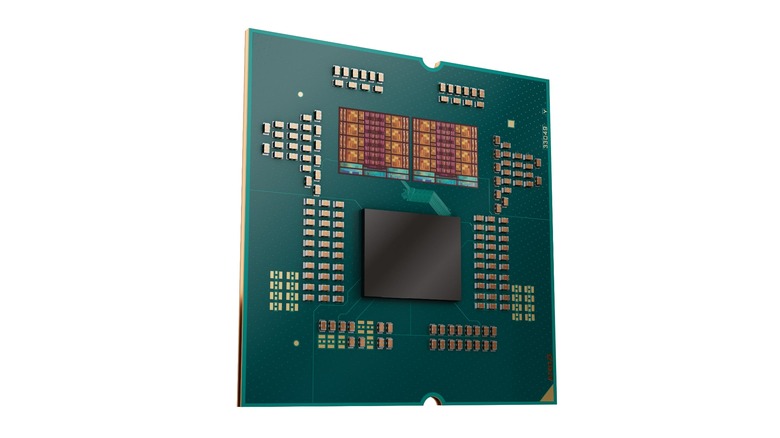
AMD Ryzen 7 9850X3D
You wouldn't know it from this AI-heavy press conference, but AMD has, in fact, just announced a high-end desktop gaming CPU: the long-rumored Ryzen 7 9850X3D with 3D V-Cache. It's an 8-core chip that can reach up to 5.6GHz boost speeds with 104MB of combined L2 and L3 cache. Like all of AMD's X3D chips, it uses 3D V-cache technology to vertically stack additional cache memory. In comparison, the standard 9850HX chip has 76MB of L2 and L3 cache. Anyway... back to health and space and science, I guess.
Read more: AMD's new Ryzen AI Max+ chips and Ryzen 7 9850X3D court desktop enthusiasts at CES 2026
-
Now we're turning to the last chapter: Science!
-
We're really going to hit the two-hour mark with this one, folks.
-
Within two months of starting a partnership with AMD, Blue Origin was able to get the chips it needed for new flight computers.
-
Couluris points out that space work demands reliable technology. He praised AMD's embedded technology for powering low-power space equipment for Blue Origin.
-
John Couluris, SVP of Lunar Permanence at Blue Origin, now joins Su on stage. Specifically, he's focused on bringing heavy industry to the moon, and away from Earth.
-
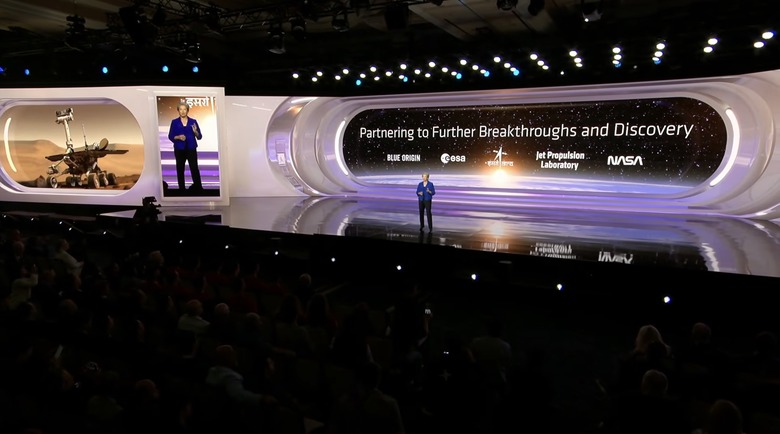
Space: Possibly the final frontier of this insanely long press conference.
-
Su says AMD technology is powering critical space missions today. That includes autonomous exploration of Mars, with the Perseverance Rover, as well as missions around the moons of Jupiter.
-
Next up: Space!
-
The robot's name is "Gene.01," which he describes as an Italian robot. It has touch sensors to figure out how to help human patients. I'd be more impressed if the robot could actually walk around on stage, instead of standing at attention, dead-eyed.
-
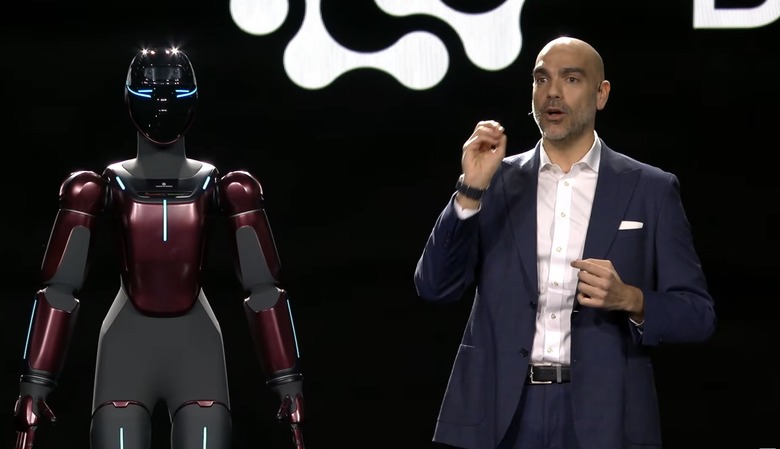
Did you have menacing robot on your bingo card? Congrats!
-
Now we're watching a sleek announcement video for a robot. It's a red robot that looks straight out of Mega Man.
-
The same tactile sensors used in robots can now act as a shoe for human patients.
-
Pucci says his approach to physical AI is to build a platform around the robot. They're inspired by bio-mechanics, like the way we walk by falling forward.
-
They built a jet-powered flying robot! Why would you do that!? You maniacs!
-
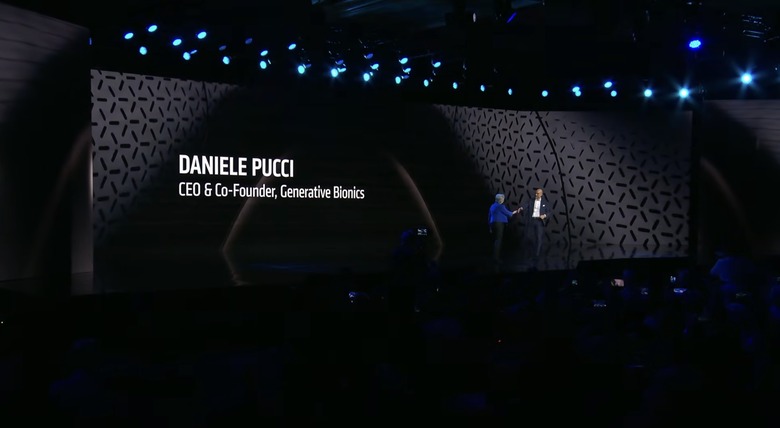
AMD CEO Dr. Lisa Su greets Daniele Pucci, CEO of Generative Bionics
-
Daniele Pucci, CEO & co-founder of Generative Bionics, joins Su on stage to discuss the world of physical AI.
-
Su is bringing up the work AMD has been doing in robotics for the last 20 years. It's basically the same physical AI concept NVIDIA discussed earlier this week.
-
Nope. Now, we're entering the world of physical AI.
-
The panel is over, and hopefully this keynote!
-
Engkvist says AstraZeneca trains its AI models models on its decades of medical data. That helps the company to sort out the best experimental drugs.
-
Thaysen's company, Illumina, focuses on gene sequencing for "genomic discoveries." He says the process more data than YouTube every day. (Also worth noting, he's bald and says he's very excited about what McClain is cooking up.)
-
Talk about burying the lede — McClain moved onto talking about a disease-modifying treatment for endometriosis, a far more serious condition than baldness.
-
Here's the panel: Sean McClain, Founder & CEO, Absci; Jacob Thaysen, CEO, Ilumina; and Ola Engkvist, Executive Director Head of Molecular AI AstraZeneca. McClain went first, now we're listening to Thaysen.
-
One of the executives is discussing having AI help cure baldness. The crowd cheers. One guy is very excited about that news.
-
I wonder if she told every stage guest to come with their favorite jacket.
-
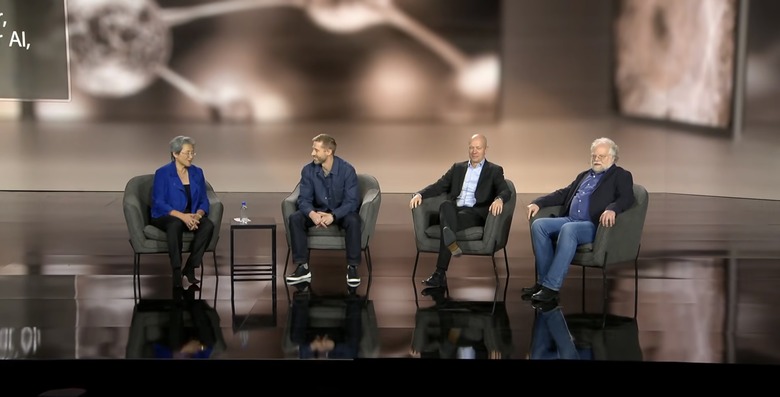
An impromptu AI healthcare panel found its way to the stage.
-
Su has brought a trio of healthcare executives on stage to talk about the progress of healthcare AI.
-
Su says that healthcare is one of the industries she's most passionate about when it comes to AI.
-
We're moving onto healthcare next, after saying goodbye to Li.
-
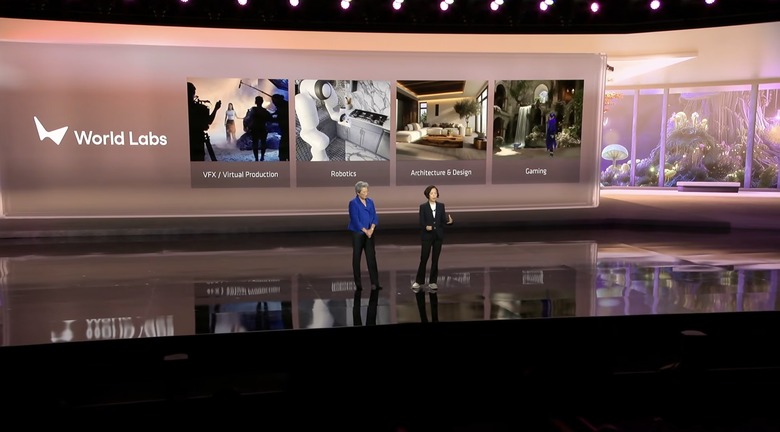
Some of the fields World Labs hopes to move its software into.
-
What used to take months now takes a few minutes with World Labs' model, according to Li. She showed off a quick demo of how her team remodeled the Venetian hotel based on a few photos. "The faster we can run these models, the more responsive the world becomes. Instant camera moves. Instant edits."
-
To the semi-educated eye it appears to be a lot like gaussian splats, but cleaned up with AI.
-
Microsoft and others have shown off quite a few AI-generated game worlds, but the persistence of World Labs' demo seems a cut above the typical AI gaming demo we've seen.
-
The World Labs team then converted that model into a few different design styles, from an overgrown forest to an ancient Egyptian theme.
-
Li says her team visited AMD's office, took pictures with phone cameras and put them into World Labs' 3D generative model. It was able to create a 3D version of that environment, including windows, doors and signs. There's a sense of depth and scale, she says.
-

In an on-stage demo, we saw a persistent "Hobbit world" that was AI generated from a couple of seed images.
-
With World Labs, Li says she's using AI to interpret the structure of an environment from a few images. It can generate rich, permanent and persistent 3D worlds.
-
Li says she's excited about AI's ability to give computers spatial awareness similar to humans. She wants to bring spatial intelligence to life.
-
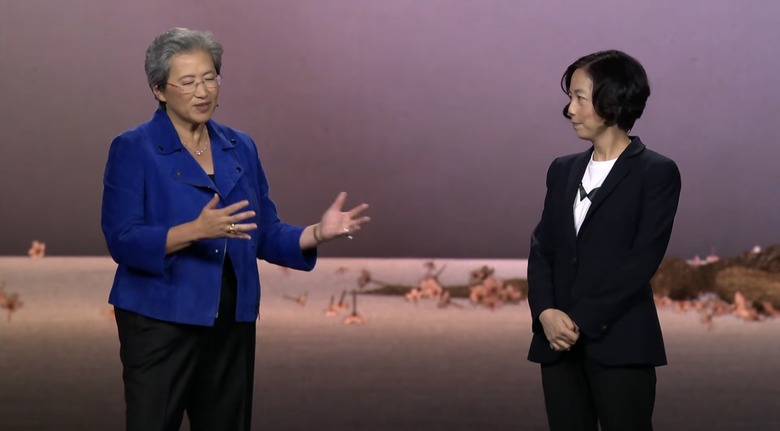
AMD CEO Dr. Lisa Su on stage with Stanford professor and World Labs CEO Dr. Fei-Fei Li.
-
Su is discussing how AI can help with game world creation. She's bringing Dr. Fei-Fei Li, CEO and founder of World Labs, onto the stage.
-
Knowing how well the Framework Desktop runs Bazzite... the real questions is: Can I turn this lil guy into a Steam Machine?
-
Now we're onto gaming and content creation.
-
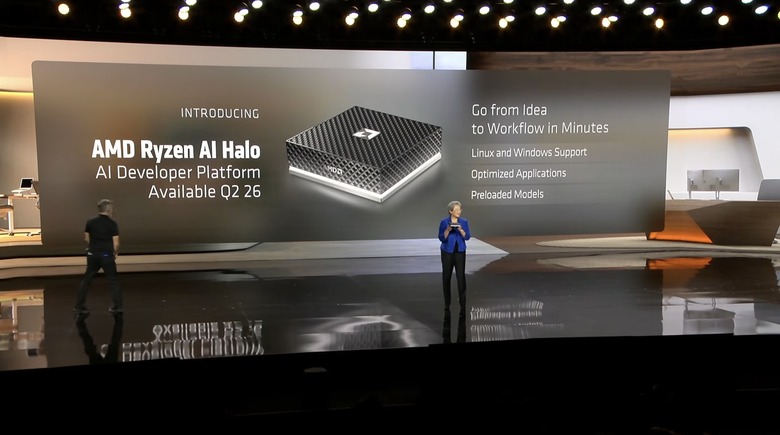
The Ryzen AI Halo is a AI development platform powered by an AI Max processor. It's tiny!
-
AMD Ryzen AI Halo will be available in Q2 2026.
-
Now she's announcing AMD Ryzen Halo, a new platform for local AI deployment. "This is the smallest AI development system in the world," Su says.
-
Now we're onto Ryzen AI Max, the "ultimate" processor for gamers, creators and developers. She's showing off the same specs from last year, they feature 50 TOPS NPUs, as well as integrated memory for faster bandwidth. Ryzen AI Max also supports Windows and Linux natively, so developers don't have to change their workflows.
-
Looking forward to meetings where everyone sends a robot, they all talk to each other, and nothing gets done. That's truly the future of human collaboration.
-
As an example, he says LFM 3 can join meetings for you to act on your behalf, while you focus on other work. (Nobody wants this! My god.)
-
LFM 3, a more powerful model coming later this year, will work natively in 10 languages, offers real-time audio/visual interaction and enhanced function calling.
-
Hasani is announcing Liquid Foundation Model 2.5, whichi features 1.2 billion parameters and fast agentic performance.
-
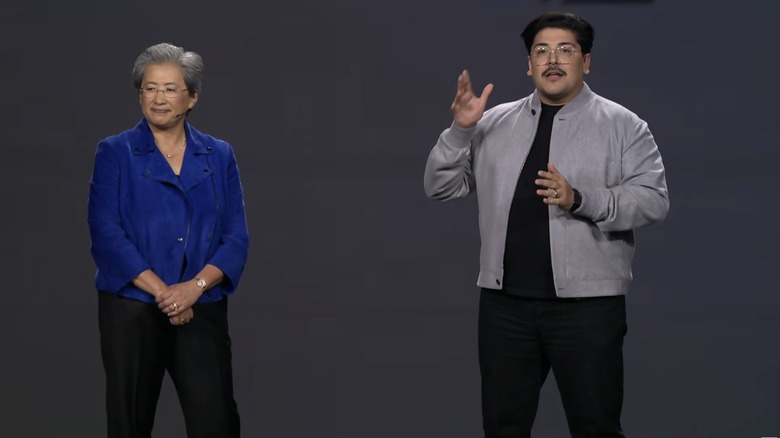
Ramin Hasani, co-founder of MIT spinoff Liquid AI, talks up his company at AMD's press conference.
-
Hasani says Liquid AI is a foundation model company, building models that can work across a wide variety of hardware. "The goal is to substantially reduce the computational cost of intelligence from first principles," he says.
-
Ramin Hasani, co-founder and CEO of Liquid AI, now joins Su on the stage.
-
Su says the first Ryzen AI 400 PCs will start shipping later this month.
-
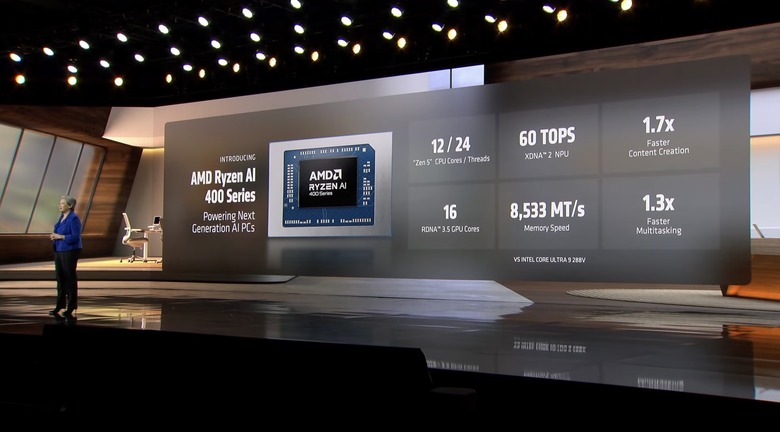
The Ryzen AI 400 Series is AMD's new family of laptop chips.
-
She's announcing the new Ryzen AI 400 series processors. They feature up to 12 Zen 5 CPU cores, 60 TOPS of AI computer and faster memory speeds than before.
-
She's giving Microsoft credit for pushing AI features and the Copilot+ initiative, which is focused on AI PCs.
-
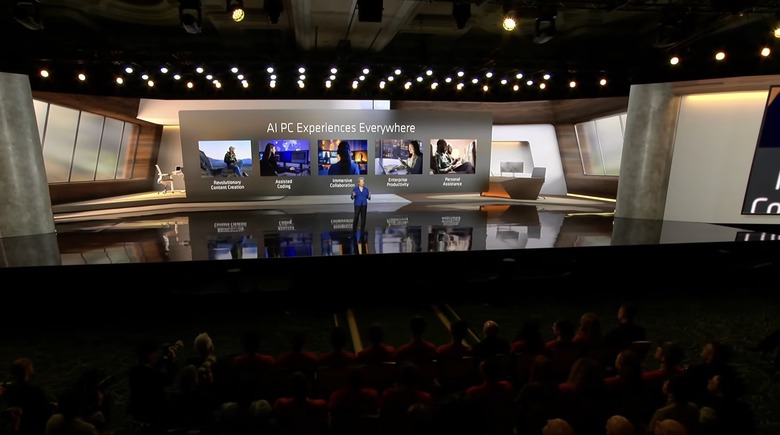
Su reminds us of how inexcapable AI is in modern day PCs.
-
She says that AI has helped PCs become more than just tools, they've turned into active participants in our lives.
-
Now, we're moving onto PCs.
-
Su says AMD's next-gen MI500 Epyc CPUs will scale AI performance by 1,000x over the next four years.
-
Jain says that scaling video models will help us to simulate real physical processes in the world. He think it could help us design rockets.
-
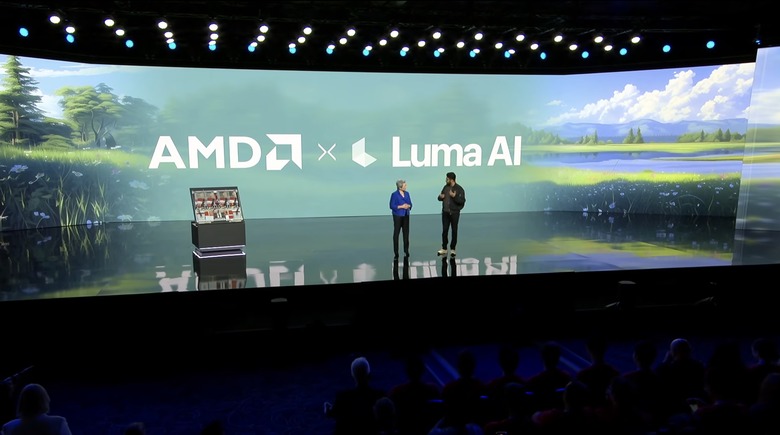
No one's going to tidy up that server rack then...
-
He believes that Luma AI's collaboration with AMD will give it a leg up on the competition.
-
Today, 60 percent of Luma's growing inference workloads run on AMD cards. (Are AMD's enterprise drivers more stable than their consumer software? I wonder.)
-
We're looking at how Luma's multi-modal agent can take a look at a script and start to generate ideas for users. Individual creatives, or small teams, will suddenly have the power to do what entire teams of Hollywood creators have been doing, Jain says.
-
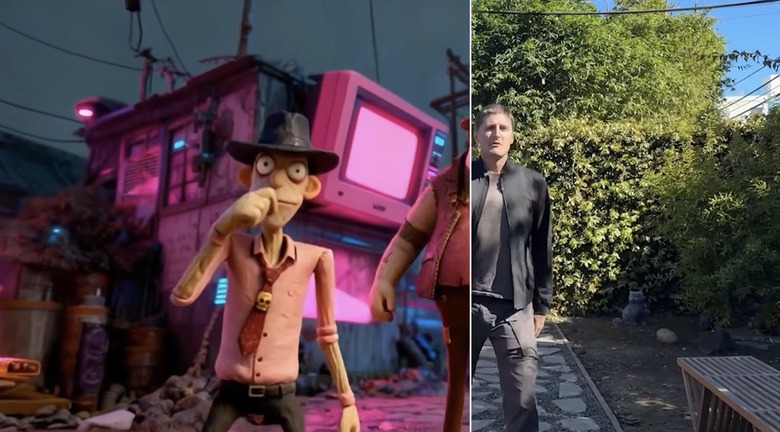
Luma's Ray3 Modify model transforming video footage into a stylized cartoon.
-
Ray 3 Modify, a new feature in the model, lets customers edit generated and live clips on the fly. He also points out how it's a hybrid form of creation, since many of the clips are based on performances from humans
-
Jain says he's working with individuals and large companies. "2025 was the year they started to deploy our models and experiment with them." Some customers have even pushed it to create a 90-minute feature length movie.
-
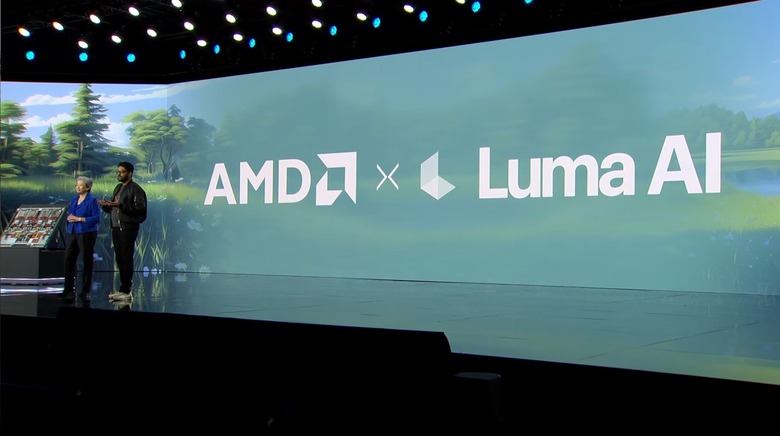
Luma AI CEO Amit Jain joins Su on stage to discuss his company's generative AI models.
-
We're seeing clips of what Luma AI's Ray3 model can do, and it sure looks like AI video. But he claims it can generate 4K clips.
-
Luma AI CEO Amit Jain joins Su on stage to discuss how it's using AI. He says the company's mission is to build multi-modal general intelligence. "In short, we are modeling and generating worlds," he says.
-
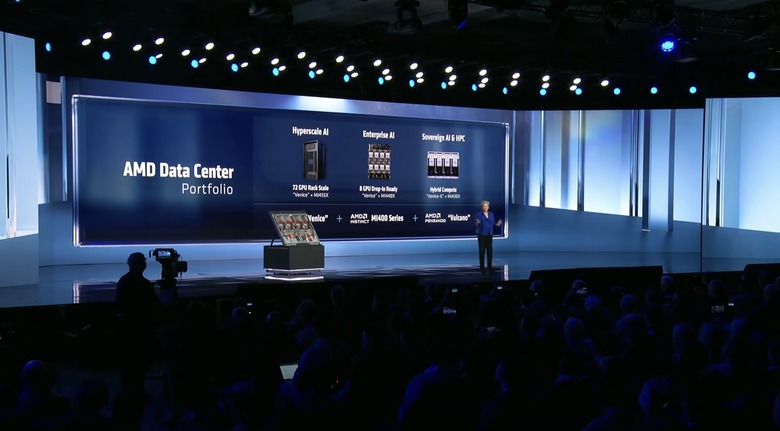
Dr. Su shows off the full AMD Data Center portfolio
-
We're briefly looking at AMD's data center portfolio, which goes from hyperscale AI to more demanding sovereign AI HPC.
-
He thinks that the hardest problem we have, as humans, is to figure out how to use the limited resources we have available. Of course, the president of OpenAI believes AI is worth burning more resources.
-
Su asks Brockman to explain to people why there's such a need for compute. He says that OpenAI has increased its computing needs 3x every year, for the last few years. And it's also grown its revenue by the same amount. I don't think there's any doubt that high-level AI work will require tons of compute. The question is if that cost is worth it to humanity.
-
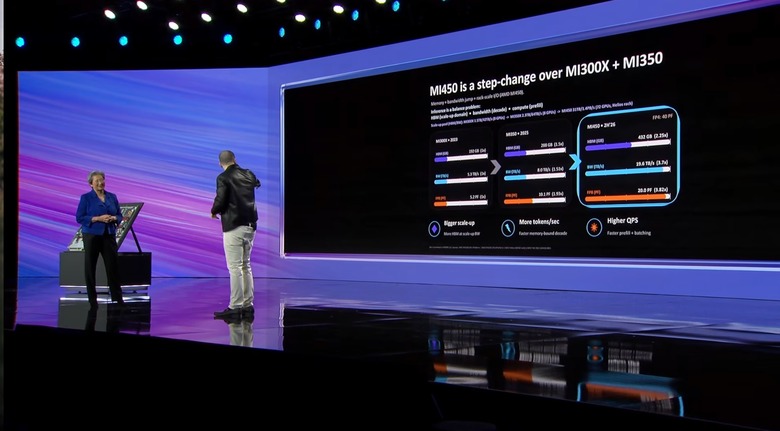
OpenAI co-founder Greg Brockman shows off a slide he got ChatGPT to make.
-
He asked ChatGPT to create a slide showing off what the new AMD GPU can do, compared to the previous gen. The slide looks well-designed, but we can't really check its accuracy in the midst of this presentation.
-
"What we're really seeing is benefits in people's lives," Brockman says. He points to healthcare, claiming that people's lives have been saved by ChatGPT. He recounts one story of an OpenAI employee who was convinced to take her husband back to the hospital for leg pain. He claims it turned out to be deep vein thrombosis.
-
In addition to Su being very clear, Aaron, it's also much easier to listen to Brockman than Sam Altman. At least this guy seems human.
-
Brockman notes that people are now using OpenAI's products for more than just text box search, they're also finding personal ways to take advantage of it. (And here's where I point out that's kind of dangerous, especially as people turn to AI for mental health, which has led to some terrible outcomes.)
-
I will say this is by far the most coherent AI keynote we've seen today. Dr. Su is a much more direct communicator than others and that helps a lot.
-
"ChatGPT is very much the overnight success that was seven years in the making," Brockman says. Now that's a bit hard to compute.
-
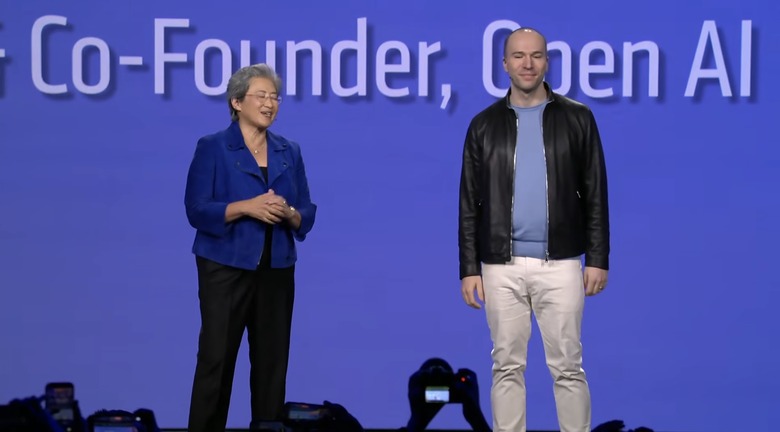
AMD CEO Dr. Lisa Su greets OpenAI co-founder Greg Brockman at CES 2026.
-
MI455X offers more than a 10x performance increase in some models compared to the previous MI355X. Greg Brockman, the president and co-founder of OpenAI, joins on stage to talk about this new hardware.
-
Each Helios rack includes more than 18,000 GPU compute units, Su says.
-
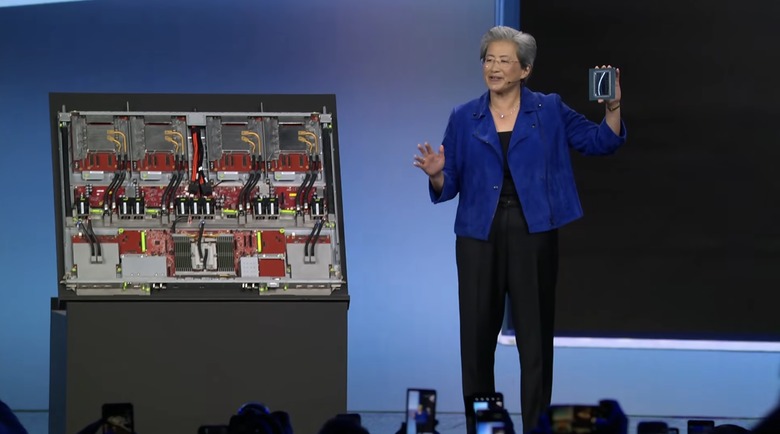
Dr. Su is showing off a compute tray from the Helios rack, which has four MI445X GPUs. (She's holding one of them up.)
-
In my years covering AMD's press conferences, I can confirm that Su really loves holding up the company's chips.
-
Each Helios tray includes four MI455X GPUs. Su is holding up one of those GPU chips, and it looks like a chonkster. There's also the next-gen Epyc CPU, code-named "Venice."
-
Su says the Helios rack weighs nearly 7,000 pounds, or more than two compact cars.
-
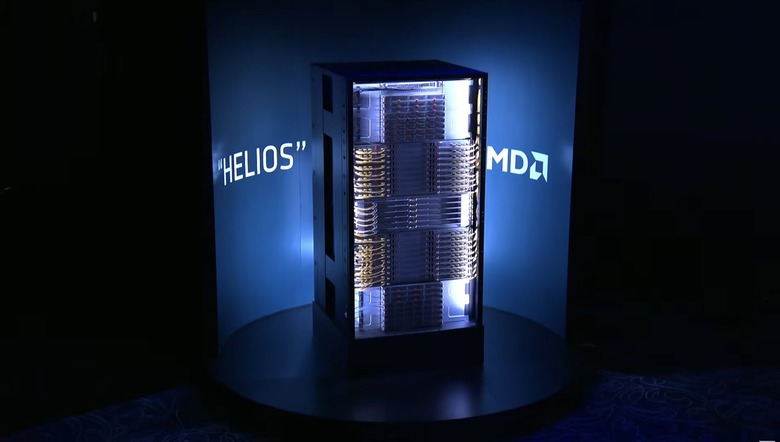
That's certainly a server rack!
-
Su is going over the nitty gritty of those Helios systems, which includes the new Instinct MI455 GPU. And it looks like a Helios rack has also hit the stage. It's very very odd to hear exciting music introducing a server rack, as powerful as it may be.
-
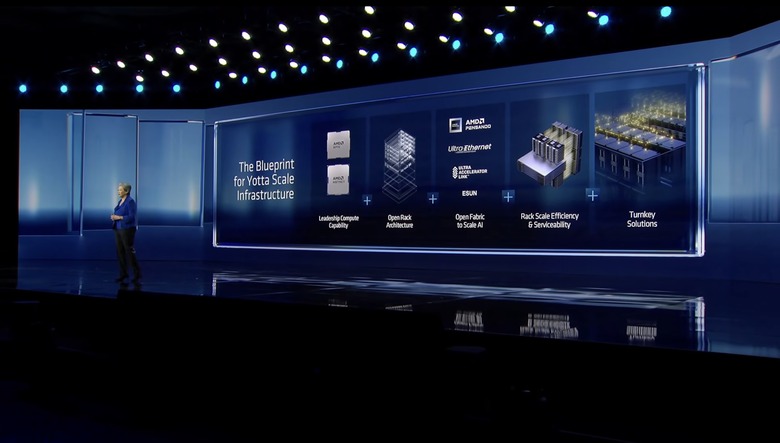
Dr. Su is talking through AMD's Helios rack servers.
-
The real challenge, according to Su, is figuring out how to scale AI to Yotta-scale. That's why AMD built Helios, its next-generation platform.
-
Su says every major AI company uses AMD Epyc CPUs, and most also use AMD's Instinct AI accelerators.
-
We're starting with the cloud. Su says it's where the largest models are trained. It gives developers instant access to massive compute and an easy way to deploy and scale.
-
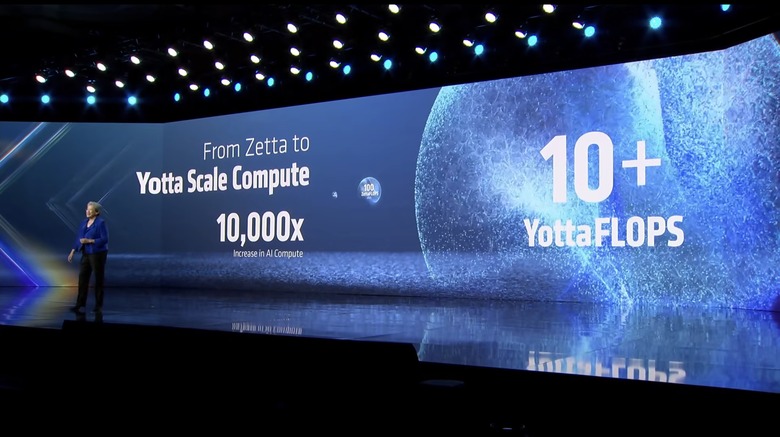
That's a lot of 000s.
-
We're going to talk about AI in the cloud, PCs and the edge, Su says. "You really need to have the right compute for each workload." So, CPUs, GPUs, NPUs and custom accelerators, all things AMD produces.
-
"We don't have nearly enough compute for everything we can possibly do," Su says. This is a refrain we're hearing from practically every AI company. Now we're talking about YottaFLOPS, a 1 followed by 24 zeroes. She predicts a 10,000x increase in AI compute.
-
Su predicts the AI industry will grow to more than 5 billion people using it daily within five years.
-
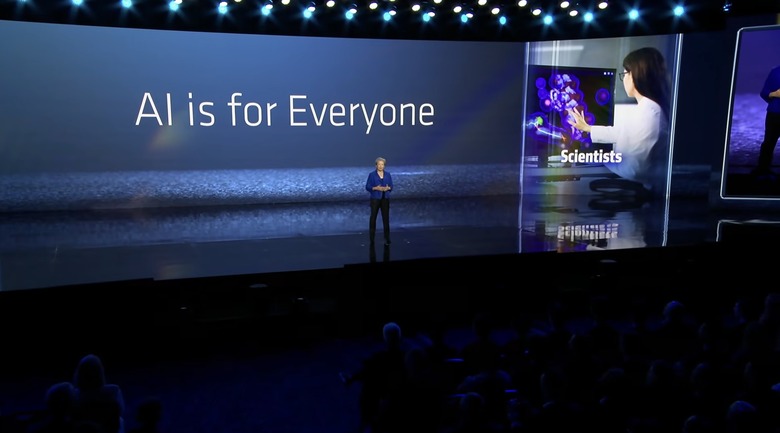
AI is for everyone. Even Scientists!
-
Su says AMD's technology touches the lives of billions every day. "AI is the most important technology of the last 50 years, and it's absolutely our number one priority at AMD," she says. She's really hammering the idea of AI being everywhere, and for everyone.
-
"Tonight is all about AI," she confirms. But her theme for tonight is also, "You ain't seen nothin' yet." We're going to see examples of where AMD believes the AI industry is headed.
-
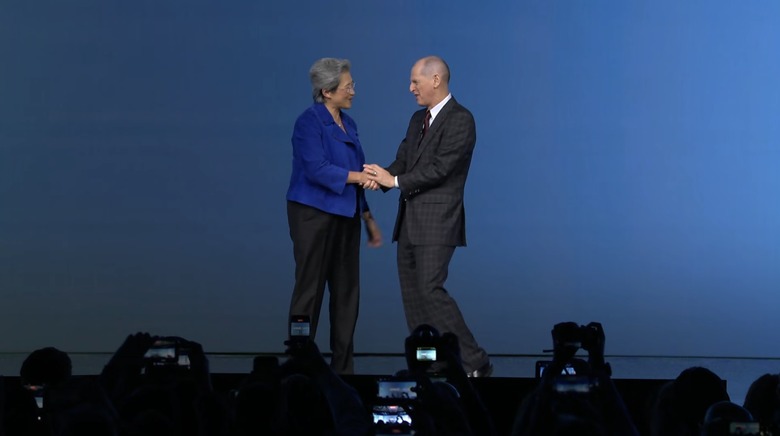
AMD CEO Dr. Lisa Su is welcomed to the stage by Gary Shapiro.
-
AMD CEO Dr. Lisa Su finally hits the stage. She's opting for a sharp blue jacket to compete with NVIDIA CEO Jensen Huang's leather attire.
-
"Video conceived by humans. Made possible by AI." Sigh.
-
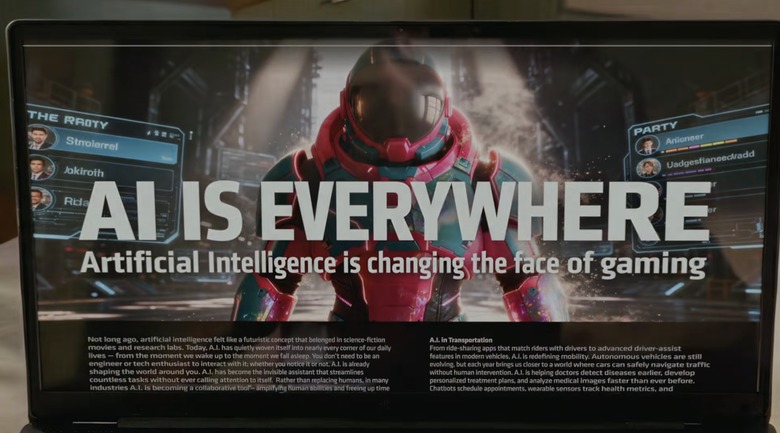
A screenshot from AMD's CES 2026 press conference showing a hellish vision of the future of gaming.
-
Now we're onto a promo video for AMD. And of course, AI seems to be the focus.
-
Gary is still talking. Come on Gary, let's get to the chips!
-
Finally, he introduced AMD CEO Dr. Lisa Su. "Lisa is no stranger to this stage, she has keynoted CES before, and each time she has helped set the tone for the industry and the year ahead," he said.
-
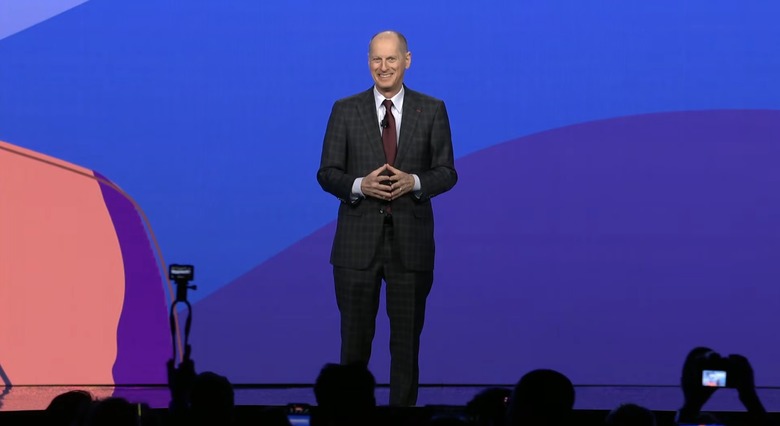
Gary Shapiro at CES 2026
-
Gary Shapiro, head of the Consumer Technology Association, hits the stage to a lukewarm reception.
-
This entire promo sounds like was written by AI, honestly.
-
And we're off. We're watching a CES promo with bombastic music.
-
We're just a few minutes away, folks. I'm personally interested in seeing how AMD is responding to Intel's Panther Lake announcement from today.
-
Hey folks, I'm back after fighting through the crowds at NVIDIA. I'll be tuning into the AMD livestream for this liveblog (thankfully), but I'm sure there will still be tons to discuss. For one, I'm intrigued to see how AMD is building on its Ryzen AI Max chips, which it originally debuted last year. At the time, an AMD VP credited Apple's Silicon chips for getting the approval he needed to develop the Ryzen AI Max, an APU combining powerful CPU cores, Radeon GPU cores, an NPU and integrated RAM.
-
So, what are we expecting from AMD? CES isn't usually a show where the company announces flagship GPUs or entirely new desktop CPU lines. Instead, we usually hear about lower-end graphics cards, laptop chips or upgraded versions of its high-end chips. Rumors have swirled of a Ryzen 9850X3D desktop CPU and new desktop and laptop APUs. Which, low-end GPU aside, would be right in line with expectations.
-
Next up was AMD's other long-standing rival, Intel, which announced its Core Ultra Series 3 chips. Those are high-end laptop CPUs that are interesting because they're the first built on Intel 18A, the new 2nm-ish process that's supposed to make Intel's chips competitive with the best on the market. To break out an overused adage, only time will tell if 18A lives up to the hype.
-
If you're keeping count, this is the third chip keynote of the day. NVIDIA kicked things off with a 90-minute conference where CEO Jensen Huang talked a lot about AI, a little about supercomputers and nothing at all about GPUs or the RAM shortage plaguing the PC market.
-
Right now, Sony's press conference has just started, and we're expecting to see the Afeela EV again. While that is going on, we'll be here prepping this liveblog, getting ready to see AMD CEO Dr. Lisa Su talk about GPUs for a bit. Hopefully that won't take too long.
-
Hello and welcome to our liveblog of AMD's keynote presentation at CES 2026. It's been a long day, and if you're reading this we're really glad you decided to join us. It's been a long day of press conferences and we appreciate the company.
What to expect from AMD at CES 2026
While AMD says it's keeping its product details under wraps, we can expect "updates on AI solutions, from cloud to enterprise, edge and devices."
It's also likely that AMD will unveil its new versions of the Ryzen chips during its keynote on Monday, as Su will talk about the "advancements driven by Ryzen CPUs." That could include the Ryzen 7 9850X3D, which is expected to have better single-threaded performance than its predecessors. Additionally, we can expect to see the Ryzen 9000G series, which is potentially built with AMD's Zen 5 architecture.
Regarding AI, AMD could further discuss its new FSR Redstone technology, which it previously previewed on December 10. AMD's upscaling tech aims to close the gap on NVIDIA's DLSS 4, which was announced during CES 2025.
Su's presentation caps off CES's press day, so she'll be taking the stage in the hours after rivals NVIDIA and Intel present their chipmaking and AI plans to the world. As a reminder of how cross-linked these companies have become: OpenAI has pledged billions of dollars of hardware orders to AMD, while rival NVIDIA has invested billions in OpenAI — and taken a stake worth billions in Intel, too.