

How to pre-order the iPhone Air, iPhone 17 and iPhone 17 Pro ahead of their September 19 release date
The new phones will all begin shipping next week.
We may receive a commission on purchases made from links.
Apple has taken the wraps off its latest crop of iPhones, introducing four devices in total: the standard iPhone 17, the high-end iPhone 17 Pro and iPhone 17 Pro Max and an all-new ultra-thin model called the iPhone Air. We have hands-on previews for each new device already, but as always, most people should hold off on making a purchase until we can fully review the phones in the coming days. If you're already sure you want to upgrade, however, we've broken down what you should know about each new iPhone before you pre-order.
iPhone Air
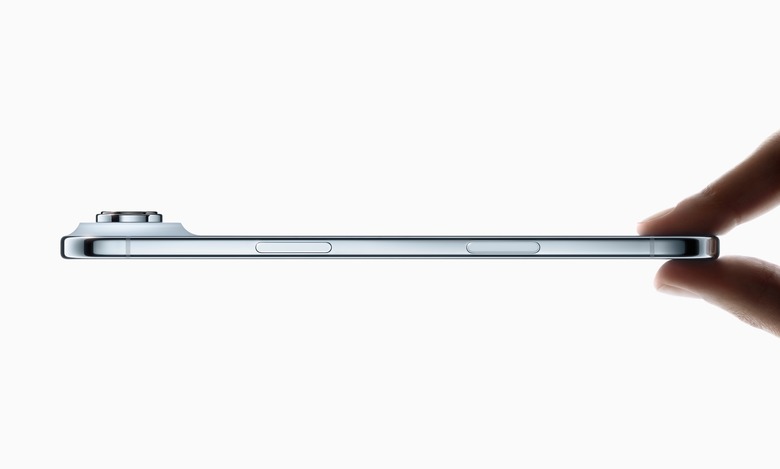
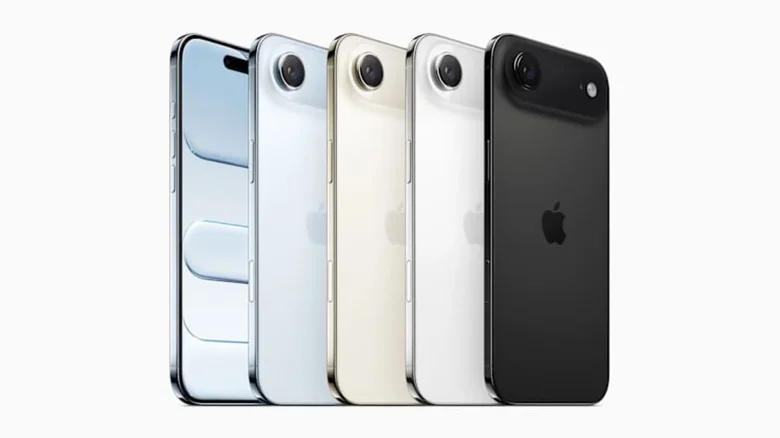
The star of Apple's lineup — and the most significant design update for the iPhone since 2017's iPhone X — is the iPhone Air. Like the original MacBook Air and iPad Air, the new phone's big selling point is thinness, as it measures just 5.6 millimeters at its slimmest point. That's about 2.3mm thinner than the standard iPhone 17. This design is also lighter than the rest of the lineup at 165 grams; by contrast, the iPhone 17 weighs 177g, while the much smaller iPhone 13 mini weighed 141 grams.
The Air sports a 6.5-inch, always-on OLED display with a 120Hz variable refresh rate. It's protected by a new Ceramic Shield 2 layer on the front that Apple claims is three times more scratch-resistant than previous models. It runs on a new chip called the A19 Pro, which should be a bit faster and more power-efficient than the also-new A19 chip in the base model. The exterior has a Ceramic Shield back and titanium frame, with a pronounced pill-shaped bump on the back that houses the rear camera. There's still a USB-C port.
Being so thin could force the iPhone Air to compromise in certain areas, however. The main concern is battery life: Apple says the phone's "high-density" battery, improved processor and new in-house wireless chips — along with efficiency improvements in iOS 26 — should allow it to last "all day," but we'll need to test the device for ourselves before we can say just how long that is in the real world. On its store page, Apple says the Air can play back up to 27 hours of video before it croaks. Perhaps tellingly, the company has released a $99 MagSafe battery pack to go with the phone, which can extend that rating to 40 hours.
Beyond that, the Air's limited space means it only has room to fit a single 48-megapixel "fusion" camera on the back, not the dual- or triple-lens camera setup of the iPhone 17 and iPhone 17 Pro. (All of the new phones come with a sharper 18MP front-facing camera with Apple's Center Stage tech, however, and they can now record videos using the front and rear cameras simultaneously.) The thin frame means there's no room for physical SIM cards either, so you'll have to get on board with an eSIM instead.
The iPhone Air starts at $999 for 256GB of storage, with 512GB and 1TB versions priced at $1,199 and $1,399, respectively. It's available in sky blue, light gold, cloud white and space black. Like the other iPhones announced today, it'll be available to pre-order on September 12 at Apple's online store. Shipping will begin on September 19.
Even more than usual, we'd recommend most people wait for reviews before picking this one up. This is a first-generation device (sort of), and the presumed sacrifices with the camera and battery could be significant. That said, it's also the first genuinely different iPhone in some time, and more than a few people have complained about Apple's handsets growing stagnant over the years. If the trade-offs aren't too great, the Air could bring a little excitement back to jaded iPhone users (especially if they won't just use a case).
iPhone 17
This year's entry-level iPhone finally (finally!) makes the leap to a 120Hz "ProMotion" display, which should make scrolling feel noticeably smoother and more responsive. Apple has long dangled faster refresh rates over its customers as a way to upsell them to the more expensive Pro series, even as the tech has become common in cheaper Android devices. While it may sound nerdy on paper, a higher dynamic refresh rate is something many people don't realize they want until they've tried it, so we're happy to see it trickle down.
The display itself is larger at 6.3 inches, a 0.2-inch increase, and Apple says it has slightly thinner borders. It's an always-on display too, and it's protected by the updated Ceramic Shield 2 glass noted above. The company says the panel can reach 3,000 nits of peak brightness, up from the 2,000-nit peak of the iPhone 16.
The device runs on the new A19 chip, and Apple says 20 minutes of charging over a cable can now refill 50 percent of its battery life. Overall, Apple says the phone can deliver up to 30 hours of video playback, which is a nice increase (on paper) over its predecessor's 22-hour rating.
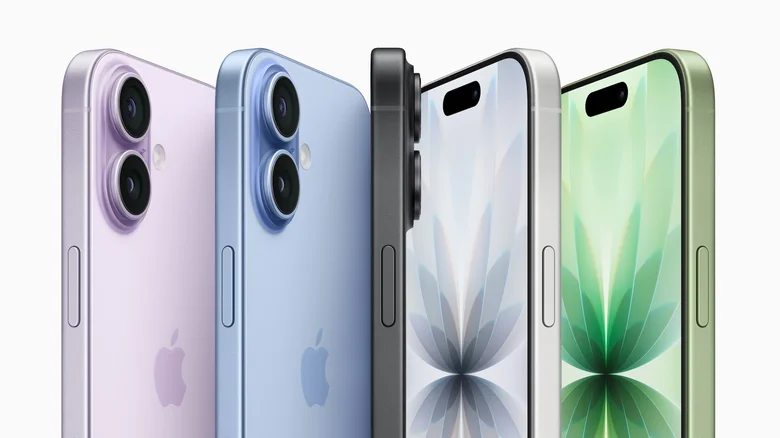
The iPhone 17 still uses a dual-lens camera system on the back, though the ultrawide lens is now 48MP instead of 12MP. There's also a sharper 18MP selfie cam with Center Stage support, which, as with the other phones, lets you take landscape selfies without having to physically turn the device sideways. The rest of the design isn't radically different from the iPhone 16, though the larger display means the new model is marginally taller and 7g heavier.
The iPhone 17 starts at $799 for 256GB of storage. That's twice as much space as the base iPhone 16. You can also get a 512GB model for $999. The device is available in lavender, mist blue, black, white and sage colorways. Pre-orders open on September 12, while general availability begins on September 19.
Note that there's no "iPhone 17 Plus" to accompany the standard model this time around. Apple is effectively replacing any Plus device with the iPhone Air, so if you want a new Apple phone for less than $999, you now have one model to choose from.
While the 6.3-inch iPhone 17 Pro and 6.9-inch iPhone 17 Pro Max look similar to prior models on the front, they've been majorly redesigned around the back. Both now have larger camera "plateaus" that stretch across the width of the device — not unlike Google's Pixel phones — and Ceramic Shield cutouts around the Apple logo and wireless charging area. The rest of the frame, meanwhile, is made from aluminum instead of titanium, reversing a switch Apple made a few years back with the iPhone 15 Pro. Apple says this, along with a new internal "vapor chamber," should make the phones better at dissipating heat, though the finish may not feel quite as premium to some.
These two phones run on the A19 Pro chip noted above. Apple promises improved battery life, with up to 33 hours of video playback for the iPhone 17 Pro and up to 39 hours for the iPhone 17 Pro Max. (Last year's models were rated at 27 and 33 hours, respectively.) The two are slightly heavier than before: 206g for the 17 Pro, up from the 16 Pro's 199g; 233g for the 17 Pro Max, up 6g from its prior iteration. Both are 0.5mm thicker than the last generation too, which may be the result of their larger battery units.
Now that the base iPhone has a ProMotion display, Apple has to push the Pro's upgraded cameras as a key benefit. These are still the only iPhones with a dedicated telephoto lens for zoom photography, and that lens has now jumped from a 12MP sensor to a 48MP one. It's also 56 percent larger and offers up to an 8x optical zoom. The main and ultrawide cameras still use 48MP sensors too. You can record videos with the front and rear cameras simultaneously, and like the devices above the front selfie camera uses an upgraded 18MP sensor.
The iPhone 17 Pro and iPhone 17 Pro Max will be available to pre-order on September 12, with shipping to start on September 19. The Pro starts at $1,099 for 256GB, while the Pro Max starts at $1,199 for the same amount. While that's not an increase over last year, the (slightly) cheaper 128GB Pro model is no longer an option. If you need more space, the Pro is available with 512GB or 1TB of storage for $1,299 and $1,499, respectively. The Pro Max is available in the same capacities for $100 more, and it now has a 2TB option for $1,999. As for color options, you can grab either device in silver, deep blue or cosmic orange.