

Google announces upcoming security tools for Android, including enhanced protection against banking scam calls
Google just livestreamed the Android Show: I/O Edition, which is an event that takes place the week before the company's annual I/O conference. This gave us a peek at a bunch of new features coming to the Android operating system, and many of them focus on security.
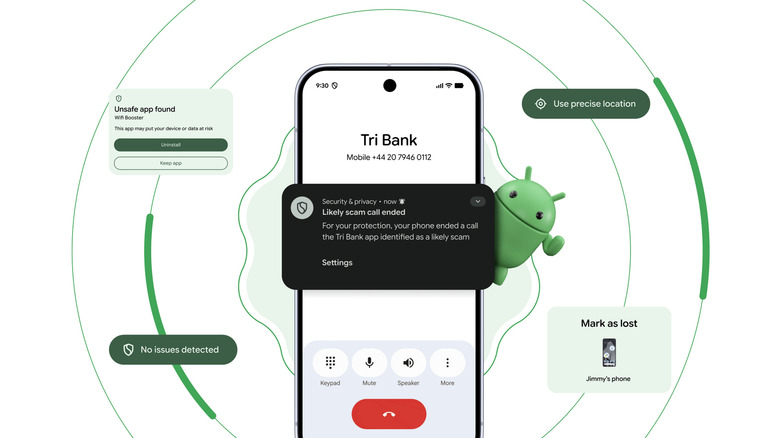
First up, the company is prepping enhanced protections against banking scam calls. This is when scammers pretend to be a bank in order to get account information so they can scoop up some cash. The bad actors here have actually gotten quite refined, as spoofing tech lets the call actually appear as if it's coming from a bank.
Google is teaming up with select banks and financial institutions to slow down this practice. There's a new spoofing protection feature that automatically ends calls from numbers impersonating any of the participating banks. This also sends a notification to the user, letting them know that they likely received a scam call.
This feature is rolling out in the coming weeks for devices running Android 11 and newer, but there's a major caveat for US-based users. As of this writing, Google has only partnered up with Revolut, Itaú and Nubank, none of which operate in the US. The company promises that it's "expanding to more banks later this year."
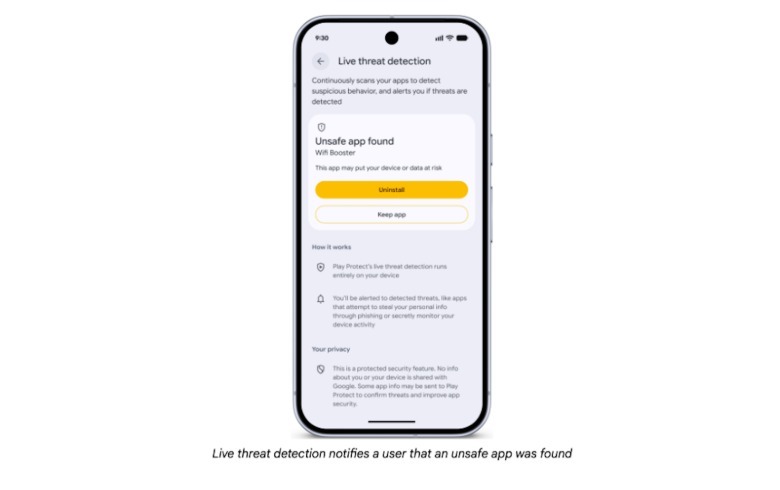
Google has also announced a pending expansion for its Live Threat Detection feature. This is the platform that analyzes app behavior to look for anything suspicious. The tool will soon be able to suss out more apps "looking to scam or abuse users."
It uses something called dynamic signal monitoring to detect suspicious patterns or actions made by an app. This checks for SMS forwarding, which is when an app forwards a message to another number, and a trick in which the app rigs the accessibility permissions to display content on the screen. These improvements are coming to Android 17 devices later this year.
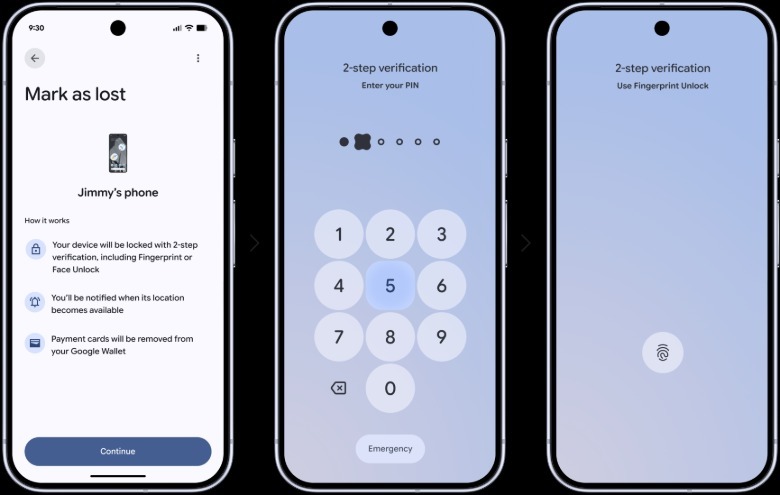
There are some security enhancements coming to protect against device theft. There will soon be more settings options for Failed Authentication Lock. Also, users will be able to lock a phone with biometric authentication, in addition to traditional passcodes. Once marked as lost, thieves won't be able to do anything with the phone until it's biometrically unlocked. This will be enabled by default on all new Android 17 devices in the near future.
Finally, there's a neat little privacy tool that focuses on app permissions and location data. A button will let users temporarily share a precise location within an app, as long as that app remains open. Google says this will be useful for "quick tasks, like finding a nearby cafe." This way, the app won't have unfettered access to location data.