

I still want Samsung's discontinued Galaxy Z TriFold
Hopefully the Z Fold 8's new design is a sign of things to come.
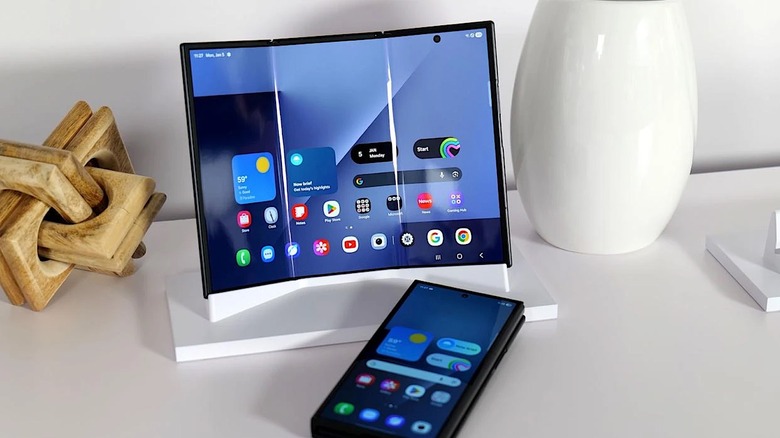
Samsung's big summer Unpacked event wasn't for the faint of heart. Alongside two new smartwatches and all the new collaborations with AI companies, chipmakers and Ned Leeds (Jacob Batalon), it unveiled three new foldable phones: the Galaxy Z Fold 8 Ultra, a redesigned Galaxy Z Fold 8 and a more-of-the-same Galaxy Z Flip 8.
The base Z Fold 8 may be the standout, with a less squarish 7.6-inch main screen that's better built for reading and web browsing. And yes, Google's been doing it for a few years.
But the Samsung phone I want the most was the one I pawed at in the very first week of 2026: the Galaxy Z TriFold. It was effectively a tablet that folds into your pocket.
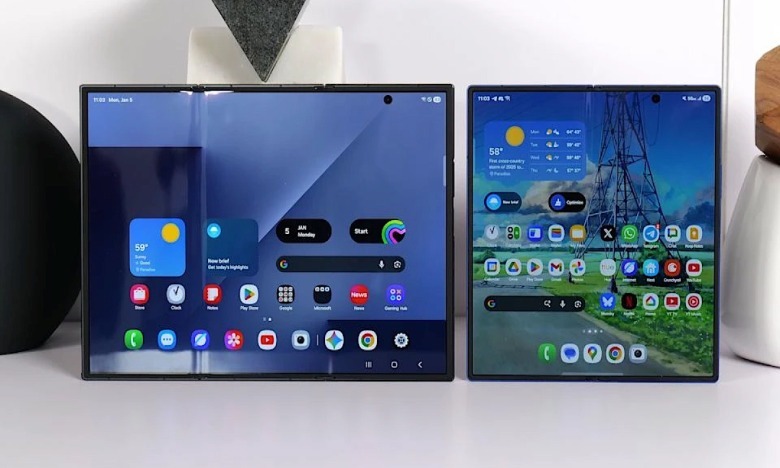
I'm not sold on the squarish aspect ratio of most current foldables, which feel like technical compromises rather than a practical choice of screen size. The Z TriFold unfurled into an almost tablet-shaped, 10-inch display in a 4:3 aspect ratio, compared to the almost-square 10:9 foldable screen of the Fold 8 Ultra. In that shape, the only app I feel effectively utilized the space was Google Maps.
 Sam Rutherford for Engadget.
Unfolding a full-sized screen from your pocket felt like a taste of the near-future. I still want to pull the device out, pair a portable Bluetooth keyboard, and write stories or send emails on the go. While I can pair peripherals with current two-pane foldables, the screen is too small to make it a true work display. Without accessories you can fold them into "laptop" mode (I'm thinking of Oppo's Find N6), but that splits your screen between the keyboard and the display, leaving you with a typing surface no larger than a standard smartphone — and an equally-sized display. It gives me a headache just thinking about it.
I also want to see what new contextual shortcuts and workflows inside Galaxy AI capitalize on that larger screen. Big-screen Android phones are approaching the multitasking and split-screen flow of an iPad, and Google's lead in AI is finally offering some tangibly useful shortcuts and tools inside Android.
The drawbacks (and reasons why the TriFold didn't stay on sale long) remain. Samsung's new foldables unveiled this week are more expensive across the board. If Samsung brought back the TriFold, the retail price would be even more jaw-dropping. It cost $2,900 at launch — and that was before RAMaggedon.
If the new Samsung foldables have been bumped up by at least $100, how much would a TriFold 2 be priced? And have we been sufficiently shell-shocked by all these price increases to make another few hundred dollars less egregious to early adopters and spendy tech fans? (Hello, have we met?) The first two iterations of the Fold series were priced just below $2,000, but dropped several hundred dollars in subsequent models. The TriFold, if continued, could pick up similar discounts as the technology and manufacturing scaled. Maybe. Expecting a new device to be the same price or cheaper in the current climate is pretty far-fetched.
The Galaxy Z TriFold officially went on sale in the US on January 30, 2026, following a limited release in South Korea last year. By March, Samsung ended production. Only months after its global launch, Samsung's statement said that it was more of a "flagship showcase" than its pitch for the world's next best-selling foldable. In the background, RAM prices were already starting to take off, and price increases were already creeping into consumer tech. This was also Samsung's first TriFold device and these are expensive phones to make, regardless of demand.
The window to buy the TriFold was a tiny one: It didn't go on sale in many places (like here in the UK, where this week's Unpacked event is being hosted). If I wanted the TriFold, I'd have to go through importers, with further markups and import costs. It was hard to buy, even if you wanted one. And I did.
Then there are the durability concerns. This is a new type of foldable screen, where dust ingress is a possible threat and damaged screens are an expensive worry. Some of the TriFold's early adopters faced challenging and costly screen repairs, with some facing a $700 bill to repair the display — the price of a solid (second-hand) foldable.
 Sam Rutherford for Engadget
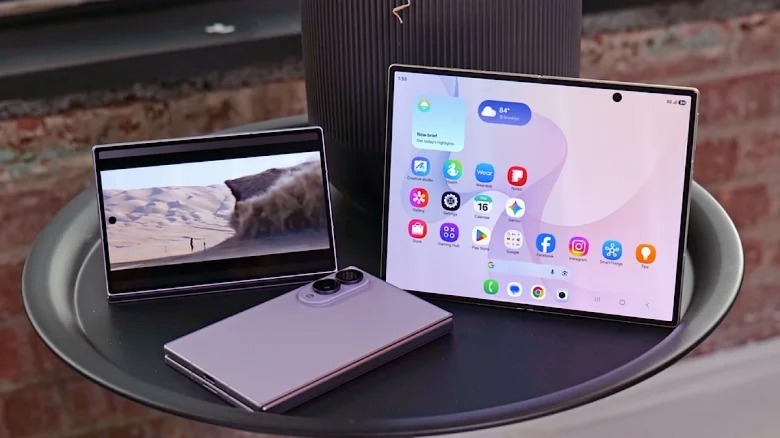
With Apple's first foldable iPhone looming over the horizon, there's no word yet on a possible follow-up to the TriFold. For now, the Fold 8 is the closest, most practical choice. With the same 4:3 display ratio and the slimmer profile and weight of a single-fold phone, it's the other half of my equation for my ideal foldable. I wonder if, using the same blockier form factor of the Fold 8, Samsung could design a subsequent TriFold with a screen closer to the 16:10 aspect ratio of a laptop display. I'd really like to see that.