

Swimming headphones: What makes them so different from regular headphones?
Why can’t I just wear my AirPods in the pool?
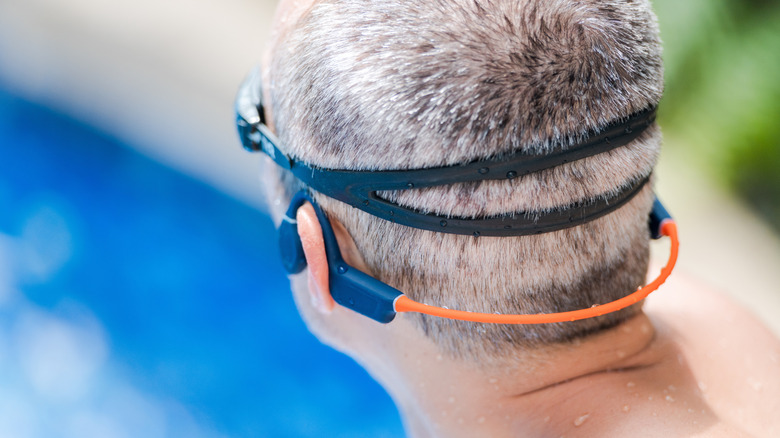
With so many headphones on the market, most of which claim some kind of unique features, it could be easy to dismiss ones marketed as "swimming headphones" as just another gimmick. However, there are actually important distinctions that set this type of headphones apart from other devices, both in how they access your music and transmit it to your ears. In essence, it all comes down to how the physics of water impact audio.
Some of the differences between swimming headphones and regular ones are obvious — it's a given that they come with more waterproofing than a typical pair, for example. Other distinctions, like sound conduction and Bluetooth signals are less overt. Let's dive into what makes underwater headphones special, and what you should look for when picking out a pair.
What makes swimming headphones different?
Ironically, a music-loving swimmer's biggest enemy when it comes to listening to tunes is the water itself. For one, Bluetooth signals can't transmit through the water, meaning that as soon as you dive under any connection to your phone is severed. Though they often also come with a Bluetooth mode, swimming headphones set themselves apart by coming with built-in storage, which is somewhat of a rarity for regular headphones.
Water also means that typical headphones, which conduct sound through vibrations in the air, can't be heard nearly as well. Swimming headphones almost exclusively utilize bone conduction, which transmits via vibrations directly into your head. To do this, the headphones rest on your cheekbones instead of inside the ear canal, bypassing the eardrum and going straight to the cochlea in the inner ear. Though there are some swimming headphones outliers that don't utilize bone conduction, a vast majority of them do.
What to look for in swimming headphones
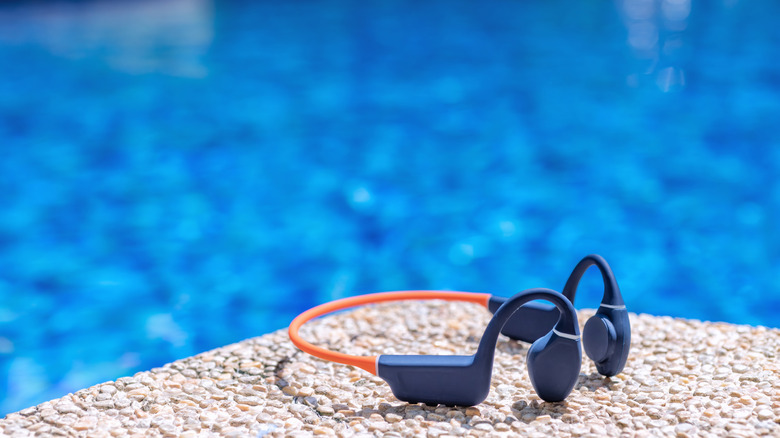
It's important to make sure your swimming headphones boast a robust enough IP rating — short for Ingress Protection — to stay protected in the water. These can be a bit confusing, as some manufacturers list two numbers while others list just one (e.g., IP56 versus IPX7). When shopping, you mostly need to pay attention to the second number in the rating, which reflects how well they're equipped to handle water (the first number refers to dust, which isn't as relevant; a rating with a X generally means manufacturers only tested for water resistance). Ratings of 6 and below can only handle things like sweat and rain, while IPX7 and IPX8 can handle different levels of actual submersion.
For audiophiles, the bone conduction itself as well as auxiliary features like adjustable EQs are also important to look at. As manufacturer Shockz points out, the water sealing your ear naturally causes an occlusion effect, amplifying lower frequency sounds in a way that can be overpowering, and headphones resting on your cheekbones instead of in your ears means outside noise is much more of an issue. To combat this, some swimming headphones offer special swimming EQs that naturally amplify harder-to-hear tones and help block other sounds.
Bone conduction's reliance on vibration can also be the downfall of some swimming headphones, especially at higher volumes, which can mean intense amounts of buzzing. Different brands boast various strategies to combat this: some swimming headphones allow listeners to manually adjust the transducers, others claim to have transducers at angles optimized for buzz reduction. It's definitely something that's worth looking into when shopping around, especially if you like to blast your music. With the right research, you can enjoy the most tech-savvy swim of your life — maybe next you can pick up a pair of smart goggles.