

Xiaomi 18 Fold hands-on: An attractive 'mid-size' foldable with powerful specs
The stockier foldable lands in China the same week Apple is expected to announce its own.
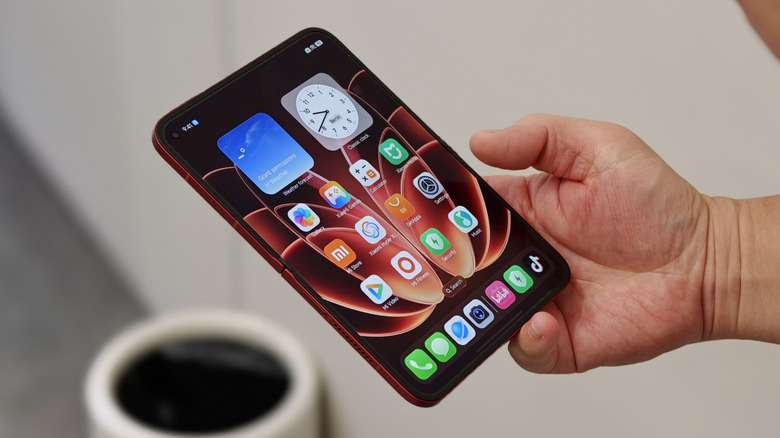
Xiaomi has formally launched what it's calling its first-ever "mid-size" foldable, the Xiaomi 18 Fold. It combines a 7.68-inch foldable display with a 5.38-inch outer display, both in a new, even more... squished aspect ratio. Xiaomi is trumpeting its A4 aspect ratio across both screens, creating a more unified feel when transitioning between them. At 219g, it's also the lightest foldable the company has ever made.
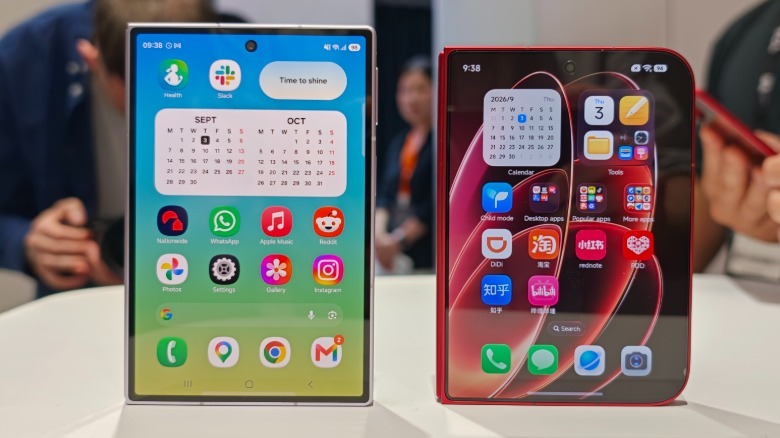
Interestingly, the front display has an asymmetric notepad look, with the right edge corners curved while the hinge-edge corners are square. This helps the device stand out even more when so many foldables seem to hit the same design notes. On the eve of Apple revealing its first foray into foldables, I got to spend a little time with Xiaomi's passport-style smartphone during IFA, and (just like the Galaxy Z Fold 8) I'm smitten with this stockier frame. And the stunning red color.
Both screens are the first to pack a Xiaomi HyperRGB panel, with a "full RGB subpixel structure." Both screens top out at 4,000 nits peak brightness and support 1-120Hz LTPO adaptive refresh rates. Xiaomi is also pushing a more robust aluminum alloy frame and its own Shield Glass 3.0 protection on both screens. A new-generation Xiaomi proprietary hinge has a three-link design which wraps around the screen. In person, it feels solid and strong – stronger than rival foldable hinges. I pulled out Samsung's Fold 8 to compare against the 18 Fold, and the Xiaomi phone is noticeably a little thicker – although it has a much bigger battery, too.
For Xiaomi, it's a big deal in other ways: it's the first of its flagship phones to run on its own in-house silicon chip, the XRING 03. Built on a 3nm process, the chip combines a 10-core all-big-core CPU with a 16-core GPU. Xiaomi says XRING O3 is also the first SoC to support the latest LPDDR6 RAM for faster memory access and improved performance. The company claims the chip combination delivers 45 percent faster on-device decoding performance on the NPU than its previous-gen flagship processor. I hope to give the foldable (and Xiaomi's home-made silicon) some more scrutiny when we pull one in for further testing.
As we've started to expect from Xiaomi, it has a substantial silicon-carbon battery with what is currently the largest battery capacity for a foldable form factor (editor's note: there aren't many). Fortunately, the Xiaomi 18 Fold supports up to 67W wired and 50W wireless charging with compatible chargers.
 Mat Smith for Engadget
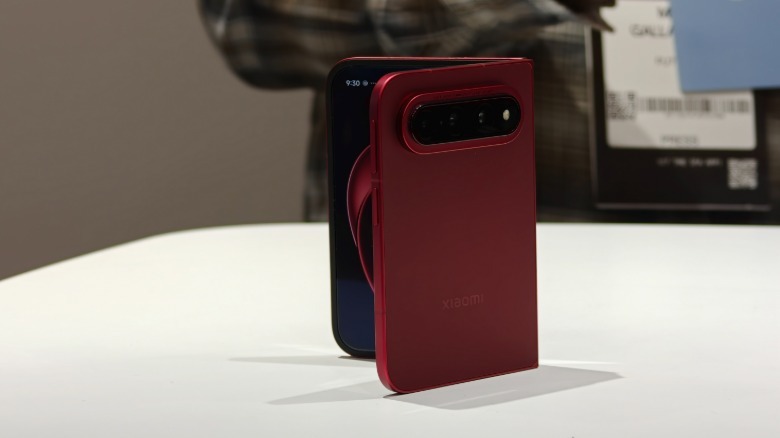
Despite its passport shape, unlike Samsung, Xiaomi doesn't seem to be compromising on cameras, with a Leica triple-camera system. The main 200MP camera has a 1/1.56-inch sensor alongside a 50MP Leica periscope telephoto camera. Our brief preview didn't allow extensive camera testing; however, I'm still smitten with the Xiaomi 17 Ultra, so I hope it performs well. The main sensor on this foldable is smaller than the 17 Ultra's main camera, however. Xiaomi didn't share an IP rating, which remains a concern with foldables.
 Mat Smith for Engadget
Xiaomi is teasing a special silicon nitride ceramic edition that will resist bumps and scratches better while weighing about 50% less than traditional zirconia ceramic. Sadly, that wasn't on display in a tiny side room during Xiaomi's IFA showcase. That said, this red version looks gorgeous.
The 18 Fold will also launch in black and white alongside the red, starting at 10999 yuan (roughly $1,640), but for now it's China-only. We'll update this story if we hear more about availability.
And if it doesn't, there's that other foldable on the horizon. The foldable iPhone is also definitely coming to the US.