

Insta360 Luna Pro review: Your Instagram Reels are about to get an upgrade
There’s now a direct rival to the Osmo Pocket 4 you can easily buy in the US.
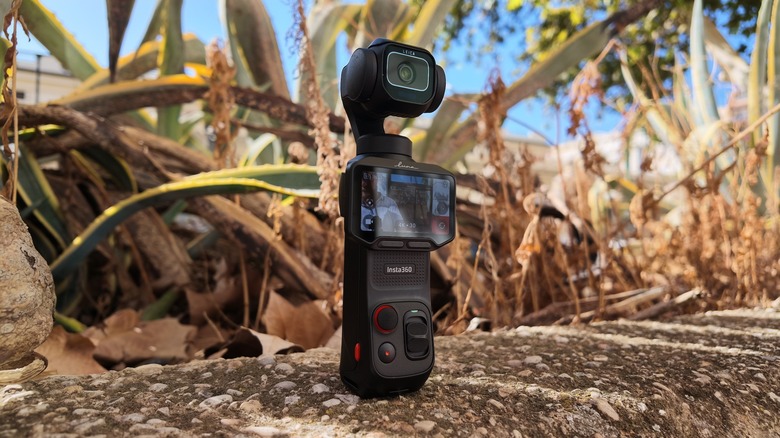
- Detachable screen/remote
- Native 4K portrait mode
- Good digital zoom
- Impressive still photos
- Premium price
- Slo-mo tops out at 120 fps
It's been a bumper summer for pocketable cameras. DJI kicked off the season with the Pocket 4, a much anticipated follow-up to the wildly popular Pocket 3. But that was just the warm up. Then came Insta360's Luna Ultra, with a dual-lens/optical zoom setup. This was swiftly answered by DJI with the Pocket 4P, formally establishing a "pro" tier to the gimbal-camera category. In between all that, GoPro delivered the Mission 1 Pro, twice, and both DJI and Insta360 unveiled rugged 360 cams. Today, we can add one more to that list: the Insta360 Luna Pro ($600).
On paper, it's the company's response to the Pocket 4 — a single lens, 20mm fixed focal length gimbal camera. That might not sound like a rousing finale to the pocket-camera bonanza, but Insta360 is smart and saved a few tricks for the Pro version that at least make it a solid encore. If you create for Instagram Reels, TikTok or YouTube Shorts, it might even be the most interesting pick of the pack.
Hardware
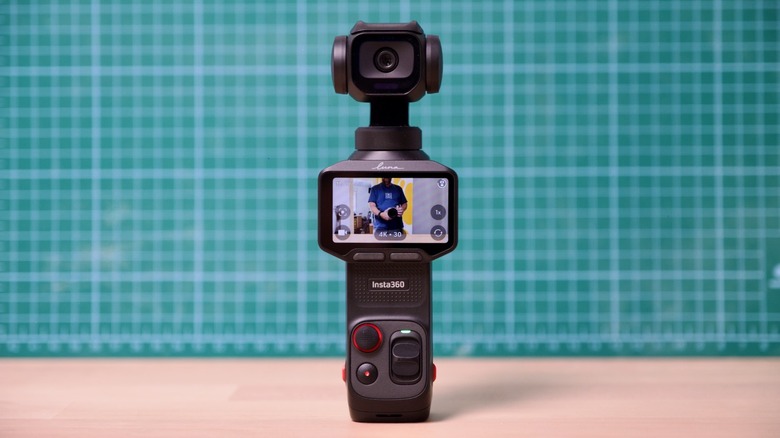
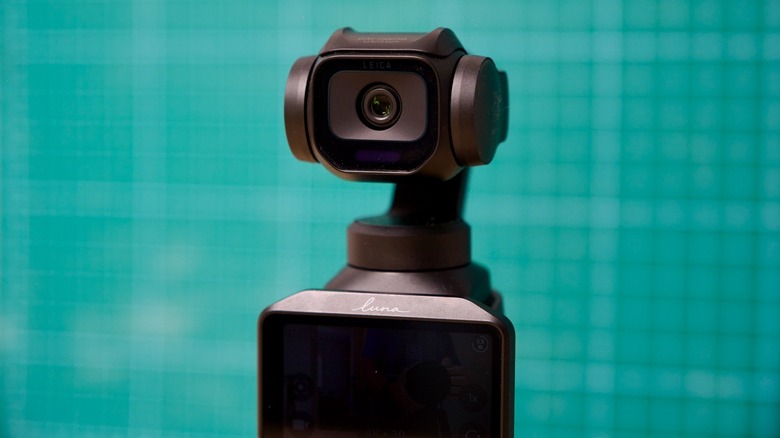
From the neck down, the Luna Pro is almost identical to the Ultra. The only visual difference is the wider frame along the top edge of the display with the word "Luna" printed in cursive. Above the collar, it's a different story, with a smaller, single-lens gimbal head that shaves about half an inch off the total height of the device. The Luna Pro also comes with the same pop-off front panel that doubles as a wireless remote and microphone.
Internally, the Pro matches the specs of the Luna Ultra's main 20mm camera. That means the same Leica Summicron lens (f1.8/20mm) paired with a 1-inch sensor that supports 8K/30 and 4K/120. Dolby Vision, 10-bit I-Log and 37-megapixel photos are all here, too. One notable difference in the Pro's favor (at the time of writing) is support for true 4K shooting in 9:16 mode (screen in portrait). The Luna Ultra, like the Pocket 4 and 4P, currently only offers 3K in portrait mode. So on the Pro, there's no more holding the camera horizontally for true 4K, social media-friendly videos.
The Luna Pro also has the same 47GB of internal storage, expandable via SD card and the same 1,550 mAh battery as the Ultra. The near identical dimensions of the body mean accessories should be largely compatible unless it's something that attaches to the gimbal head. For example, Insta360 provided a fill-light accessory for this review, which connects to the collar of the gimbal mechanism, so it's not compatible with the Luna Ultra. Fun fact, you can swap the detachable displays between models, and they will still work — even wirelessly — but the screen will update its firmware to match the new camera each time. When I tried this, I lost the 4K portrait menu option on the Pro, which meant I needed a factory reset to resolve the problem. It's something you can do, but probably shouldn't.
Video quality
Like the Luna Ultra before it, the Pro reliably delivers a crisp, high-quality image. In 4K, colors are bright and appear gently saturated to give them a confident pop. The f1.8 aperture provides good depth and subject separation without being over dramatic. I found the Luna Pro gives just a dash more bokeh compared to the Osmo Pocket 4 under the same conditions with close up subjects, although DJI's camera has a richer color depth to my eye.
Both the Luna Pro and the Pocket 4 are very close in terms of image quality, but in casual testing on default settings, the Luna Pro's detail and blacks are a little more punchy. Like the Osmo Pocket, the Luna Pro has full i-Log recording with color restoration for tuning the image to your style or preference. The Luna also supports Dolby Vision.
I used the Luna Pro as my main B-roll camera for this review video of the new GoPro and was surprised at how well it handled a variety of lighting situations. Moving between dark and well lit areas is generally smooth, but sometimes the transition of exposure isn't subtle. If there's one slight weak spot, bright backgrounds or sunny, overcast skies occasionally over expose in standard color mode when there's a wide dynamic range. Use I-Log and you usually have enough headroom to tame them.
Despite the obvious focus on video, the photos for Engadget's Mission 1 Pro ILS review were taken with the Luna Pro. I wouldn't go as far to suggest it can be your main camera for stills, but for a video-first camera I was impressed enough with the results to use them for publication.
4K and 4x
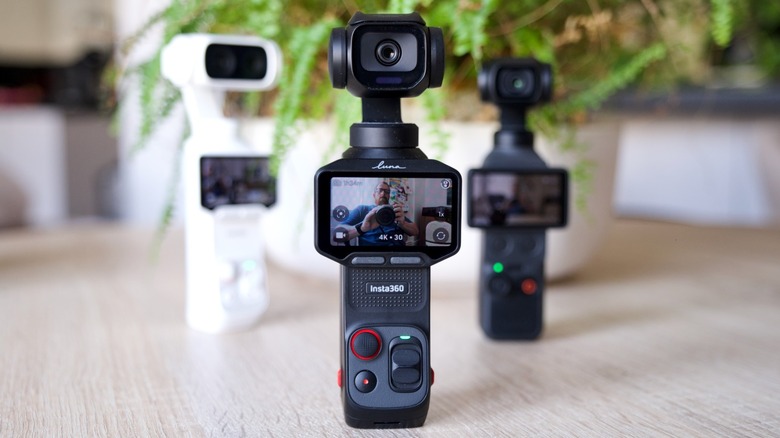
At launch, the Luna Pro has a feature not found on any of the gimbal cameras we've talked about so far: native 4K in portrait mode. Until now, the minute you flick the screen to shoot in 9:16 on a DJI or Insta Luna Ultra, the max resolution drops to 3K. There are some technical reasons for this, but it was particularly frustrating on the Luna Ultra, given it has an 8K sensor (and presumably more headroom for vertical video). Well, the Pro casually does 4K/30 in portrait mode, like it's no biggie.
There are still some limitations. For one, 4K in portrait mode tops out at 30 fps, while in landscape mode you can go right up to 120 fps. If you drop back down to 3K, you can increase this to 60 fps. You can, of course, still hold the Luna Pro at 90-degrees and have all the features the camera offers, but you lose one axis of gimbal stabilization, and it's less natural filming that way.
Insta360 claims the Luna Pro has "HiRes" 4x zoom, despite just the one lens. For 2x zoom, you're still within the 8K sensor's native shot, but once you go beyond that, software is enhancing things behind the scenes. This is how the Pocket 4 also works. In some fairly extensive testing, the Luna Pro definitely is clearer at 4x than DJI's rival but unsurprisingly not as sharp as either the Pocket 4P and Luna Ultra that have a headstart thanks to the secondary 3x/60mm lens.
At the time of publication, the enhanced zoom and 4K portrait modes are exclusive to the Luna Pro, giving it some compelling advantages over the Pocket 4, and even the Luna Ultra, if 4K social videos are your main interest. The 4K portrait option will arrive on the Ultra in the coming weeks, so it won't remain exclusive to the Pro if that is a deciding factor for you.
In-use
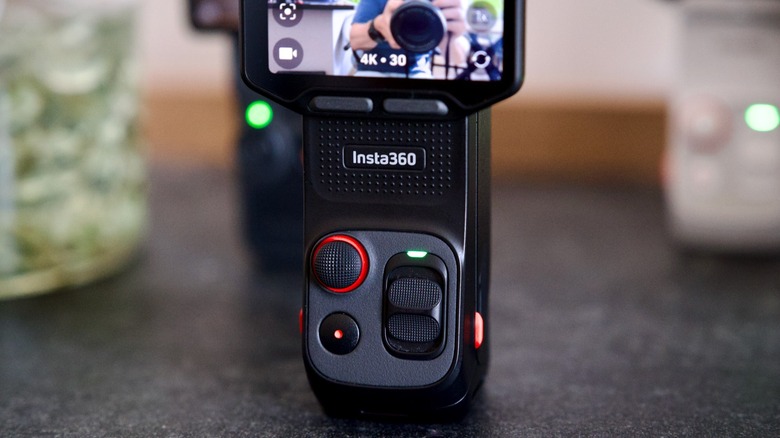
Usually this section comes sooner, but in my opinion, Insta360's main advantage over its rivals are the little details and design touches it adds. The obvious example with both the Pro and the Ultra is the detachable front panel that becomes a wireless remote and microphone.
Being able to set the camera, walk away, and still line up a perfect shot is a huge advantage. DJI has the FrameTap accessory, but it's an additional cost, and not nearly as capable. It's also not a microphone. With Insta360's removable remote, you have 100 percent functionality in your hand, including changing camera settings and powering the device on and off — neither of which the FrameTap can do. The microphone, while not as good as a dedicated wireless option, is capable enough, and ensures you have everything you need — or at least a solid plan B if you forget to bring one.
The on-board storage is about half what you get on a Pocket 4/4P, but it's good enough as a backup. The Luna Pro is also compatible with Insta360's headtracking accessory. That is an optional extra spend, but adds a fun, new way to control the camera.
The competition
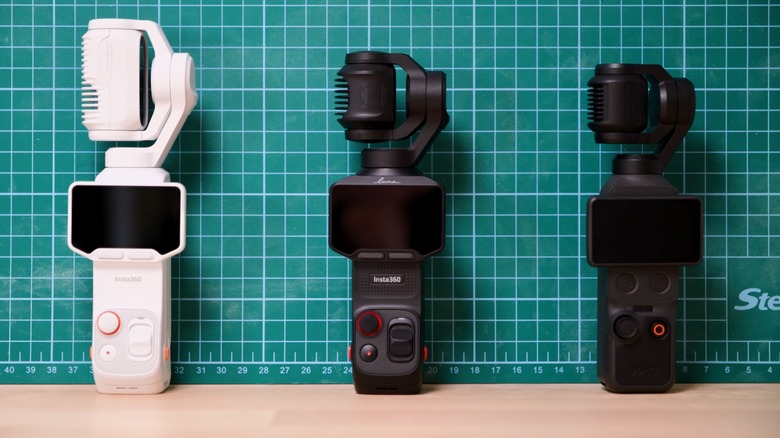
If you want the most capable gimbal camera, then both Insta360 and DJI offer dual-lens/optical zoom options. Which of those is better for you will depend on both where you live (US availability for DJI products is still limited) and whether dynamic range or 8K and a removable screen are more important to you.
Likewise, if native 4K portrait is what you want, plenty of action cams support true 3,840×2,160 9:16 without rotating the camera. The Mission 1 Pro, for example, can even shoot up to 60 fps in portrait mode or 8K/480 fps in open-gate (full sensor) recording, if you don't mind punching out a portrait image after the fact. DJI and Insta360 alternatives, such as the Ace Pro 2, offer similar functionality.
The Osmo Pocket 4 is the clearest competition. With 8K, the detachable display, superior zoom and 4K portrait shooting, the case for the Luna Pro is easy. It's not a total walkover, as DJI image quality, color and dynamic range are favorable to some. Plus, there's higher frame rates and more onboard storage, too.
Wrap-up
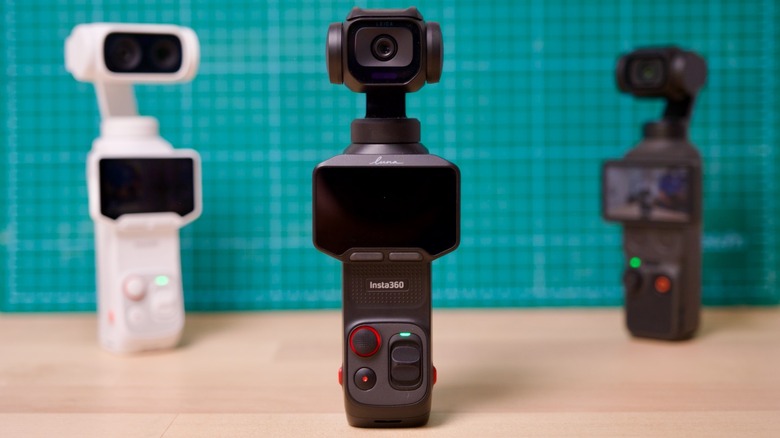
Just five months ago, there was really only one pocket gimbal camera worth buying. Now there are at least four (and more on the way). The Luna Pro is arguably the most capable single-lens option for generalists and social media creators. It doesn't hurt that its best competition is also harder to buy in the US. You can find the Osmo Pocket 4 online for about the same price as the Pro, but unless slo-mo and a few other minor perks are important to you, the Pro offers a lot more for the same money.
The gap between the Pro and the Ultra is a little more tricky. The $170 upgrade for the extra zoom lens isn't huge, but enough that it's worth considering how much you really need it. But right now, the Luna Pro is the most flexible single lens gimbal camera you can buy.