

Microsoft may have finally fixed Windows search by turning it into a chatbot
The redesign arrives this fall.
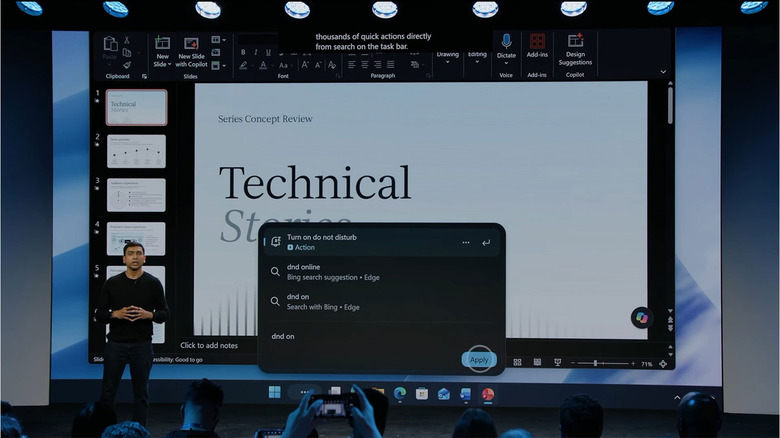
Less than a year after it promised to remove unnecessary Copilot integration from Windows 11, Microsoft announced today that it plans to turn part of the operating system's Task Bar into a sort of chatbot. Starting this fall, the Search Menu will allow you to carry out thousands of different actions across Windows just by typing short commands into its interface. During the company's fall Surface event, Pavan Davuluri, Microsoft's executive vice president of Windows and Devices, demoed how the new Search experience can quickly turn on and off settings like dark mode and do not disturb. He also demoed how the redesigned menu allows users to converse with the new Copilot app, without launching the app on its own.
Davuluri said the redesigned interface is also faster, and more efficient, promising it will make finding apps, settings and files easier. The inference is more contextual as well. For instance, if you type "increase mic volume" into the prompt bar, you will see a volume slider appear above your command prompt. If you have your phone paired with Windows, you can also use the Task Bar to send text messages without pulling out the device.
"To make AI a part of everyday life, we need to bring it to places people use the most — into the flow of human ambition," Davuluri told the audience at the company's San Francisco event. "We're moving into a future where everyone can simply express what they want, and their Windows PC, with their permission, can take action on their behalf."
At Wednesday's event, Microsoft also announced Hybrid Intelligence, a new suite of software orchestration tools that will allow your PC to run AI models locally. When you enable Hybrid Intelligence, the updated Copilot app can access files on your computer, and take actions across your apps and settings. Microsoft says Copilot will still use cloud inference for the hardest tasks, but in scenarios where cost or privacy might be a concern, it can run prompts against models that run directly on your computer.
If you use Copilot for coding assistance, Microsoft says Hybrid Intelligence makes that experience better in a few key ways. To start, writing native Windows apps directly from Copilot is easier, and safer due to built-in support for new Microsoft Execution Containers (MXC) tech, which helps ensure local AI agents remain in a secure sandbox.
Hybrid Intelligence also enhances Autopilot, Microsoft's in-house personal AI agent. It can now use your local files to inform its responses. The company demoed the assistant helping an employee organize their tax documents for filing. Autopilot used a local model to find, rename and Zip the files for the employee, and then drafted an email for them to send to their account. By using a local model, the assistant did not have to send any information to the cloud.
Copilot features that are powered by Hybrid Intelligence will roll out to Windows PCs over the coming months.