

Why are internet upload speeds so much slower than download speeds?
It’s a combination of physical limitations and everyone’s behavior.
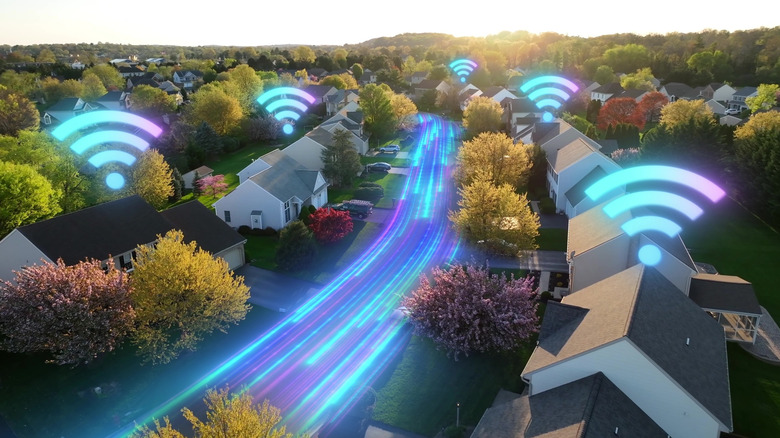
If you've checked your home internet plan details or shopped for a new one recently, you might have noticed that the download speeds are far higher than upload speeds. For instance, Xfinity plans in my area currently offer download tiers of 300 Mbps, 500 Mbps and 1 Gbps, but the broadband facts show all three of these plans have the same typical upload speed of 117 Mbps. You'll need to jump to the 2 Gbps plan to see the upload speed increase to around 293 Mbps.
As it turns out, there are a few reasons for this, and modern connections aren't subject to all the same limitations.
The speeds match how most people use the internet
The most pertinent point is a practical matter: Most people download much more than they upload. Almost every way we interact with the internet involves downloading, and what we download is typically much larger than what we upload.
Think about how often you stream video or music compared to uploading it yourself, for instance. Another major download area is installing and updating apps, games and system software, which takes a lot of network bandwidth. Even standard browsing has you download much more data from webpages than the bits of text you upload to log in or post a comment.
Unless you transfer massive files with cloud storage, stream on Twitch or have multiple people taking video calls all day, you probably don't need a fast upload speed. The average person will appreciate having 80 or 90 percent of their bandwidth used to keep downloads quick, rather than having uploads and downloads be roughly equal.
Physical connection limitations
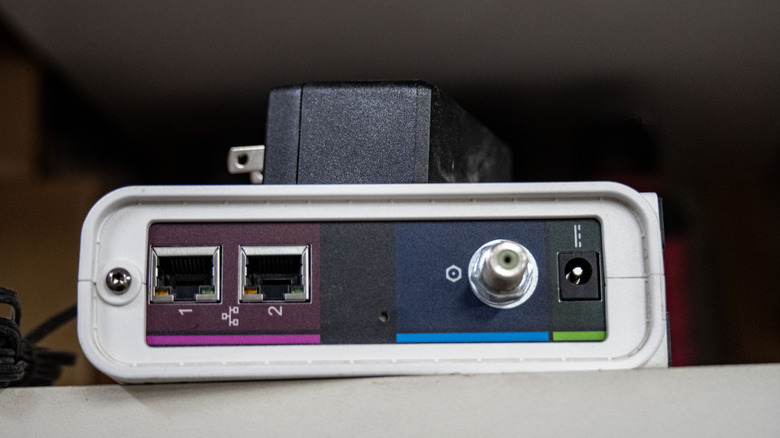
The major reason for slow upload speeds in practice is the limitations of the medium that carries your internet connection. Standard cable internet uses the same coaxial copper lines that were made to deliver cable TV. Obviously, cable TV is a one-way setup where your home almost never needs to communicate back, so cable infrastructure was built around this. But because internet usage requires both up and down communication, internet providers have to decide how much of the limited bandwidth of copper cables to assign to each path. Following what we discussed above, it makes sense to devote the majority of the pipeline to downloads, since that represents most activity.
The Data Over Cable Service Interface Specifications (DOCSIS) standard is what allows internet signals to travel over cables that weren't initially intended for that. Newer versions of this standard improve maximum download and upload speeds, but it costs ISPs a lot of money to install the updated equipment to support it.
Fiber internet, which has light bounce inside a cable instead of electrical signals in twisted wire, doesn't suffer from these problems. Its enormous theoretical bandwidth is far beyond even the best internet speeds today, meaning it has plenty of room to move downloads and uploads at the same speed. That's why fiber providers typically offer equal upload and download speeds.
With cable, it's also common to see slower speeds when everyone in your area is using the internet, since nodes and overall bandwidth are shared across a neighborhood. This isn't a concern with fiber; since it lacks cable's bandwidth limitations, even an entire neighborhood's worth of traffic is not an issue. A fiber connection also sidesteps other issues of copper cables, like interference and electrical noise.
Content delivery networks spread out the work of downloads
Another part of this equation that's not discussed as often is data distribution. Major companies like Netflix and Google use content delivery networks (CDNs) to more quickly deliver downloads all over the world. These are servers designed to more efficiently provide data to people in a certain area, rather than it all coming from a central location.
For instance, if you live in Florida and stream a movie on Netflix, you don't have to download the movie's data from a Netflix HQ server on the West Coast. Instead, Netflix has a network of servers, usually placed near ISP networks for efficiency, that keep copies of the data and deliver it to you (and everyone near you). Downloading something from a server 200 miles away is much faster than pulling from one that's 3,000 miles away and is thus less taxing for the ISP.
However, there's no real equivalent of this for uploads, at least not to the same extent. When you upload something, it needs to travel to its final destination, which could be a server far from where you are. Also, what you're uploading is usually something unique, like backed-up photos or a video you've recorded, so there's no "shortcut" like CDNs provide for thousands of people watching the same movie. The ISP's infrastructure thus has to do much more work to get your uploaded data where it needs to go.