

Best smartwatches for 2026
It’s not just about the Apple Watch.
We may receive a commission on purchases made from links.
Smartwatches aren't just about tracking your workouts and reading messages without using your phone. Heck, these days, there are plenty of devices that will let you leave your phone at home and can still do more or less everything you might need them to. If you're looking to take your first step into this world, or upgrade your existing timepiece, we've got you covered. After all, our team of reviewers has tested all of the big names, and plenty of the smaller ones, too.
Best smartwatch overall: Apple Watch Series 12
Read our full Apple Watch Series 12 review.
Tracks: Sleep, activity, calories | Connectivity: Bluetooth, Wi-Fi, Cellular (Optional) | GPS: Yes | Water resistant: Yes | Assistant: Siri | Case Sizes: 42mm, 46mm | Display: Always-on OLED touchscreen | Battery Life: 24 hours
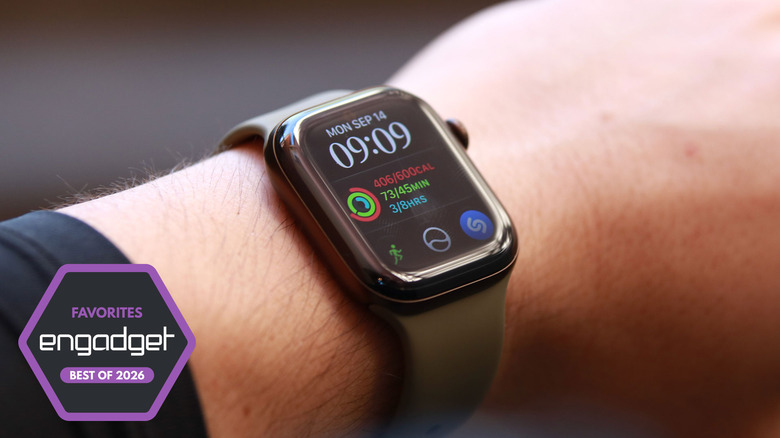
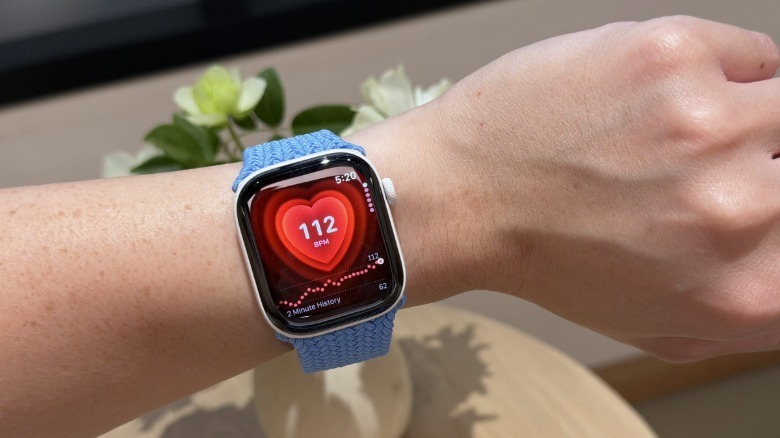
Apple's approach to the Watch is one of gentle evolution over revolution, but don't let that make you think the company isn't trying. It may look the same, but the company has done plenty both inside and out to the Watch Series 12. That includes reviving the long-mourned ceramic case, improving the battery performance and radically improving the health and fitness sensors. And that's before we get to the biggest and most contentious addition: active listening.
These features include the ability to listen to the ambient noise to identify which songs are playing before you open Shazam. It can also spot specific noises, like alarms, appliance beeps and running water, in case your focus isn't where it needs to be. Live Rewind and Siri Recaps, which have more troubling privacy implications, won't debut until later this year, but will be pored over to see if they're actually useful, or just weird and creepy. On the less controversial side, Apple has improved gesture support, added a new Oura-esque way to track your vital signs and, oh yeah, Siri AI.
Fundamentally, the Apple Watch remains the best watch for iPhone users, and it's now been polished to a fine shine after so many years of refinement.
Best smartwatch for Android users: Google Pixel Watch 5
Read our full Pixel Watch 5 review.
Tracks: Sleep, activities, calories | Connectivity: Wi-Fi, Bluetooth, Cellular and Satellite (Optional)| GPS: Yes | Water resistant: Yes, IP68 | Assistant: Gemini | Case Sizes: 41mm, 45mm | Display: Always-on AMOLED touchscreen | Battery Life: 30 hours
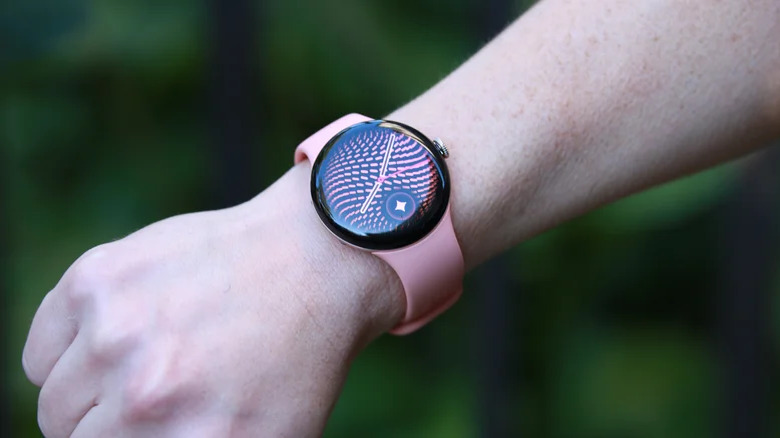
It should come as no surprise that the people who make Android also make the best watch for Android users. The Google Pixel Watch 5 doesn't just have Google's expertise behind it, but also that of Fitbit, which provides the health and fitness know-how inside. There's plenty to like about the Pixel Watch 5, including the round design that looks far more like what a watch should be. Throw in supremely fast charging, nearly two days of battery life and emergency satellite connectivity and you've got peace of mind, too.
Best smartwatch for running: Garmin Forerunner 165
Tracks: Sleep, activity, workouts | Connectivity: Bluetooth, Wi-Fi, ANT+| GPS: Yes | Water resistant: Yes | Assistant: None | Case Size: 43mm | Display: Always-on AMOLED | Battery Life: Up to 11 days.
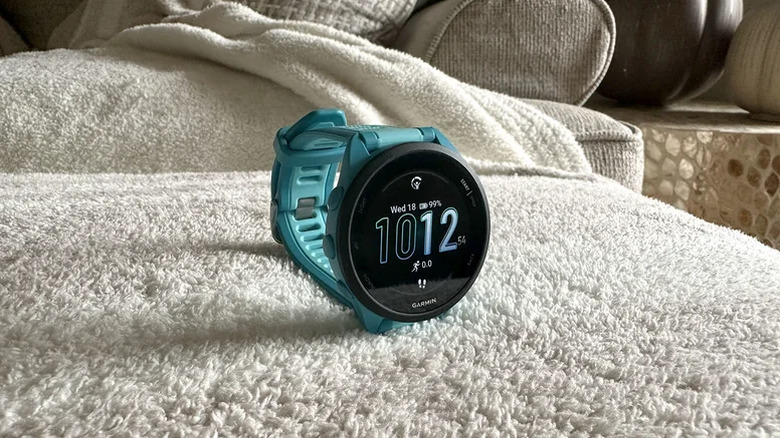
The Garmin Forerunner 165 is a serious and pretty affordable running and general fitness watch for those who want more focus on their health. Garmin has a lengthy track-record making good GPS running watches to cater to every type of person from neophytes to the pros. The 165 gets props here for being light, easy to use, accurate and able to track your daily activity as well as specific workouts.
There are 25 workout-specific profiles, too, enabling you to monitor your progress during runs indoors and outdoors, in the water or while strength training. You also get the suite of tools that Garmin adds to its mobile app, Connect, including scores rating your sleep and readiness. It's also far hardier than plenty of other smartwatches, lasting for 11 days in smartwatch mode, even if you use the GPS once or twice in that time. It even has local music storage, letting you leave your phone at home when you're out preparing for your next marathon.
Honorable mentions
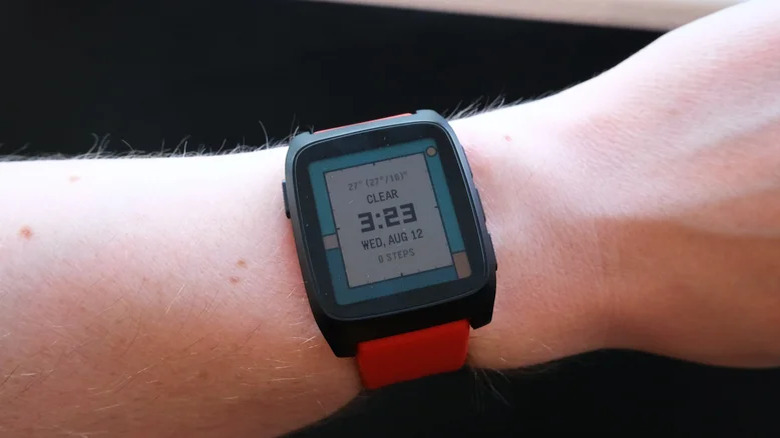
Pebble Time 2
Read our full Pebble Time 2 review here.
Tracks: Activity, Sleep | Connectivity: Bluetooth | GPS: No | Water resistant: No | Assistant: None | Case Sizes: 43mm | Display: 1.5-inch 64 color e-paper | Battery Life: Up to 30 days.
In the early 2010s, if you looked up smartwatch in the dictionary, you'd find a picture of Pebble's first product. Back then, the ethos was to make a device as an extension of your phone, rather than as a standalone computing device. And, when the company came back from the void after nearly a decade, it decided to cling to that original mantra.
The Pebble Time 2 has a heart rate sensor, offering basic activity and sleep tracking, but it's still more of a second screen for your phone. Its focus is on longevity, especially with its low-power system-on-chip, e-paper screen and intentionally limited feature set. You should expect to get at least a week and a half of intensive usage on a single charge, and almost a month if you use low-power mode.
Pebble's hardware and software is all open source, and it even offers tools for users to build their own watchfaces and apps. It's even released a Claude skill for folks who don't know how to code but would like to craft their own. The Pebble Time 2 isn't going to be for everyone, but it's perfect for the small subset of people who want to embrace that DIY ethos.
Samsung Galaxy Watch 8
Read our full Samsung Galaxy Watch 8 review.
Tracks: Sleep, activity, calories, dozens of workouts, antioxidant levels, vascular load | Connectivity: Bluetooth, Wi-Fi, LTE (optional) | GPS: Yes | Water resistant: Yes, 5 ATM + IP68 | Assistant: Gemini | Case size: 40mm, 44mm, 46mm | Display: Always-on Super AMOLED | Battery life: 30+ hours
Samsung redesigned the Galaxy Watch 8 to be cleaner, more sophisticated and far more comfortable to wear. It got a bigger battery, which made that power-sucking always-on display far easier to live with, too. Samsung also boosted what came out of those health sensors, with a promise to track your antioxidant levels and vascular load joining the party. What limits its appeal is, sadly, the fact it's a Samsung-only product and the raised glass screen which seems ripe for taking damage.
Stylish alternatives
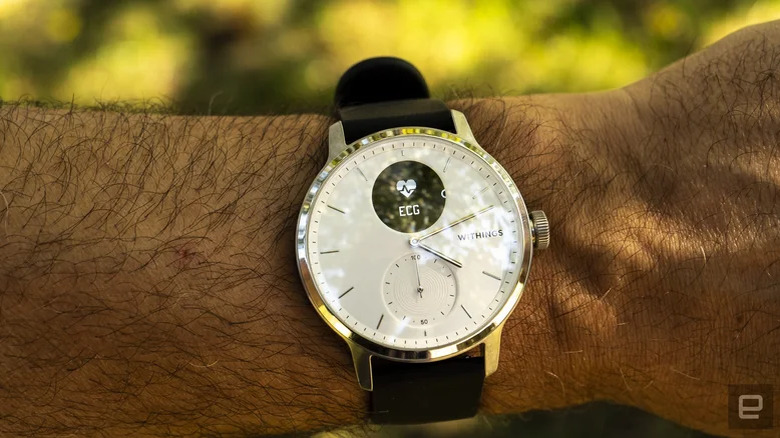
In the last few years, the wearables world has shrunk as the major players improved their offerings. But there are still plenty of people who'd rather wear a more traditional timepiece. Sadly, companies like Fossil (and by extension, its many marques) no longer offer any sort of smart or hybrid watch. This left names like Withings and Garmin as two of the last still building hybrid devices for users.
Withings, with a focus on health and fitness, makes the ScanWatch series, all of which look like regular timepieces. On each device's face, you'll find two subdials, the first of which is simply a face that counts from 0-100. This, and to this day I'm still surprised nobody else has stolen the idea, represents your step count, with the total set by the user. No matter what your daily goal is, the little hand will keep track of how well you're doing throughout the day. The second subdial houses a small display, from which you can check your heart rate, blood oxygen levels, step count and trigger a one-line ECG. You'll also be able to read your smartphone notifications, albeit as a ticker tape running across that tiny screen.
Garmin, meanwhile, offers the Vivomove Trend, which has analog hands but a digital display embedded in its face. When not in use, the Trend looks like any other watch, but can spring into action to show you your notifications and vitals, share your location and make payments. Plus, it's a Garmin, so you'll get the company's ever-reliable activity and fitness-tracking.
Other smartwatches we tested recently
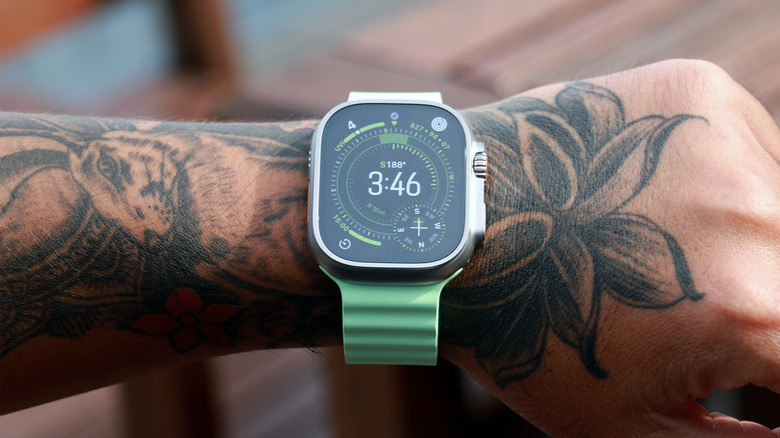
Apple Watch Ultra 3
Let's be honest, the Apple Watch Ultra 3 is overkill for a huge amount of the people who'd want to buy and wear one. After all, it's designed for mountain climbers, deep sea divers and folks who probably feel comfortable standing near helicopters. But the durability and battery life are compelling enough that you might need one to survive the rigors of daily life.
Apple Watch SE 3
The Apple Watch SE 3 is essentially just the regular Apple Watch from a few years ago in a new package. That makes it the best smartwatch for newbies and budget buyers, since it'll do all of the things you could ever need from an Apple Watch. But, as Apple's technology has evolved, the gulf between the old and new has shrunk to a small crack.
Una Watch (2026)
This is a first-generation modular, repairable running watch designed to last far longer than its competitors. Built on an open-source platform, it's affordable and with replacement modules that won't break the bank when something goes wrong. But while it shows a lot of promise, it can't be immersed in water or mud, making it a tough sell for an outdoorsy crowd.
Oppo Watch X3
With a beefy battery that'll keep running for multiple days on a single charge, there was a lot to like about the Oppo Watch X3. It's a good-looking timepiece that actually made good use of its AI integration, which is a rare feat. Sadly, it's not readily available in the US and the fitness tracking features were a little too erratic for it to be a must-own.
Moto Watch (2026)
It may carry the Motorola name, but it's a generic piece of low-power, low-effort gear with few redeeming qualities. Avoid this one, lest it poison your memories of the original, glorious Moto 360.
How we test smartwatches
We test smartwatches and all other wearables by wearing them as if they were our own for at least a week, if not longer. Most devices in this category ask for a week of wearing to develop its own picture of your physical health, which means that two weeks of wear is more common. On the rare occasion that embargoes or other factors don't allow for that, we will make that clear in our review. In that case, we will go back and add more in-depth conclusions after publication where necessary to ensure you're getting the full picture.
Our primary aim is to test every feature from the perspective of an ordinary consumer who may want a device for one or two specific purposes. In our line of work, we probably use our devices more excessively than most, and we look to test battery life claims to the fullest. When a company makes a bold claim about a specific feature, we will attempt to push that claim to its limit to see how well it delivers on its promise. Where a product is a sequential update to an existing model, we will try and ensure the same person reviews it for consistency.