Brian Horvath

Engadget Editorial Policies

The unique content on Engadget is a result of skilled collaboration between writers and editors with broad journalistic, academic, and practical expertise.

In pursuit of our mission to provide accurate and ethical coverage, the Engadget editorial team consistently fact-checks and reviews site content to provide readers with an informative, entertaining, and engaging experience. Click here for more information on our editorial process.

Stories By Brian Horvath

  • GOQii Predicts Wearables Will Be Our Mobile Future

    "Wearable is not just a fitness device or a band, in next 3-5 years wearables will become your mobile devices." - Vishal Gondal, founder GOQii If you haven't heard of GOQii, you might as well be living in the dark. Wearable technology is the next big thing happening in India and if we talk about the healthcare sector then they are probably the first one to grab their hold on this particular technology. Get this, figures stated by Forbes are indicating that a staggering 71 percent of millennials want wearable technology. Predictions for 202 include a whopping $40 billion valuation, with a shipment of 400 million wearables. With all of this being said, there is one specific company that has started to rattle up the stratosphere, GOQii. "It is similar to saying five years back that was a mobile phone need to have or nice to have," said Vishal Gondal, Founder and CEO, GOQii. "Mobile phone started as an item of luxury and later on it become ubiquitous. We are talking about the era where smartphone itself will disappear and your wearable will become your phone. So what I am telling you is that wearable is not just a fitness device or a band, in next 3-5 years wearables will become your mobile devices." Menlo Park based startup GOQii is revolutionizing the way we train on a day-to-day basis. GOQii offers a wearable fitness band paired with remote personalized coaching. After closing its beta program in April 2014, GOQii became commercially available in India in August 2014. The company first started its beta run with 1,000 users and also has offices in Mumbai, India and Shenzhen, China and plans to expand its services to the Middle East, the United States, and Singapore. The startup was founded by Vishal Gondal, the former CEO of Indiagames. After achieving critically acclaimed success and selling his company to media tycoon Disney for a whopping $100 million, he set out on a new mission to create GOQii. The idea for GOQii developed when he noticed that he wasn't simply using the devices exclusively, but also shared the collected data with a personal trainer who would then provide him with customized advice. Boom! GOQii was born. In January 2015, the company launched a limited US beta only open to 500 initial customers in the U.S. Selected applicants received 12 months of personal training through unlimited chat and monthly video calls over the company's mobile app, along with a free wearable device. GOQii offers a wearable fitness band which collects users' (called players) activity and sleep data. A personal coach is assigned to a player who reviews this data and communicates via mobile app to guide them towards their health and fitness goals. GOQii received $13.4 million in Series A funding led by New Enterprise Associates (NEA) and Cheetah Mobile Inc. with additional support from Great Wall Club (GWC), DSG Consumer Partners, Ilkka Paananen and Pravin Gandhi in November 2015.

    By Brian Horvath Read More
  • Time for Technology to Help Ticket Buyers from Being Scammed

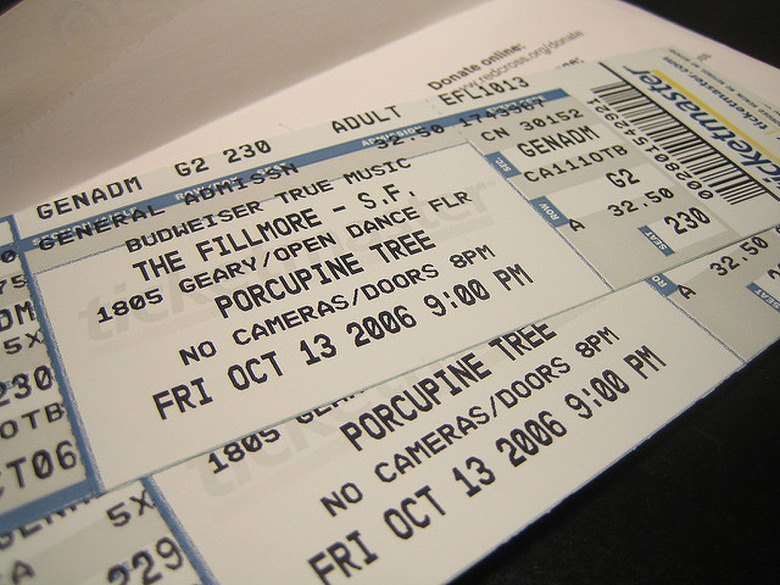
    Technology has made it easier for venues to sell tickets. It has also made it easier for counterfeiters to create fake tickets to peddle to unsuspecting consumers. One way technology is missing out is by helping consumers avoid being scammed by these counterfeiters. The only ones benefiting are venues and criminals Technology has already disrupted the ticket industry. Advancements have made it easier for venues to promote and sell their available lot of tickets. Barcoding and scanning have also made it easy to determine if a ticket is valid at the gate. But, what about those buying tickets online or from scalpers? Real or fake? Tickets for Porcupine Treat at The Filmore in 2006. Despite having a barcode, consumers are unable to use it to verify their purchase. The technology is only available to the venue. Image courtesy of Flickr. While technology has made it easier for venues, it has created more of an opportunity for fraud. Counterfeiters are now able to make tickets that look authentic thanks to advancements in printing technology. All the while, little has been done to help protect consumers from counterfeit tickets. While buying from scalpers can be a risky proposition for the average fan, customers who use secondary market websites like StubHub and Ticket Liquidator are protected by a money-back guarantee. Many legal professionals agree. "I recommend using sites like Stubhub or Ticket Liquidator," says attorney Robert May from The May Firm. "They back their purchases with a form of insurance which protects buyers from any fraud issues." Sporting events taking the biggest hit One of the largest markets for counterfeiting and scalping is NFL tickets. "I hate to give the counterfeiters credit, but they're getting very good," Philadelphia Eagles ticket manager told The New York Times. "If you're buying a ticket on the street, it's very difficult to tell it's a fake. If you're buying on the Internet, it's impossible." Lincoln Financial Field, home of the NFL's Philadelphia Eagles, has a seating capacity of close to 70,000. Image courtesy of Flickr. NFL Football is one of the largest targets for criminals due to the size of the events. The Eagles can host close to 70,000 people per home game. With many NFL games selling out, that gives counterfeiters plenty of room to work. Other sporting events are not immune to counterfeiting. The 2016 World Series became one of the most sought after tickets in decades thanks to the Chicago Cubs returning to the event after more than half a century. Making the case to help fans Fans need help. Due to online marketplaces such as Craigslist, there really is no protection for consumers. It is highly recommended that you use an authorized reseller for tickets, but that does not always happen. In fact, many venues have agreements that allow their tickets to be sold on other sites. It is highly recommended that you use a reputable source when purchasing tickets. Sites like Ticket Liquidator can help prevent the type of scams you will encounter on sites such as Craigslist. Venues are able to scan barcodes and verify tickets. If a counterfeit ticket is presented, they can simply turn away the presenter. But, what about the purchaser? We have apps such as Shazam that can identify a song by listening to a few notes. We have apps that allow you to scan a barcode of a product to find what store is selling it cheaper. So why can't the same technology be used to help consumers? Some have tried, but there really is not a single technology to help. In addition, scanning only solves part of the problem. Counterfeiters can still duplicate barcodes. Even if counterfeit tickets scan correctly, you could wind up finding someone else in your seats when you get into the stands. Can open source help the cause? Venues allowing access to code could be the disrupter we are looking for. In addition to scanning technology, coders could develop a way to bring personalized authentication for each ticket. As an example, venues could assign a specific code to tickets which can track the sale history of the ticket (similar to what Carfax does with automobiles). People buying tickets can confirm the actual owner and verify their identity at the time of purchase. Sound crazy? Maybe so. But something needs to be done. Nearly 5 million people are scammed by counterfeit tickets each year. What are your thoughts? Authenticating tickets on a consumer level is open for disruption. I would love to hear your thoughts and ideas about how it can be done. Have you ever purchased a counterfeit ticket? Tell me your story below.

    By Brian Horvath Read More
  • 3 Companies Using Technology to Disrupt the Music Industry

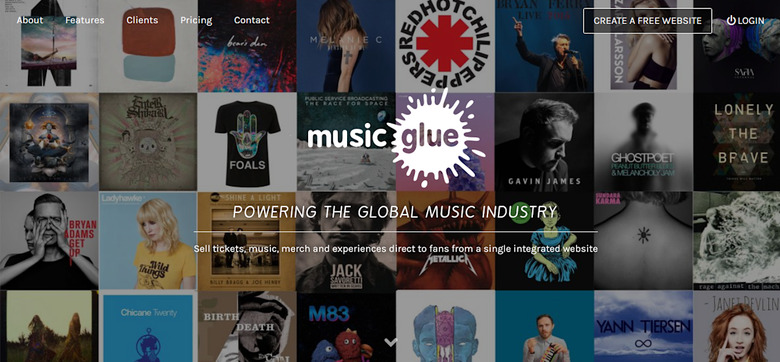
    Of course technology has been disrupting the music industry. I remember the days of standing in line at the music store, waiting for midnight so I could buy a new release. Those days are over and thanks to technology I can now pre-order, download, and play my favorite music without even leaving my bed. Even music streaming services have replaced the traditional ways we used to listen to music. Music industry disruption doesn't stop there. Year after year, the industry shifts based on new advancements and consumer demand. Here are three companies that have taken the reins of technology to present a better way for consumers to experience music. Musicnotes Musicnotes.com is a website that allows the download of sheet music for more than 300,000 songs. But, don't think of this as a nerdy band site. It has everything from classical musical to your favorite artists like Michael Jackson and most recently, music from the Tony Award winning musical, Hamilton. For its part in using technology to disrupt the music industry, the company has been referred to as the iTunes of sheet music. Musicnotes also has an app that allows you to download digital sheet music and play along on your phone or tablet. It is available in both iOS and Android and allows visual and audio playback, set list organization, and markup. It has a video recording feature for iOS which allows you to record and upload your performances on YouTube, Facebook, Instagram, and other social networks. "As a technology company, we're proud to be modernizing how people purchase and play sheet music. As musicians, the music itself is at the heart of everything we do," said Bill Aicher, chief marketing officer at Musicnotes. "Our goal is to inspire fellow musicians of all ages, skill levels, instruments and genres to practice and share their talent." The company continues to secure licensing agreements in order to keep its selection fresh. It currently has agreements with Disney Music Publishing, EMI, BMG, Sony, and others. You can find music from the movie Frozen, songs from Justin Beiber, and thousands of songs from your favorite musicians. Music Glue Music Glue is a technology company founded by Mark Meharry in 2007. The company provides a platform for artists to sell music to consumers without having to use retailers such as iTunes or Amazon. It is a "direct-to-fan" website (a play on the term "direct-to-consumer") which officially launched direct selling in 2013. While this concept is not new, it does have an advantage over others. Music Glue allows artists and music venues to sell everything in a single place. It has basically done to the online music industry what Amazon Marketplace did for retail. It brings everything together from multiple suppliers into a single site. "Within the next three years, artists will no longer be spending money building websites as marketing tools," Meharry told Forbes in a 2015 interview. "Instead they will simply have an account with YouTube, Twitter, Instagram, Facebook, MailChimp and Music Glue. We crave ease of use and we will continue to invest heavily in tech." The company isn't a simple startup trying to attract clients. One of its first artists was Mumford and Sons and it is currently used by artists such as Bryan Adams, Rage Against The Machine, and Red Hot Chili Peppers. LANDR LANDR is all but replacing producers and mixing engineers. Imagine recording a song and then having it mastered automatically. Well, LANDR pretty much does just that. A normal song must first be mixed (mixing the singing with the background with the instrumental, etc.). Then, it must be mastered by leveling out the different voices to be the same volume. This is something normally reserved for the studio but now can be done online. LANDR uses algorithms to detect and master songs on a cloud based system. Instead of using presets, it uses technology similar to Shazam to analyze the music and then make adjustments accordingly. "Their algorithms were refined over eight years of university research, and they even have a resident astrophysicist," writes Brian Hazard in a blog post on Passive Promotion. However, he also says there is a downside as an algorithm can never replace a professional engineer. "The algorithm will get better over time but, it can never replace a professional mastering engineer, because it lacks musical understanding." Continuing Music Disruption These are three companies but, there are many more in the process of disrupting the music industry. Since Napster brought about music file sharing, the disruption has been in full swing. What companies do you know that are disrupting the music industry? Have you had any experience with the three above? If so, share your thoughts about them below.

    By Brian Horvath Read More
  • 4 Ways to Win Customer Loyalty and Keep Your Leads Coming Back for More

    Customer loyalty is everything in the B2B world. Decreasing your customer churn rate by 5% can increase your profitability by up to 25%. Keep your leads coming back for more and the chances are you'll make more from them in the long-term. It's also a great way to boost team morale because it shows they're doing something right. The problem is it's not necessarily an easy task to do this. Customer loyalty is difficult to win and it requires you to improve your customer service. This guide is going to show you how to do it. Don't Send All Your Customers the Same Message One of the most unlikely strategies to generate B2B leads is personalization. The chances are you know a lot about each customer, so why would you send them the same message. The power of personalized marketing shouldn't be underestimated. Send your customers different messages that suit them. If you want to build great B2B content for your company, you should go out of your way to send customers entirely different messages. Segment your leads and build up different content chains for each segment. You don't have to come up with personalized content for absolutely everyone, but the interactions you have should always be relevant. So what's the best way to segment your group? You could start with basic demographics, but you should go further than that. Drill down into their interests and their preferred way of consuming content. You can get a lot of this data just from your analytics. You Want More? Give More First It goes without saying that your deal or call to action should also be personalized based on the segment. Offering the lowest price and throwing something in for free isn't going to create customer loyalty. Never pay for customer loyalty. Leverage recognition and rewards. Go beyond a simple discount on your services. Give them recognition for staying loyal to you and give them rewards for doing so, such as an exclusive look at a new version of your product. Look for value elsewhere, such as in convenience, community, and exclusivity. There are lots of areas you can take advantage of to grow the value of each of your customers, and to keep them coming back for more. You have to give more if you want to get something back. Offer Great Content That People Can Believe In What you put in your newsletter, on social media, and on your blog is all content. This content should fit in with your product or service. Your brand's values should be shown within that content, and the content should come with a consistent voice. The idea behind customer loyalty is to produce content that people are going to love. No customer should look at your content and feel like they've been misled or lied to. Breaking trust is the fastest way to break your business. So how do you go about publishing great content? It all goes back to knowing your audience and what they want. This should be a priority from the first day you open your company. Your customers should be as intimate to you as a close friend. Give them what they want and aim your content at the various segments you've separated your customers into. Don't Just Get in Touch When You're Selling Don't be that friend who only picks up the phone when they want something. The same principle applies to business. Your customers are not going to stay loyal to you if the only time you get in touch is when you're trying to land a sale. Get in touch with them even when you are not selling. A simple message a few weeks after a purchase is all you need. Make it seem like you care about their experience and how their businesses are running. Making it all about them is a welcomed change for many of these companies, who are bombarded by sales emails every day. Conclusion – Loyalty is a Long-Term Thing Customer loyalty is something you can only build up over a long period of time. Forget about trying to make things happen quickly. But if you make it a priority from the beginning you'll have a head start on the competition and you'll have customers who will buy from you over and over again. What are your top tips for making sure your B2B leads stay loyal to you?

    By Brian Horvath Read More
  • Becoming The Sports Reporter from Home - How ClutchPoints Is Changing How Sports Is Reported

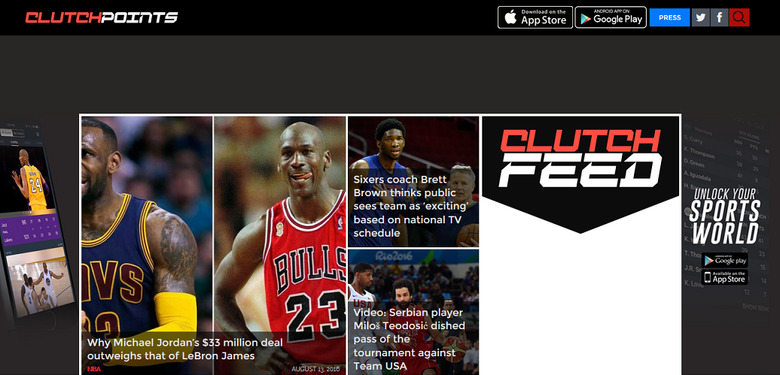
    Reporting on sports is limited to a number of exclusive groups. First of all, you have the teams themselves reporting it on their official sites. Then you have the various news outlets giving live feedback on their sites. Beyond that you're stuck with SMS messages from your friends in the crowd. The problem with this is you can't cover all the angles. And in the case of the news outlets and sports teams it's heavily sanitized. ClutchPoints, the live sports reporting and discussion app, is putting you in the position of sports reporter. Now you can follow the news and events of games from your fellow fans as they happen. As Rio 2016 gets underway and the new NFL season is on the horizon, you'll be able to keep your fingers on whatever's happening at the time alongside your fellow fans. The Sterility of Sports from Home One thing that has always plagued sports fans is they're unable to feel what it's like to be at the game. When you're stuck in traffic or working overtime the best you can do is keep updated on the current situation on the NBA website or some other reputable news provider. They will give you the basic facts and nothing more. There's none of that emotional investment that you would normally enjoy from actually attending the game or watching it live at home. You're not with your friends and you're not debating the big issues of the game. It's sterile and ClutchPoints is looking to change that. This is one of the few frontiers of sports that have yet to be fully explored because it's all within the hands of ordinary sports fans. So What's the Alternative? ClutchPoints has created an app that brings the best of real-time chat and Reddit to allow users to provide insight and commentary from the games. You'll be able to search through a list of threads from the comfort of your smartphone and tablet on the go. It'll be there just in time for the opening game of the NFL season as the Broncos take on the Panthers in a replay of last year's Super Bowl. And it's happening right as the news breaks, so you can enjoy the best of the emotional reactions people have. You'll be able to feel like you're at the game, even though you could be toiling away in the office alone. A New Way Too Express Yourself But simply writing a message to someone is no better than actually sending an SMS to a buddy, right? This is something that already exists because a number of companies have already created apps that allow sports fans to talk to each other. And there are more than enough forums online for people to connect with each other. That's why this app is different. You can add memes, images, and practically any other piece of content you want to express yourself. To further differentiate this app from other similar products on the market, you're still taking advantage of ClutchPoints at the same time. Try it and you'll still be following all the action as the drama of Rio 2016 plays out, including the epic showdown between Usain Bolt and Justin Gatling. Why this is Necessary Today People often don't consider the world of today. The 21st century is one where people are switched on all the time, with young people spending up to seven-and-a-half hours in front of a screen per day. The days where people could easily sit in front of the TV after finishing their shift at work are long gone. People are used to being able to access content from anywhere whenever they like. It's why products like Netflix have had such success recently. ClutchPoints will allow you to stay in touch with what's going on in the NBA, and later in other sports. Take the finals of last season between the Golden State Warriors and the Cleveland Cavaliers as an example. If you worked a stressful job the chances are you wouldn't be able to sit down for all seven games. But if you had this app, you would have been able to track every point and feel like you were at the game because of the 360-degree coverage. It's a far superior option than Googling the score and seeing only a couple of numbers on the screen, or even worse recording the game and risking someone giving you a spoiler. With people more mobile than ever it's never been more important to have a connection like this to your favorite team. Last Word – Improving the Experience This app is set to enhance the ClutchPoints experience even more, with people being able to tune into Rio 2016 and the start of the 2016/17 NFL season. On a wider basis it's the pushing forward of a frontier that has long been neglected by sports reporters. The power is in the hands of the fans, the people who really matter when it comes to sports. What would you like to see from this app?

    By Brian Horvath Read More
  • SEO is Now About the Little Things

    There is no longer a sure thing when it comes to SEO. Black-hat tactics such as keyword stuffing and overuse of anchor text are no longer an option. They will get you penalized by Google in a heartbeat, as your competition sits at the top of the search results. In order to help rank higher, you need to focus on the little things. While Google may change its algorithm to help weed out spammers, the little things are unlikely to change and should be the focus of your SEO strategy. Website Layout Can Affect SEO Your website layout is important when it comes to SEO. This is due to the multiple devices people could be using to access your content. As such, you need to make sure your website is responsive and displays correctly on mobile and tablets. Layout is imperative to time spent on the site. If your website annoys people, they will leave quickly. When Google sees you have a high bounce rate, it will factor it into your search ranking. People leaving your site quickly is an indicator to Google that your content is not high quality. This may not be the case, but Google doesn't read your content. Failure to Use Keywords and Anchor Text Not using keywords and failing to use correct anchor text are some of the mistakes that SEOs need to avoid. Keywords are still valuable to content as Google needs to know what your content is about. They cannot display it for users if they don't know what it is. That is why it is still important to use keywords. Keep in mind that keyword stuffing is no longer an option. Use keywords sparingly and naturally, but do not stuff your content with them. You still must use anchor text. Having a combination of long-tail anchor text and specific anchor text can help with rankings. If you only use one or the other, you risk not being ranked as Google will have no idea what you stand for or being penalized if Google sees you linked from the same anchor text over and over. Internal and External Links Of course links are still relevant. One thing to keep in mind is to use other authoritative content to show your content authority. That means to use sites like Forbes and Entrepreneur in your content. Link out to relevant articles on those sites to show Google that your content is using information from reputable sources. If you are using a source that you are unsure of, which you shouldn't be, use a no-follow link. Internal links to content within your site are important. Use specific anchor text to those pages that are relevant. It will help users navigate your site as well as tell Google what those pages are for. Links are links. Even though Google may give more weight to some links over others, internal links still help tell Google more about those pages. Keeping Your Content Fresh Make sure your content is not only relevant, but fresh. Update old content to reflect any new information. Make sure to share regularly, especially your older content. When Google sees old content that is shared continuously, it will know that it is relevant and likely rank it higher. You can no longer "set it and forget it." Content that is not popular dies in search ranking. Since Google likes fresh and relevant content, it makes sense to not only post new content, but update the old. Pay Attention to Meta Data and URL Titles Many people skip meta data as they feel it is not important in the new world of SEO. Title tags, header tags, meta tags, and blog post tags have always been important as they help Google understand your content. A report by Backlinko.com in 2016 showed that title tags that are keyword optimized are associated with better ranking. It only makes sense to ensure the rest of your tags are filled out correctly. URL titles are also important. Many people simply publish posts and let WordPress decide the URL title based on the title of the content. This is a bad thing as it will likely contain stop words not associated with the content. Shorten your URL to contain only the words relevant to the title. Don't Overthink Things Don't get caught up in the "next best thing" in the world of SEO. When you start to overthink the process, you will begin to make mistakes that will keep you out of the search engines. Pay attention to the little things and when major algorithm updates come along you will be able to withstand the changes. If you have any tips for the little things in SEO please do share them in the comments below.

    By Brian Horvath Read More
  • Keeping an Eye on Medical Device Technology

    Medical technology is evolving rapidly. New devices are hitting the market at a furious pace, but this may not be for the best. Some devices are being rushed to the market while others are sitting stagnant due to stringent testing standards. Despite some of the setbacks in medtech, it's safe to say that we are currently benefiting from such technology. In July 2016, the Food and Drug Administration placed a two-year ban on Elizabeth Holmes, founder and CEO of Theranos, preventing her from owning a lab. This was after extensive scrutiny was placed on the company's testing products with numerous sources, citing the tests as unreliable. While this was a victory for patients who ultimately want the most accurate medical technology, it also raised questions about the current state of medical technology. Can we bring the technology to the market in a safe manner? Is medical technology moving quicker than we can adapt? Will doctors rely too much on technology? Bringing safe technology to market all depends on the meaning of the word "safe." It is sad to say, but ultimately it comes down to the level of regulation put on a particular product or device. Some companies are not putting in the time to develop technology because of stringent regulation. A survey conducted by the Advanced Medical Technology Association found that "unpredictable, inefficient, and expensive regulatory processes are jeopardizing America's leadership position in medtech innovation." The U.S. is not the only market that may suffer because of regulations. Britain manufacturers are scared that the county's exit from the European Union may cause them to face new regulations for both the U.K. and E.U. markets. So, when we talk about safe, we really man does a device meet the testing standards as implemented by the U.S. government? We have seen devices that have done so, only to be recalled at a later date. According to the website Drug Lawsuit Source, one third of the 140 manufacturers affected by device recalls in the second quarter of 2012 actually faced multiple device recalls during a 90-day period. This shows that sometimes rushing products to market can wind up affecting the work on other devices by the same manufacturer. An article in Fortune Magazine by Vinod Khosla predicted that technology will eventually replace 80% of what doctors are currently trained to do. This sounds great except technology must match or exceed the intimate care we currently receive from physicians. While artificial intelligence has made great strides, it is not currently at the point where we will see doctors being put out of work. Some also say that technology will cause doctors to start losing their ability to properly examine patients. This type of reliance on technology can cause people to become misdiagnosed. "The consequence of losing both faith and skill in examining the body is that we miss simple things, and we order more tests and subject people to the dangers of radiation unnecessarily," wrote Abraham Verhgese in a New York Times op-ed. "In my experience, being skilled at examining the body has a salutary effect beyond finding important clues...it is a ritual that remains important to the patient." So even if technology replaces 80% of what doctors can do, the intimacy is still needed at least for the benefit of the patient. Unfortunately, I cannot answer any of the questions I propose in this article, only bring them more to light. Hopefully by the time I am in need of such technology, those bringing it to market have done the due diligence to cause more good than harm.

    By Brian Horvath Read More
  • The 12 Best Browser Extensions You Can Have in 2016

    HoverZoom screenshot obtained from Chrome Web Store. The internet is pretty great, but the way we browse it can always be improved. Today's browsers have become sophisticated vehicles for exploring the web, but sometimes, even those advanced features aren't enough to meet all our productivity, efficiency, and entertainment needs. That's why we need browser extensions to enhance the experience. However, with so many on the market, it's hard to know what the best choices are. Here are 12 of my personal favorites: 1. Gestures. Gestures is a valuable extension for Chrome that enables users to customize their own "shortcuts" using gestures like keystrokes and mouse movements. For example, you might associate the gesture of flicking your mouse back and forth with closing a tab, saving you time in the long run. 2. Shopsta. Shopsta is an extension dedicated to making the process of online shopping easier for the consumer. Whenever you perform a search for a given product, the Shopsta extension kicks in and displays information on a number of pre-determined factors—such as shipping policies and potential discounts—to give you more immediate information and lead you to a better decision. 3. HoverZoom. HoverZoom is a pretty simple extension, but you'll be amazed at what a difference it can make for your online experience. The concept is to enlarge thumbnail images whenever your mouse hovers over them. This prevents you from needing to open up every image you come across, and gives you a richer online experience. 4. Readability. You can probably guess Readability's main intention from seeing the name alone. It's an extension designed to help make on-page text more readable for users. On a surface level, the extension converts webpages to a more immediately readable format, but beyond that, it allows users to store pages with a "read later" option. 5. Momentum. Momentum is all about increasing user productivity by utilizing the tabs you keep when browsing the web. With Momentum, you'll customize your own "new tab" page as a kind of personal dashboard, allowing you to integrate items like the time, date, a list of to-dos, or even an image as a source of inspiration. 6. Any.do. Any.do is both an app and a browser extension. It's designed to make creating, managing, and sharing to-do lists easier, enabling users to create, add, and manage synced to-do items across multiple devices at once. Once you start using it, there's no going back. 7. AdBlock. AdBlock has existed in a handful of different forms, but it remains one of the most popular browser extensions of all time—and for good reason. With AdBlock, you can selectively filter out almost any popup or advertisement you encounter on the web. If you don't already have this installed, you need to get it immediately. 8. TabCloud. TabCloud is the perfect browser extension for the web user with a need for multiple open tabs at once. Let's say you've got 20 tabs open for a research project, and you're about to switch from your laptop to your tablet. TabCloud allows you to sync your current open tabs so you can pull them up for later use, or access them from another device. 9. StayFocusd. StayFocusd is another extension that skyrocketed in popularity when it first came onto the scene. Essentially, it limits the amount of time you can spend on typical time-wasting websites, such as Facebook or Reddit. It's fully customizable so you can set it to manage any websites you want. 10. LastPass. LastPass was designed to make the process of managing and using passwords easier. It helps you keep track of all your online passwords, and can also help you generate random passwords if you need stronger security. It can also help you fill out forms automatically with its auto-fill feature. 11. Feedly. Feedly is one of the world's most popular RRS feeds and blog readers, and its extension aims to improve that user experience even further. It's an excellent way to manage how you consume content on the internet, allowing you to flag pages for later and manage your reading lists. 12. Honey. Honey is a relatively new browser extension designed for the average online shopper. It automatically looks for and applies coupon codes for your online purchases, saving you money at every turn. These browser extensions are just a handful of the thousands that are out there, and new ones are being developed all the time. You don't want to sacrifice browser performance by installing every extension you come across, but do take some time to fully explore what these extensions have to offer, and add the ones that can make your life easier.

    By Brian Horvath Read More
  • How to Implement a Data-Driven Business Strategy

    Big data is here to stay, and there's no doubt about that. The ability to mine, monitor, and analyze data is putting many businesses ahead of the curve. Implementing a data-driven business strategy isn't something that every CEO is uniquely capable of doing, however. That is to say, you can't simply buy data analytics software and think all your data problems are going to be solved.A true data-driven business strategy actually has to be a strategy with clear-cut goals and a roadmap to achieve those goals. Whether you have a vast IT department or are just a business professional with analytics software, it's exceedingly important to know where you're going when it comes to data.INSEAD recently broke down a study by AT&T relating to big data. It stated, "Companies without standardized digital platforms and processes could find themselves with a much lower chance of getting value out of their investments in ICT and at the same competitive level as companies that don't make any IT investments at all." This shows the importance of collecting data, but what about utilizing it?"Data is nice to have, but its importance is diminished if it's irrelevant to any pragmatic business processes."There is so much data out there to be mined and understood that it can seem difficult to pin down which pieces of data are right for your business. Try to think about which pieces of information will actually be useful to those in decision-making positions.It's also important to home in on acute areas of focus. There's so much data available that this can be difficult to accomplish. But, try to pinpoint the data that will produce appropriate and actionable data visualizations. Getting bogged down in numbers and statistics isn't going to help anyone.Many companies avoid comprehensive data analytics upgrades because accumulating data can be costly and often isn't one of the core strategic areas. In order to make analytics work in your favor, it's vital to make the data business-relevant. The data itself needs to be relevant, but the manner and timeliness in which it is delivered is also important."For managers to make business decisions based on data, they need real-time updates and visualizations that make logical sense and are easy to read."Utilizing dashboards can be an efficient way to deliver data that doesn't interfere with standard processes. Integrating data analytics into everyday business practices can make the decision process smoother and more efficient.Take a look at datapine for example, a company that has made it easy for companies to sort through data. Its dashboard is customizable and allows you to use customized charts and graphs to easily display the data you collect. Other companies such as Oracle have seen the important of visualization and are playing catch-up to offer it to their clients.To put it plainly, some IT infrastructures aren't up to snuff. Some businesses are still working off Excel spreadsheets as their delivery system for making sense of data. But, software architecture is being designed for this specific purpose all the time. It may also be in a company's best interest to expand their IT department to include professionals who can make the most out of a vast array of data.Standards and best practices need to be employed when your business is looking at analytics strategies. It's best to prioritize your company's data management process so that it doesn't get muddled by confusion.Make sure your analytics department is on the same page with other departments so that they can deliver the most actionable and relevant data. Certain individuals should be assigned to certain initiatives, and they should also be responsible for seeing them through."In order for a data-driven strategy to work, it can't be spread thin by different strategies in different departments."There's nothing particularly easy about a data-driven business strategy, but the results can be well worth the risk. Being able to effectively mine and visualize data to foment effective business decisions and models is a key to success in this day and age.

    By Brian Horvath Read More