Eric Lancheres

Engadget Editorial Policies

The unique content on Engadget is a result of skilled collaboration between writers and editors with broad journalistic, academic, and practical expertise.

In pursuit of our mission to provide accurate and ethical coverage, the Engadget editorial team consistently fact-checks and reviews site content to provide readers with an informative, entertaining, and engaging experience. Click here for more information on our editorial process.

Stories By Eric Lancheres

  • How HTC Vive is Outpacing Oculus Rift

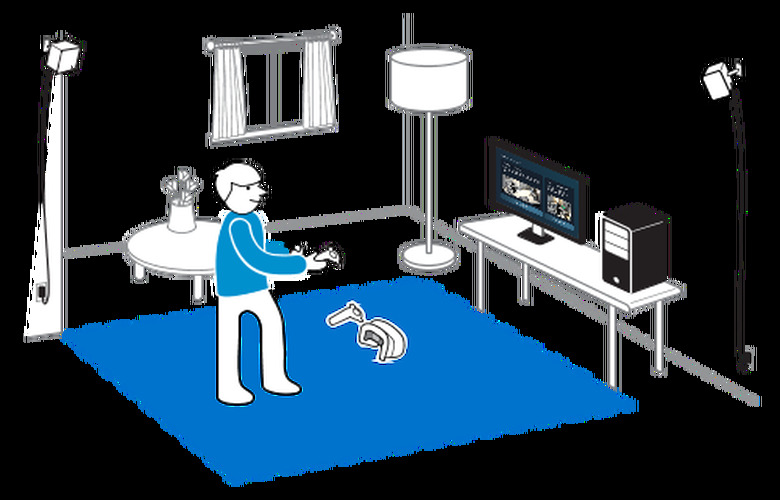
    The VR headset field might not be very crowded, but competition in fierce. At the front of the pack, it's clearly a two-horse contest between Oculus Rift and HTC Vive. But Vive is surging ahead, and quality determines the winner, it'll be Vive. Vive outpaces Oculus due to three chief factors: its all-important room scale for better navigation; its excellent controllers; and its big collection of gaming content. Room Scale for Full Immersion Let's start with Vive's Room Scale technology. In short, Room Scale provides the user with the opportunity to walk around his or her room and thus traverse a digital world. For all the immersion of other VR experiences, they leave the user stationery. They're 3D, sure, with the illusion of moving forward, but without the ability to actually wander. The technology is driven by two base stations, which are infrared Lighthouse cameras, set in opposite corners of the room. These interact with the Vive's sensors, allowing for the user's movement. The effects of this are profound, because so much of gaming--or another key use of VR, horror—thrives on the user feeling threatened from all sides. There's a pre-programmed and safe feel to standard VR—a horror movie using the technology might be scary, but not like it is with Room Scale. Walking through the chill-scape of A Chair in a Room: Greenwater, for instance, provides maximum adrenaline. The user can wield a flashlight to navigate the shadowy space, bodily walking through the experience, rather than using a controller's buttons. If something jumps out at you from behind, it goes to where you've navigated to—it's really jumping at you. The only downside of room scale is of course, the initial setup which can be quite intimidating even when using tripods to set up the HTC Vive. Superior Control The issue of the controllers also gives Vive a big edge over Oculus. As you probably know, the Rift ships with a bundled X-Box controller. On the other hand, the Vive comes with two controllers, one for each hand. They're shaped like skinny TV remotes with a single trackpad in the center. The dual-control concept is devilishly obvious. It allows you to use your hands and arms as usual, and this, of course fuels the realism of the experience. This is where real reaching and picking up come in, and considering that the controllers use haptic feedback to actually stimulate the skin, it's a very realistic experience. The controllers are wireless and battery-run. Games and More Games Just before its launch, HTC Vive added more than thirty games, giving it a serious advantage over Oculus. Vanishing Realms, Hover Junkers, Final Approach, and Selfie Tennis are all pretty good examples of Vive content. Not only is the quantity there, but quality too. Now, that's subjective, but one thing HTC Vive has on its front burner is the importance of the social experience. Playing along with your friends in a multi-player environment, with Hover Junkers being one example, is a big part of the gaming experience. Chet Faliszek, writer for Valve, told Fortune that the company feels multi-player to be a natural fit for VR, something they're just scratching the surface on. The advantage of more content is self-explanatory. But besides the pragmatic reasons that availability of more games is a boost, there's also the benefit of building a reputation for being first and for being aggressive. Vive was actually behind in the battle to bring forth content, and pulled out its thirty-plus-game surprise just before launch. We all know that in gaming and any entertainment content, the will to outpace one's opponent builds confidence in users. The most recent blow is the recent launch of Trials on Tatooine, free for Vive users. It's hard to find a better showcase for those thin rectangular controllers than turning them into the grips of a lightsaber. HTC has been winning recent battles, and the fight to join forces with The Force had to have been extra sweet. The Coke vs. Pepsi-like debates surrounding Vive vs. Rift will continue to rage. We're sure Rift has a few things up its sleeve. But it's clear Vive has pulled ahead at this juncture, due to the reasons above. Right now, the brand is charging $200 more than Rift, but we feel users will know where the extra money went.

    By Eric Lancheres Read More
  • DJI Phantom 4 Markets to Novice Users: Is this Safe?

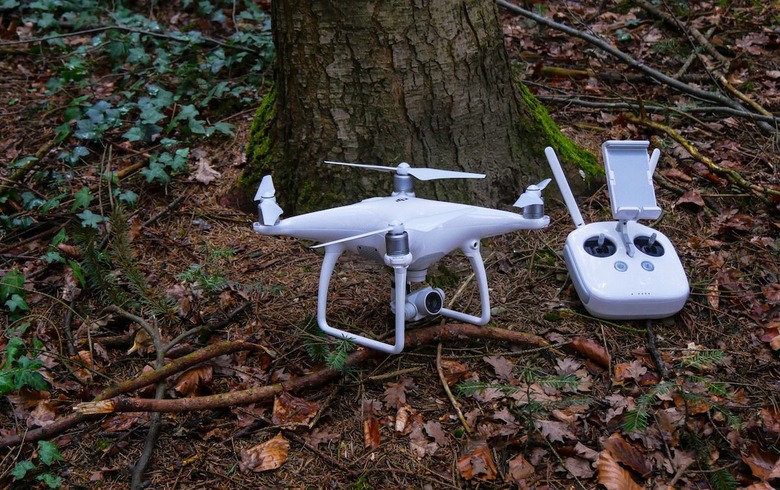
    The sexiest drone in its line: that's how DJI bills its new release, the DJI Phantom 4. And I'm not here to doubt that. I'm just asking if sexy is the best quality for a drone. Pamela Anderson's character on Baywatch may have been a sexy lifeguard, but did she know CPR? The big draw of the Phantom 4 is its many automated processes that make it accessible to less- experienced users. Given the responsibilities of operating drones, coupled with a reticence on the part of the public and of regulators, is this such a great idea? How Phantom 4 Flies Itself So, how does all this automation work? Well, first, Phantom 4 has much better visualization capabilities than previous camera drones. It goes well beyond GPS, with, in addition to its main camera, front-facing optical sensors. These are what allow the Phantom 4 to "see" obstacles and to automatically veer around them. With this wrinkle, a user can get close-up photos of blue jays, capture exhilarating video zipping between trees or skimming above the roof of an abandoned building. But it goes way beyond that. Another key feature, TapFly mode makes things much less technical and makes the user much less of a pilot-by-proxy. In TapFly, the operator goes to his tablet, phone, etc., simply taps the screen, and thus sends the 4 humming in a particular direction. If the tap sends it straight at a wall, and all goes as planned, it will screech to a halt. Great for Beginners: Great? Now, my concerns over this automation don't center around how well they work. Some obstacles, it may not process as such, and it may not always have time to stop in front of an obstacle it can't veer around. But let's leave those issues aside for a moment and accept that whoever wants to own the 4 can deal with these issues. Credit DJI The problem is the "beginners" concept. Making flying easier and attracting users who haven't learned to actually pilot the drone is dangerous. Here's what some novice drone operators don't know: it all happens a lot faster than you think. This is particularly true when you are just tapping a screen, sending the drone, perhaps, a lot farther than you realize. Keep in mind that the Phantom 4 includes a "sport mode," in which it can race at up to 45 mph and rise at as much as 20 feet per second. Also, the Obstacle Sensing System does not work in this mode, so if a user is in this mode (perhaps without even knowing it), there could be big trouble. Credit DJI Phantom 4 A Los Angeles Times writer, Mariel Garza, decided to test out a drone without the proper training and reports that she lost control "Within seconds." She writes, "I had no idea how far it could fly once it left my vicinity." Garza's drone slammed into a line of trees and fell a few days later due to high winds. But she made this flight in a residential area, so it would've been as likely for the plane to eventually make a dent in someone's home as the journalist tried a scary landing. The speed and agility with which these craft move make them harder to handle than most people can readily understand. The Rule Book That is partly why, as Garza's story shows, too many new users commit a major mistake: flying where they shouldn't. Even if common sense prevails and a hobbyist leaves residential areas, dangers remain. A lot of drone operators have a fondness for flying near airports. Now, regulations ban people from doing that—you can't get within five miles of airports. But how many people know this? The New York Post reveals that, nationally, 650 drones were reported near airports from January to August of 2015. They often hang out near runways, and can also get sucked into the engine of a jet, which would cause a catastrophe. Of course, the capabilities of the 4 also increase the likelihood of drones crashing into one another. All of this leads to the question: should these drones be set up like video games? Should they be navigated by touch screens? Or, to put it another way, while the open market will have its way, will the outcomes of this freedom be positive? The TapFly mode, early indicators show, is often used by kids, often with a parent standing next to them. This presents a bit of a barrier from reality—it's just a screen, and the scale is of course misleading. It would be all too easy for someone to be unaware of where he or she is really sending the craft. Ultimately, it's common for products of all kinds to acquire new and better safety features throughout their lives. It may be the case that the Phantom 4's OSS will improve and that the touch screen can be tweaked to allow a finer granularity of control—a more realistic connection between the screen and reality. However, the best thing people can do is to take safety into their own hands. Parents need to be well experienced with the piloting of any craft they put into the hands of their children. And users of all ages should ease in. While the Phantom 4 can be used by beginners, perhaps the best way to remain safe is to treat it just the opposite. An automated craft like this may be best used only by more experienced users. We all owe it to the community of drone operators to not five each other a reputation as being disrespectful of the safety of others. Image credit D. J. Hoffman via Flickr

    By Eric Lancheres Read More
  • How Virtual Reality Upgraded My Life

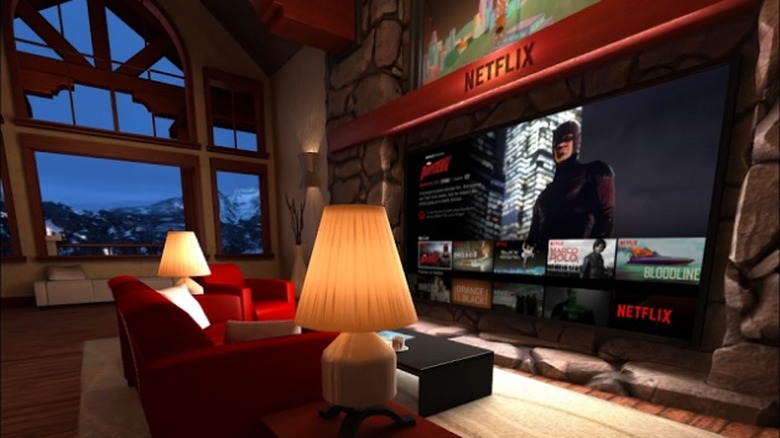
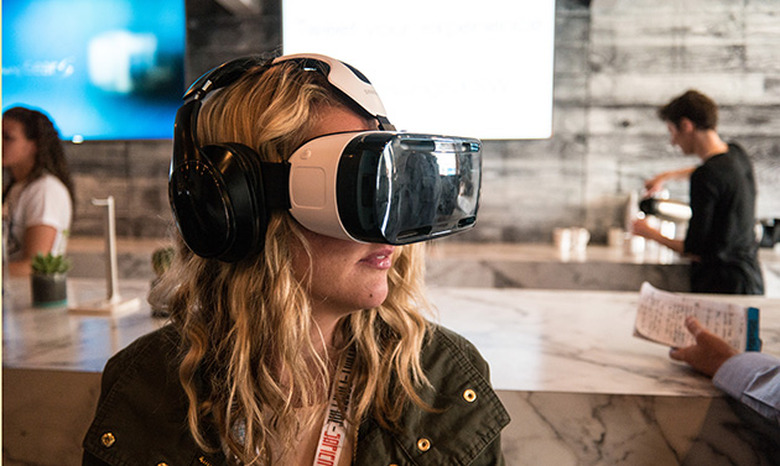
    1. I no longer watch normal movies on my 80-inch screen. Now, every time I watch a movie I do it in a million dollar, 100-foot movie theater, and most movies are in 3D. Fine, you got me, I don't actually own a 80-inch TV, but I do own a 65-inch one, which is still quite respectable as far as TV sets go. I also own a top of the line home theater system (I don't want to name brands here, but let's just say it's about as top of the line as you can go). And yet, the experience I get when watching my large-screen TV doesn't even come close to what I can do with my smartphone, a Samsung Gear VR headset, and a pair of decent noise-cancelling headphones. Because it doesn't really matter how many inches your TV has: the point is that it'll still be measured in inches, while you can follow this Samsung Gear VR guide to unlock Netflix's VR Void Theater, which lets you watch movies in an enormous screen floating in mid air, put you in front of a screen several stories tall. Other VR apps, like 360 Video put you inside a huge movie theater, and, of course, are capable of rendering videos in 3D. Even if I did have a 80-inch TV, watching videos like this is still better unless you have friends over. 2. On my lunch break, I take a quick trip to Hawaii using StreetView VR in order to relax and take in a bit of sun. I like to actually take my lunch break. By which I mean that in addition to eating lunch I like to step away from work and focus on something else for a little bit. Ultimately, this just makes me more productive. I used to eat out just to change my mind. But since I'm usually quite busy, I can't go very far, and eating out gets expensive. With the StreetView VR app, though, I can now travel far and be completely immersed in pleasant, relaxing destinations, all inside of my self imposed 45-minute lunch break. I just put on my Gear VR and take a stroll on the beaches of Hawaii or down the streets of Downtown San Francisco. StreetView VR renders Google Street View in VR and, lets me explore just about any destination from the comfort of my desk. An employee told me I look somewhat silly sitting at my desk with a VR headset on during lunch, but since I couldn't see her, I didn't even notice – I was exploring Paris's Latin Quarter that day. 3. When I can't see my friends in real life, I no longer post on Facebook about it, I hang out with them in the virtual space of AltSpaceVR, where I can genuinely interact with them. Facebook is no longer what it used to be: I used to spend hours stalking my friends on Facebook – I mean... catching up on their lives – but in the last few years, much of the magic of the social network has dwindled. These days I see more ads than anything else. I think that as our generation has gotten over the original novelty of Facebook, we've come to understand its limits as a means for connecting people. So, what's next for the online social universe? Social VR. Apps like AltSpaceVR, which is now available on Samsung Gear VR, let you hang out with you friends in Virtual Reality. Whether I'm playing dungeons and dragons in a shared virtual space or enjoying a "virtual coffee" with my pals, this technology really does bring people much closer together than Facebook's photos and posts ever did, while overcoming the muteness of videoconferencing. Now, don't get me wrong. It's still not quite like actually being in front of other people, but it gets much closer than anything else. It really does create a space for true social interaction that goes beyond text and images. 4. I no longer take regular pictures. Instead, I take 360º videos with my Theta S camera... so I can really return to any place that I have visited in the past and FEEL as if I'm there. I like taking pictures. They really capture the moment. But until now, pictures were always limited by the fact that they could only ever capture one specific angle of a given place. Traditional pictures always therefore leave something out: whatever's behind the camera's lens. Panoramic and wide-angle pictures make up for that, and nowadays it's easy to take them with just a smartphone, but I feel that there's always something a little bit artificial about a really long, horizontal picture of a place that is, in fact, not horizontal. Now, with my newest toy, the Theta S camera, I can easily take pictures that literally capture everything surrounding the camera. This device is equipped with two opposite-facing cameras that produce a single, integrated image in 360 degrees. The other day, I went up on my building's rooftop and took a picture of Montreal's skyline. It redefined the notion of a skyline: more like a skycircle! I can't wait for my next vacation... I'm thinking the Alps would produce amazing 360 pictures. How has virtual reality changed your life?

    By Eric Lancheres Read More
  • Virtual Reality Is Coming and It Will Change The World In 2016

    Photo credit: Flickr Nan Palmero Ever wanted to visit Tokyo? How about the moon? Still too close? What about Mars? Pilot an F-15, ride on roller coasters that literally defy the law of gravity, or watch movies on a 300 foot screen. With new virtual reality (VR) technology, all of these experiences will soon become possibilities. And while virtual reality has previously been somewhat of a pipe dream still reserved to video-game developers and members of some R&D departments, 2016 will be the year when virtual reality actually becomes a reality for the average consumer. If virtual reality takes off, everything, from gaming to video entertainment to commerce, will change. An Overnight Success 10 years In The Making Virtual reality has been an idea in developers and people's minds for a while. I mean, who hasn't fantasized at least once about diving into a completely new world by "jumping into" your TV screen and becoming a part of your movie or video game's world? Well, with VR you won't quite be diving into the TV screen, but rather strapping it onto your head, or kind of: VR hardware mostly works through a headset and accompanying earphones and hand controllers. However, what this technology will be able to do is to is to completely submerge you in the world shown on its screen. Now, some forms of the technology already exist. Google Cardboard, for example, is literally a cardboard cutout that folds into a headset and uses your cellphone as a screen. Photo credit: Flickr It's compatible with most Android phones, and Google is encouraging developers to release apps using the technology. Google 360 allows viewers to have a VR experience of Google Maps, and a good number of VR video games, like Insurgent VR and Zombie Shooter VR are already on the market. In a somewhat controversial move, New York Times subscribers in the US recently received a Google Cardboard cutout with their Sunday paper, as well as directions to watch a 3D VR video through the NYT website, announcing that the future of journalism will likely also involve VR. But Google Cardboard is just the beginning. Photo credit: Flickr There's at least three VR devices in the making that are due to come out in 2016, and whose VR experience promises to run laps around anything you can achieve with your phone and a cardboard cutout. 2016: The Year Of Virtual Reality The Facebook-owned venture, Oculus Rift, probably represents the most anticipated device for VR enthusiasts. After much speculation and waiting, Facebook finally announced this summer that the X-Box-compatible headset will come out during the first quarter of 2016. Photo credit: Flickr (Older version of Oculus Rift shown) Oculus Rift will come with a pair of integrated headphones designed to maximize the VR experience, and it will come with an X-Box controller, although Oculus is also designing its own handset to be fully integrated with the technology. Oculus has also announced a partnership with Microsoft, and the two companies promise that streaming and gaming will be seamlessly available on the Rift through an X-Box or Windows 10 platform. Many think both console and PC gaming will be revolutionized by the technology. Gaming But X-Box will not be the only gaming platform offering VR in the near future. Sony is developing its own VR headset, formerly known only as Project Morpheus, and recently revealed under the name PS VR. The headset will be compatible with Play Station, and is also due to be released in the first half of 2016. With high definition graphics, ultra-sensitive motion detectors, and integrated sound systems, the technology will likely also usher in its own set of dedicated 3D VR games. Photo credit: Flickr A third VR headset due to come out really soon is HTC's Vive. According to some sources, HTC Vive may come out as early as this December, although it will probably won't be widely available until early 2016. Built with a gyrosensor and accelerometer, the HTC-Vibe differs from the Oculus Rift in that it uses laser sensors to track your motion instead of a camera on the headset. It also will come with its own wireless hand controllers. Photo credit: Flickr Challenges Ahead Although VR will inevitably face some challenges next year, not least of which is its high projected price, the fact is that important changes are coming for VR. With three high-power headsets developed by leaders in the industry coming to the market early next year, there is sure to be a boom of new dedicated applications, from gaming to 3D movies. And who's to say that only entertainment will be reached by the virtual reality revolution? Photo credit: Flickr The possible applications are truly diverse: As alternate universes become available inside the world of a VR headset, the travel industry may be profoundly changed, offering voyages to distant parts of the world by just downloading an application – you'll be there much faster than if you take a 20 hour flight to New Delhi, say. And the best part of it all is that there's no jet-lag. In a completely different field, NPR has reported how nuclear scientists use virtual reality technology to train for emergency scenarios that would be difficult or impossible to reproduce otherwise. The future is here To give just one more example, real estate developers might soon be using VR technology to make tours easier and more efficient. As the technology improves, so too will its applications. Uses of VR are endless and easy to imagine: education in virtual environments, defense training, engineering virtual factories, healthcare, communications, you name it. All that's really missing is for the technology to be widely available, and that's just around the corner. How do you think the world will change after the advent of virtual reality?

    By Eric Lancheres Read More
  • Is a Star Wars Reboot Good for the Fans?

    Photo Credit: FlickrLightsabers, Death Stars, Jedi, an Ewoks: who doesn't love Star Wars? And with Episode VII, The Force Awakens, coming out this December, there's reason to be excited. As one of the movies that has inspired technological innovations, I can't help but wonder if the next one in the series will be remembered as fondly.Some controversy has arisen because the new trilogy will be somewhat of a reboot since it will not follow the storylines and characters given by the Star Wars Expanded Universe, including Timothy Zahn's Heir to the Empire trilogy. At the same time, everything indicates that the new movies will continue the plot and respect the basic premises of the first two trilogies.The question remains, though: What to think of these sorts of reboots in science fiction franchises?Star Trek seems to have successfully pulled it off with Star Trek (2009), and Into Darkness (2013), if you judge by the numbers or the reviews, but not everyone agrees. In spite of having a long Star Trek timeline to uphold, I thought they did a great job. I personally loved Nolan's Batman reboot, but I should admit that I didn't really have any previous exposure to Batman, so for me it was kind of like "the original" (and that's probably part of what producers are going after with these sorts of reboot series: newly converted or young viewers). And yet, you kind of worry that the only thing producers are really doing is squeezing every last penny out of what was once a great story and surrounding universe, but that they ultimately ruin the magic with these reboots. I mean, it's certainly happened before. Cough, cough: Fantastic Four, Jurassic World, Terminator Genisys...I believe it's important to keep our sci-fi franchises alive to inspire and strive for technology that might not actually exist today. You know the saying "If you can imagine it... it can happen!"Here's three angles to consider when evaluating a reboot. After them, my own opinion about Star Wars. Hint: much like the force's light and dark sides, it's hard to trace clear-cut boundaries here. (I'll be commenting mostly with Star Wars in mind, but you could really say similar things about all sorts of science fiction franchises.)AuthenticityBy making a reboot of a series or movie, producers risk departing from whatever made the original good in the first place. In the case of Star Wars, this wasn't so much a problem with Episodes I, II and III because George Lucas himself still directed them. But with Disney purchasing Lucasfilm in 2012, and J. J. Abrams replacing Lucas in the director's chair, you could worry that whatever they come out with in The Force Awakens, it might just no longer actually be Star Wars. Wouldn't that be ruining the magic?Keeping the Star Wars world aliveI think that the reason so many of us love Star Wars so much is because it creates a different world. It's just nice to suddenly find yourself in a world full of droids, podracers, stormtroopers, and Gungans. The idea of a universe where a great struggle between two different sides of the force takes place is somehow enthralling. But the memory of the movies that inspired that world in our imagination starts to fade as the movies begin to get older, and the universe too begins to disappear. Of course, there's things like Star Wars's Expanded Universe, where fans and independent producers write comic books, novels and even videogames amplifying and developing the parts of that world that Lucas himself left open. But at the end of the day, the thrust of that universe, a long time ago in a galaxy far, far away is those movies that we all saw in the big screen. With a new trilogy coming out, we can be sure that that universe will continue to exist.Consistency with the Expanded UniverseFrom comic books to video games to novels, franchises like Star Wars, Star Trek, Batman, Spiderman, and so many others are more than just the movies that originally inspire them. In a way, the fact that a bunch of fans and other people not directly connected to the original production contribute to imagining these worlds is what makes them worlds. But by rebooting these storylines and characters, the movie kind of betrays the fans. At the same time, because the Expanded Universe was produced by a bunch of independent fans and producers, their stories are not quite consistent with one another. In order for the whole thing to work, you need for this world to be coherent, and that's what you get when an official reboot comes along and says, "This is THE one and actual sequel to Episodes III-VI."My Take:A sequel reboot can ultimately be good because it keeps the alternative worlds that drive us to the movies in the first place alive. But it needs to be close enough to the previous storylines, characters, and themes that it remains the same world. So for example, in the new Star Wars trilogy, the storyline is supposed to be a continuation of Episodes I-VI, although it will ignore most of what the Expanded Universe had previously imagined.But at least this means that we will be able to watch all 9 movies one day (anyone else into binge watching TV?) and still get one coherent and roughly continuous narrative. If they really pull this off, then I'll be happy with this reboot series. We'll have to wait and watch the movies to find out, but I can at least say that I'm excited to go watch the premiere in December! What's your take?

    By Eric Lancheres Read More
  • TV Consumption After The Streaming Revolution

    Photo credit: GettyWhen I was growing up, I would often hear my grandmother tell stories about how TVs first started to become popular when she was a teenager. Before that, her family would gather around the radio set to listen to news, talk shows, and even this thing called "radio drama," which was apparently like a TV series except it was all on narrated on audio.That was the first revolution: the birth of TV.My mom would tell me how she grew up watching TV in black and white, but that at some point in her early teens, her dad came home with this new state-of-the art technology: color TV. During the heydays of color TV, there were only a couple channels broadcasting in full color, and since they were very expensive, only a few people could afford the devices. That was revolution number two: color.By the time I was a kid, everything was in full color, and a basic cable subscription included more than 50 channels. I used to think that was that: TV had reached its zenith, and there was no more evolution to be had. Boy, was I mistaken.Who Needs Cable These Days?I went apartment hunting the other day, and the realtor proudly announced that one of the apartments he was showing had a bunch of perks, "like that fact that cable is included in the price."Puzzled, I looked at my roommate, and we both silently though the same thing:What in the world would we need cable for?That's right: I can barely remember the last time I actually watched TV on cable. Now, don't get me wrong, I am by no means one of those people who just don't watch TV. It's just that I watch everything through my computer. Sometimes I'll connect my computer to the TV with an HDMI cable, or just stream things directly through the TV's Wi-Fi connection. But flipping through the channels to see "what's on"... well, that just seems archaic to me.There was Tivo and other DVR services sometime in the early 2000s. It really was quite a relief not to have to wait for whatever show you wanted to be broadcast at a specific time. Then there was Netflix, but not the one we tend to think of today. Do you remember that Netflix started out renting DVDs by mail? That too was quite some progress as compared to driving to Blockbuster and then inevitably paying late fees.But then at some point in 2011, Netflix separated off its TV streaming service from its DVD rental plan, and started selling the two separately. I would point to that as the point when the third TV revolution occurred: streaming.How I Watch TV After its Third RevolutionI binge watch series.I think I should admit it. I remember when the last season of House of Cards came out this February. I was done watching it within a week. And what about Narcos? I finished that in just one weekend. Orange is the New Black, Better Call Saul, Fargo, The Americans... pretty much the same story. And hey, it's not just Netflix. There's HBO Go, Hulu, Amazon Prime, iTunes, and many more (I think the last two are especially good for finding rare and foreign movies and shows).But what do you watch when you've gone through all the blockbuster series? And, given the vast universe of possibilities to watch, how to choose. (Because as we know all too well, there are some really bad show and movies out there.)What People Are REALLY WatchingOne strategy I have found useful is to track some of the pirate streaming sites to see what people are watching there. I am in no way endorsing them, however, whatever you think about them, one thing is certain: they reflect what people are actually watching (in other words, what is actually good), rather than what companies want you to watch.With Netflix and other streaming companies recently entering the TV production business, they have a stake in some shows being preferred above others, so it's good not to settle for their "top picks" and "trending now" sections.What About the Old Dinosaurs?As subscriptions to on-demand streaming services continue to increase, old cable companies become less and less profitable. New players are on the map, and giants like Comcast and DirecTV no longer hold a monopoly. But that's actually a good thing for the consumer.Photo credit: GettyTraditional TV services are striving to meet the demands of TV viewers who want to be able watch programming whenever they want, not when some arbitrary schedule tells them to. That's exactly what HBO did when it released HBO Go in 2010. According to some, Comcast and NBC are in talks to release their own streaming service through Apple TV. Apple too, has just released a new version of Apple TV that will integrate a variety of streaming and online television services. It seems everyone is trying to create the ideal TV plan. And all the while traditional content providers are reducing their prices in the hopes of becoming more competitive. All of this means that consumers have more and better options for TV watching.Better For ConsumersAnd while internet TV is on the rise, some programming is still mainly available trough traditional providers. Sports and news, since most people want to watch them in real time, remain one of cable and satellite TV's biggest selling points. Will these too eventually be taken over by streaming and on-demand services? For the time being it's hard to say.We are far from the time of sitting in front of a black and white TV set, and watching whatever it fed us, and waiting through commercials. Today we binge watch series, watch only the programming we choose, and watch at whatever time we want. Oh, and everything is in HD. But surely this is far from the last TV revolution.How do you think television will change in the years to come?

    By Eric Lancheres Read More
  • The Working Drones of the Future

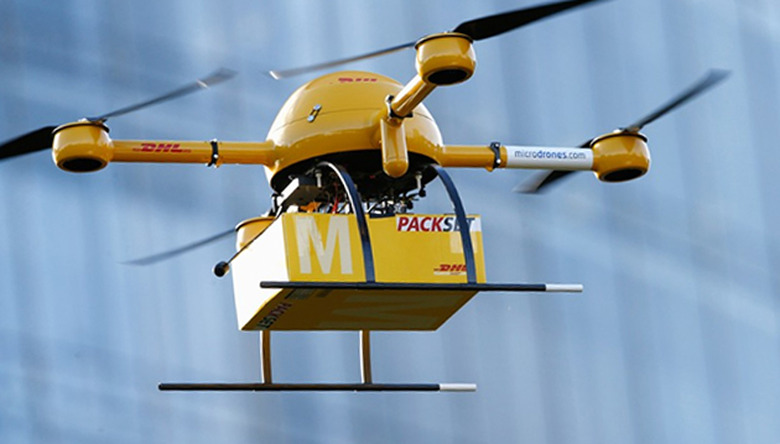
    Since it has only recently become possible to use drone technology for commercial purposes, there is currently somewhat of a regulatory vacuum for these unmanned aerial vehicles (UAVs, as the FAA refers to them). As we recently covered in our article on "Drone Regulations That Actually Make Sense" guidelines for recreational drone users are vague at best. For commercial purposes, the rules are even worse and you must obtain a special exemption from the FAA.This situation is, well, strange, given the recent boom in drone technology and applications, but won't stay that way for long. Countries all over the world, from Germany to South Africa, have recently passed regulations for commercial use of drones, and the US is likely to pass its own set of regulations soon.Protecting The Industries Of The FutureRecent high-profile drone mishaps, like the crash of a drone operated by an off duty Secret Service officer on White House premises, have made it clear that regulations for drones are exceedingly necessary in order to guarantee public safety. At the same time, there is a wide array of promising commercial uses for drones, and regulations must be careful not to make it so difficult or costly to operate drones for practical purposes that we miss out on their many benefits. We need intelligent drone regulations that actually make sense and allow for companies and consumers alike to benefit from drone applications in our everyday lives.Here's a list of just some fields that may soon be revolutionized by drone technology.Real Estate Uses Drones For Aerial PerspectivesPhoto credit: Ben FreedmanThat's right, the next time you go online to scope out properties for your dream home, it's likely you won't just get a virtual tour and a list of specifications. You might also find aerial pictures and videos of properties and their surroundings taken by drones, as some realtors are starting to make available for their clients. Without proper drone regulations, we might be restricted to our standard typical real estate pictures. And it's not just your realtor that's using drones...Improved Safety For Construction SitesPhoto credit: Pavel KazachkovThere's a high probability that the next time you are looking to move into a newly developed neighborhood or recently remodeled building, drones will have been essential to its building process. Indeed, construction is a second important category of drone applications.Developers are now using drones to survey land before starting new projects, and once projects are underway, drones promise to be useful in monitoring workers and safety during construction. This increases safety and can potentially prevent accidents from happening.According to some, drones may soon prove to be useful in the construction process itself, delivering heavy materials to high-rise construction sites and possibly reducing the need for cranes. And since drones can be programmed with pinpoint accuracy, some of the possibility of human error may be eliminated from the construction process.Agriculture Surveying Via DronesPhoto credit: Bruce Van CamperFarmers too may benefit from drone applications. Not only can the unmanned aerial vehicles serve to survey large expanses of land to identify any yield-reducing problems in a more cot-efficient manner, some in the drone manufacturing industry also predict that drones may soon be used to spray crops in the most precise manner possible.Sports Photography - Bringing You Into The ActionPhoto credit: Zach DischnerHave you ever seen those posters of a snowboarder doing a handplant in midair? What about video of a BMX rider doing a frontflip? It used to be that you needed a helicopter or some kind of crane to get that kind of footage, but as drones enter the scene of extreme sports, shot quality is improved and cost reduced. And nowadays, you no longer need to be a professional get your extreme sports pictures taken, but the solution doesn't involve selfie sticks and GoPros.Some top camera equipped drones can now be configured to track and follow the GPS on your phone, which means you can get a shot of that one time you actually did pull off a 360° without having to hire a professional photographer full-time.Emergency Medical DeliveriesPhoto credit: Getty St. Bernards used to serve as search and rescue dogs for people stranded in remote mountainous locations because the dogs could more easily access areas with rough terrain. They would carry a small barrel filled with whiskey around their neck, which the stranded traveler would keep once he was found, while the dog went back to show the rescue team the location of the traveler. Drones can now aid in search and rescue missions, but the sort of packaged they can deliver will likely be more useful than those carried by St. Bernards.In places where road access is difficult or impossible (after a natural disaster, for example) drones can prove essential in supplying anything from medical supplies to basic staples. And it's not just remote locales that may benefit from drone-aided medical deliveries. At times when meeting strict delivery deadlines is imperative (for organ transplants, say) drone deliveries are likely to be the most effective option, given the fact that they are not subject to traffic constraints and that human error can be reduced by programming their routes.Standard Commercial Deliveries Of The FutureAnd, of course, commercial delivery drones are currently being designed and tested by a host of companies seeking to make their logistics departments more efficient. And it's not just giants like Google and Amazon that are investing in drone delivery ventures. All sorts of deliveries could possibly be made more effective the use of drones, from pizza to library books. And organizations in all sorts of sectors are exploring the endless possibilities for drone deliveries.Where do we take it from here?And yet, while the possibilities for new and innovative drone applications are truly vast, we're not quite yet at the point where these technologies can be generally applied. The current regulatory setup, which requires commercial drone users to obtain special permission from the FAA in order to operate, is simply not feasible for widespread application.A second concern is that the technology might not yet be at the point where it is sufficiently safe to be flown in crowded urban areas. While drones can be extremely useful and ultimately safer than their alternatives when everything works as it should, they can be quite dangerous when they malfunction, which means that the kinks in the technology must be sorted out before these applications truly come into effect. That being said, both regulation and technology advance at lightning speed, and it is highly likely that we'll see both evolve soon...It's up to us to make sure that the right regulations are set up so that drone technology may flourish!Who knows what exactly the working future of drones will look like. What's for sure is that it will be exciting and that it will change many of our commercial activities... hopefully for the better. What can you do to ensure drone regulations make it possible to use this technology to improve our daily lives?

    By Eric Lancheres Read More
  • Drone Regulations That Actually Make Sense

    Drone technology is advancing so quickly that standard regulations are still lagging behind. Designed for RC pilots and model airplanes, the old rules are outdated and somewhat inadequate. Even worse, many people purchasing drones don't even educate themselves on safety which has prompted the "Know Before You Fly" education campaign in association with the FAA. Here's what you need to know if you just purchased a drone or are thinking of getting into the hobby.Although this is by no means an exhaustive list, here are the basics:- Do not fly above 400ft- Always fly the aircraft in line of sight- You should not interfere with any manned vehicle or aircraft- Do not fly near airports or restricted areas (5-mile radius)- Do not fly near people, property, wildlife.- Don't be careless, reckless or under the influence while flying.Source: FAA Small Model AircraftThis current set of rules is somewhat vague and difficult to enforce which is why regulators are scrambling to create new rules for drone (quadcopters, tricopters, hexacopters) under 55 pounds. These will dictate what you can and cannot do with your drone which is why it is important that the future regulations are fair while protecting the population.Striking a balanceOn the one side, we want to promote innovation. Industries such as shipping, real estate photography, surveying and agriculture can benefit from drone advancements. Imagine a world where your packages are delivered by drone!On the other hand, the last thing we want is someone flying a drone into a protected airspace while planes are taking off or a drone crashing into a crowd at a festival. Unfortunately, these things are happening right now because the best drones on the market can be purchased by anyone, regardless of experience or age. While this is great, it also leaves the door wide open for abuse.The Latest Proposal: Too Much?The latest proposal is that all drones must be registered before use. Seeing as some enthusiasts own 10-15 drones, I can't see this being very practical, and it won't get us any closer to achieving our primary goal: safety. This would also be next-to-impossible to enforce because people are building drones from scratch in their basements.Instead, I would like to propose that we treat drones like bicycles. We should create a clear set of laws and regulations so they can function within into society while remembering that some people just want one for fun. Otherwise we're going to end up with companies like this that are trying to create anti-drone guns.What should our priorities be with regards to drones? We want to keep people safe We want to keep our property safe We want to maintain our privacy We want to keep noise levels to a minimum We want to promote innovation.If we can satisfy all those requirements, then we should be in a good place. We don't want to hinder any potentially new industries, but we do want to minimize the drone-related accidents.The Future Of DronesHere's what I believe makes sense for the future of drones:Rule #1 Avoid flying above people and animals.Rule #2 If your drone suddenly stops working, it must crash in a safe environment that you can access.Rule #3 Your drone must yield and respect all other vehicles.Rule #4 Your drone cannot be used as a tool to invade someone's privacy.Essentially it comes down to common sense. Even the most experience drone pilot will tell you that sometimes the RC drones misbehave and accidents to happen. As long as you're flying on public property and obeying rule #2, then everything else should fall into place.Do you agree or disagree ? Let us know what kind of rules you would like to see around drones in the comments.Photography credit: https://www.flickr.com/photos/myfrozenlife/9509729338/

    By Eric Lancheres Read More
  • Maximize Performance By Using The Best Browser For The Job

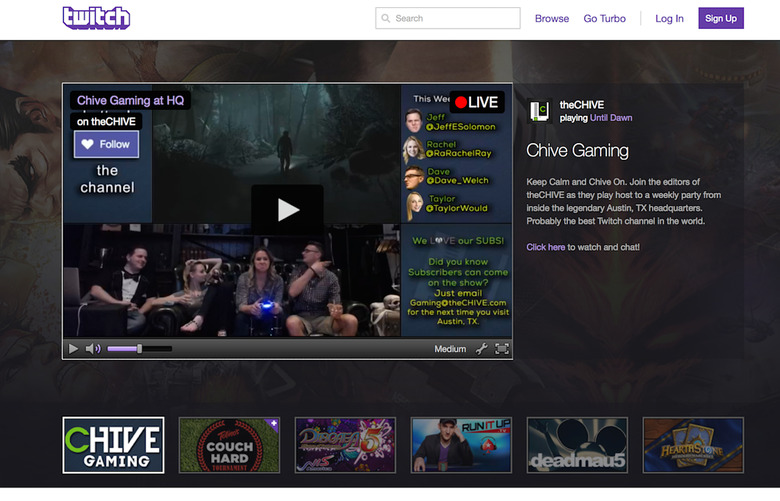
    The best browser for the job might not the one you're currently using. Different browsers will provide a different user experience depending on the site that you're visiting. Some will lead to a longer battery life, others will provide additional features, some will crash less and others will display video in higher resolution.Here's how to get the best experience on some of the world's most popular sites.Best Browser For Viewing Streams on Twitch.tvOne of the most popular streaming sites in the world, Twitch.tv, allows gamers to broadcast their games for the world to watch. Just like you might have watched a sibling play a video game when you were younger, the world of Twitch has captured the attention of the web as it currently ranks 4th in the world in terms of bandwidth consumed.If you're watching streams in 720p or 1080p on a laptop, you'll quickly notice the CPU usage skyrocketing and your machine heating up. That's because in most browsers, Twitch currently uses Flash to render video.If you want to take advantage of HTML5 video on Twitch, which leads to a significant increase in battery life (when compared to Firefox and Chrome), less heat and faster performance, then you'll want to use the Safari browser.Browser of choice for Twitch: SafariBest Browser For NetflixOne of the most popular website in the world is Netflix and with good reason. Allowing you to stream movies, TV shows and documentaries, it has quickly risen the ranks as one of the most popular sites in the world. One thing that people might not realize is that the viewing experience can be quite different depending on the browser that you use.If you run Chrome or Safari to view Netflix, then you'll be restricted to 720p quality. Even though higher video quality is available (1080p) and you might have the bandwidth to support it, your browser choice will restrict you. That's why, if you're craving the absolutely highest video quality on Netflix, you'll want to use either Safari (Mac) or Internet Explorer/Edge (Windows).Using the native browser will allow you to access the 1080p video quality.However... there is a twist!There are plugins available for Chrome and Firefox (which will remain unnamed) that allow you to access different regions of Netflix without the use of a proxy. So for the highest quality, you'll want to use either Safari or Internet Explorer/Edge. If you want to access various regions with the use of plugins, Firefox and Chrome will be the browser of choice.Browser of choice for the highest quality Netflix: Safari & Internet Explorer/EdgeBrowser of choice for using Netflix plugins: Firefox & ChromeUltimate Youtube BrowserThe browser war is closer when it comes to Youtube videos. Google has upgraded Youtube playback so that it defaults to HTML5 on all modern browsers.This means that battery life and performance should be equivalent across most modern browsers. Unfortunately, it's not that simple. Both Firefox and Chrome offer a huge array of user plugins which enhance the Youtube experience: Ad-Blockers, video savers and more are all available in the form of plugins and not all of them are available on both platforms.However, Chrome takes the lead as Google (Which own Youtube and Chrome) releases new Youtube features exclusively available on Chrome. For instance, 3D video was first available on Chrome (now available on other browsers) and once again when 60 FPS were released (also currently available on other browsers), they were first restricted to Chrome. So if you want the latest and greatest Youtube experience, you'll want to use the Chrome browser. You'll get to play with all the bells and whistles before everyone else.Best Browser for Youtube: ChromeThe Right Tool Browser For The JobAs developers update the websites the browser of choice might change. I for one, am eagerly awaiting for Twitch to implement HTML5 across all browsers. As a result, there is no best browser, just a different browser for different situations.So which browser is your favorite? Let us know in the comments down below and tell us why.

    By Eric Lancheres Read More