Inhabitat

Engadget Editorial Policies

The unique content on Engadget is a result of skilled collaboration between writers and editors with broad journalistic, academic, and practical expertise.

In pursuit of our mission to provide accurate and ethical coverage, the Engadget editorial team consistently fact-checks and reviews site content to provide readers with an informative, entertaining, and engaging experience. Click here for more information on our editorial process.

Stories By Inhabitat

  • Inhabitat's Week in Green: Ocean Cleanup Array, ForceShoes and a warp-capable spacecraft

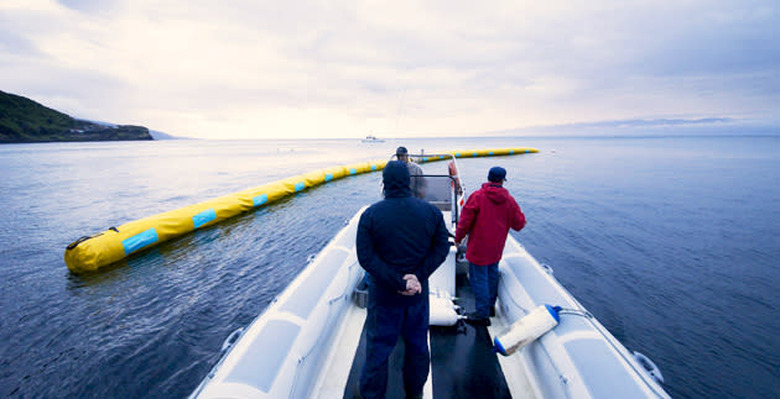
    Innovative design has the power to save the world. Case in point: Last year, teenage inventor Boyan Slat announced plans to create an Ocean Cleanup Array that could remove up to 7 million tons of plastic trash from the world's oceans. The plan was met with a fair bit of skepticism, but a new yearlong study confirms Slat's claims. The hefty report goes as far as to suggest that a single array could remove half of the plastic in the Great Pacific Garbage Patch in a decade. Slat isn't the only youngster turning heads: A 14-year-old Indian girl recently invented a pedal-powered washing machine that doubles as an exercise bike, which she uses to wash her family's clothes. Google just announced that an 11-year-old girl won the 2014 Doodle 4 Google competition by dreaming up a fantastical water purifier that turns dirty polluted water into fresh, clean H2O. And a team of Dutch architects is building the world's first 3D-printed house using a massive printer contained within a shipping container!

    By Inhabitat Read More
  • Inhabitat's Week in Green: Terrafugia, Urban Skyfarm and a motorized 'home in a box'

    Each week our friends at Inhabitat recap the week's most interesting green developments and clean tech news for us -- it's the Week in Green. Hurricane Sandy slammed into the East Coast in the fall of 2012, causing widespread devastation and billions of dollars in damages -- and future superstorms will likely be worse. But the US government is doing something about it, providing nearly $1 billion in federal funding for projects that will make the coast more resilient in the face of climate change. HUD announced six winning proposals this week, and they include some of the world's top design firms. OMA, the firm founded by Rem Koolhaas, received $230 million to rebuild the damaged areas of Jersey City, Hoboken and Weehawken and protect them from future superstorms. Bjarke Ingels' BIG Architects was awarded $335 million to create a series of protective planted berms and flood walls in lower Manhattan's flood zones to make them more resilient to storm surges. SCAPE/Landscape Architecture won funding for its Living Breakwaters project, which will provide a buffer against wave damage on Staten Island. A team from MIT also won funding for its plan to transform and protect the Meadowlands basin in New Jersey and expand current marshland restoration efforts. And Walter Meyer has developed a proposal for creating a 50-acre nature park with sunken forest that could protect the Rockaways from future storms.

    By Inhabitat Read More
  • Inhabitat's Week In Green: Google's new car, ice walls and the future of bamboo

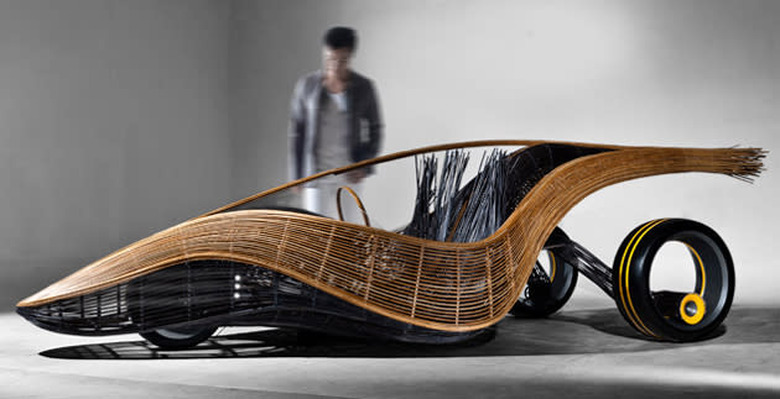
    Each week our friends at Inhabitat recap the week's most interesting green developments and clean tech news for us -- it's the Week in Green. It's 2014 and even though we can 3D print entire buildings and create jewelry from Beijing's smog, we're still struggling to fix our transportation system and transition away from polluting fossil fuels. It'll be a while before flying electric cars take to the skies, but there are concepts in the works that suggest we may not be crawling through toxic traffic forever. In a major breakthrough for its self-driving car project, Google recently unveiled a pod-like vehicle it built from scratch. Creating its own car instead of modifying an existing one enabled Google to pursue some interesting design choices such as, well, the lack of a steering wheel -- for a start! In an effort to make current automobiles more efficient, some experts have suggested that bamboo could soon upstage carbon fiber as the material of the future. But as we all know, the greenest car is no car at all. Worried that it might not meet its pollution reduction targets in 2015, the Chinese government announced plans to take at least 5 million old cars off the road. For those that prefer their transportation with two wheels, IKEA is branching out into the transportation arena with a brand-new electric bicycle that will feature six different driving modes and a pedal-assisted range of up to 45 miles.

    By Inhabitat Read More
  • Inhabitat's Week in Green: hybrid Batmobile, self-cleaning fish tank and an anatomical Barbie

    Clean tech fans were thrilled this week when Germany proved it's possible to power the world with greener energy by announcing that 74 percent of its energy was recently met with renewable sources. But if you still have doubts about the future of renewable energy, a new report from the International Energy Agency predicts that solar energy could become the biggest generator of electricity worldwide by 2050 if the right policies are put in place. Meanwhile in Baltimore, they are using solar energy to help tackle pollution. The new solar-powered Water Wheel Trash Interceptor is ready to pull a whopping 50,000 pounds out of the water, which the city hopes will make its harbor swimmable again. In developing countries that lack access to any kind of fossil fuels, this solar-powered pump is helping to produce clean, drinkable water.

    By Inhabitat Read More
  • Inhabitat's Week in Green: Aero-X hoverbike, vertical forest towers and a braille robot

    Climate change is already causing serious problems, including extreme weather events, drought and wildfires like the massive fire that displaced thousands of people in San Diego County this week. But one of the most concerning effects of climate change is sea level rise. This week, the world got some sobering news when we learned that a large section of the West Antarctic Ice Sheet collapsed. Although scientists have warned that we've already reached the point of no return with climate change, transitioning to green design and technology is more urgent than ever. Transportation accounts for more than a quarter of greenhouse gas emissions in the US, so we were pleased to learn that an electric bus produced by the South Carolina-based company Proterra broke the world record for most miles traveled in a day when it traveled over 700 miles in 24 hours. And file this one in the "We'll believe it when we see it" drawer: China plans to build an 8,000-plus mile railroad connecting China, Russia, Canada and the US. The plan includes a 125-mile undersea tunnel spanning the Bering Strait.

    By Inhabitat Read More
  • Inhabitat's Week in Green: Flux, smart parking meters and 1,600 paper pandas

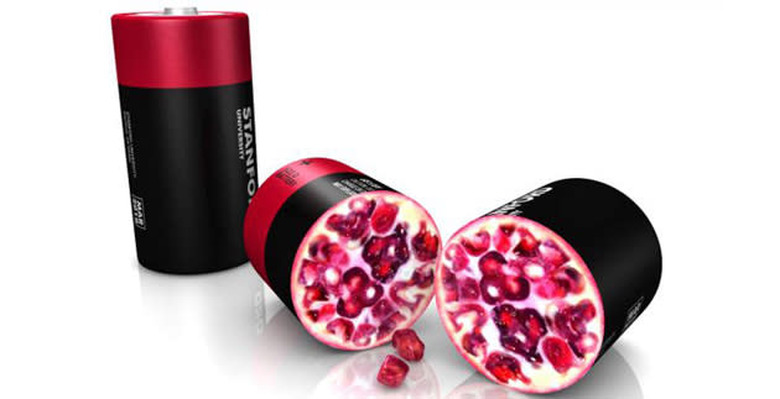
    Climate change isn't some abstract future -- it's already here. And the federal government is finally acknowledging that. Last week, the White House issued a landmark 1,300-page report identifying climate change as a clear and imminent danger. The US government isn't the only body that's concerned about climate change; the United Nations Secretary General Ban Ki-moon is calling on countries around the world to take strong measures to reduce greenhouse gas emissions and fight global warming. In higher education, Stanford University is leading the charge, becoming the first major US university to divest from coal companies. It will take significant investment in alternative energy to reverse course, and several major projects are paving the way. An American energy company is planning to build a gigantic tower on the Arizona-Mexico border that could tap solar and wind resources to generate 500 megawatts of energy. And a Spanish island with 10,000 residents is planning to sever ties with the traditional power grid and move to 100 percent renewable energy, making it entirely energy independent.

    By Inhabitat Read More
  • Inhabitat's Week in Green: spasers, battery-powered airplanes and phones printed on clothes

    Each week our friends at Inhabitat recap the week's most interesting green developments and clean tech news for us -- it's the Week in Green. Technology is getting small -- this week, Inhabitat took a look at LIX, the world's smallest 3D-printing pen, which is powered by a USB port. Meanwhile, a team of British neuroscientists strapped the world's tiniest pair of 3D glasses onto a praying mantis, and then exposed the bug to a series of weird 3D videos. The study aims to learn more about 3D vision. Cellphones could soon be shrinking, too. Researchers at Monash University have developed the world's first spaser, which is basically a laser on the nanoscale. The development could lead to phones so small that they can be printed on clothes. And the musician Imogen Heap has created an interactive glove that turns gestures into music.

    By Inhabitat Read More
  • Inhabitat's Week in Green: energy from toilets, Legoland Florida and 6K tons of pistachios

    Earth Week is coming to a close, and to mark the occasion, Inhabitat showcased 14 awe-inspiring aerial photos of the Earth and 14 photos that remind us how important it is to protect the planet we live on. The week was also met with a bit of good news, as a report surfaced stating that President Barack Obama will most likely reject the controversial Keystone XL Pipeline. Apple took the opportunity to revamp its environmental-responsibility website, highlighting its new green initiatives -- including building a new campus that will be entirely powered by renewable energy. Google announced its biggest renewable-energy purchase to date, investing $100 million to make solar panels more affordable for American homeowners. And Legoland Florida became the country's first theme park to be entirely powered by solar power.

    By Inhabitat Read More
  • Inhabitat's Week in Green: flexible circuit boards, BMW i3 and the world's first urban algae canopy

    Each week our friends at Inhabitat recap the week's most interesting green developments and clean tech news for us -- it's the Week in Green. When you think about transportation innovations, highways probably aren't the first things that come to mind. But Dutch designer Daan Roosegaarde recently rolled out the first "smart" highway in the Netherlands -- and it utilizes glow-in-the-dark lane lines, interactive lights and smart road signs to make roadways safer and more sustainable. The skincare company Foreo has come up with a far less practical plan to lessen our need for streetlights: Increase the moon's reflectivity to make the night sky brighter. The bizarre idea calls for coating part of the moon in a reflective surface in order to increase the amount of light it reflects back to the Earth at night.

    By Inhabitat Read More
  • Inhabitat's Week in Green: sun-powered plane, Baobed treehouse and modular furniture

    Each week our friends at Inhabitat recap the week's most interesting green developments and clean tech news for us -- it's the Week in Green. Airplanes are major CO2 emitters, but it doesn't need to be that way. For the past several years, two Swiss innovators, André Borschberg and Bertrand Piccard, have been flying around the world in a sun-powered plane, spreading the word about solar power. Last week, the duo announced the debut of the new and improved Solar Impulse 2 aircraft, which they'll use to attempt a flight around the globe. While the Solar Impulse is charting new territory in the skies, Tesla is changing the game on the roads. Last month Tesla sold 1,493 Model S sedans in Norway, breaking a 28-year-old monthly sales record and outselling every other vehicle in the country. Thanks in part to Tesla's success, electric cars are selling at a furious pace: A recent report shows that EV sales are currently growing by more than 100 percent per year. Smaller is better when it comes to urban cars -- especially for parking -- but there are drawbacks to owning a pint-size car. In San Francisco, vandals recently went on a Smart Car-tipping spree, flipping the tiny cars upside down in the middle of the night. A bicycle is still best way to get around the city, both for your health and the health of the planet. In Boston, doctors are now prescribing bike share memberships to obese patients, encouraging exercise instead of medication.

    By Inhabitat Read More
  • Inhabitat's Week in Green: WarkaWater Tower, kangaroo-like robot and an energy-generating carousel

    Each week our friends at Inhabitat recap the week's most interesting green developments and clean tech news for us -- it's the Week in Green. The world is flooded with electronic devices, which add up to a huge e-waste problem -- but if a team of MIT researchers has its way, the gadgets of the future could be made from living cells. The team is working on hybrid materials made from bacteria that could grow anything from solar cells to smartphones. The German engineering company Festo is known for its biomimetic creations, producing everything from flying seagulls to wind turbines that flap their wings like birds. Now the company has developed an energy-efficient robot that hops around like a kangaroo. In green lighting news, Torafu Architects has created a series of recycled glass pendant lamps that are inspired by droplets of water. And Philips has developed a new LED bulb that looks and feels like an incandescent. And for those travelers who just can't seem to fit everything in their carry-on luggage, we present you with the JakToGo, a new jacket that stores up to 10 kg of goods, freeing up space in your suitcase.

    By Inhabitat Read More
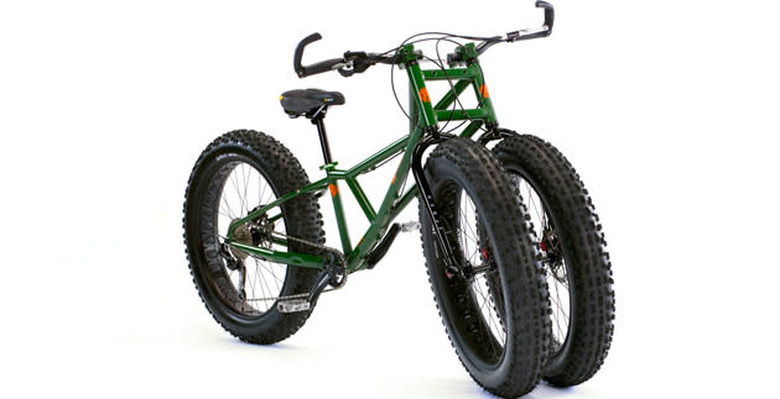
  • Inhabitat's Week in Green: Juggernaut Bike, Project Blue and a skyscraper made of desert sand

    Each week our friends at Inhabitat recap the week's most interesting green developments and clean tech news for us -- it's the Week in Green. It's been a big week for architecture -- especially the futuristic kind. First, winners were announced for the 2014 eVolo Skyscraper Competition, a contest that challenges designers to create buildings that are beautiful as well as problem-solvers. Top honors were earned by Sand Babel: a twisting, solar-powered, 3D-printed skyscraper built from desert sand. Then there's the extraordinary Hyper Filter Skyscraper, which is designed to inhale carbon dioxide and other greenhouse gases and exhale oxygen. China's ongoing air-pollution crisis seems to have inspired more than one designer, as an honorable mention also went to Project Blue, a skyscraper that could actually transform air pollution into green energy.

    By Inhabitat Read More
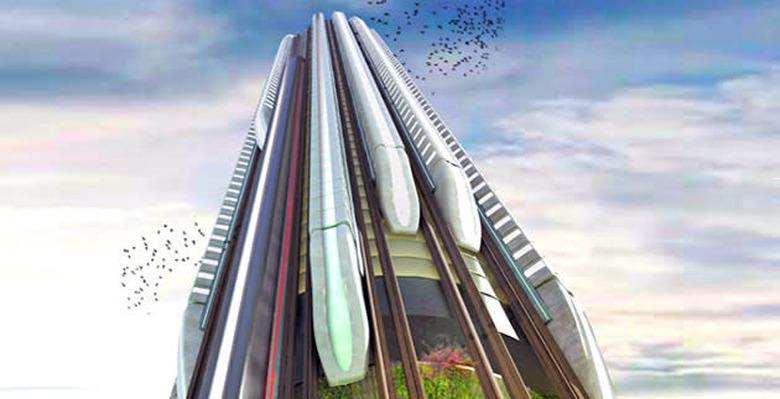
  • Inhabitat's Week in Green: Gigafactory, eVolo Skyscraper Competition and super-powered bionic plants

    Each week our friends at Inhabitat recap the week's most interesting green developments and clean tech news for us -- it's the Week in Green. First, the bad news: A new NASA-funded study predicts that industrialized society could completely collapse in the coming decades due to growing inequality and overconsumption of resources. Officials in Paris are taking emergency measures to curb emissions after air quality monitors found that air pollution had risen to hazardous levels in recent weeks. And large-scale famine could be closer than we think: A new report finds that climate change could affect food production much sooner than previously thought.

    By Inhabitat Read More
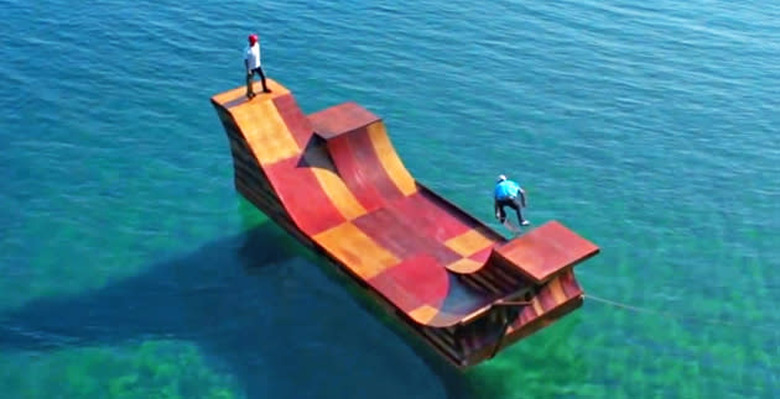
  • Inhabitat's Week in Green: floating skate ramp, foldable electric bicycle and a 3D-printed sneaker

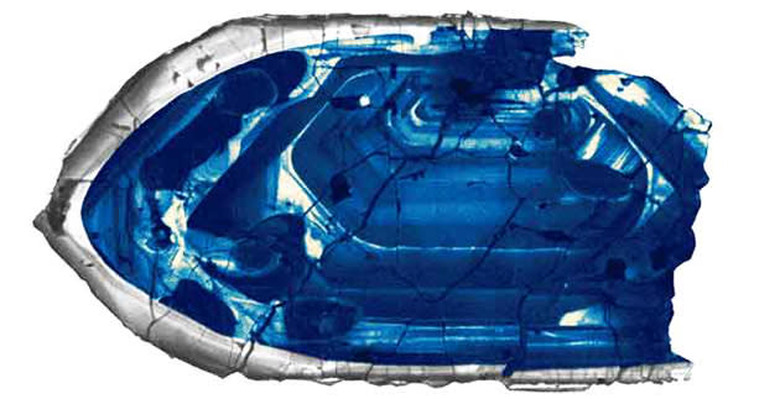
    Each week our friends at Inhabitat recap the week's most interesting green developments and clean tech news for us -- it's the Week in Green. The Earth is a mysterious place. Scientists recently discovered a small, rough diamond that reveals the existence of an ocean of water more than 250 miles below the Earth's surface. But that's not all: A German company has figured out how to produce super-strong spider silk from genetically modified E. Coli bacteria. Electric vehicles have been picking up steam around the world. Case in point: Norway is set to become the first country in the world with one electric vehicle on the road for every 100 cars.

    By Inhabitat Read More
  • Inhabitat's Week in Green: human diamonds, floating farm and a 13-year-old nuclear fusioneer

    Each week our friends at Inhabitat recap the week's most interesting green developments and clean tech news for us -- it's the Week in Green. Ever wish you could take a bite out of Kanye West? A new (possibly satirical) startup is taking meat alternatives to an absurd new level, with plans to make salami from animal meat and human tissue from celebrities. No word yet on what Kanye thinks of the venture. In other weird science news, a Swiss company says it is creating diamonds from cremated human remains. The company claims that its so-called memorial diamonds are almost indistinguishable from a typical diamond.

    By Inhabitat Read More
  • Inhabitat's Week in Green: smog safety bubbles, the Tesla Gigafactory and transforming furniture

    Each week our friends at Inhabitat recap the week's most interesting green developments and clean tech news for us -- it's the Week in Green. Extreme weather is dominating the headlines yet again this winter. California is in the midst of a historic drought, which has many observers wondering if desalination is the answer to the state's water problems. This week, workers broke ground on what will soon be the largest desalination plant in the Western Hemisphere near San Diego. Man-made fixes like desalination plants aren't likely to solve the problems brought on by climate change, but they could help mitigate the effects. For example, a team of researchers found that offshore wind farms could reduce wind speeds, wave heights and storm surges resulting from hurricanes. A string of harsh winter storms has battered most of North America all winter, but here's one vehicle that can cut right through the snow: A Quebec man created a crazy battery-powered sled that can navigate the most treacherous terrain. And architects from the London-based firm Orproject have drafted plans for large inflatable bubbles that would give residents of Beijing a place to escape from the city's suffocating smog.

    By Inhabitat Read More
  • Inhabitat's Week in Green: DIY velomobile, Lego braille printer and a supercharged anode battery

    Each week our friends at Inhabitat recap the week's most interesting green developments and clean tech news for us -- it's the Week in Green. Sure, 3D printers can create everything from jewelry to entire houses, so why not sweaters? Gerard Rubio just debuted the OpenKnit Printer, a 3D printer that can knit anything from a hat to a sweater in less than an hour. In other 3D printing news, the toy company Hasbro is partnering with 3D Systems to create low-cost 3D printers that kids could use to create their own toys. Meanwhile a seventh grader from California created a working braille printer using a Lego Mindstorms kit. In green transportation news, a pair of car companies has announced plans to create the world's largest electric vehicle-charging network in China. And in northern Wisconsin, architect Kelly Davis designed an amazing tiny home that functions like a cabin, but is technically considered an RV.

    By Inhabitat Read More
  • Inhabitat's Week in Green: NASA's healing device, vertical gardens and a grass-powered robot mower

    Each week our friends at Inhabitat recap the week's most interesting green developments and clean tech news for us -- it's the Week in Green. Solar power just got a big boost as Ivanpah, the world's biggest solar thermal power plant, was just switched on in the California desert. The massive plant, which is partly owned by Google, will provide enough clean energy to power 140,000 homes. Ivanpah wasn't the only major breakthrough in clean energy this week: For the first time, scientists at the Lawrence Livermore National Laboratory achieved a nuclear fusion reaction that produced more energy than it took in. In Oregon, officials gave the green light to the first offshore wind farm on the West Coast of the US. At the intersection of renewable energy and modern design, a giant photovoltaic cube appeared in the streets of Milan, showing that solar power can be beautiful. The sun isn't the only natural source of energy: Swiss designer Fabienne Felder collaborated with a few Cambridge scientists to produce the world's first radio that is completely powered by plants.

    By Inhabitat Read More
  • Inhabitat's Week in Green: floating cities, vegetable synthesizer and a syringe that seals gunshot wounds

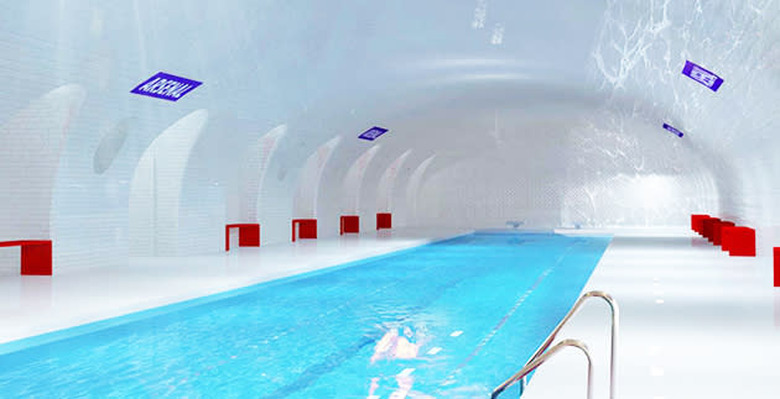
    Each week our friends at Inhabitat recap the week's most interesting green developments and clean tech news for us -- it's the Week in Green. All eyes turned to Russia last week as the Winter Olympics kicked off in Sochi. The opening ceremony took place in the Fisht Olympic Stadium, a venue designed by Populous that was inspired by Fabergé eggs. But despite promises that this year's games would be zero-waste, environmental groups have countered that the event won't live up to its green claims. In other green design news, Paris is planning to turn abandoned underground metro stations into restaurants, auditoriums and even underground swimming pools. In London, a series of impressive origami-inspired pavilions popped up in Canary Wharf. In Abu Dhabi, Inhabitat obtained some exclusive photographs of the Al Bahr Towers, which are cooled with the world's largest computerized façade. A new study suggests that white roofs are actually more effective at fighting climate change than green roofs, but planning for climate change will require more than just a coat of white paint. Some prominent thinkers are suggesting that as ocean levels rise, we will be forced to build floating cities -- or at the very least, buildings that are better adapted to water.

    By Inhabitat Read More
  • Inhabitat's Week in Green: carbon fiber 3D printer, mollusk shell glass and a self-sustaining island

    Wouldn't it be great if you could just snap your fingers and a pizza would appear? It might not be too far off: NASA recently funded a plan to build a 3D food printer for astronauts, and a new video shows the prototype in action. In other 3D printing news, Stratasys just unveiled the world's first multi-color, multi-material 3D printer. And in San Francisco, a race car part company recently produced the world's first carbon fiber 3D printer, which can print parts that are 20 times stiffer than plastic. On the wearable tech front, Google Glass is getting a big-time face-lift with prescription lenses and stylish frames. And the design firm Lemur Studio unveiled plans for a life-saving boot insert that can detect land mines from a distance of 6.5 feet. In other innovation news, the Swedish design studio Tomorrow Machine has developed a new coating that makes food simply roll off your plates and bowls, making cleaning the dishes a breeze. And in order to reduce weight and cargo on future missions, NASA plans to make oxygen on Mars and water on the moon.

    By Inhabitat Read More
  • Inhabitat's Week in Green: blue lava, biodegradable batteries and a self-cleaning t-shirt

    Each week our friends at Inhabitat recap the week's most interesting green developments and clean tech news for us -- it's the Week in Green. China is facing a pollution crisis. In cities like Beijing, the smog has gotten so thick it's often difficult to see the sky - which begs the question: Does China's capital need an artificial sun? The problem isn't confined to China's borders, either: A new study has shown that Chinese pollution is crossing the Pacific Ocean, affecting the western US. Could geoengineering provide a fix? To deal with the problem, scientist Yu Shaocai has proposed using giant sprinklers that spray water into the atmosphere of heavily polluted cities like Beijing to clear toxins out of the air. Air pollution isn't the only way humans are shaping the environment -- people in northern European cities have recently witnessed a mysterious aurora borealis-like glow that is caused by a combination of manmade light pollution and ice crystals trapped in the air. The natural world has plenty mysteries of its own: Photographer Olivier Grunewald recently captured an amazing set of pictures of an Indonesian volcano that erupted with rivers of blue lava.

    By Inhabitat Read More
  • Inhabitat's Week in Green: Passat BlueMotion, jellyfish drones and a pig-cloning factory

    Each week our friends at Inhabitat recap the week's most interesting green developments and clean tech news for us -- it's the Week in Green. The North American International Auto Show kicked off last week in Detroit, and Team Inhabitat went to the Motor City for an early look at the industry's eco-friendly offerings. Topping the list at this year's show is Ford's C-MAX Solar Energi, a hybrid electric car with a set of high-efficiency SunPower photovoltaic panels installed on its roof. Also in Detroit, Audi unveiled its Allroad Shooting Brake Concept, a compact plug-in hybrid that's designed to handle "light off-road conditions." And Volkswagen showed off its new Passat BlueMotion concept, which boasts the highest highway fuel economy rating of any non-hybrid mid-size sedan. Auto companies have good reason to be bullish on eco-friendly cars -- just ask Tesla. The electric automaker recorded its highest sales figures in history in the fourth quarter of 2013. But despite recent advances in fuel efficiency, a new University of Michigan study makes a case for ditching personal cars altogether, proving that cars are the most inefficient form of transportation.

    By Inhabitat Read More
  • Inhabitat's Week in Green: Navia, $100 prosthetic limbs and a controlled nuclear meltdown

    Each week our friends at Inhabitat recap the week's most interesting green developments and clean tech news for us -- it's the Week in Green. As most of the US bundled up and tried to stay warm during last week's unprecedented "polar vortex," the tech world descended on Las Vegas for the annual International CES. Intel started things off by vowing to use only conflict-free minerals in its microprocessors, and Ford officially unveiled its very first solar-powered car. Manufacturers also showcased several gadgets focused on personal improvement -- check out this smart bed that helps control snoring and the Lumo Lift, a gizmo that gently nags you to stand up straight. Also at CES, MPOWERD launched a colorful new inflatable solar lantern that will retail for just $25. In other green lighting news, Hulger introduced the Plumen 002, an innovative CFL that the company hopes will bring "magic and poetry back to the humble light bulb." Technology isn't just getting greener -- it's also changing lives. Case in point: Mick Ebeling, CEO and founder of Not Impossible Labs, recently traveled to Sudan to produce $100 3D-printed prosthetic limbs for amputees in war-torn Sudan. Apple has given its top-of-the-line workstation, the Mac Pro, a makeover that uses 74 percent less aluminum and steel than the previous generation. For backyard gardeners, Togetherfarm has produced a modular garden box system that snaps together like Lego bricks. And in other Lego news, Lego announced that a new Simpsons set would be produced this year.

    By Inhabitat Read More
  • Inhabitat's Week in Green: Mission Mars One, MulchFest 2014 and a pickup truck made of ice

    Each week our friends at Inhabitat recap the week's most interesting green developments and clean tech news for us -- it's the Week in Green. Ever wish you could just get away from it all? Mission Mars One is a prime opportunity to secure a one-way ticket away from Earth. The Dutch nonprofit organizing the mission just finished screening its first round of applicants, and it will soon move on to the second round. The Mars mission is still more than a decade away, but here on Earth, we're seeing plenty of life-changing innovations. In June, a paralyzed teen will make the ceremonial first kick of the World Cup using a mind-controlled exoskeleton. Ghana has some of the worst sanitation in the world, but MIT's Susan Murcott is looking to provide clean drinking water to people with an amazing $6 water filter that's made from a big ceramic bowl. Embedding batteries in the human body for medical applications is a tricky task, but a team of scientists just created biological batteries made from cuttlefish ink that can be consumed in a pill. And on the design front, Spanish architect Santiago Calatrava is facing legal action from his home city of Valencia over the beautiful, but deteriorating €100 million Palau de les Arts Reina Sofia opera house.

    By Inhabitat Read More
  • Inhabitat's Week in Green: SuperPier, reversing the aging process and an artificial, self-regulating heart

    Each week our friends at Inhabitat recap the week's most interesting green developments and clean tech news for us -- it's the Week in Green. Well folks, we've made it through two major holidays, with just one more to go. We can't look into a crystal ball to see what 2014 has in store for us, but looking into Rawlemon's Betaray prototype might be the next best thing: It's a giant transparent marble capable of concentrating solar energy 10,000 times. If hanging out with all those nieces and nephews over the holidays has you feeling your age, you'll be thrilled to know that Harvard scientists have successfully reversed the aging process in a group of laboratory mice. And if you're already bored with typical 3D printing news, here's something new: Boots Industries just developed a new 3D printer that's capable of replicating itself.

    By Inhabitat Read More
  • Inhabitat's Week in Green: doggie translator, full-size Lego hot rod and skyscraper cemeteries

    Each week our friends at Inhabitat recap the week's most interesting green developments and clean tech news for us -- it's the Week in Green. Do you ever wish you knew exactly what your dog is thinking? A team of designers from the Nordic Society for Invention and Discovery is playing Doctor Dolittle -- they've developed a doggie headset that can read animal brainwaves and translate them into human speech. That's just one of the many amazing scientific breakthroughs we've witnessed this week. South Korean scientists developed the world's first nanobot that can both detect and treat cancer. Rawlemon unveiled a gigantic crystal ball that can magnify solar energy 10,000 times -- that's enough to harvest light from the sun, moon and clouds. For the first time, researchers at the University of Cambridge used an inkjet printer to print living retinal cells, which could be used to replace defective eye tissue. And this week, Inhabitat interviewed Natural Machine's Chief Marketing Officer Lynette Kucsma to talk about an amazing new 3D printer that can cook up edible designs.

    By Inhabitat Read More
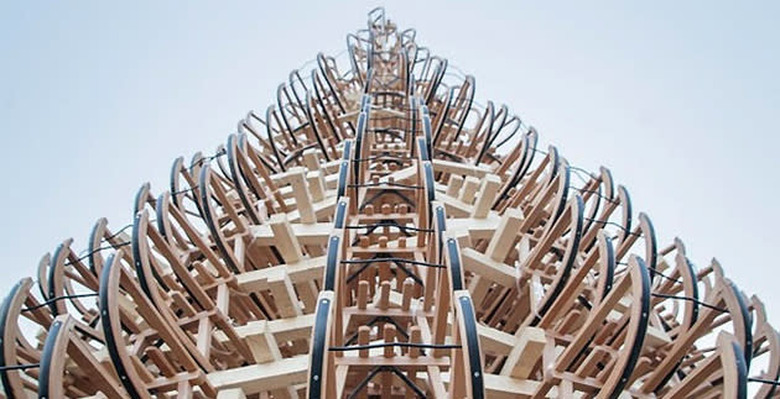
  • Inhabitat's Week in Green: 'Saltygloo,' 3D-printed lingerie and a Christmas tree made from 365 wooden sleighs

    Each week our friends at Inhabitat recap the week's most interesting green developments and clean tech news for us -- it's the Week in Green. The 3D-printing craze was in full effect this week. No longer content making plastic figurines or smartphone covers, 3D makers are now taking a more delicious route. If you're pressed for time in the kitchen, the Foodini 3D printer can do some of the prep work for you. Meanwhile, Emerging Objects has found a way to turn abundant sea salt into a building material. It recently revealed "Saltygloo," a pavilion made from 336 3D-printed sea salt panels. And if cooking and building with 3D printers isn't exciting enough for you, there's always the 3D-printed lingerie that took center stage at Victoria Secret's annual televised fashion show (it was encrusted in millions of Swarovski crystals, of course). And don't worry if you're still 3D printing with traditional plastic filaments: The newest printer from 3D Systems is not only the world's first and only continuous-tone, full-color 3D printer, it also features integrated material recycling to cut down on wasted materials and filament expenses.

    By Inhabitat Read More